Asking Gros Morne for a Trail Permit
Planning an ATV or side-by-side trip near Gros Morne can get confusing fast: a route that looks open on a map may cross into a national park, where recreational off-road riding is generally not allowed. This guide explains what to ask Parks Canada, what a permit may and may not authorize, and how to plan a legal ride outside the park.
Understand the rules before asking for a permit
A permit is not a general pass to ride
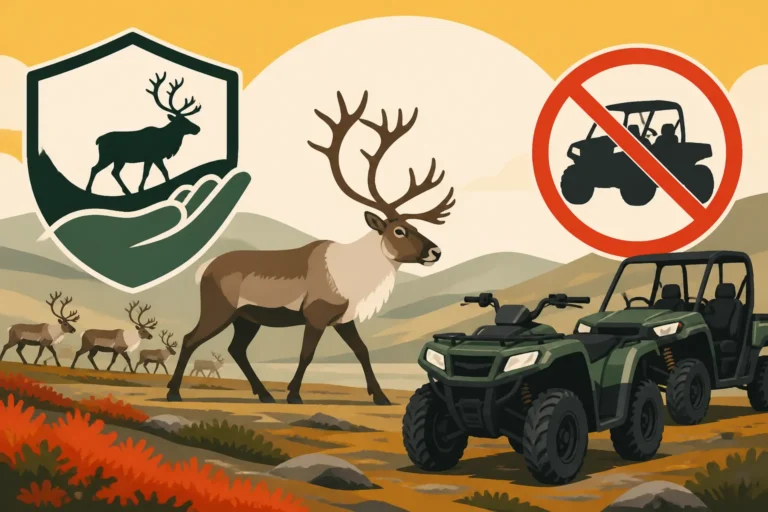
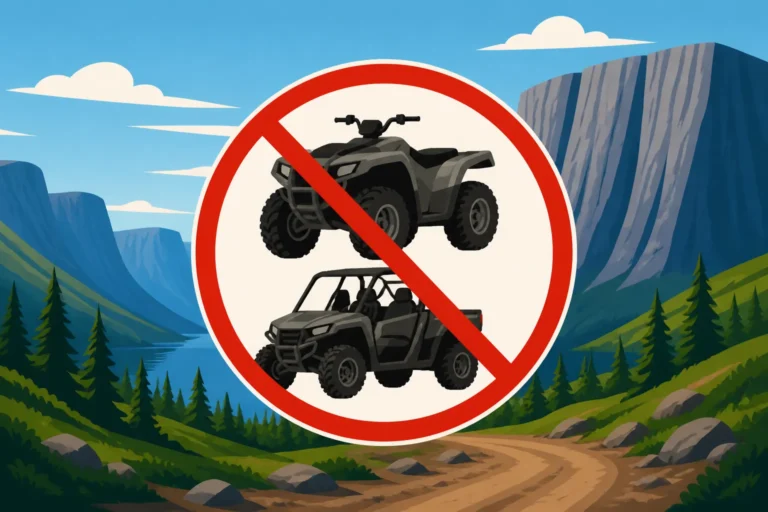
Gros Morne National Park is not a place where you can simply buy a trail pass and explore on an ATV. National park rules restrict off-road vehicle use, and a permit should not be treated as routine permission for recreational trail riding. The key question is whether your specific purpose and proposed route could be authorized under the rules that apply.
That distinction matters when you’re looking at a route near Rocky Harbour, Norris Point, Woody Point, or Trout River. A line on a phone map can cross a park boundary without making that boundary obvious on the ground. Likewise, being able to reach an area by ATV does not establish that the route is open to ATV use.
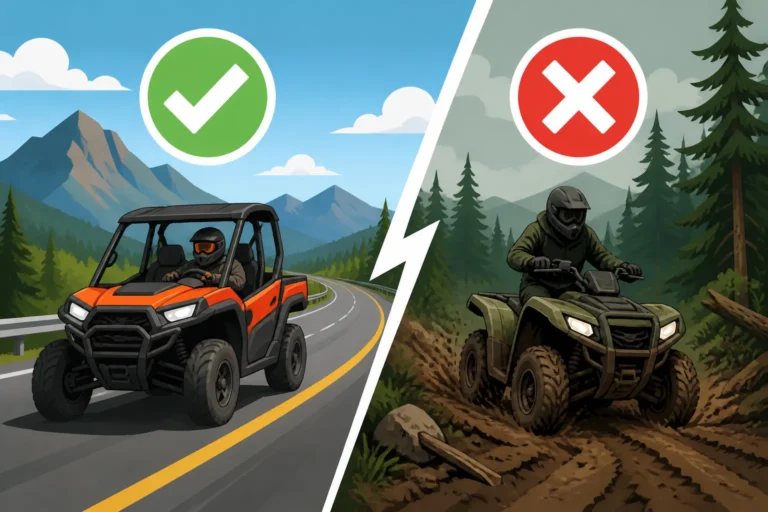
For a broader overview, read Gros Morne Allows Machines Only on Highways and National Parks Have No Trails Open to Machines. These explain why a request for a permit should start with a precise description of what you need to do, not simply a request for access to ride.
Ask whether your purpose is eligible before making plans
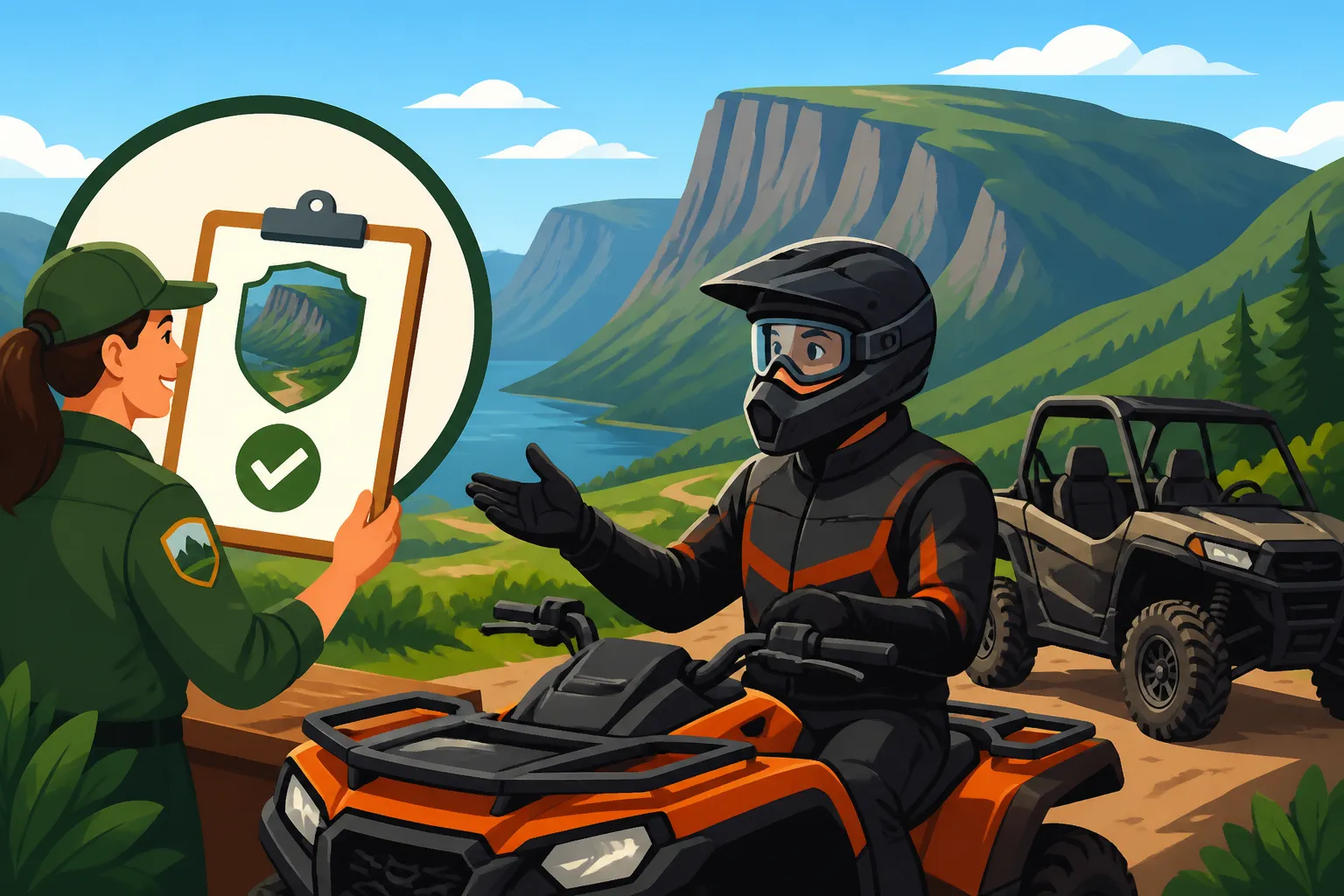
Before spending time building an itinerary, contact Parks Canada and describe your intended activity. Ask whether any authorization is available for that purpose, whether the location is within the park, and what rules or conditions would apply. The answer may be that your proposed recreational ride cannot be authorized, even if the route appears practical or you have ridden nearby before.
Some permits issued in a national park may relate to specific activities or exceptional circumstances rather than general recreation. The type of activity, exact location, timing, and effects on park resources can all matter. Don’t assume that permission for one purpose, person, vehicle, or section of road would automatically cover another.
The post When a Park Superintendent May Issue a Permit is useful background for understanding why a superintendent’s authority is not the same thing as open access. Treat any authorization as specific: ask what it covers, where it applies, when it is valid, and whether it includes the vehicle and activity you have in mind.
Check whether your route is actually inside the park
The first practical step is to establish the proposed route and the park boundary. This is especially important if you are planning from a cabin, campground, community road, or trailhead and expect to connect to another route. A short connector can be the part that crosses into restricted land.
Use official park information to confirm boundaries and restrictions. A mapping app such as onX Offroad can help you sketch a proposed route or notice where you need to investigate further, but don’t treat an app’s displayed line or land boundary as legal permission. Map layers can differ, and a route shown as passable is not necessarily open to motorized use.
If the route is close to the boundary, ask Parks Canada to confirm the location rather than relying on an approximate pin. Save the reply and any written authorization with your trip documents. If you cannot establish that the route is permitted, plan a different route before unloading your machine.
How to make a clear permit inquiry
Prepare the details before you contact Parks Canada
A vague question such as “Can I ride my ATV in Gros Morne?” is difficult to answer usefully. Prepare a short, specific description instead. Include the reason for the request, the proposed date or date range, your starting point, the route you hope to take, and where you expect to finish.
Be ready to identify the machine type, such as an ATV or side-by-side, and explain whether you are travelling alone or with a group. If the request involves access to a particular property, work activity, community need, or other specific purpose, explain that clearly. Don’t present a recreational trip as a different kind of activity to improve your chances; accurate information helps park staff assess the request and tell you what options exist.
If you have a route file or map, ask how staff would like you to share it. Include clear landmarks and road names where possible. A screenshot with a marked route may be easier to discuss than a verbal description such as “the trail behind the cabin.” You can use onX Offroad or another mapping tool to organize your proposed route, then confirm the relevant boundaries and access rules with Parks Canada.
Ask questions that produce a usable answer
When you contact the park, ask direct questions and write down the answers. For example:
- Is the proposed route inside Gros Morne National Park?
- Is the activity allowed without a permit?
- If authorization may be possible, what application or information is required?
- What exact route, dates, vehicles, and people would the authorization cover?
- Are there seasonal closures, wildlife protections, or other restrictions to consider?
- What should you do if weather, construction, or a closure makes the proposed route unusable?
Ask whether approval must be in writing and how you should carry or present it while travelling. If staff explain that a permit cannot be issued for your purpose, ask them to clarify which nearby areas or routes are outside the park and what other permissions may still be needed there.
A verbal conversation can be helpful for initial planning, but it is risky to rely on a remembered conversation as proof of permission. Request written confirmation where authorization is granted, and make sure the document matches your actual plan. A permit for one route does not necessarily authorize detours, extra riders, different dates, or unrelated trail use.
Keep your request and approval organized
Keep a copy of your application, any supporting route information, and all responses together. If you receive authorization, check every detail before leaving: the names or group covered, vehicle description, dates, route, conditions, and any reporting or access instructions. If something is unclear, ask before the trip rather than interpreting the wording yourself on the trail.
If the plan changes, don’t assume the original approval still applies. A new start point, a changed destination, or a detour across a different section of land could change whether the ride is allowed. Contact the issuing office to ask whether the change needs additional approval.
A simple trip file can also help if you are travelling with other riders. Share the relevant restrictions and conditions with everyone in the group. It is frustrating to reach a trailhead after a long tow only to discover that one rider understood the plan differently or expected a route that is not authorized.
Planning a ride outside the park
Identify legal alternatives before you tow
If your purpose is recreational riding, the most practical answer may be to plan outside Gros Morne National Park rather than seek a permit. Newfoundland has riding areas and routes beyond the park, but permission depends on the land, trail, and applicable rules. Check whether the route is an approved area, a managed trail, private land, or another category with its own access requirements.
Start with Newfoundland Approved and Restricted Areas and Newfoundland Rules for Riding Crown Land. These can help you understand why “outside the park” does not automatically mean “open to ATVs.” You may still need to follow restrictions, obtain landowner permission, use marked trails, or meet separate trail-access requirements.
The T’Railway and other riding areas may be options to investigate, but check the particular section rather than assuming every route is open to every machine. Newfoundland ATV Trails: The T’Railway and Beyond offers a starting point for comparing routes. Before heading out, confirm any current closures or access conditions with the relevant land manager or trail operator. Newfoundland Trail Conditions Before You Ride is also worth reviewing when weather or recent trail damage could affect your plan.
Separate park rules from nearby land rules
A route near the park can involve more than one authority. Depending on where you intend to travel, questions may involve Parks Canada, a provincial land manager, a municipality, a private landowner, or a trail operator. Permission from one party does not necessarily replace permission from another.
This is where route planning needs more care than simply choosing a trail on an app. Mark the start and finish, identify the roads and trails connecting them, and check each segment. If you’re staying in the Deer Lake area or travelling toward communities near the park, verify the route before you assume you can ride from your accommodation to a trail system. A legal road connection for one kind of vehicle may not be an authorized ATV route.
onX Offroad can be useful for organizing possible routes and flagging places that need a closer look, but confirm access with the responsible authority. Do the same with any other digital map: it is a planning aid, not a substitute for current rules, posted signs, or permission from the land manager.
Make a backup plan for closures and uncertain access
Have a second route or riding area in mind, especially if your trip depends on a particular trailhead. Weather, maintenance work, seasonal restrictions, or a land-access issue can change what is practical. If you are already towing toward Gros Morne, finding out at the last minute that your planned ride cannot proceed can mean a wasted day and a difficult scramble for an alternative.
Before leaving, confirm the trailhead location, parking arrangements, and whether the route is suitable for your machine. Check the local forecast and road conditions, and make sure your group knows where the park boundary lies. If your alternate route uses private land, get permission before entering; if it uses a managed trail, check the operator’s requirements.
Keep your plans flexible without treating flexibility as permission to improvise across restricted land. If a gate is closed, signs prohibit motorized travel, or the route appears to enter the park, stop and verify your options. A short delay to call the appropriate office is far better than discovering after the ride that your route crossed an area where ATV use was not allowed.
A practical checklist before you ride
Before contacting the park
- Draw the route you are considering and note the starting point, destination, and connecting roads or trails.
- Check whether any part of the route appears to enter Gros Morne National Park.
- Write down your purpose, proposed dates, machine type, group size, and any relevant circumstances.
- Ask Parks Canada whether the activity is allowed and whether an authorization process applies.
- If the route is outside the park, identify the land manager or trail operator responsible for access.
Before loading the machine
- Confirm the route and all required permissions with the appropriate authority.
- Read any written authorization carefully and make sure it covers your actual plan.
- Check for closures, seasonal restrictions, and trail conditions.
- Confirm that your group understands where riding is permitted and where it is not.
- Save maps and contact details offline in case mobile service is limited.
- Carry any required documents and follow the conditions that apply to your route.
| Situation | Best next step |
|---|---|
| You want to ride recreationally inside Gros Morne | Ask Parks Canada whether the activity is allowed; do not assume a general trail permit is available |
| You have a specific non-recreational reason to enter or travel through an area | Explain the purpose and exact route to Parks Canada and ask whether authorization may apply |
| Your route may cross the park boundary | Confirm the boundary and route with Parks Canada before riding |
| Your planned ride is outside the park | Check the land category, trail access rules, closures, and any landowner or operator permission |
| You receive written authorization | Verify the dates, route, vehicle, people, and conditions before departure |
The safest approach is to treat Gros Morne as a protected area with restricted motorized access, not as a trail network that becomes available once you ask for a permit. Be specific when you contact Parks Canada, get any approval in writing, and plan a legal alternative outside the park if your goal is recreational ATV or UTV riding.
Disclaimer
This article is for general informational purposes only and does not constitute professional advice. Laws, prices and regulations vary by location and change over time. Consult a qualified professional for guidance on your specific situation.