Where the T’Railway Runs Smooth and Fast
A stretch of the T’Railway can feel quick and easy one day, then turn into a slow, jarring ride after rain or trail work. That uncertainty makes it hard to plan a comfortable ATV or UTV outing. This guide explains what “smooth and fast” really means on the railbed, how to spot friendlier sections, and how to ride them without treating a shared trail like a racetrack.
What makes a T’Railway section feel smooth
The T’Railway follows an old railway corridor across Newfoundland, but the ride is not one continuous, uniform surface. A firm, even stretch can feel comfortable and predictable; loose ballast, ruts, washouts, water, or rough approaches to a bridge can slow you down quickly. Even within a single outing, surface and visibility may change.
“Fast” is relative. It means a section lets you maintain a steady, controlled pace without constantly dodging obstacles or stopping to pick a line. It does not mean the trail is suitable for high-speed riding. The corridor is shared, conditions can change, and you still need to leave yourself room to react.
Read the surface, not the map mileage
A map can help you understand where the trail goes, but it cannot promise that a particular stretch will be smooth on the day you ride. Look for a firm, relatively level surface with good sightlines and no obvious washouts, deep ruts, or loose material. Keep your speed conservative until you have seen enough of the trail to judge how it feels.
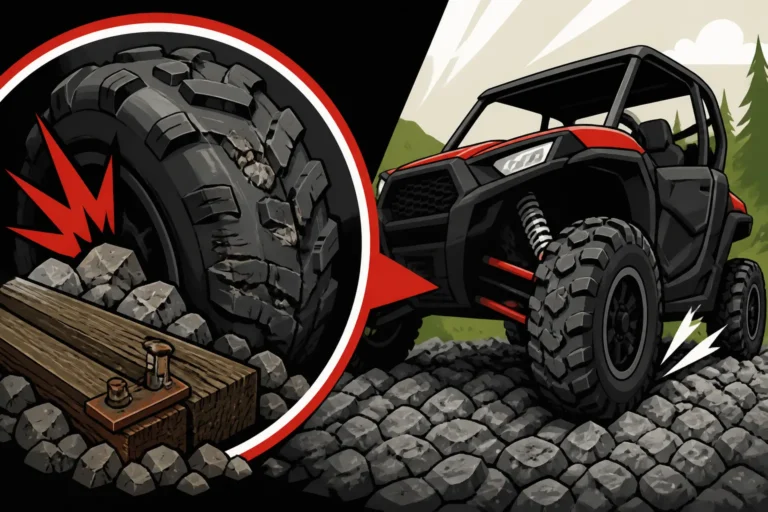
Railway ballast is not the same as packed dirt. Its loose stones can make a machine feel unsettled, especially when you turn or brake. A section that looks flat from a distance may still have a rough centre, soft shoulders, or uneven patches. If you see another rider moving slowly ahead, give them space rather than closing the gap because the trail appears open.
Expect the ride to change by section
The corridor’s former railway purpose gives it a different character from a narrow forest trail, but it does not make every section level, smooth, or obstacle-free. Approaches to bridges and crossings may feel different from the straight stretches between them. Drainage, seasonal weather, maintenance, and local use can also affect how the surface rides.
The T’Railway is a long route, so conditions around Port aux Basques may not match what you encounter closer to Corner Brook, Gander, Clarenville, or the Avalon. Avoid planning a full day around an assumption that the entire corridor will be equally easy. A shorter out-and-back ride gives you room to turn around if the surface becomes rougher than expected.
For a broader sense of the route’s scale and layout, see An 883-Kilometre Corridor From Coast to Coast. If you are trying to choose a distance for your group, Which T’Railway Sections Slow You to a Crawl can help frame why a planned mileage total does not always translate into an easy ride.
How to find a friendlier stretch
A more comfortable outing usually starts with a modest plan, not a promise of a fast run. Choose a trailhead that is practical for your group, leave time to check the surface, and be ready to shorten the ride. A route that feels easy for an experienced operator may be tiring for a new rider, a passenger, or someone using a machine with a different suspension setup.
Plan around trail access and your group
Before setting off, identify where you intend to enter the corridor and where you can safely turn around. Make sure your vehicle and trailer can park without blocking the access point or other users. If you are unfamiliar with the area, check local trail information and ask a trail operator or community contact about access, restrictions, and recent conditions.
A mapping app such as onX Offroad can help you review routes and orient yourself, but treat any map as a planning aid rather than a live guarantee of trail condition or legal access. Check that your route follows an area where riding is permitted, and confirm that access points and closures have not changed. For provincial access context, read Newfoundland ATV Trail Map Downloads and Newfoundland Approved and Restricted Areas.
Be especially careful when a mapped line appears to continue across a road, bridge, or private property. A line on a screen is not permission to ride. Where a trail intersects a road, slow down, look for signs, and follow applicable crossing rules. The guide Crossing a Newfoundland Highway Needs 150 Metres of Visibility explains why a clear view matters before crossing.
Use a condition check before committing
At the trailhead, take a moment to look at the surface and weather rather than unloading and immediately heading out at your planned pace. Notice standing water, fresh erosion, deep grooves, loose stone, and signs of recent maintenance. If the entrance is already rough or muddy, the same conditions may continue farther along.
Rain can soften the surface, conceal holes, and make a previously manageable patch harder to cross. Strong wind, fog, and changing coastal weather can affect visibility and comfort too. Check the forecast for the area you plan to ride, but remember that local conditions on exposed sections may differ from what you see at home. For more on timing a ride, see Newfoundland Riding After Heavy Rain and Packing for Weather That Changes Every Hour.
| What you notice | What it can mean for the ride | A sensible response |
|---|---|---|
| Firm, even surface with clear sightlines | Easier to hold a steady, controlled pace | Continue cautiously and keep space between machines |
| Loose stones or uneven ballast | Less predictable steering and braking | Slow down, avoid abrupt turns, and leave room to stop |
| Deep ruts or standing water | Hidden holes or soft ground may be present | Choose a safe line only if you can see it clearly; turn back if unsure |
| Fog, rain, or poor visibility | Other trail users and hazards may be harder to see | Reduce speed, increase following distance, or postpone the ride |
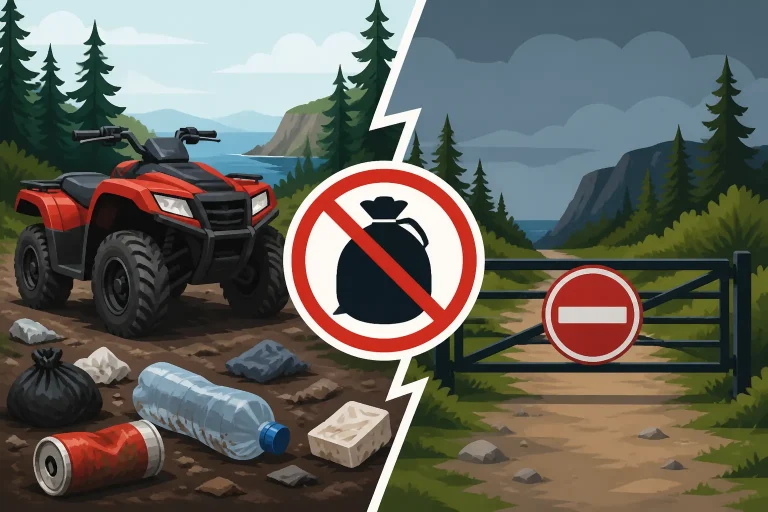
| A closed gate or posted restriction | Access may be prohibited beyond that point | Do not bypass it; check the restriction and choose another route |
Ride smoothly without taking unnecessary risks
A smooth outing comes from matching your speed to the trail, not from trying to hold one pace everywhere. A long, straight section can tempt riders to open the throttle, particularly when the surface looks open and the machine feels stable. But a shared corridor can bring walkers, cyclists, wildlife, other machines, or a sudden rough patch into view with little warning.
Keep speed and spacing under control
Ride at a pace that lets you stop within the distance you can see. That simple rule is especially useful where the trail bends, dips, narrows, or becomes obscured by dust, vegetation, or weather. On a rough patch, ease off before the machine becomes unsettled rather than braking sharply once you are already bouncing over it.
Leave more space than you think you need between machines. Dust can hide a rut or a person ahead, and a rider who stops suddenly may need room to do so safely. If someone in your group is less experienced, let them set a comfortable pace. A ride is not improved by making the most cautious person feel pressured to keep up.
The T’Railway is shared with people travelling in different ways. Slow down well before meeting hikers or cyclists, pass only when there is room, and be prepared to stop. Sharing the Railbed With Walkers and Cyclists offers practical guidance for using the corridor considerately.
Treat bridges, crossings, and rough patches as separate hazards
A smoother stretch does not tell you what is around the next bend. Slow down as you approach bridges, road crossings, trail junctions, and areas where the surface changes. Watch for signs and barriers, and do not assume an old railway feature is safe to cross simply because it appears on a map or another machine has used it.
Loose gravel can reduce traction, while water may hide a deeper rut or an uneven edge. Avoid making a sudden steering or braking movement on a loose surface. If you cannot see a clear, safe line through a water-filled section, do not feel obliged to push on. Turning around is often the best call, particularly when you are riding alone or have limited recovery equipment.
For a trip that includes more than one trail type, plan for the slowest and roughest part rather than the easiest stretch. What Old Railway Ballast Does to Your Tires explains why ballast can affect handling and tire wear. If your route includes crossings, review Newfoundland’s 150-Metre Crossing Visibility Rule before you ride.
Make a practical trip plan
A useful T’Railway plan is flexible. Pick a starting point, set a turnaround point, and decide in advance what conditions will make you change course. This is more helpful than committing to a long mileage goal and feeling you have to complete it after the surface, weather, or group energy says otherwise.
Pack for a ride that may take longer
Bring water, basic first aid supplies, weather-appropriate layers, a charged phone, and any recovery equipment suitable for your machine and route. A paper map or offline route information can be useful where mobile service is weak. Let someone know where you plan to ride and when you expect to return, especially if you are heading out beyond a busy trailhead.
Fuel planning matters even on a route that looks straightforward. Do not assume that services will be available near the corridor or that you will have a reliable signal to find them. Leave a comfortable reserve for detours, slower sections, or a return ride that takes longer than expected. If you are travelling with a group, agree on regrouping points before the ride begins.
Make sure your machine is ready for the conditions. Check tires, brakes, lights, and any required safety equipment, and secure cargo so it cannot shift or block your plate. For a more complete pre-ride checklist, see Newfoundland Registration Before Your First Ride and Newfoundland Trail Etiquette Locals Expect.
Know when to turn around
Turn back if the surface becomes too rough for the least experienced rider, if weather reduces visibility, or if the route ahead appears damaged or closed. Do not ride around barriers or assume a closure applies only to someone else. A change in conditions is a reason to adjust the plan, not a challenge to push through.
A good ride can be short. If your group finds a firm, comfortable section, enjoys the outing, and returns without rushing, that is a better result than covering more distance while tired or uncomfortable. On a long corridor like the T’Railway, choosing a manageable stretch and riding it thoughtfully is often the easiest way to enjoy the railbed.
Disclaimer
This article is for general informational purposes only and does not constitute professional advice. Laws, prices and regulations vary by location and change over time. Consult a qualified professional for guidance on your specific situation.