Fitting a Snorkel Before Crossing a Brook
A brook crossing can look shallow from the trail and still hide a soft bottom, a sharp drop, or a current strong enough to push an ATV sideways. A snorkel may reduce the risk of water entering certain intake and drivetrain openings, but it does not make a machine waterproof. This guide explains what a snorkel can protect, what it cannot, and when to turn around.
What an ATV snorkel does before a brook crossing
How a snorkel helps protect your machine
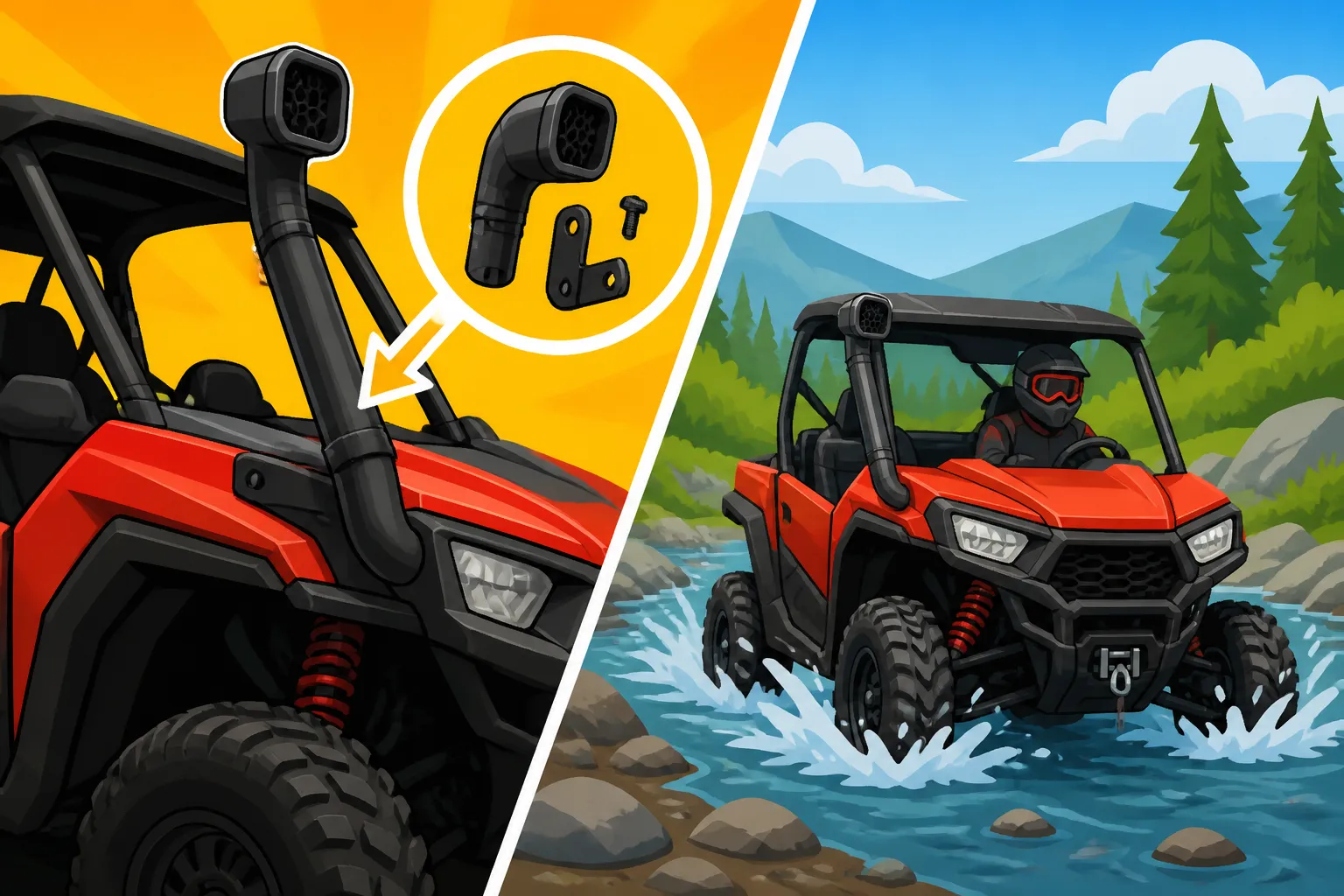
A snorkel relocates selected openings—commonly the engine air intake and parts of the continuously variable transmission system—higher on the machine. The goal is to reduce the chance that water, mud, or spray reaches those openings during a crossing or in wet trail conditions.
That can matter on Newfoundland routes, where a short stretch of water may follow heavy rain, spring thaw, or a period of sustained wet weather. But the snorkel only helps if it is correctly designed for your ATV or side-by-side and installed with the rest of the system in mind. A raised intake does not automatically protect electrical connectors, wiring, differentials, wheel bearings, or every other opening on the machine.
Think of a snorkel as one part of a water-risk plan, not permission to ride into water without checking it. Before heading out, learn the machine’s limits and inspect its condition. A snorkel cannot compensate for damaged seals, loose hoses, a poorly sealed airbox, or a submerged opening below the snorkel’s height.
For a broader look at choosing equipment for soft, wet ground, see Which Tires Float Best on Soft Bog. Tires, snorkel setup, ground clearance, and riding technique all affect what a machine can safely handle, but none guarantees that a particular crossing is safe.
What a snorkel does not make safe
A snorkel does not make an ATV or UTV amphibious. Water can still enter through openings that have not been raised or sealed, and the machine can still stall, lose traction, or be swept off line. If water reaches electrical components or a differential vent, a snorkel at the engine intake will not protect those parts.
The exhaust also deserves attention. A running engine may push exhaust outward, but stopping, tipping, or allowing water to back up can create a different risk. Do not treat an exhaust extension as proof that a deep crossing is manageable. Follow the machine manufacturer’s guidance and the snorkel system’s installation instructions.
There is also a practical limit to what riding gear can solve. A snorkel will not prevent a rider from being knocked off balance, trapped by a machine, or exposed to cold water. Newfoundland weather can change quickly, and a crossing that looks manageable from the bank can become more dangerous once the tires lose grip or the water reaches the floorboards.
How to assess a brook before you approach it
Check depth, current, bottom, and exit
Stop well back from the water and look at the whole crossing, not just the entry point. Check the current, the visible depth, the width, and whether you can see a firm exit on the far bank. A shallow-looking edge can conceal a deeper channel, while a clear surface may hide rocks, holes, branches, or a soft bottom.
The current can be more important than the water’s apparent depth. If water is moving quickly, pushing debris downstream, or breaking around obstacles, do not assume your machine’s weight will keep it stable. If you cannot confidently judge the crossing from a safe position, choose another route rather than riding in to find out.
The bottom matters as much as the water. Peat, silt, and loose stones can make it difficult to steer or stop. A machine that begins moving sideways may be hard to recover, especially if the far bank is steep, muddy, or covered in vegetation. Do not enter if you cannot identify a reasonable way out.
A quick route check can help you avoid being surprised by a crossing, but maps do not tell you the water’s depth or condition at that moment. Riders sometimes use planning tools such as onX Offroad to review a route before leaving, then confirm access and conditions with local trail information. Treat any digital route as a planning aid, not a live report from the brook.
Use a conservative decision checklist
Before a crossing, ask yourself:
- Can I see a clear route in and out? If the entry or exit is hidden, steep, undercut, or blocked, stop.
- Can I judge the depth and current from the bank? If not, do not use the machine to test it.
- Is the bottom likely to support the tires? A soft or uneven bottom can turn a small crossing into a recovery.
- Is the water moving quickly or carrying debris? If it is, turn around.
- Is the crossing permitted and appropriate for this trail? Avoid creating a new route around water or damaging the banks and wetland.
Never walk into moving water to test a crossing if doing so would put you at risk. Do not ride in simply because another machine has crossed earlier; water levels and bottom conditions can change. After rain, a brook may be higher or faster than it was when someone last passed through.
For current planning, consult Newfoundland Trail Conditions Before You Ride and Newfoundland Riding After Heavy Rain. When using a mapping app such as onX Offroad, check whether the route information is suitable for the area and confirm trail access through local or official guidance. A line on a screen cannot tell you whether a brook has risen overnight.
Snorkel setup and preparation
Get the installation checked as a complete system
A snorkel installation should be designed for the exact machine, not improvised from parts that happen to fit. On an ATV or UTV, several systems may have vents or air openings in different locations. Raising only the engine intake while overlooking another vulnerable opening can create false confidence.
Before a ride, inspect the visible hoses, clamps, connections, and airbox area for looseness, cracks, or signs of water or mud intrusion. If you are unsure whether the installation protects the components you expect it to protect, have a qualified mechanic or experienced installer review it. Ask what has been relocated, what remains vulnerable, and what inspection is recommended after wet riding.
A snorkel can also affect how the machine is used and maintained. Follow the manufacturer’s instructions for service, and ask about any implications for warranty or required maintenance before modifying the vehicle. Do not assume a system advertised for water use allows you to exceed the manufacturer’s operating limits.
| Preparation item | What to check | Why it matters |
|---|---|---|
| Snorkel installation | Confirm the system is intended for your machine and is securely fitted | A poor fit can leave openings exposed or allow a hose to come loose |
| Airbox and intake | Look for loose connections, damage, or signs of water | A raised snorkel cannot help if the intake path is compromised |
| Other vents and seals | Ask which components remain vulnerable | Not every opening is protected by an engine snorkel |
| Crossing route | Identify the entry, bottom, current, and exit from a safe position | A snorkel does not prevent loss of traction or a swept machine |
| Recovery plan | Carry suitable recovery equipment and ride with a partner when possible | A machine stuck in water may be difficult or unsafe to recover |
| Trail rules | Confirm that riding and access are allowed | A detour through sensitive ground can cause lasting damage |
Carry a recovery plan, not just recovery gear
A tow strap or winch may be useful in some situations, but neither makes a dangerous crossing safe. Recovery equipment is only helpful when it can be used without placing a person in the current, beneath an unstable machine, or in another hazardous position. Make sure riders in your group know how to use the equipment and agree on a plan before anyone needs it.
Think through what you would do if the ATV stopped at the water’s edge, lost traction on the far bank, or became stuck in soft ground. If the answer depends on someone standing in deep or fast-moving water, the crossing is a poor choice. On a longer ride, tell someone your intended route and expected return, and carry a way to navigate if you lose phone service.
Newfoundland terrain can make recovery harder than it first appears. A machine may be only a short distance from firm ground yet be surrounded by bog, brush, or a steep bank. The advice in Winching a Machine Out of Deep Bog is relevant to recovery planning, but water adds extra hazards that require even greater caution. Do not attach a winch or strap to a person, and do not attempt a recovery if the machine or anchor point could shift unpredictably.
When to turn around and protect the trail
Avoid high water and sensitive ground
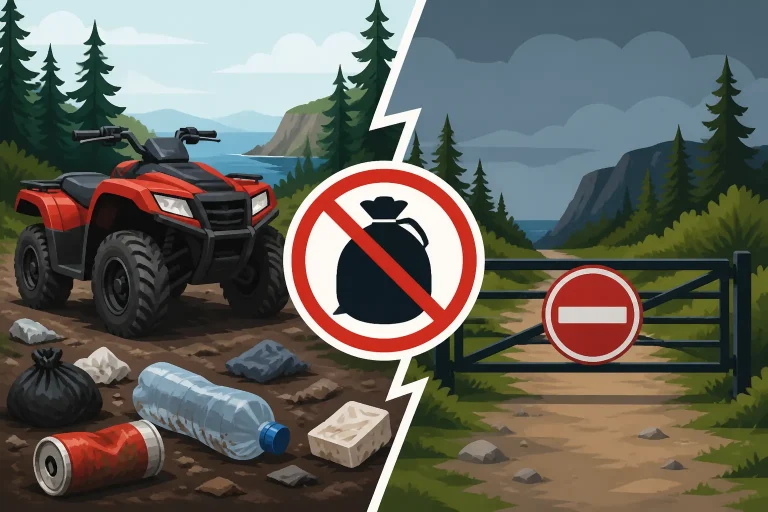
Turn around if the current is fast, the depth is uncertain, the exit is unstable, or the water is rising. Also stop if you cannot identify a safe route without driving off the established trail. Riding around a wet crossing can widen the trail, damage vegetation, and create new ruts that channel water into the surrounding ground.
Wetland and bog areas are especially vulnerable to repeated traffic. A small detour can leave deep tracks that remain long after the ride, and those ruts can hold water or lead other riders to widen the damaged area. Check Newfoundland Wetland Protection Rules and Newfoundland Managed Trail Rules before riding in sensitive areas or using an alternate route.
If the crossing appears unsafe, turning around is not a failure of preparation. It is a sensible decision that protects you, your passengers, your machine, and the trail. A snorkel may reduce one kind of mechanical risk; it does not remove the risks created by current, hidden depth, unstable ground, or poor visibility.
Inspect the machine after wet riding
After a wet ride, stop somewhere safe and check the machine according to its manual. Look for water or mud where it should not be, loose connections, warning lights, unusual noises, or changes in how the engine or drivetrain behaves. If the machine has been submerged or begins running abnormally, avoid repeated attempts to start it and seek qualified service.
Clean mud from the machine without directing high-pressure water at seals, electrical connectors, or other sensitive areas. Pay attention to the underside, vents, and places where debris can collect. Keep a note of any symptoms and where the machine was exposed to water; that information can help a mechanic assess the problem.
Before your next ride, review Newfoundland ATV Trail Map Downloads for route planning, but verify access and trail conditions through appropriate local information. A map can help you plan where to go; it cannot certify that a brook is safe to cross today. When water, visibility, or the exit is uncertain, choose a different route.
Disclaimer
This article is for general informational purposes only and does not constitute professional advice. Laws, prices and regulations vary by location and change over time. Consult a qualified professional for guidance on your specific situation.