Newfoundland Trail Volunteer Days
Trail volunteer days are a practical way to help keep Newfoundland’s ATV routes usable, but it can be hard to know whom to contact, what work is involved, or what to bring. This guide explains how to find an organized opportunity, prepare for a day outdoors, and contribute safely without damaging trails or disrupting other users.
What happens on a Newfoundland trail volunteer day
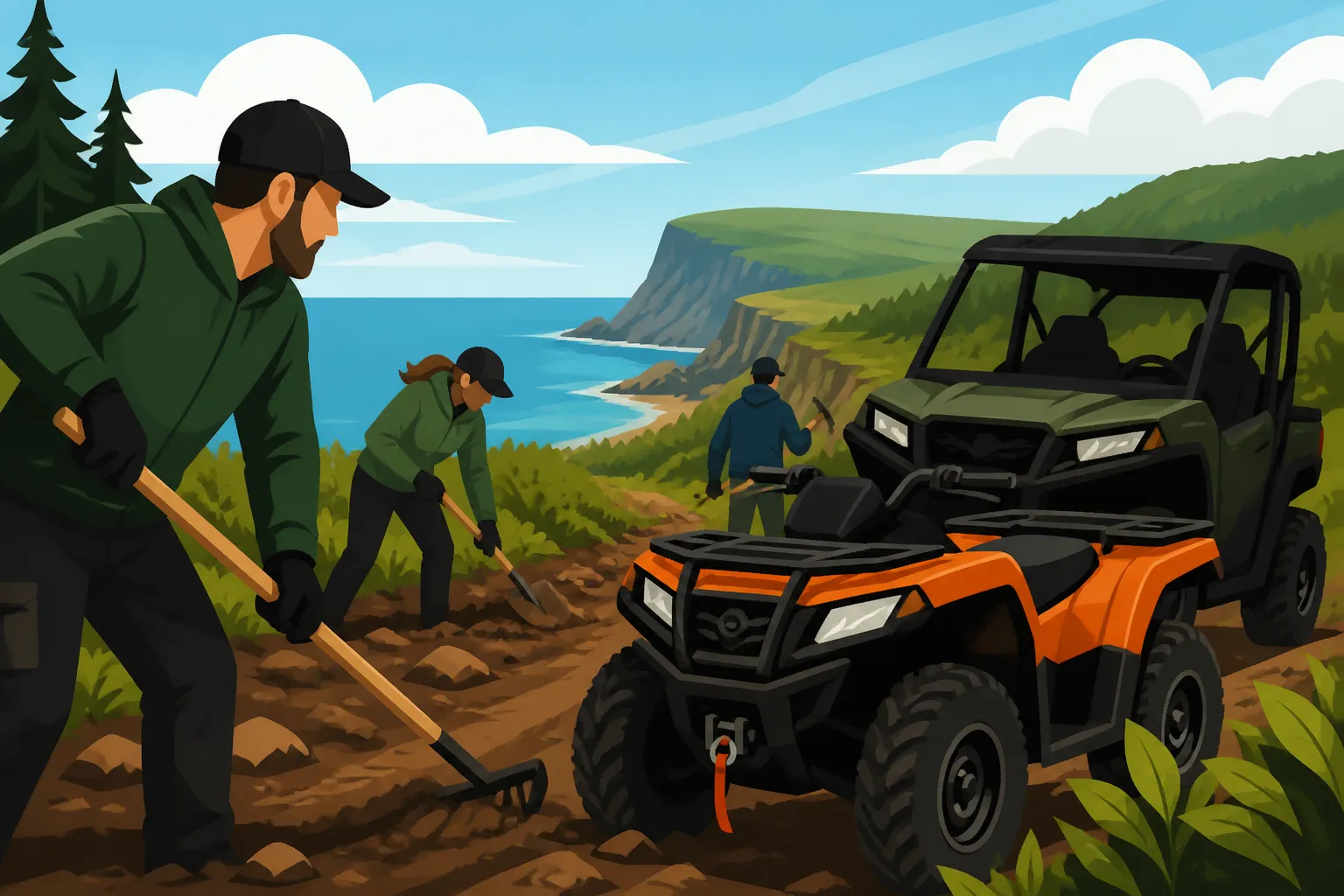
A volunteer day is usually organized around a specific trail or access problem. The work may involve clearing small debris, improving signs, picking up litter, or helping with a community cleanup. The exact tasks depend on the site and the group running the day, so ask before you arrive rather than assuming you’ll be riding or doing heavy construction.
Newfoundland trails can pass through very different landscapes, from forested sections near Corner Brook to open, exposed areas along parts of the T’Railway. Weather, terrain, and the condition of a route can change what work is suitable. A day that sounds straightforward on a message or event listing may involve wet ground, uneven footing, or a longer walk than expected.
Common tasks and what they involve
Litter pickup and light cleanup are among the simplest ways to help. Volunteers may collect discarded packaging or tidy a gathering area, but should not handle sharp, hazardous, or unidentified material. Leave it in place, make a note of its location, and tell the organizer how it can be dealt with safely.
Some work focuses on keeping trail information useful. Depending on the organizer’s plan, volunteers might help identify a damaged sign, report a blocked section, or tidy around a signpost. Don’t move, replace, or add signs on your own. Trail markings and access notices need to be handled by the group or authority responsible for that location.
There may also be light maintenance, such as clearing small branches from an approved path. That doesn’t mean volunteers should cut trees, dig drainage channels, build structures, or redirect water without permission and appropriate direction. Changes that seem minor can affect drainage, nearby vegetation, and the experience of other trail users. For context on why ground conditions matter, see [Newfoundland Trail Damage and Bog Ruts] and [Newfoundland Wetland Protection Rules].
Volunteer work is different from a group ride
A volunteer day may include riding to a work site, but riding is not automatically part of the event. The organizer might ask participants to meet at a trailhead, walk to a particular spot, or travel only on an approved route. Ask whether your ATV or side-by-side is needed, where it can be parked, and whether the work plan includes riding.
If you do bring a machine, follow the event instructions and the rules for the area. An organized cleanup does not create permission to ride somewhere that is otherwise restricted. It also doesn’t replace any applicable training, registration, insurance, trail sticker, or access requirements. Review [Newfoundland Managed Trail Rules] and [Newfoundland Crown Land Access Rules] before heading out if you’re unsure what applies.
How to find and join a trail volunteer opportunity
There isn’t one reliable calendar that covers every trail and community. Opportunities may be arranged by a local club, a trail operator, a community group, or another organization involved with a route. Start by looking for the group that manages or regularly works on the specific trail you hope to support.
Contact the group responsible for the trail
If you’re interested in a particular area, ask who organizes maintenance there and whether they have public volunteer days. A local ATV club can be a useful starting point, particularly if it rides and maintains trails in the region. The article [Newfoundland ATV Clubs Worth Joining] can help you think about the value of connecting with a club beyond a single cleanup.
For a trail near a town or community, you can also ask the community council or town office who handles local access and maintenance questions. If the route is managed by a trail operator, contact that operator directly. [Newfoundland Trail Operator Contacts] and [Asking a Newfoundland Community Council About Riding] offer useful starting points for making those inquiries.
Keep your message simple and specific. For example:
- Name the trail or nearby community you’re asking about.
- Say whether you’re looking for a scheduled volunteer day or want to report a maintenance issue.
- Ask what tasks are planned, where to meet, and whether you need to bring tools or safety equipment.
- Confirm whether machines are involved and what access rules apply.
- Ask how weather changes or cancellations will be communicated.
An organizer may not be able to accommodate a drop-in volunteer, especially if work involves tools, vehicles, or a small crew. Waiting for a confirmed plan helps prevent confusion at the trailhead and avoids putting extra pressure on the people coordinating the day.
Check the route and event details before you leave
Before travelling, confirm the meeting place, start time, expected duration, and the work location. Ask whether the group has a plan for changing weather or unsafe ground. A route can be muddy, obstructed, or temporarily unsuitable even if it was in good condition on a previous visit. For more on checking conditions and planning around disruptions, see [Newfoundland Trail Closures After a Storm].
A map can help you understand the general area, but it should not be treated as proof that a route is open or that access is permitted. Tools such as onX Offroad can help with personal route planning and orientation, but confirm access and event details with the organizer or the responsible trail authority. If you’re checking a route on [Newfoundland ATV Trail Map Downloads], use it as part of your preparation rather than as a substitute for current local instructions.
If you’re travelling from another part of the island, plan for a long drive and limited services along some routes. Let someone know where you’re going, arrange a check-in, and don’t rely on having cell service throughout the day. Event organizers can advise whether a particular meeting point is accessible by car or trailer and where participants should leave their vehicles.
What to bring and how to work safely
A volunteer day is easier when you arrive ready for the conditions, but the right kit depends on the job. A litter pickup near a trailhead has different needs from clearing a minor obstruction on a damp route. Ask the organizer what’s supplied and what you should bring. Don’t bring power tools or start work with them unless the organizer has explicitly approved their use and can direct you.
A practical packing checklist
The table below is a general guide, not a substitute for the organizer’s instructions. Pack for the task and the forecast, and keep gear secure if you’re travelling by ATV or UTV.
| Item | Why it helps | Check with the organizer |
|---|---|---|
| Sturdy footwear | Helps on uneven, muddy, or wet ground | Whether waterproof boots are recommended |
| Work gloves | Useful for ordinary cleanup and light tasks | Whether specialized gloves are needed |
| Weather-appropriate layers | Conditions can shift during an outdoor workday | Whether the work area is exposed or sheltered |
| Drinking water and food | Keeps you comfortable during a longer outing | Whether breaks or refreshments are planned |
| Personal first-aid supplies | Useful for minor personal needs | Who carries the group first-aid kit |
| Eye protection | Can help with dust or debris during approved work | Whether the task requires specific protection |
| Charged phone and backup plan | Useful for contact and navigation where service permits | How the group will communicate if service is poor |
| Reusable bag or container | Handy for personal items and small cleanup supplies | How collected litter should be handled |
| Safety gear for your machine | Needed if you are riding to the work area | Which equipment and documents apply |
Wear clothes you’re comfortable getting dirty, and bring a layer that can handle wind or rain. On an exposed section of rail trail, weather can feel quite different from conditions at home or in a sheltered parking area. Pack enough water and food for the time you’ll be away, especially if the organizer expects the group to work beyond the immediate trailhead.
Follow the work plan and leave uncertain jobs to the organizer
At the start of the day, listen to the safety briefing and ask questions if a task is unclear. Find out where volunteers should work, which areas to avoid, what tools are approved, and who to check with if conditions change. If you see a hazard, stop and report it rather than trying to solve it alone.
Never assume that a damaged bridge, steep bank, washout, or large fallen tree is a volunteer repair job. These situations may require trained workers, specific equipment, permission, or an assessment before anyone can proceed. The same goes for wildlife, hazardous waste, and unstable structures. A safe contribution can simply be documenting the problem and sharing its location with the person leading the group.
If machines are part of the plan, ride only where and as directed. Keep a safe distance from people working on foot, don’t idle near a work area unless needed, and secure tools or supplies before moving. On shared routes, be considerate of walkers, cyclists, and anyone else using the corridor. For a refresher on everyday shared-trail conduct, read [Newfoundland Trail Etiquette Locals Expect].
Make your contribution useful beyond one day
A single volunteer day can help, but lasting trail care also depends on communication and restraint. The most useful volunteers are often the ones who report a problem clearly, follow the organizer’s directions, and respect the limits of what they’re authorized to do. If you can’t attend an event, asking where to send a trail concern may still be helpful.
Report problems with clear, practical details
When you notice an issue, describe what you saw and where it is. Mention a nearby trail junction, landmark, or sign, and explain whether the route is blocked or merely difficult to pass. If you have a safe way to record a location or take a photo, ask the organizer whether that would help. Avoid walking into an unstable or restricted area to get a better view.
A useful report is factual rather than speculative. “A section of the trail is under water near the marked junction” is more actionable than guessing about the cause or recommending an unapproved repair. If the problem appears urgent or involves a safety hazard, contact the organization responsible for that route and follow its instructions.
Keep the relationship going
After the event, thank the organizer and ask how to hear about future workdays. You can also ask whether the group needs help with planning, registration, or sharing event information. Not every contribution needs to involve physical trail work. Someone who helps communicate a meeting point or reminds new volunteers what to bring can make the day easier for everyone.
If you use a navigation app such as onX Offroad, treat it as a planning aid, not an authority on closures or permissions. Share route information only in ways that support responsible access, and check with the trail group before distributing details about sensitive or restricted locations. OnX Offroad may help you keep track of a route, while local organizers remain the better source for the event plan and what work is appropriate.
A good volunteer day leaves the trail and surrounding area in better hands without creating new problems. Be realistic about your experience, stay within the plan, and ask before taking on a task that isn’t clear. That approach helps protect the route, the people working on it, and the shared access that riders and other trail users value.
Disclaimer
This article is for general informational purposes only and does not constitute professional advice. Laws, prices and regulations vary by location and change over time. Consult a qualified professional for guidance on your specific situation.