Newfoundland Riding in Spring
Spring riding in Newfoundland can look inviting from the road, then turn into a cold, muddy slog once your tires reach a soft railbed or boggy trail. Thawing ground, lingering snow, rain and changing access conditions all affect where an ATV or side-by-side can go. This guide helps you plan a safer ride, avoid damaging trails and know what to check before unloading.
What Makes Spring Riding in Newfoundland Different
Expect a mix of thaw, mud and leftover winter conditions
Spring does not arrive evenly across Newfoundland and Labrador. A sunny afternoon near St. John’s does not guarantee dry conditions inland, and a trail that looks firm at its entrance may become soft farther along. In exposed areas, wind can make a mild day feel raw; in shaded or higher spots, snow and ice may linger after the surrounding ground has started to thaw.
That mix changes how a trail behaves. Water from melting snow and spring rain can collect in low spots, while thawing soil may become soft enough for tires to cut deep ruts. A route that was manageable in winter, when the ground was frozen, can become much more fragile during a thaw. If you are unsure whether the surface can support your machine, turning around is often the best choice.
Spring conditions can also change during a single ride. A trail may be firm in the morning and noticeably softer after a warm, wet afternoon. Before heading out, check the local forecast and ask about recent conditions with a club, trail operator or local rider who knows the area. For a broader seasonal overview, see [Newfoundland Riding Season Month by Month].
Match your route to the ground, not just the map
A mapped route can help you understand where you intend to go, but it does not tell you whether the ground is currently firm, flooded or open to riding. The T’Railway and other riding areas may have changing conditions along their length, and trail surfaces can vary from packed gravel to rough ballast, mud or waterlogged sections. A route that looks short on a screen may take much longer when you have to slow down or turn back.
Use a mapping tool such as onX Offroad to help plan and keep track of your route, but treat it as one planning aid rather than proof that a trail is open or suitable. Check access and closure information with the relevant trail operator or local authority before you ride. This is especially useful if your route crosses land with different access rules or connects to an area you have not visited before.
Plan a route with an easy exit rather than committing to a long loop with no practical turnaround. If you are riding near Corner Brook, Gander or the Avalon, conditions may differ from one local trail system to another. For ideas on how to assess a route before setting out, read [Newfoundland Trail Conditions Before You Ride] and [Newfoundland ATV Trail Map Downloads].
How to Prepare Your ATV or Side-by-Side
Do a spring inspection before the first trip
After winter storage, a machine may start and still need attention before it is ready for a trail. Check the tires for damage and suitable pressure, inspect the brakes and controls, and look for signs of a weak battery, cracked hoses or fluid leaks. If your ATV or UTV has been sitting in a damp shed or outdoors, look closely for corrosion and check that lights and electrical connections work.
Mud and standing water can make a small maintenance issue more frustrating. Confirm that the machine’s cooling system is clear, that the winch operates correctly if you have one, and that recovery points are secure. Carry basic tools and any model-specific supplies you may need. On a longer ride, a spare belt may be useful for a belt-driven machine, but it should not replace preventive maintenance or a realistic route plan.
Pay attention to how you load your machine, too. Loose cargo can shift on a rough section, and a strapped-down item can block a plate or lamp. Review [Newfoundland Equipment Requirements], [Newfoundland Plates Unobstructed by Cargo] and [Newfoundland Plates Kept Free of Mud and Dust] before heading out.
Pack for a cold, wet and changeable day
Spring gear should assume that the weather may be worse on the trail than it felt in the driveway. Waterproof outer layers, warm gloves, dry socks and layers that you can add or remove are more useful than dressing for the temperature at home. Pack water, food, a first-aid kit, a charged phone and a way to navigate if cell service drops out.
For remote routes, tell someone where you are going and when you expect to return. A paper map can be a valuable backup where your phone loses signal or its battery runs low. If you use onX Offroad or another navigation app, download or save the information you need before leaving service. Do not assume that an app will provide reliable directions or connectivity throughout a remote ride.
Your load should reflect the route and the group. A short ride close to a maintained trailhead calls for different supplies than a long outing over exposed barrens or a remote railbed. For more practical preparation ideas, see [Packing for Weather That Changes Every Hour] and [Carrying a Paper Map Where There Is No Signal].
| Spring condition | What it can mean for your ride | A sensible response |
|---|---|---|
| Soft or thawing ground | Tires can dig ruts and damage the trail | Turn back or choose a firmer route |
| Standing water | Hidden holes, soft edges or uncertain depth | Do not enter water unless you can assess it safely |
| Leftover snow or ice | Reduced traction and obscured trail features | Slow down, increase spacing and avoid steep or exposed sections |
| Heavy rain or recent thaw | Conditions may worsen quickly | Check for closures and reconsider the trip |
| Cold wind or fog | Reduced comfort and visibility | Add warm layers and shorten the route if needed |
Riding Responsibly on Spring Trails
Avoid making ruts in soft ground
The urge to power through mud is understandable, especially when a group is trying to stay together. But spinning tires can quickly deepen a rut, widen a trail and make the route harder for everyone who follows. A rider who tries to force a machine through a soft section may also end up stuck, creating a more difficult recovery and additional damage.
If you find a section that is too soft, stop before the group enters it. Look for a safe, permitted way to turn around or take another established route. Do not create a new bypass through vegetation or wetlands just to avoid a muddy patch. A detour that seems harmless from one machine can become a much wider damaged area as other riders follow it.
Spring is a good time to be conservative about water crossings and boggy ground. Water can conceal holes, loose edges and uneven surfaces. If the depth or bottom is uncertain, do not assume that a snorkel, winch or large machine makes the crossing safe. Helpful background includes [Newfoundland Trail Damage and Bog Ruts], [Newfoundland Wetland Protection Rules] and [Newfoundland Bog and Machines].
Share the route and respect closures
The T’Railway and many other routes are shared spaces. You may meet hikers, cyclists, other riders or people using the corridor for work and access. Slow down when approaching others, give them room and avoid covering them in dust or mud. A quiet, courteous pass makes it easier for different users to continue sharing the route.
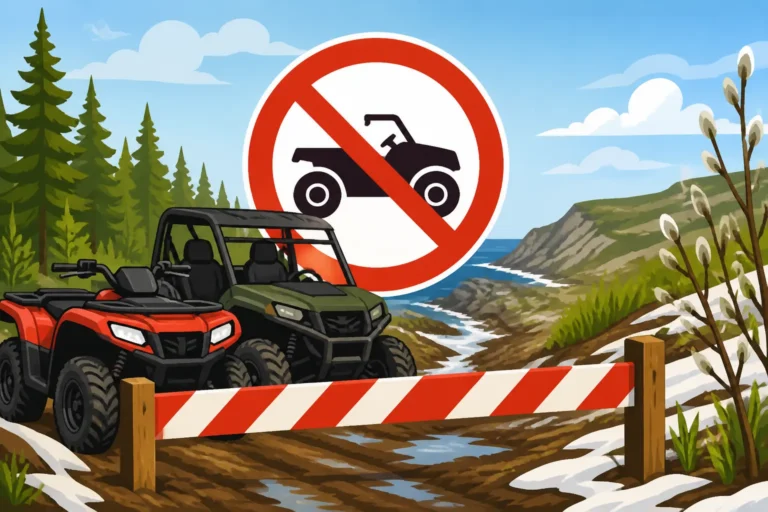
Pay close attention to signs and barriers. A trail entrance that was open on a previous trip may be closed now, and spring conditions can lead to temporary restrictions or local decisions about access. Do not move barriers or assume that a route is open because it appears on a map. If the status is unclear, ask the trail operator or the appropriate local office before riding.
Respect land boundaries and obtain permission where required. Access rules can vary between public, private and managed areas, so a familiar route may still include sections with different requirements. Read [Newfoundland Crown Land Access Rules], [Newfoundland Restricted Areas and Approved Trails] and [Asking a Landowner for Written Permission to Ride] before planning a route that crosses unfamiliar ground.
Planning a Spring Ride That Can Change Course
Make a flexible plan with clear turnaround points
A spring ride is easier to manage when the plan includes more than a destination. Choose a route that suits the least experienced rider and the least capable machine in the group. Identify places where you can safely stop, assess the surface and turn back without blocking other trail users. Share the route and expected return time with someone who is not on the ride.
Build extra time into the schedule. Soft ground, water on the trail, stops to check conditions and slow travel over rough surfaces can make a short distance take longer than expected. Agree ahead of time that anyone in the group can call for a turnaround if conditions feel unsafe. That removes the pressure to keep going just because the group has already travelled partway.
Use onX Offroad or another navigation tool to help with route awareness, but compare the planned route with current access information before you leave. Save the map for offline use where possible, carry a backup and keep track of your position as the ride progresses. A route line is a planning reference, not a reason to continue into a closure or unstable trail section.
Check access, requirements and seasonal restrictions
Before riding, confirm that the route is open and that your machine and group meet the rules that apply there. Requirements can include registration, insurance, safety training or a managed-trail sticker, depending on the circumstances and where you ride. Do not assume that owning the machine or having ridden the route before settles every requirement.
Spring also overlaps with seasonal conditions that may affect activities on or near trails. Check local notices and fire-related restrictions before setting out, especially if your plans include a campfire or an overnight stop. The applicable season and rules may differ between Newfoundland and Labrador. See [Newfoundland Fire Season Dates] and [Newfoundland Managed Trail Rules] for related guidance.
Finally, check that every rider has appropriate protective equipment and understands the route plan. If a young rider is joining, confirm the supervision and training requirements before the trip. For a broader checklist, see [Newfoundland Trail Etiquette Locals Expect] and [Newfoundland Safety Training Is Mandatory]. A spring ride should be enjoyable, but there is no shame in changing plans when the ground, weather or access conditions are not right.
Disclaimer
This article is for general informational purposes only and does not constitute professional advice. Laws, prices and regulations vary by location and change over time. Consult a qualified professional for guidance on your specific situation.