Newfoundland Liability Limits Explained
Riding your ATV or UTV across Newfoundland’s incredible landscapes, from the barrens to the old railbeds, offers a freedom like no other. But that freedom comes with a significant responsibility, and a common oversight many riders make is truly understanding what happens if an accident occurs – specifically, how liability insurance protects you, or more importantly, doesn't. This guide is here to unravel the often-confusing world of Newfoundland's off-road vehicle liability limits, explaining exactly what they cover, where they fall short, and how you can protect yourself and your family from financial disaster.
Understanding the Basics of Liability for ORVs in Newfoundland
When you head out on your off-road vehicle, whether it's an ATV, a side-by-side, or a snowmobile, you're not just enjoying the trail; you're also taking on a certain amount of risk. We often think of accidents as something that only happens to "other people," but the truth is, even the most careful rider can find themselves in an unfortunate situation. It's not just about getting hurt yourself; it's about the potential damage or injury you might cause to others.
Why Liability Matters Beyond the Trail
Imagine you're cruising along a forest access road, and suddenly, a deer bolts out, causing you to swerve. You manage to avoid the animal, but your machine clips a parked truck on the side of the road, leaving a nasty dent. Or perhaps you're on a shared trail, and an accidental bump causes a hiker to fall and break an arm. These aren't far-fetched scenarios; they're real possibilities that can quickly lead to significant costs. Liability insurance is designed precisely for these moments, covering the costs you are legally obligated to pay if you cause injury to another person or damage to their property. Without adequate coverage, these costs could come directly out of your pocket, potentially wiping out savings or even putting your assets at risk.
The Mandatory Minimum Insurance Requirement
In Newfoundland, the law requires all off-road vehicles to carry a minimum amount of third-party liability insurance. This isn't just a suggestion; it's a critical part of being a responsible rider. Specifically, you need at least $200,000 in liability coverage. This means that if you're deemed at fault for an accident that causes injury or property damage to someone else, your insurance will cover up to $200,000 of those costs. While this might sound like a lot of money on paper, it's important to understand what it realistically covers in today's world. Medical bills, lost wages, and property repairs can escalate incredibly fast, especially if serious injuries are involved. It's crucial to [Newfoundland Insurance Requirements for Riders] before you even think about hitting the trail.
For example, if you accidentally collide with another ORV, and the other driver sustains a serious injury requiring hospitalization, surgery, and long-term rehabilitation, plus their machine is a total write-off, that $200,000 could be eaten up quicker than you'd think. It's a floor, not necessarily a comfortable ceiling for every situation. You need to be prepared to produce [Newfoundland Insurance Proof Within Two Days] if an officer requests it after an incident.
Scenarios Where Liability Kicks In on Newfoundland Roads and Trails
The question of when and where your liability insurance applies can sometimes feel a bit murky, especially with the unique blend of road and trail access we have in Newfoundland. It's not just about what happens far out on the barrens; it's also about those moments when your ORV interacts with the broader world.
Incidents Involving Other Vehicles on Shared Roads
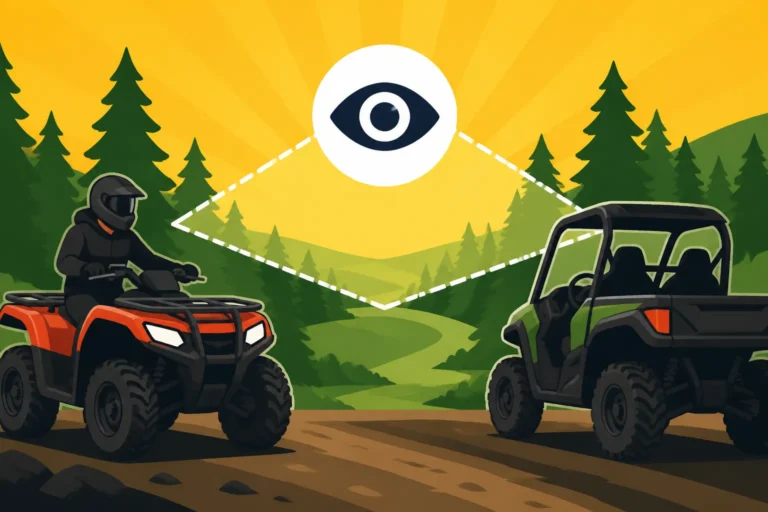
One of the most common points of confusion for ORV riders is operating on or near public roads. While the primary use for ATVs and UTVs is off-road, there are specific, limited circumstances where you might find yourself briefly on a highway shoulder or crossing a paved road. For instance, [Crossing a Newfoundland Highway Needs 150 Metres of Visibility] to be legal, and if you're riding the shoulder, there's a [Newfoundland's 20 km/h Shoulder Limit]. In these situations, your machine is interacting with cars, trucks, and other larger, faster-moving vehicles.
If you're riding the shoulder to get from one trail section to another and you accidentally cause a collision with a car, your liability insurance will be called upon. Even a minor fender bender with a highway vehicle can result in thousands of dollars in damages, not to mention potential personal injury claims. Your $200,000 minimum might just cover the repair of a modern vehicle's bumper and sensors, leaving very little for any associated medical costs or lost income for the other driver. This is a critical area where many riders underestimate their financial exposure. Always remember to be mindful of [Newfoundland Riders Yield to Highway Traffic].
Accidents on Private Land or Shared Trails
Beyond highway interactions, liability can also come into play on private land or on the many shared trails that crisscross our province. Imagine you're riding through a field that you thought was Crown land but turns out to be private property without permission. If you accidentally damage a fence, a hay baler, or injure livestock, you could be held liable for those damages. Similarly, on multi-use trails like portions of the T'Railway, you're sharing the path with hikers, cyclists, and even horseback riders.
A collision with a pedestrian or cyclist, even if it feels minor at the time, can result in serious injuries for them. A broken bone, a concussion, or even just significant bruising and psychological distress can lead to substantial medical bills and claims for pain and suffering. Your insurance would step in, but again, the $200,000 limit might quickly be tested. It’s also vital to respect [Newfoundland Trespass Law for Riders] and always secure [Newfoundland Landowner Permission Forms] if you plan to ride on private property. Whether you're customizing your rig with robust protection like a heavy-duty bumper or rock sliders from a brand like SuperATV, always remember that physical upgrades don't replace the need for comprehensive liability coverage in these scenarios.
What the Minimum Liability Limit Actually Covers (and Doesn't)
Understanding the $200,000 minimum is crucial, but it's even more important to grasp what that coverage actually does for you and what it emphatically does not. Many riders mistakenly believe that once they have insurance, they're fully protected for any incident. The reality is far more nuanced.
What $200,000 in Coverage Looks Like
That $200,000 liability coverage is specifically designed to cover the costs you are legally responsible for to other people. This includes their medical expenses, rehabilitation costs, lost income, and the repair or replacement of their damaged property (like another vehicle, a fence, or even another ORV). So, if you hit a car and cause $10,000 in damage to it, and the driver has $5,000 in minor injuries and lost wages, your insurance would pay out $15,000, leaving $185,000 of your limit remaining for any other potential claims from that incident. This coverage is essential because it shields you from having to pay these significant costs out of your own pocket.
However, here's the critical part: this minimum liability coverage does not cover you or your machine. It won't pay for your own medical bills if you're injured, nor will it cover the cost to repair or replace your own ATV or UTV after an accident. If you collide with something and total your machine, that $200,000 doesn't help you replace it. This is a fundamental distinction that often surprises riders, especially those new to the world of off-road vehicle insurance. If you're wondering [Newfoundland Insurance Requirements for Riders], always remember that the minimum is about protecting others from your actions.
When Your Personal Assets Are at Risk
So, what happens if the damages you cause exceed that $200,000 limit? This is where your personal assets come into play, and it's a scenario no rider wants to face. If, for instance, you're involved in a serious accident on a public road where a motorist sustains life-altering injuries, and their medical bills, lost income, and pain and suffering settlement total $500,000, your $200,000 policy would pay out its maximum. But that still leaves a staggering $300,000 that you are legally responsible for.
In such a situation, the injured party or their insurance company could pursue you personally for the remaining amount. This could mean garnishing your wages, placing a lien on your home, or even forcing the sale of other assets like vehicles, boats, or property. It's a stark reminder that the minimum coverage is exactly that – a minimum – and it may not be enough to fully protect your financial future. Many riders, especially those with significant assets, families, or simply a desire for greater peace of mind, choose to carry much higher liability limits. Utilizing robust protection from brands like SuperATV can certainly help mitigate some physical damage in minor incidents, potentially reducing your machine's damage, but it doesn't extend to the liability protection for others.
Beyond the Minimum: Protecting Yourself with Additional Coverage
The $200,000 minimum liability is a starting point, but for many, it's far from sufficient protection in an increasingly litigious world. Thinking beyond the bare minimum is a smart move for any responsible ORV owner. It's about proactive risk management, giving you peace of mind as you explore the province's trails and wilderness.
Increasing Your Third-Party Liability
One of the simplest and most effective ways to enhance your protection is to increase your third-party liability coverage. Most insurance providers offer options for $500,000, $1 million, or even $2 million in coverage. While this will mean a slightly higher premium, the cost difference is often surprisingly small compared to the immense financial security it provides. For just a few extra dollars a month, you could increase your protection five or tenfold, drastically reducing the chances of having to pay out-of-pocket for a major accident.
Consider the example of the serious highway accident mentioned earlier. With a $1 million liability policy, you would be fully covered for that $500,000 claim, leaving you with zero personal financial exposure. This peace of mind allows you to truly enjoy your rides without constantly worrying about worst-case scenarios. It’s always worth asking your insurance provider about options for [Newfoundland Insurance Requirements for Riders] that go beyond the basic legal minimum.
Other Coverage Options to Consider
Beyond third-party liability, there are several other types of insurance coverage that can provide crucial protection for you and your machine:
- Collision Coverage: This covers the cost to repair or replace your own ATV or UTV if it's damaged in a collision with another vehicle or object, regardless of who is at fault. If you accidentally hit a tree or roll your machine, collision coverage is what helps you get back on the trail.
- Comprehensive Coverage: This protects your machine from damages not caused by a collision. Think fire, theft, vandalism, falling objects, or even hitting an animal. If your ORV is stolen from your cabin, comprehensive coverage would help replace it.
- Accident Benefits (or Personal Injury Coverage): This coverage helps pay for your own medical expenses, rehabilitation, and lost income if you are injured in an ORV accident, regardless of who caused it. Since basic third-party liability doesn't cover your injuries, this is a vital addition for your personal well-being.
Each of these coverages adds another layer of security, transforming your insurance from a bare-bones legal requirement into a robust safety net. If you're financing your machine, your lender may even require some of these additional coverages.
Documenting Your Riding and Machine Condition
Beyond insurance, good practices can also indirectly contribute to reducing your liability risk. Regular maintenance, for example, ensures your machine is in top operating condition, reducing the likelihood of mechanical failure contributing to an accident. Pre-ride checks, ensuring tires are properly inflated (especially important for [Newfoundland Low Pressure Tire Rules]), brakes are functioning, and lights are working, are all part of responsible ownership.
For UTV owners, considering accessories that enhance safety and visibility can also be a smart move. Features like an illuminated whip flag for increased visibility on dusty trails, or even a robust windshield and wiper kit from SuperATV, can improve operational safety. Some riders even install dash cams on their side-by-sides to record their journeys. While a dash cam doesn't prevent an accident, the footage can be invaluable in establishing fault (or proving your innocence) if an incident occurs, potentially saving you from lengthy legal battles and protecting your liability record. Carrying proper [Newfoundland Equipment Requirements] also plays a big role in staying safe and reducing risk on the trails.
Remember, insurance is there for when things go wrong, but a proactive approach to safety and understanding your coverage can make all the difference.
| Coverage Type | What it Covers | What it Doesn't Cover | Mandatory in NL? | Key Benefit |
|---|---|---|---|---|
| Third-Party Liability | Damages/injuries you cause to others (property, medical, lost wages) | Your own machine, your own medical bills, your own lost wages | Yes ($200,000) | Protects your personal assets if you're at fault in an accident. |
| Increased Liability | Higher limits ($500K, $1M, $2M) for damages/injuries you cause to others | Your own machine, your own medical bills, your own lost wages | No | Offers greater financial security against large claims, reducing personal risk. |
| Collision Coverage | Damage to your ORV from a collision with another vehicle or object | Damages/injuries to others, damages not from collision, your medical bills | No | Helps you repair or replace your own machine after an accident. |
| Comprehensive Coverage | Damage to your ORV from non-collision events (theft, fire, vandalism, animal strike) | Damages/injuries to others, collision damage, your medical bills | No | Protects your investment from a wide range of other perils. |
| Accident Benefits (Optional) | Your own medical bills, rehabilitation, and lost income if you're injured | Damages/injuries to others, damage to your own machine | No | Covers your personal costs regardless of fault, filling a key gap. |
Disclaimer
This article is for general informational purposes only and does not constitute professional advice. Laws, prices and regulations vary by location and change over time. Consult a qualified professional for guidance on your specific situation.