Newfoundland Rules for Riding a Beach
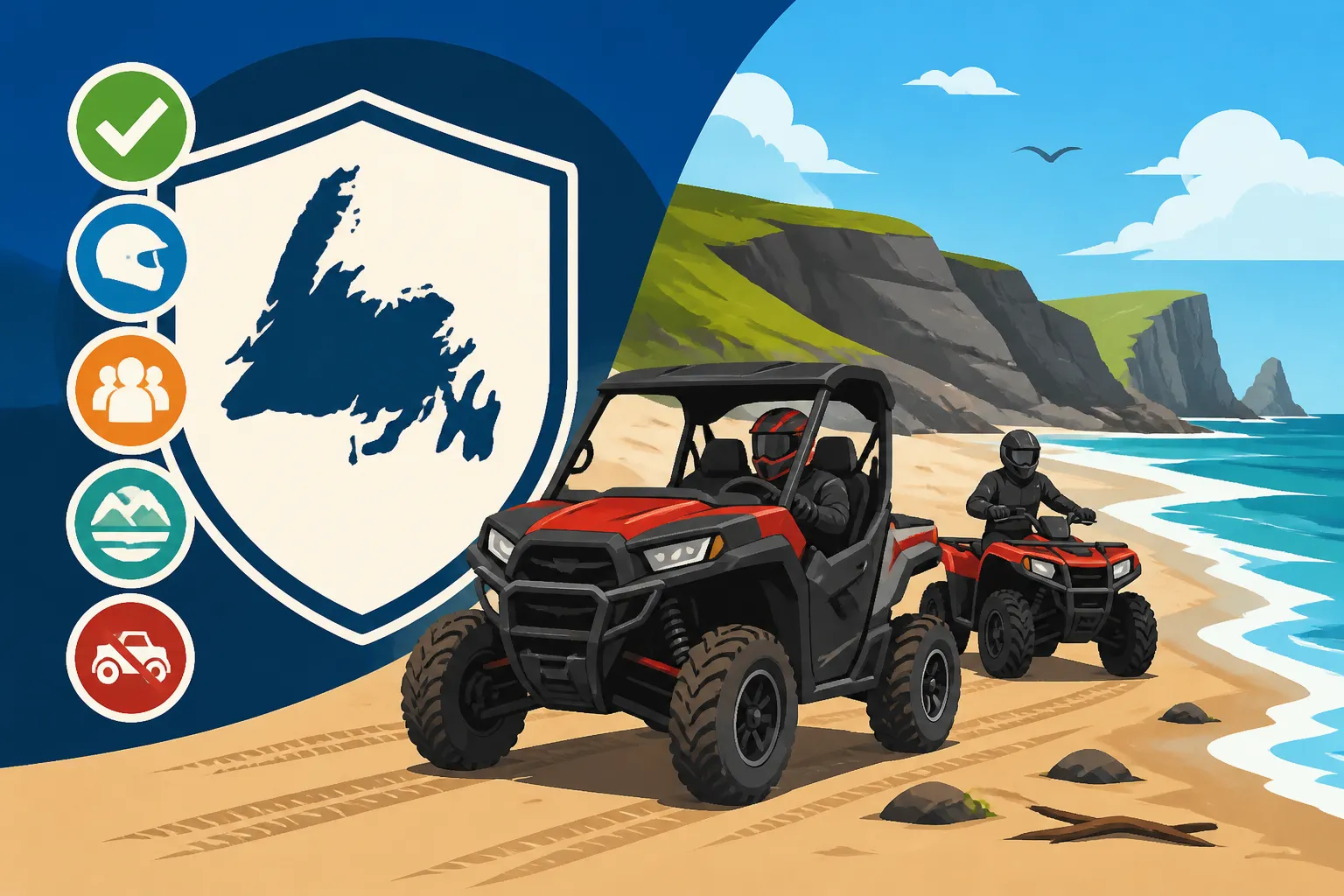
Oh, the dream of cruising along a vast, sandy stretch of beach on your ATV or side-by-side! It’s an image that captures the spirit of freedom and adventure many of us associate with off-road riding. But here in Newfoundland, that romantic vision quickly collides with reality, and unfortunately, the reality is that riding your off-road vehicle on our beautiful beaches is, for the most part, simply not allowed. This guide is here to help you understand why, what the rules are, and where you can legally and responsibly enjoy your machine while still experiencing our stunning coastal landscapes.
The Lure and the Law: Why Beach Riding is Tricky in Newfoundland
There's something undeniably alluring about the idea of riding your ATV or UTV on a wide-open beach. The vast expanse, the roar of the ocean, the feeling of the sea breeze – it’s a powerful draw. Many riders from other regions might be used to having designated beach access, or perhaps they recall a time when rules were a bit looser even here. However, Newfoundland and Labrador takes the protection of its delicate coastal environments very seriously, and for good reason. The [Newfoundland's Off-Road Vehicles Act] and associated regulations are quite clear on this matter, and they largely restrict off-road vehicles from beach areas.
The core problem isn't just about fun; it's about balance. We love our machines and the freedom they offer, but we also cherish the pristine natural beauty of our island. When those two things clash, especially in fragile ecosystems, protecting the environment often takes precedence. It can be a real bummer to realize your dream ride isn't possible, but understanding the "why" behind the rules can make it a little easier to accept, and hopefully, point you toward equally thrilling legal alternatives.
Why the Restrictions Exist: Protecting Our Coastal Ecosystems
Our beaches and coastal areas are much more than just sand and rocks; they are incredibly dynamic and sensitive ecosystems. Think about it: these areas are constantly shaped by the ocean, wind, and tides. They provide critical habitats for countless species, many of which are already facing challenges. When off-road vehicles traverse these areas, even seemingly gently, they can cause significant, long-lasting damage.
For example, our beaches are vital nesting grounds for various shorebirds. A single pass by an ATV could inadvertently crush eggs or disturb nesting parents, leading to abandonment. The delicate dune systems, which are nature's first line of defense against coastal erosion, can be easily damaged by tires. Once the stabilizing vegetation is broken, these dunes can quickly erode, making coastal communities more vulnerable to storms. Marine life, even microscopic organisms living in the sand, can be impacted. It's a complex web, and the vibrations and tracks from a machine can disrupt this balance. The provincial government, in enacting laws like the [Newfoundland's 2022 Statute Replaced an Older Act], aimed to better safeguard these invaluable natural assets for everyone, including future generations of riders and nature lovers.
Distinguishing Between Public and Private Beaches
When we talk about beaches in Newfoundland, most people think of the vast stretches of coastline that are publicly accessible. These are typically Crown land, and as such, they fall directly under provincial regulations concerning off-road vehicle use. Generally, these regulations prohibit ORVs from operating on beaches, sand dunes, and sensitive coastal habitats. It's not just a suggestion; it's the law.
Now, you might be thinking about that small, isolated beach near a family cabin, or a piece of land that a friend owns. While private land offers more leeway, the rules for beach riding still apply unless that specific stretch of shoreline is genuinely private and not part of the publicly owned beach zone or a protected area. Even then, landowners must be incredibly careful about the environmental impact and potential liability. It’s rare to find a private beach where ORV riding is genuinely permitted and advisable without risking environmental damage or facing community backlash. The blanket prohibition is there to protect a shared resource, and even if you own a sliver of coastline, the ecological principles remain the same. Always remember, when it comes to riding on any land, especially coastal areas, "if in doubt, stay out" is a good motto. For broader understanding of where you can ride on public land, refer to [Newfoundland Crown Land Riding Rules].
Where Can You Ride? Understanding Approved Areas and Exemptions
Given the strict rules, it's natural to wonder if there's any scenario where you can legally ride your ATV or UTV near the coast in Newfoundland. The short answer is: you generally cannot ride on the actual beach, but there are sometimes designated access points or trails that run adjacent to coastal areas, offering stunning views without violating environmental protections. These are crucial distinctions to understand to avoid hefty fines or environmental damage.
It's really important to differentiate between "riding on a beach" and "riding a trail that is near the coast." The former is almost universally forbidden, while the latter can be a fantastic way to experience Newfoundland's rugged beauty. The province, through its various acts and regulations, has established approved areas for off-road vehicle use, and these typically focus on traditional trails, old logging roads, and designated access routes. Beaches, with their fragile ecosystems, are specifically excluded from these approved areas.
Designated Coastal Access Points and Managed Trails
While broad recreational riding on beaches is a no-go, there can be very specific, often marked, access points along the coast. These are typically not for joyriding up and down the shoreline. Instead, they might be designated for specific purposes, such as launching small fishing boats, accessing commercial fishing stages, or providing a path for licensed operators in particular industries. These are usually gravel or hardened paths, not the sandy beach itself, and often have signage indicating their limited purpose. It's not a free-for-all for ATVs, but rather a functional access route.
Many managed trail networks, like sections of the [T'Railway's 883 Kilometres in Newfoundland], run surprisingly close to the coastline in certain areas. Imagine cresting a hill on a well-maintained gravel trail and suddenly being presented with a panoramic ocean view – that's the kind of legal coastal experience you can have. These trails are generally well-marked, and sticking to them ensures you're riding responsibly and legally. The key here is managed trails and marked access, not venturing off into fragile areas. Always look for official signage and consult maps of [Newfoundland Approved and Restricted Areas] before you ride.
The Role of Municipal Bylaws and Park Regulations
Beyond provincial legislation, you also need to consider local municipal bylaws and the specific rules of any parks you might encounter. Many towns and communities across Newfoundland have their own bylaws concerning off-road vehicles, and some of these might pertain to specific coastal areas within their jurisdiction. For instance, a town council might have a bylaw restricting ORV access to a popular local swimming beach, even if provincial law already covers it. It's always a good idea to check with the local municipal office if you're planning to ride in a new area.
Similarly, if you're near a national or provincial park, their rules will almost certainly prohibit off-road vehicles from beaches and environmentally sensitive zones. National parks, like Gros Morne, have very stringent regulations; typically, ORVs are only permitted on designated highways within the park, and absolutely not on natural beaches or backcountry trails. This is to protect their unique ecological and geological features. [Newfoundland National Park Vehicle Rules] clarify what's allowed. Always assume stricter rules apply in park settings and check park-specific guidance before you ever put a wheel on their land.
| Riding Location/Activity | General Legality in Newfoundland | Key Considerations |
|---|---|---|
| Sandy Beaches (Recreational) | Generally ILLEGAL | High environmental sensitivity, nesting birds, erosion risk. Strict fines. |
| Sand Dunes | Generally ILLEGAL | Critical for coastal protection, highly fragile. |
| Designated Coastal Access Paths | LIMITED & SPECIFIC USE | Only for permitted access (e.g., boat launch), not recreational riding. Check signage. |
| Managed Trails Near Coast | LEGAL | Stick to marked trails. Offers ocean views without beach riding. |
| Private Land Coastal Access | RARE & RISKY | Requires explicit landowner permission, high environmental risk, potential liability. |
| National/Provincial Park Beaches | ILLEGAL | Parks have strict conservation rules; ORVs often only on highways. |
Practical Implications for Riders: Risks and Alternatives
Ignoring the rules about beach riding in Newfoundland comes with significant risks, both legal and environmental. It’s not just about getting caught; it's about being a responsible rider and respecting the land we all share. The penalties can be steep, and the long-term damage to the environment can be even greater. Instead of risking a fine or harm to nature, let’s focus on the fantastic, legal alternatives available.
For those who are passionate about exploring, there are so many incredible places to ride that don't involve damaging our precious coastlines. Newfoundland's interior offers rugged terrain, vast barrens, and winding trails that provide an exhilarating experience, often with a fraction of the environmental risk when ridden responsibly. We have a huge network of trails, both managed and unmanaged, that are crying out for exploration.
Penalties and Enforcement for Illegal Beach Riding
Make no mistake: enforcement officers in Newfoundland and Labrador take illegal off-road vehicle use seriously, especially in environmentally sensitive areas like beaches. If you're caught riding your ATV or UTV on a prohibited beach, you could be facing substantial fines. These aren't just minor tickets; they can range from several hundred dollars into the thousands, depending on the severity of the offense and whether environmental damage has occurred. You could also be responsible for remediation costs if your actions cause significant harm.
Beyond the monetary penalties, there's also the very real possibility of your machine being seized. Imagine having your prized ATV or side-by-side impounded, requiring you to pay release fees on top of any fines. It’s a costly and inconvenient ordeal that no rider wants to face. Law enforcement, including Royal Newfoundland Constabulary, RCMP, and provincial resource officers, patrol these areas. They are equipped to identify and fine individuals who are violating the [Newfoundland's Off-Road Vehicles Act]. Don't assume that because a beach looks remote, you won't be seen. The consequences outlined in sections like [Newfoundland Fine Ranges by Offence] and [Newfoundland Machine Seizure Rules] are designed to be a significant deterrent.
Exploring Legal Alternatives and Coastal-Adjacent Trails
While actual beach riding is out, there are countless opportunities to enjoy Newfoundland's breathtaking coastal scenery from legal and approved trails. The T'Railway Provincial Park, which stretches for [Newfoundland's 883 Kilometres in Newfoundland], is a prime example. This old railbed often weaves through landscapes that offer incredible ocean vistas, particularly along the South Coast and parts of the Avalon Peninsula. You might not be on the sand, but you'll certainly be near the sea, experiencing its grandeur from a safe and legal vantage point.
Beyond the T'Railway, many communities have established local trail networks that crisscross the barrens and woods, occasionally bringing you to clifftops or lookout points that offer panoramic views of the Atlantic. These trails, unlike beaches, are designed to withstand vehicle traffic and are often maintained by local riding clubs. When exploring these trails, ensure your machine is properly equipped for the rugged, often rocky and sometimes muddy terrain. For those tougher, permitted trails where you might encounter deep ruts or rocky sections, investing in robust underbody protection or a powerful winch from a reputable brand like SuperATV can save your hide, keeping your machine in top shape for many adventures. Always carry a map, tell someone your route, and be prepared for changing weather conditions – it’s Newfoundland, after all! These [Newfoundland ATV Trails: The T'Railway and Beyond] truly offer the spirit of adventure without the legal pitfalls.
Preparing Your Machine for Newfoundland's Diverse Terrain (Excluding Beaches)
Since beach riding is largely off the table, let's talk about preparing your ATV or UTV for the real Newfoundland terrain you're actually allowed to conquer. Our island offers an incredible variety of landscapes, from rocky barrens and dense forests to boggy wetlands and gravel roads. Your machine needs to be up to the task, and having the right gear and maintenance routine is crucial for both safety and enjoyment. This preparation is about making your legal rides as smooth and trouble-free as possible, ensuring your machine can handle the unique challenges our trails present.
Focusing on upgrades and maintenance for legitimate trail riding will not only keep you compliant with the law but also significantly enhance your riding experience. Forget specialized beach tires or salt-resistant coatings for prohibited areas; instead, think about what truly helps you navigate a winding woods road or a challenging section of the T'Railway.
Essential Gear for Newfoundland Trail Riding
Regardless of where you ride, certain gear is non-negotiable for safety. First and foremost, a properly fitting, approved helmet is absolutely mandatory for both operators and passengers under [Newfoundland Helmet Law for Every Rider]. Don't skimp here; your brain is worth protecting. Eye protection, whether goggles or a full face shield, is also essential to guard against dust, mud, branches, and insects.
Beyond personal safety gear, always carry a basic toolkit, a tire repair kit, and a small air pump. A first-aid kit, whistle, flashlight (even for day rides, just in case), and navigation tools (GPS or detailed paper maps, especially in areas with no cell service) are also crucial. Weather can change in an instant here, so dress in layers and always pack rain gear. A tow strap is incredibly useful for helping a buddy (or being helped!). If you're outfitting your machine for the diverse and often rugged terrain you are allowed to explore, considering upgrades like heavy-duty axles or a lift kit can improve clearance over rocks and through deeper ruts. Companies like SuperATV offer a wide range of components designed to enhance your ATV or UTV's performance and durability on legitimate trails. Always confirm that any aftermarket parts comply with provincial regulations for safe operation.
Maintaining Your Machine for Longevity
Regular maintenance is key to enjoying your ATV or UTV for years to come, especially given the challenging conditions some Newfoundland trails can present. After every ride, give your machine a thorough cleaning, paying special attention to mud and debris that can accumulate in critical areas. Check and clean your air filter, inspect your tires for damage and proper pressure, and ensure all your lights are working.
Regularly check your fluid levels – oil, coolant, brake fluid – and top them up or change them according to your manufacturer's schedule. Lubricate moving parts, inspect your brake pads, and check your suspension components for any wear or damage. The varied terrain, from the sometimes-rocky [Newfoundland Trails Across the Barrens] to the deep mud of a bog, puts a lot of stress on your machine's components. Investing in quality parts and performing routine checks, even for aftermarket components say from SuperATV, will ensure your machine runs reliably. A well-maintained machine is a safe machine, and it means less time in the shop and more time out enjoying the legal and fantastic trails Newfoundland has to offer.
Disclaimer
This article is for general informational purposes only and does not constitute professional advice. Laws, prices and regulations vary by location and change over time. Consult a qualified professional for guidance on your specific situation.