Newfoundland Rules for Riding a Shoulder
Navigating the road system with your off-road vehicle (ORV) can feel like walking a tightrope, especially when you're just trying to get to your favourite trail. Many riders, myself included, have stood at the edge of a highway, scratching their heads and wondering exactly what the rules are for using that small strip of gravel or pavement beside the main road. This guide will meticulously break down the specific regulations governing shoulder use in Newfoundland, ensuring you can travel safely and legally to your next adventure.
The Fine Line: Why Newfoundland Has Rules for Riding a Shoulder
It's tempting, isn't it? You've got your quad or side-by-side all loaded up, trail maps in hand, and the trailhead is just a short hop down the road. But that "short hop" often involves some interaction with public roads, and that's where things can get confusing, and frankly, a bit anxiety-inducing. The provincial government in Newfoundland recognized the need for ORV users to access trails and private property that might be adjacent to or crossed by highways. However, they also had to balance this need with the safety of everyone else using those same roads – cars, trucks, cyclists, and pedestrians. This is why the rules for riding a shoulder exist: to create a clear framework that allows for limited, controlled interaction between ORVs and the highway system.
Think about the sheer difference in speed and vehicle dynamics. A highway vehicle might be travelling at 100 km/h, while an ORV, even on the shoulder, is much slower and has different handling characteristics. Without strict guidelines, this could be a recipe for disaster. The rules aren't there to make your life harder; they're genuinely designed to prevent accidents and protect both ORV riders and the general public. It’s about ensuring that when you need to use that shoulder, you’re doing so in a predictable and safe manner, minimizing any potential conflict or hazard.
Ultimately, these regulations are a practical compromise. They acknowledge that ORVs are part of the landscape here, deeply woven into the fabric of our outdoor pursuits, from hunting and fishing to simply enjoying the vast wilderness. But they also underscore that these machines are not cars, and they require a different set of operating principles when in proximity to the high-speed, high-volume traffic of our main roads. Understanding this underlying rationale can help you appreciate why the rules are as specific as they are, rather than seeing them as arbitrary restrictions.
What the Law Says About Riding a Highway Shoulder
Newfoundland's Off-Road Vehicles Act is quite clear when it comes to riding on highway shoulders, and it’s important to absorb every detail to avoid issues. This isn't a "suggested guideline" – these are legally binding requirements that officers enforce diligently. The core principle is that off-road vehicles are not generally permitted on the paved or gravel surface of a highway itself, except for specific, very limited circumstances like crossing. The shoulder, however, offers a very narrow window of opportunity.
The Strict One-Kilometre Limit
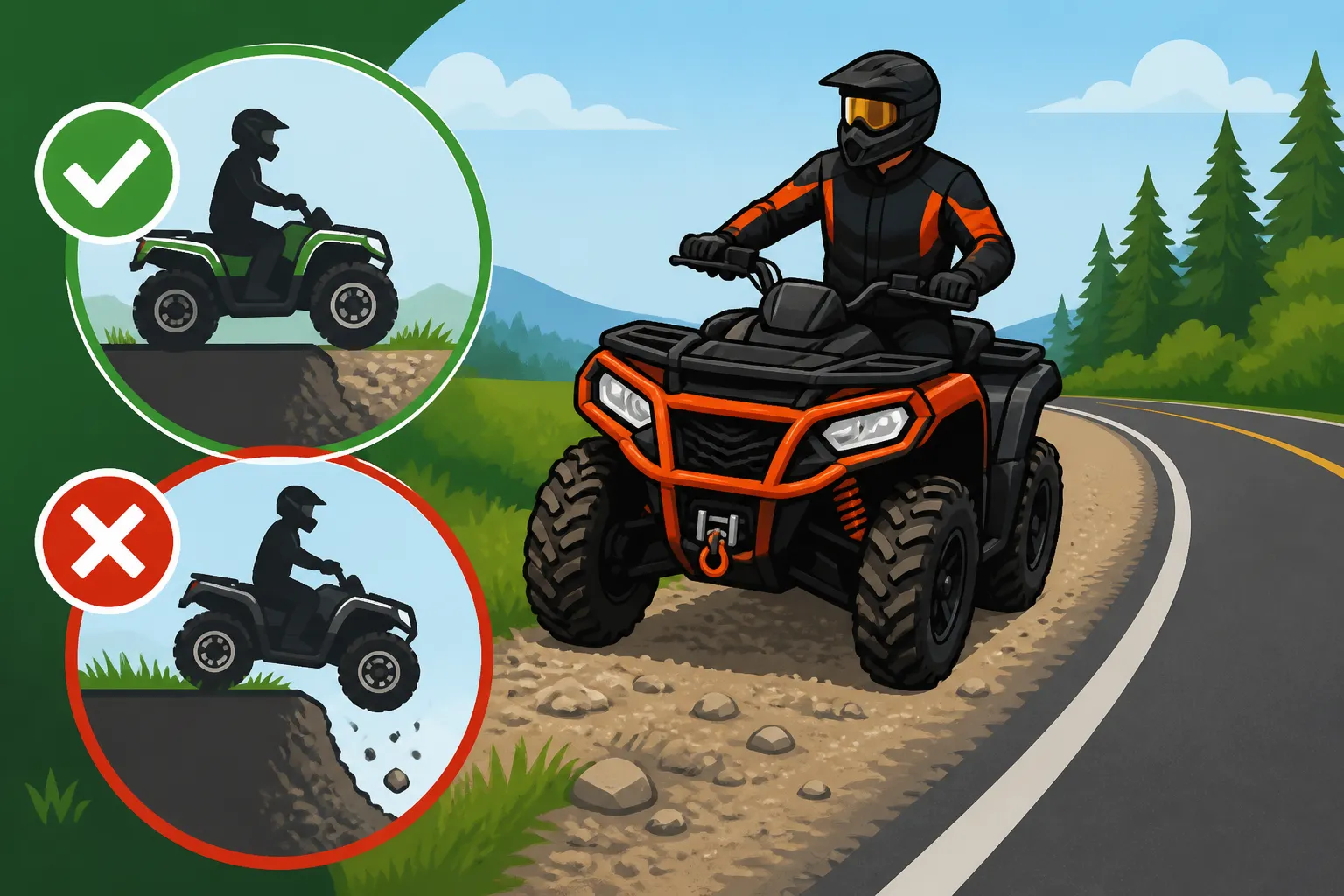
One of the most crucial rules you need to engrave into your memory is the distance limit: you can only ride an ORV on a highway shoulder for a maximum of one kilometre. That's it. This isn't a suggestion; it's a hard limit. The purpose of this rule is explicitly to allow you to get from one section of a trail to another, or to access a property immediately adjacent to the highway, without fully entering the high-speed traffic lanes. It's not a shortcut to your fishing spot that's three kilometres down the road.
Imagine you're trying to reach an ORV trail on the other side of a highway overpass, but there's no direct crossing point. The law allows you to ride the shoulder for up to one kilometre to find a safe access point or a legal crossing. But if your destination or the next trail section is 1.5 kilometres away, you simply cannot use the shoulder for that entire distance. You would need to find an alternative route, perhaps using a permitted [Newfoundland Rules for Riding a Cabin Road] or a designated crossing. This specific limit highlights that shoulder riding is intended as a brief, transitional measure, not a sustained mode of travel.
The Mandatory 20 km/h Speed Limit
Beyond the distance, your speed on the shoulder is equally critical. The law states that when operating an ORV on a highway shoulder, you absolutely cannot exceed 20 kilometres per hour. This is a very low speed, deliberately set to maximize safety for everyone involved. It gives you, the rider, ample time to react to unexpected obstacles, changing road conditions, or other vehicles, and it gives highway traffic plenty of time to see and anticipate your movements.
I've seen riders try to push this limit, thinking that if they're "just a little bit over," it won't matter. Believe me, it does. An officer clocking you at 30 km/h on the shoulder is a clear violation. This reduced speed helps minimize the impact of any potential collision and makes your ORV less of an unexpected hazard to fast-moving highway vehicles. It also underscores that the shoulder is not for making quick progress; it's for cautious, temporary transit. Your machine, whether it's a nimble sport quad or a robust utility side-by-side fitted with a heavy-duty SuperATV winch and cargo box, must maintain this crawling pace when on the shoulder.
Purpose of Shoulder Use: Connecting the Dots
It’s not enough to simply adhere to the distance and speed limits; the reason you’re on the shoulder matters too. The law specifies that you can only operate an ORV on a highway shoulder to gain access to an approved ORV trail, private property, or to bridge two sections of a trail that are separated by a highway. You cannot use the shoulder for general travel, recreation, or simply to get somewhere faster than going through the woods.
This means if you’re riding down the shoulder just because it’s a smoother surface than the nearby Crown land, or because you want to show off your new machine to passersby, you are in violation. An officer can, and likely will, ask you about your destination and why you are using the shoulder. If your explanation doesn't align with the legal purposes, you could face penalties. It all boils down to the spirit of the law: temporary, necessary access, not convenient bypass. When planning your ride, always ask yourself if using the shoulder truly aligns with these narrow, defined purposes.
| Rule Category | Specific Requirement | What it Means for Riders |
|---|---|---|
| Distance | Max. 1 Kilometre | Only short segments, not long trips. |
| Speed | Max. 20 km/h | Very slow, cautious speed. |
| Purpose | Access Trail/Property | Must have a specific, legal reason. |
| Visibility | Yield to Traffic | Always give way to highway vehicles. |
| Equipment | Essential safety gear | Lights, mirrors, etc. are critical. |
Practicalities of Riding the Shoulder Safely
Understanding the rules on paper is one thing, but applying them safely in the real world is another. The shoulder of a highway can be a hazardous place, and even when you’re strictly adhering to the law, you need to ride defensively and be hyper-aware of your surroundings. Safety is paramount, and there are several practical steps you can take to minimize risks when you find yourself needing to use this temporary thoroughfare.
Enhancing Visibility
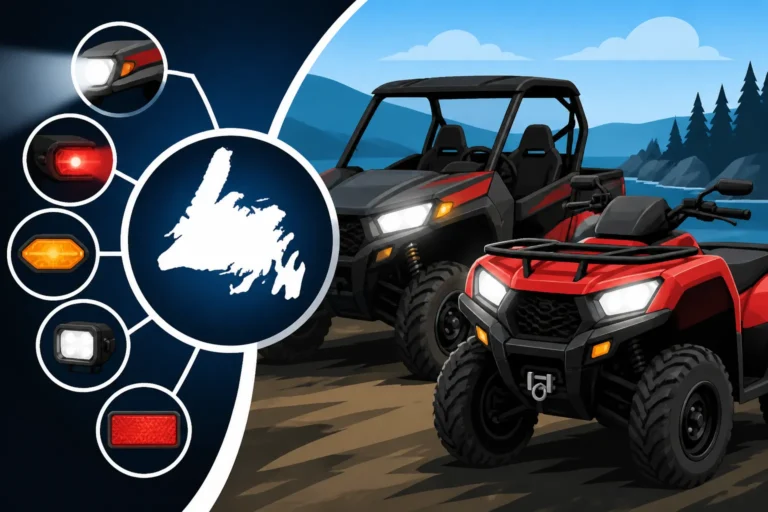
Being seen is half the battle when you're moving slowly near high-speed traffic. Your ORV, whether it’s a quad or a side-by-side, is smaller and lower to the ground than most highway vehicles, making it harder to spot, especially in adverse weather conditions or at dusk. Ensure your headlights and taillights are on, even during the day, to maximize your visibility. Bright, reflective clothing can also make a significant difference. Many riders also install additional reflective tape on their machines or wear reflective vests, especially if their typical riding gear is dark.
Consider upgrading your machine’s lighting. While stock lights are usually sufficient for trail riding, extra auxiliary lights can make you more noticeable on a shoulder. Forward-facing white lights and rear-facing red lights are not just about seeing; they're about being seen. Ensure your machine is in top condition; a broken headlight or tail light can not only be a safety hazard but also a reason for an officer to stop you. [Newfoundland Equipment Requirements] dictate certain lighting standards, so always be sure you meet or exceed them, especially for any on-road or shoulder operation.
Some riders even opt for aftermarket rearview mirrors – perhaps something robust from a brand like SuperATV that can withstand trail abuse but also provides a clear view of traffic approaching from behind. Having a good set of mirrors can give you those precious extra seconds to react to a situation, like a large truck veering slightly into the shoulder.
Yielding to Highway Traffic
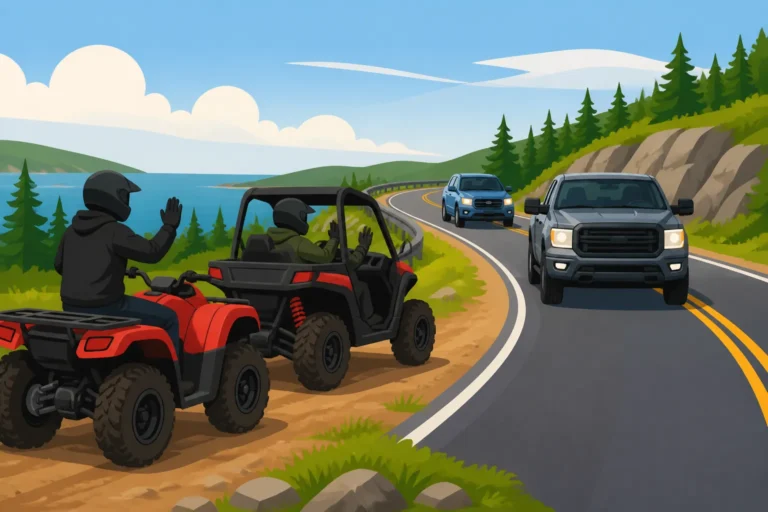
This might sound obvious, but it bears repeating: when you're on the highway shoulder, you are the secondary user. Highway traffic always has the right of way. This means you must yield to any vehicle already on the highway, whether it's approaching from behind or pulling out from an intersection. Never assume that a driver has seen you or will adjust their speed for you.
When approaching an intersection or a merge point, be extra cautious. Look, look again, and then look one more time. Make eye contact with drivers if possible. The sheer speed differential between your 20 km/h and their 80-100 km/h means their closing speed is incredibly fast. You need to be prepared to stop or pull further off the shoulder if necessary. This isn’t just about avoiding a collision; it’s about maintaining a smooth flow of traffic and not creating a hazard for others. Remember, an officer observing you impede highway traffic could deem your shoulder use unsafe, even if you're within the distance and speed limits.
What to Do If Stopped by an Officer
It's an uncomfortable scenario, but one you should be prepared for. If a peace officer pulls you over while you're riding on the shoulder, remain calm and cooperate fully. Turn off your engine, remove your helmet, and keep your hands visible. The officer will likely ask for your identification, proof of ownership, and registration. [What an Officer Can Ask You to Produce] on the spot. Make sure you have all your necessary paperwork readily accessible.
Be polite and clearly explain why you are using the shoulder – reiterating that you are within the 1-kilometre limit, adhering to the 20 km/h speed, and using it to access an approved trail or private property. If you have a physical map or GPS showing your intended route and the trail access point, that can be helpful. Remember, officers are there to enforce the law and ensure public safety. A calm, respectful approach goes a long way. Trying to argue or being evasive will only make the situation worse. If you are found to be in violation, understanding the [Newfoundland Penalties for Riding Illegally] can help you grasp the seriousness of the situation.
Consequences of Non-Compliance
Ignoring the rules for riding a highway shoulder in Newfoundland isn't just a minor inconvenience; it carries real consequences that can range from a hefty fine to the impoundment of your valuable machine. It's crucial to understand these repercussions, not as scare tactics, but as a clear indication of how seriously the provincial government takes these safety regulations.
Fines and Penalties
The most immediate consequence of violating shoulder riding rules is a fine. These aren't small, parking-ticket-level fines either. Depending on the specific infraction – whether it's exceeding the speed limit, going beyond the 1-kilometre distance, or using the shoulder for an unauthorized purpose – you could be looking at hundreds of dollars in penalties. These fines are designed to be a significant deterrent, reflecting the potential danger posed by an illegally operated ORV on a highway shoulder.
For example, simply exceeding the 20 km/h limit, even by a small margin, could result in a significant ticket. Repeated offences can lead to even higher fines and more severe penalties. These financial hits can quickly sour any recreational outing and serve as a stark reminder that adhering to the letter of the law is not optional. It’s not just about the monetary cost either; a citation on your record can lead to increased insurance premiums, especially if you have a history of moving violations.
Machine Seizure and Impoundment
Perhaps one of the most frightening consequences for any ORV owner is the potential for their machine to be seized and impounded. This isn't just for egregious violations like impaired operation; it can also occur if an officer determines you are operating your ORV in a dangerous manner, or if you repeatedly disregard the regulations. If your machine is seized, you're not just facing the fine; you're also on the hook for towing charges, daily storage fees, and an administrative release fee before you can even hope to get your quad or side-by-side back.
Imagine being halfway through your trip, only to have your machine loaded onto a tow truck. Not only is your ride over, but you’re left stranded and facing a substantial bill to recover your ORV. These costs can quickly add up, often exceeding the initial fine itself. It's a stark reminder that the province is serious about keeping ORVs off the main flow of traffic unless strictly necessary and done according to the rules. The hassle, expense, and interruption to your plans far outweigh the minor inconvenience of finding a legal route or travelling at the prescribed speed.
Increased Risk to Yourself and Others
Beyond the legal and financial penalties, the most severe consequence of non-compliance is the increased risk of an accident. Operating an ORV on a highway shoulder, especially at speeds above the limit or for extended distances, drastically increases the chance of a collision with highway traffic, other ORVs, or even pedestrians. The physics simply aren't in your favour when you're a small, relatively slow-moving machine next to vehicles travelling at highway speeds.
A collision, even a minor one, can result in serious injuries or worse, not just for you but for anyone else involved. It can also cause significant damage to your machine and other vehicles. This is why adherence to the [Newfoundland Rules for Crossing a Highway] and [Newfoundland's 20 km/h Shoulder Limit] is so important. The rules are designed to create a buffer zone, a predictable pattern of behaviour that reduces the element of surprise and gives everyone a fighting chance to react safely. Your responsibility as a rider extends beyond just yourself; it's about the safety of the entire community, both on and off the trails.
Disclaimer
This article is for general informational purposes only and does not constitute professional advice. Laws, prices and regulations vary by location and change over time. Consult a qualified professional for guidance on your specific situation.