Two Business Days to Show Insurance
There's nothing quite like the feeling of hitting the Newfoundland trails on your ATV or side-by-side, the wind in your face, the scent of the barrens in the air. But that freedom comes with responsibilities, and one of the most critical—and often misunderstood—is carrying proper insurance. If you're ever stopped by law enforcement, knowing exactly what to do and how much time you have to produce proof can save you a significant headache and hefty fines. This guide will walk you through the essential insurance requirements for off-road vehicles (ORVs) in Newfoundland, specifically detailing the "two business days" rule for presenting your documentation.
Understanding Newfoundland's Insurance Mandate for ORVs
Riding an ATV or UTV in Newfoundland and Labrador isn't just about getting out there; it's about doing so responsibly and legally. Just like with a car, operating an off-road vehicle carries inherent risks, and provincial legislation is in place to protect riders, passengers, and the public. Insurance is a cornerstone of this framework, ensuring that if something goes wrong, there's a safety net.
Why Insurance Matters in Newfoundland
Imagine you're enjoying a beautiful fall day on a remote trail and, through no fault of your own, another rider collides with you, causing significant damage to your machine and perhaps even injury. Or, consider a scenario where you accidentally damage private property while trying to navigate a challenging section of a woods road. Without proper insurance, the financial burden of repairs, medical expenses, or legal fees could be catastrophic. Newfoundland's Off-Road Vehicles Act doesn't just recommend insurance; it mandates it to ensure that all registered ORVs have a basic level of liability coverage. This isn't just a bureaucratic hurdle; it's a vital protection for everyone involved in the ORV community.
Beyond the legal requirement, having insurance provides immense peace of mind. Knowing that you're covered against unforeseen circumstances allows you to focus on the joy of the ride rather than worrying about potential financial ruin. Whether you're a seasoned rider or just getting started, understanding why this coverage is so crucial helps reinforce safe and responsible riding practices across the province.
Who Needs to Be Insured
Essentially, any off-road vehicle that is registered and operated in Newfoundland and Labrador must carry valid liability insurance. This includes your trusty ATV, your family's side-by-side, your snowmobile, and even specialized machines like amphibious vehicles. If it's on the provincial registry, it needs insurance. This requirement applies whether you're riding on public trails, crossing a highway, or even just traversing a cabin road that's accessible to others. There's no exemption for riding "just on my land" if that land isn't truly isolated from public access or if the machine ever leaves that parcel.
Furthermore, if you're a new resident to Newfoundland bringing your machine from another province, you'll need to get it registered and insured within [Ninety Days After You Arrive]. Visitors from other provinces are typically covered by their home province's insurance for up to 30 days, but beyond that, local rules apply. [Newfoundland Visitors Staying Over 30 Days] will need to ensure they meet the provincial requirements, including insurance. For those using a rental machine, the rental operator is responsible for providing the required insurance, but it's always wise for the renter to confirm the coverage details before signing any waivers.
Types of Coverage: What to Look For
While the minimum requirement is typically third-party liability, responsible riders often consider additional coverage options. Third-party liability insurance covers damages or injuries you might cause to another person or their property while operating your ORV. This is the absolute bare minimum, and in Newfoundland, the floor is set at $200,000. This is to ensure that in the event of a serious accident, there's at least some financial protection for the injured party.
However, many riders choose to go beyond this basic coverage. Collision insurance can protect your own machine against damage from an accident, regardless of who is at fault. Comprehensive insurance offers protection against non-collision incidents like theft, vandalism, fire, or even hitting an animal. Given the rugged terrains and often remote locations where ORVs are used, these additional coverages can be incredibly valuable. Some policies also offer coverage for specialized equipment you might have added to your machine, such as a winch, upgraded suspension, or lighting from a brand like SuperATV, which can be an important consideration for many riders. When speaking with an insurance provider, be clear about how and where you use your ORV to ensure you get the most appropriate coverage for your specific needs and riding style.
What Happens When You're Stopped: The "Two Business Days" Rule in Action
It's a scenario no rider wants to face: seeing those flashing lights behind you while you're enjoying a ride. While the initial interaction might be stressful, knowing your rights and obligations, especially regarding insurance, can make all the difference. Newfoundland's Off-Road Vehicles Act includes a specific provision for presenting proof of insurance, offering a small window if you don't have it on your person.
The Initial Encounter with Law Enforcement
When a peace officer stops you while you're operating your ORV, their primary concern is ensuring everyone's safety and compliance with the law. They'll typically ask for your driver's licence, proof of your machine's registration, and proof of valid insurance. It's a common practice for riders to keep these documents in a waterproof bag on their person or secured to their machine. Being polite and cooperative goes a long way. This initial stop is about gathering information and ensuring you're legally permitted to operate the ORV.
The officer might also be checking for other compliance issues, such as proper helmet use [Newfoundland Helmet Law for Every Rider], appropriate machine lighting [Newfoundland Lighting Requirements on a Machine], or adherence to age restrictions [Newfoundland ATV Age Requirements]. Even if you feel you're doing everything right, it's important to remember that the officer has the authority to request these documents. If you cannot produce proof of insurance at that exact moment, don't panic. This is where the "two business days" rule comes into play, offering a critical grace period.
Producing Proof of Insurance After a Roadside Stop
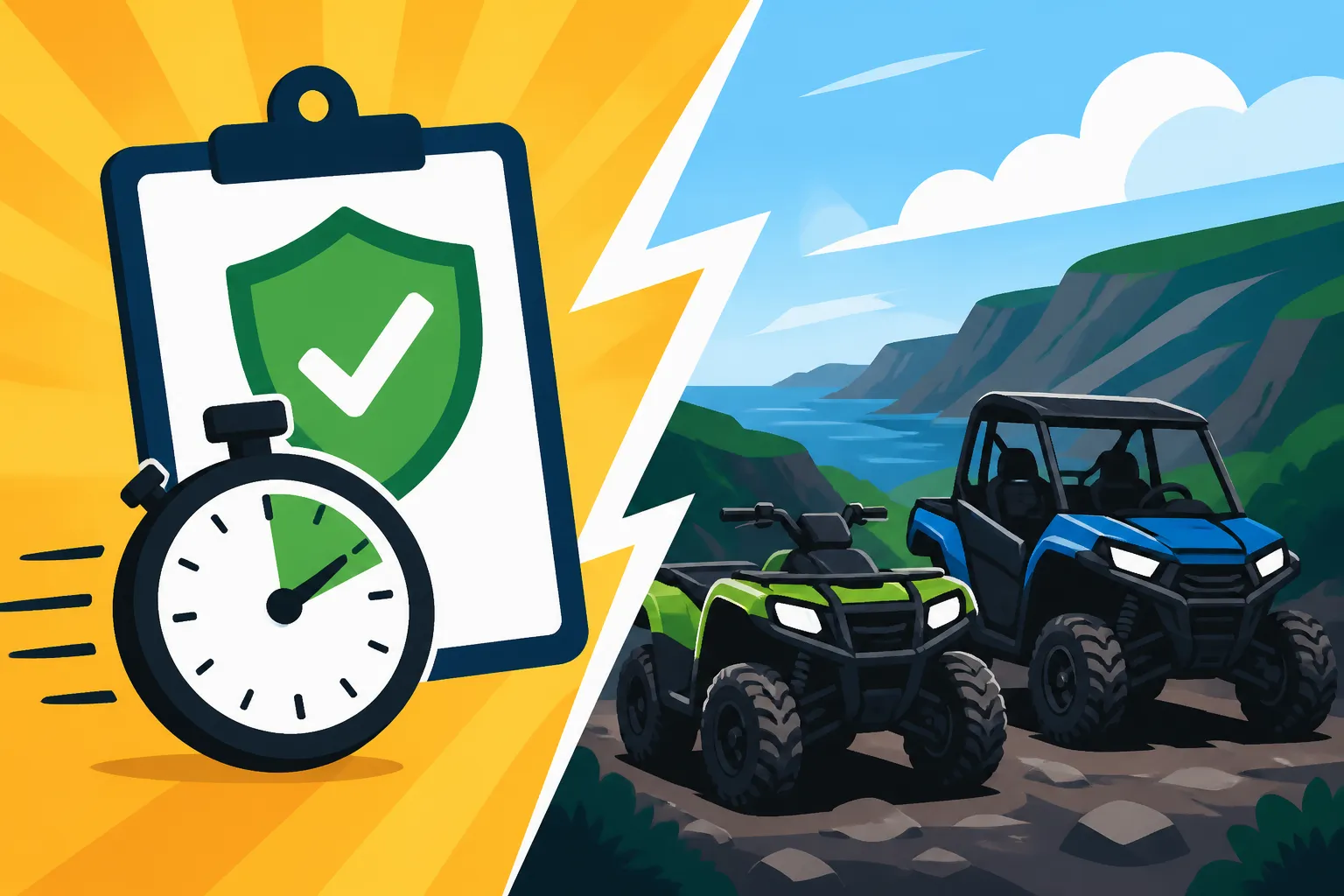
If you're stopped and can't immediately present your insurance card or documentation, the officer has the discretion to issue you a notice requiring you to produce that proof within a specific timeframe. This is what's known as [Two Business Days to Show Insurance]. This means you have two full business days (not including weekends or holidays) to physically present your valid insurance documentation at a designated police station or government office. The officer will typically provide you with instructions on where and when to do this.
It's absolutely crucial to follow these instructions to the letter. Missing this deadline or failing to produce adequate proof can lead to significantly more severe penalties than the initial stop might have warranted. This grace period acknowledges that sometimes documents get forgotten, left at home, or are simply not practical to carry on a rugged trail. However, it's not an excuse to ride uninsured; it's a chance to prove you were insured at the time of the stop. Make sure the proof you bring clearly shows the policy was active and covered your specific ORV on the date you were stopped.
Understanding the "Two Business Days" Window
The "two business days" window is a specific legal allowance designed to be reasonable for riders. Let's say you're stopped on a Wednesday afternoon. You would then have until the end of business on Friday to present your proof. If you're stopped on a Friday, you'd likely have until the end of business on Tuesday of the following week (assuming Monday is not a holiday). It's always best to clarify the exact deadline with the officer at the time of the stop. Mark it down, set a reminder, and prioritize getting to the specified location with your documents.
This period is not meant for you to go out and buy insurance after being stopped. The insurance policy must have been valid and active at the time of the stop. Presenting a policy purchased after the fact will not satisfy the requirement and could lead to charges for operating an uninsured vehicle. Think of it as a small administrative window to rectify a paperwork oversight, not a loophole for riding illegally. Being proactive and having your insurance readily accessible, even digitally on your phone (if the officer accepts it, though physical proof is always best), can help you avoid needing to use this window at all.
Newfoundland's Minimum Insurance Requirements and What They Cover
When it comes to insuring your off-road vehicle in Newfoundland, there's a specific baseline you need to meet. This isn't just a suggestion; it's a legal requirement designed to offer a basic level of financial protection to anyone who might be negatively affected by an ORV incident.
The $200,000 Liability Floor
In Newfoundland and Labrador, the mandatory minimum for third-party liability insurance on an off-road vehicle is $200,000. This figure is critical to remember as it forms the foundation of your legal coverage. [Why Newfoundland Sets the Insurance Floor at $200,000] is rooted in the potential costs associated with serious accidents. If you are found at fault in an incident that causes injury to another person or damage to their property, this $200,000 coverage is intended to help cover those expenses. This can include medical bills, rehabilitation costs, lost wages for the injured party, and repair or replacement costs for damaged property.
It's important to understand that this minimum is often exactly that: a minimum. In today's world, where medical costs and property values can be incredibly high, a $200,000 liability limit might not be enough to cover all expenses in a severe accident. Many insurance professionals recommend considering higher liability limits, often $1 million or even $2 million, to ensure greater protection against catastrophic financial loss. While the legal requirement is $200,000, being adequately insured for your personal risk tolerance and asset protection is a different conversation.
Beyond Basic Liability: What Else to Consider
While liability insurance covers damages you cause to others, it doesn't do much for your own machine or your own injuries. This is why many riders explore additional coverage options that go beyond the basic legal requirement.
- Collision Coverage: This pays for damage to your own ORV resulting from a collision with another vehicle or object. Given the rugged nature of Newfoundland trails, hitting a rock, a tree, or even having a rollover is a real possibility.
- Comprehensive Coverage: This protects your ORV from non-collision incidents like theft, vandalism, fire, or damage caused by falling objects or encounters with wildlife. Imagine a moose darting out onto the trail!
- Specified Perils: A more limited version of comprehensive, covering only specific events listed in the policy (e.g., fire, theft).
- Accident Benefits: This coverage can help with your own medical expenses, rehabilitation, and loss of income if you are injured in an ORV accident, regardless of who was at fault.
- Uninsured/Underinsured Motorist Coverage: This protects you if you're involved in an accident with another ORV operator who doesn't have insurance or whose insurance isn't enough to cover your damages.
When purchasing a new machine, especially a high-value side-by-side that might feature accessories from SuperATV, it makes sense to protect that investment. Discuss these options with your insurance broker to build a policy that truly reflects your needs and the value of your machine.
How Insurance Protects You and Others
Ultimately, ORV insurance serves as a critical financial safeguard, not just for you but for everyone around you. From a community perspective, it ensures that victims of accidents aren't left with unmanageable bills, which could otherwise burden public services or lead to protracted legal disputes. For you, the rider, it provides a buffer against the unforeseen. A moment of inattention, a slippery patch of bog, or an unexpected mechanical failure can all lead to an accident. Without insurance, these incidents can escalate from an unfortunate event into a life-altering financial disaster.
Consider a situation where you're riding a scenic coastal trail and inadvertently lose control, damaging a section of private property belonging to a cabin owner. With proper liability insurance, the costs associated with repairing that damage would be handled by your insurer. Or, if a passenger on your machine is injured due to a sudden jolt, your policy's accident benefits might assist with their medical care. This protective layer allows riders to enjoy the vast and beautiful Newfoundland landscape with the confidence that they are prepared for the unexpected, fulfilling their legal obligations while also being a responsible member of the riding community.
| Document Category | Item | Required on Person? | Required within 2 Business Days? | Why It's Needed |
|---|---|---|---|---|
| Proof of Identity | Driver's Licence (for highway use) | Yes | N/A (must be valid) | Establishes identity and driving privileges for road sections. |
| Machine Ownership | ORV Registration Certificate | Recommended | Yes | Proves legal ownership and registration status. |
| Insurance | Proof of Valid ORV Insurance | Recommended | Yes | Confirms liability coverage as required by law. |
| Rider Eligibility | ORV Safety Training Certificate | Recommended | Yes | Mandatory for certain age groups/first-time registrants. |
| Special Permits | Park or Land Use Permits (if applicable) | Yes | N/A (must be present) | Required for riding in specific restricted areas. |
Beyond the Policy: Essential Documents to Carry While Riding
While having an active insurance policy is paramount, simply having it isn't enough. You also need to be able to prove it, along with your legal right to operate the machine. Peace officers can request a variety of documents, and being prepared means carrying more than just your insurance card. It’s about being ready for any roadside check, whether you’re on the T'Railway or a remote woods road.
Registration and Ownership Papers
Your ORV's registration certificate is like its birth certificate and current ID combined. It proves your machine is legally registered with the provincial Motor Registration Division and identifies you as the owner. [Newfoundland Registration Paperwork Explained] clarifies that this document is essential for any ORV on public land or crossing public roads. While the "two business days" rule can sometimes apply to registration if forgotten, it's far better to have it with you. An officer needs to confirm that the machine you are operating is legally allowed on the trails and that you are its rightful custodian.
Think of scenarios: you're stopped, and the officer wants to verify the VIN (Vehicle Identification Number) against current records. Having your registration handy allows for a quick and smooth check. Without it, the process can become much more prolonged, potentially leading to delays or even a temporary impoundment while ownership is verified. This document also contains vital information about your machine, such as its class (ATV, side-by-side, snowmobile), which might be relevant to specific trail rules or restrictions.
Your Driver's Licence and Training Certificate
If you're operating an ORV on a highway, even for a brief crossing or a short stint on the shoulder, a valid driver's licence is mandatory. [Which Driver's Licence You Need on a Highway] confirms that the class of licence you hold must be appropriate for operating a motor vehicle. Even if you're not on a highway, an officer can still request your identification to ensure you meet age requirements for operating an ORV. For example, [Newfoundland Rules for a 12-Year-Old Rider] involve specific supervision requirements, and an officer needs to verify the operator's age.
Furthermore, Newfoundland has mandatory ORV safety training requirements. [Newfoundland Safety Training Is Mandatory] for new registrants and for riders under the age of 16. If these requirements apply to you, you must be able to produce proof of your completed training certificate. This proves you've undergone the necessary education to operate an ORV safely and responsibly. Failing to provide a valid licence (when required) or a training certificate can lead to fines and other penalties, underscoring the importance of having these documents readily accessible whenever you ride.
Proof of Address and Identification
While not explicitly listed as a "must-carry" document like insurance or registration, a peace officer may sometimes ask for additional identification to verify your address, especially if there are any discrepancies or if they need to issue official documentation like a ticket or a notice to produce. Having an additional piece of photo ID that includes your current address, such as a provincial ID card or even a piece of mail, can help expedite this process.
In situations where a rider is a new resident or has recently moved, ensuring your registration and licence reflect your current address is crucial. [Newfoundland Registration Address Change] outlines the process for updating your details with Motor Registration. Keeping all your documents up-to-date and carrying them in a robust, waterproof holder (perhaps one attached to a sturdy storage box from SuperATV) will help ensure that any interaction with law enforcement is as brief and uneventful as possible, allowing you to get back to enjoying your ride quickly.
Consequences of Non-Compliance: Fines, Seizure, and More
Ignoring the legal requirements for operating an ORV in Newfoundland, particularly those concerning insurance, carries serious ramifications. The provincial government takes these regulations seriously, and penalties are designed to deter non-compliance and ensure public safety and financial accountability.
Penalties for Lacking Insurance
Operating an ORV without the mandatory liability insurance is a significant offence under the Off-Road Vehicles Act. If you're caught riding without valid insurance, or if you fail to produce proof within the [Two Business Days to Show Insurance] window after being issued a notice, you could face substantial fines. These aren't minor infractions; they can range from hundreds to thousands of dollars for a first offense, with repeat offenses drawing even higher penalties. [Newfoundland Fine Ranges by Offence] clearly outlines the tiered system of fines.
Beyond the immediate financial hit, there can be other consequences. Operating an uninsured vehicle might impact your automobile insurance premiums, as insurance companies often view such an offense as a red flag for higher risk. Furthermore, if you're involved in an accident while uninsured and found at fault, you would be personally liable for all damages and injuries. This means paying out-of-pocket for medical bills, property repairs, and potential legal settlements, which could easily lead to bankruptcy.
Machine Seizure and Early Release Fees
In addition to fines, a peace officer has the authority to seize your off-road vehicle if you are found to be operating it without valid insurance. This is not a temporary inconvenience; it means your ATV or side-by-side could be impounded, and you'll have to pay to get it back. [Newfoundland Machine Seizure Rules] are explicit: serious violations, including lacking insurance, can lead to your machine being towed away to an impound lot.
Retrieving a seized machine involves more than just paying your fine. You'll also be responsible for towing fees, storage fees for every day the machine is impounded, and an "early release fee" if you want it back before the full impoundment period is over. [Newfoundland Early Release Fees] are in place to cover the administrative costs associated with impounding and releasing vehicles. These costs can quickly add up, easily surpassing the initial fine amount, making the financial burden even heavier. The entire process of getting your machine back can be frustrating, time-consuming, and a significant drain on your wallet.
Impact on Your Driving Record and Future Insurance
A conviction for operating an uninsured ORV can have lasting consequences that extend beyond the immediate fines and impoundment. Such an offense can be recorded on your driving abstract, similar to violations in a regular vehicle. This can negatively impact your ability to get or maintain insurance for all your vehicles—not just ORVs—in the future. Insurance companies assess risk based on your driving history, and a record of operating uninsured vehicles signals a higher risk, potentially leading to higher premiums or even denial of coverage.
In some cases, especially for repeat offenses, there might even be a suspension of your driving privileges. This means not only would you be unable to operate your ORV, but you might also lose the ability to drive your car or truck on public roads. The long-term financial and practical implications of such a conviction far outweigh the cost of an insurance policy. It underscores why understanding [Newfoundland Insurance Requirements for Riders] and adhering to them is not just a matter of avoiding a ticket, but of protecting your overall driving record and financial stability.
Navigating the Roads: Where and How Insurance Applies
The beautiful thing about Newfoundland's ORV landscape is its diversity, from dense forests to open barrens, and occasionally, the necessity of using public roads to connect these areas. Understanding how your insurance coverage applies across these varied terrains is crucial for compliance and safety.
Highway Crossings and Shoulder Riding
The provincial Off-Road Vehicles Act allows for specific, limited use of highways and highway shoulders, but with very strict rules. For instance, [Crossing a Newfoundland Highway Needs 150 Metres of Visibility], and [Riding the Shoulder 1 Kilometre to Reach a Trail] is permitted under certain conditions, including a speed limit of [20 km/h on a Shoulder]. When you are operating your ORV in these regulated highway zones, your provincial ORV insurance is absolutely critical. It acts as your primary liability coverage, protecting you in the event of an accident involving other highway users.
It's a common misconception that because you're only on the road for a short distance, insurance isn't as important. This couldn't be further from the truth. An accident on a public highway, even a minor one, can lead to significant damages and injuries, and the presence of other, much heavier highway vehicles increases the risk. Your ORV insurance ensures that you meet the legal requirements for these movements and provides that essential financial safety net. Always remember to [Yielding Every Single Time] to highway traffic and to have your documents readily available, especially when interacting with the formal road network.
Cabin Roads, Private Land, and the T'Railway
Beyond the strict highway rules, much of Newfoundland's ORV riding happens on cabin roads, private land (with permission), and designated trails like the T'Railway. While these areas might feel less formal, your insurance coverage is still paramount. [Newfoundland Rules for Riding a Cabin Road] often intersect with private property, and accidental damage is always a possibility. Even if you're riding on your own land or land owned by immediate family, if that land is accessible to others (e.g., via a shared access road), the expectation for insurance typically still holds.
For designated trails such as [The T'Railway's 883 Kilometres in Newfoundland], which is shared with hikers, cyclists, and often snowmobilers, liability insurance is essential. A collision with another trail user, or causing damage to trail infrastructure, would fall under your liability coverage. Some trail operators, like those managing specific groomed sections, might even require proof of insurance for [Newfoundland Managed Trail Stickers]. Even if it's "just the woods," the potential for accidents and the need for financial protection remains constant.
Insurance for Rental Machines and Visitors
For those looking to experience Newfoundland's trails via a rental ORV, the responsibility for insurance primarily falls to the rental operator. [Newfoundland Rental Machines and Insurance] typically means the rental company will provide the mandatory liability coverage. However, it's always smart for renters to ask about the specifics of this coverage, including the liability limits and whether any deductibles apply to collision or comprehensive damage to the rental machine itself. Renters might also have the option to purchase additional coverage from the rental company for greater peace of mind.
Visitors to Newfoundland from other provinces are generally covered by their home province's ORV insurance for a period of up to [Newfoundland's 30-Day Visitor Exemption]. This allows riders from Nova Scotia or New Brunswick, for example, to explore Newfoundland without immediately needing local insurance. However, for longer stays, or if you become a [Newfoundland's 90-Day New Resident Rule], you will need to register your machine in Newfoundland and obtain local insurance that meets provincial standards. Regardless of whether you're a local, a renter, or a visitor, ensuring you have proper, valid insurance is key to enjoying the incredible riding opportunities Newfoundland and Labrador has to offer without unnecessary risk.
Disclaimer
This article is for general informational purposes only and does not constitute professional advice. Laws, prices and regulations vary by location and change over time. Consult a qualified professional for guidance on your specific situation.