Newfoundland Seat Belt Requirements
It's incredibly frustrating when you're trying to do the right thing, trying to stay safe out on the trails or just crossing a road, and the rules around something as seemingly simple as a seat belt feel like they're written in riddles. You’ve got a side-by-side that feels a lot like a small car, so naturally, you’d think seat belts are a no-brainer, but then you hear whispers of different rules for different machines. This guide is going to clear up all that confusion, detailing exactly what Newfoundland's Off-Road Vehicles Act says about seat belt requirements for ATVs and UTVs, and what that means for you and your passengers when you're out exploring our beautiful province.
Understanding the Law: Newfoundland's Off-Road Vehicles Act
Navigating the legal landscape for off-road vehicles in Newfoundland and Labrador can sometimes feel like traversing a particularly muddy bog – you know there's solid ground somewhere, but it's not always obvious where to step. When it comes to seat belts, the rules are pretty clear, but they're specific to the type of off-road vehicle you're operating. It's not a one-size-fits-all approach, and understanding the nuances is key to staying safe and legal.
The Specific Statute: What the Law Says About Restraints
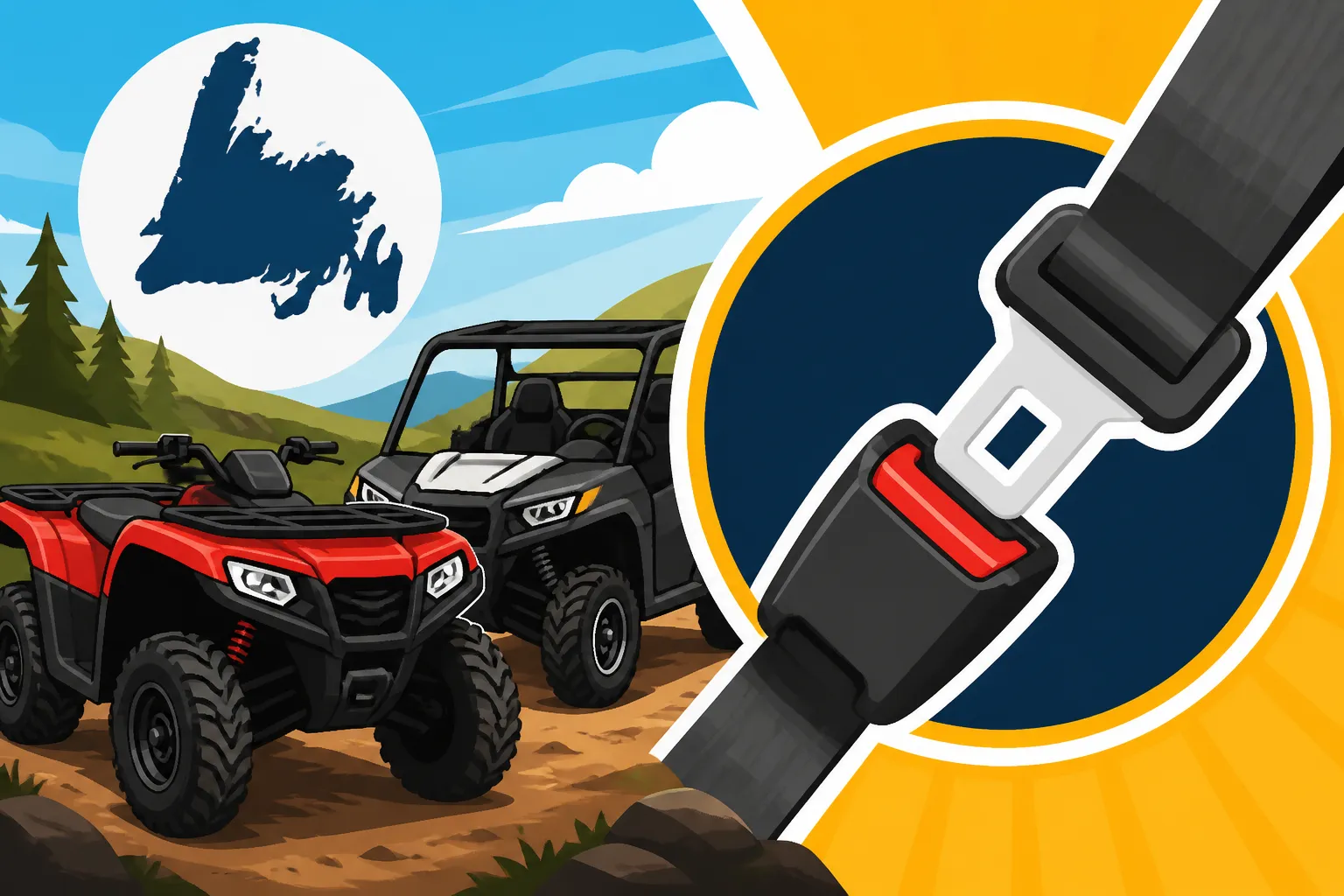
The foundation for all off-road vehicle operations in our province is [Newfoundland's Off-Road Vehicles Act], which came into force relatively recently, replacing older legislation. This Act and its accompanying regulations are what dictate everything from registration to safety equipment. For seat belts, the core principle is that if your off-road vehicle was originally manufactured with seat belts, then those seat belts must be worn by the operator and all passengers. This isn't just a suggestion; it's a legal requirement designed to keep everyone inside the vehicle's protective frame during an incident. The law recognizes that machines like side-by-sides are built differently than traditional ATVs, and their safety systems are designed to work together.
This means that for the vast majority of side-by-sides (UTVs), which come equipped with seat belts as standard from the factory, buckling up is non-negotiable. It's about ensuring you're using the safety equipment as intended by the manufacturer and as mandated by the province. Ignoring this simple step can lead to serious consequences, not just legally, but in terms of personal safety. It's the kind of rule that, while seemingly basic, often catches people off guard because they assume if they're not on a highway, some rules don't apply. But when it comes to fundamental safety, the Act is quite firm.
What "Factory-Installed" Means for Your Machine
The term "factory-installed" is really important here because it draws a clear line. It means the seat belts that came with your side-by-side when it rolled off the assembly line. These aren't just any old belts; they're integral to the vehicle's original safety design, engineered to work with the machine's roll cage and chassis. This distinction is vital because it addresses the different types of off-road vehicles. For instance, a traditional single-rider ATV (quad) doesn't typically come with seat belts from the factory because its design and intended use are different. The operator shifts their weight, stands, and moves with the machine.
What this "factory-installed" clause generally means is that you can't just slap a seat belt onto an ATV that wasn't designed for it and expect it to comply, nor does it create a requirement for ATVs that don't have them to suddenly install them. The focus is on machines designed with them, primarily side-by-sides. If your UTV has two, four, or even six seats, and each of those seats came with a seat belt from the factory, every single one of those belts must be functional and worn when the vehicle is in operation. This is also why [Newfoundland Side-by-Sides Added in 2022] specifically addresses these types of machines and their unique safety requirements, acknowledging their increasing popularity and distinct design.
Who Needs to Buckle Up: Operators and Passengers
The rules regarding who needs to wear a seat belt are pretty straightforward once you understand the "factory-installed" principle. It's not just about the person driving; it's about everyone on board any vehicle equipped with these safety devices. This applies whether you're taking a quick trip down a cabin road or embarking on a multi-day journey across the barrens. Safety is paramount, and the law reflects that by making no distinction based on the length or nature of your ride.
Side-by-Side Specifics: UTVs and Their Occupants
For those of us who enjoy the comfort and camaraderie of a side-by-side, the seat belt rule is perhaps the most critical to remember. If your UTV, like many popular models from Polaris, Can-Am, or Yamaha, has seats designed for multiple occupants and comes with seat belts, then everyone in those seats must be buckled up. This includes the operator and all passengers. These machines are built with roll-over protection structures (ROPS), and the seat belts are designed to keep occupants contained within that protective cage in the event of a roll-over or impact. They're not just for show; they're a vital part of the machine's safety system.
Think about it: when you're out on uneven terrain, or if you hit an unexpected rut or rock, a side-by-side can lurch violently or even tip. Without a seat belt, you or your passengers could be ejected from the vehicle, which can lead to far more severe injuries than if you had remained safely restrained inside. It's a fundamental difference from an ATV, where the rider's ability to shift and dismount quickly is part of their safety strategy. For a side-by-side, staying in the vehicle is the primary objective of the restraint system. This is a common point of confusion, but the rule is very clear: if it has belts, use them.
Children in Side-by-Sides: Car Seat Considerations
This is where things can get a bit more complex and require extra thought, especially for families who enjoy bringing their little ones along for the ride. The [Newfoundland Rules for a Child Passenger] stipulate that if a child is riding in an off-road vehicle (which almost exclusively means a side-by-side in this context), and that vehicle is equipped with seat belts, then the child must be properly secured in a manner appropriate for their age and size. This often means using a child car seat or booster seat, just as you would in a regular passenger vehicle, as long as it can be safely installed and secured using the factory-installed seat belt system.
It's not enough to just buckle a small child into an adult-sized seat belt; those belts are designed for adult bodies and may not offer adequate protection for a child in a crash or roll-over. Parents have a responsibility to ensure their children are safely restrained, and this goes beyond just the seat belt. Consider aftermarket harnesses or specialized child restraint systems designed for UTVs, if appropriate for your machine. Safety should always be the top priority, and making sure our youngest riders are protected means going the extra mile to understand and implement these requirements. Checking with a reputable dealer or referring to your UTV's owner's manual for guidance on child restraints is always a smart move.
When Seat Belts Aren't an Option: Open-Air ATVs and Helmets
While side-by-sides are all about strapping in, traditional ATVs (All-Terrain Vehicles) operate on a completely different safety philosophy. You won't find seat belts on most factory-built ATVs, and for good reason. Understanding this distinction is crucial for safe and legal riding in Newfoundland. It's not about being less safe; it's about matching the safety equipment to the specific design and function of the machine.
ATVs and Helmets: The Primary Safety Device
For single-rider ATVs, or even those designed for two-up riding, the primary safety device is not a seat belt, but a helmet. The very nature of riding an ATV involves dynamic balance, shifting your weight, and sometimes even leaning off the machine to navigate turns, climbs, and descents. A seat belt would restrict this necessary body movement, actually making the machine harder to control and potentially more dangerous. Therefore, the law does not require seat belts on ATVs that weren't originally equipped with them. Instead, it places a strong emphasis on head protection.
Every single operator and passenger on an ATV in Newfoundland must wear an approved helmet. This is explicitly stated in [Newfoundland Helmet Law for Every Rider]. This rule is absolute, regardless of age, experience, or where you are riding. Whether you're puttering around your cabin lot or tearing up a trail, that helmet needs to be securely fastened. Many riders often get this mixed up, thinking that because a side-by-side has seat belts, every ORV must. But for ATVs, your most critical piece of safety gear is the helmet. It's your first line of defense against head injuries, which are tragically common in ATV accidents.
Exceptions and Exemptions to the Rule
While the general rule is "if it came with a belt, wear it; if not, wear a helmet," there are very few explicit exemptions for seat belts themselves. The exemptions usually relate to the type of machine. For instance, trail bikes (dirt bikes) also fall under the off-road vehicle umbrella, and like ATVs, they do not typically have seat belts. Their operators and passengers are also required to wear helmets. The key takeaway is that the safety equipment is dictated by the vehicle's design.
There are no broad exemptions that would allow a side-by-side operator or passenger to forgo wearing a factory-installed seat belt. Attempting to modify a UTV to remove seat belts or render them non-functional would not only be a serious safety hazard but would also likely put you in violation of the Act. The spirit of the law, and good common sense, is to use the safety equipment provided by the manufacturer. Occasionally, people might question rules for specific circumstances, like [Newfoundland Machines Used Only on Family Land] or [Newfoundland Machines Used Only at a Cabin]. However, the safety equipment requirements, including seat belts where applicable, apply universally to any ORV operating in Newfoundland and Labrador, regardless of location or ownership.
Choosing the Right Safety Gear: Beyond the Belt
While Newfoundland's seat belt requirements are clear for side-by-sides, safety on the trails extends far beyond just buckling up. Thinking about the full suite of protective gear, both original equipment and aftermarket enhancements, can significantly reduce your risk of injury and make your off-road experience more enjoyable. It's about being prepared for anything the unpredictable Newfoundland terrain might throw at you.
Aftermarket Options for UTVs: Enhancing Your Safety
For side-by-side owners, the factory-installed seat belts are the minimum requirement, but many riders choose to upgrade for enhanced safety and comfort, especially if they're engaging in more aggressive riding or racing. Aftermarket harnesses, often 4-point or 5-point systems, can provide a much more secure fit, keeping you firmly planted in your seat even over extreme bumps or during sharp maneuvers. Brands like SuperATV offer a range of these harnesses, as well as doors, windshields, and other accessories designed to improve occupant protection. While not legally mandated to replace factory belts, these can be a smart investment for peace of mind.
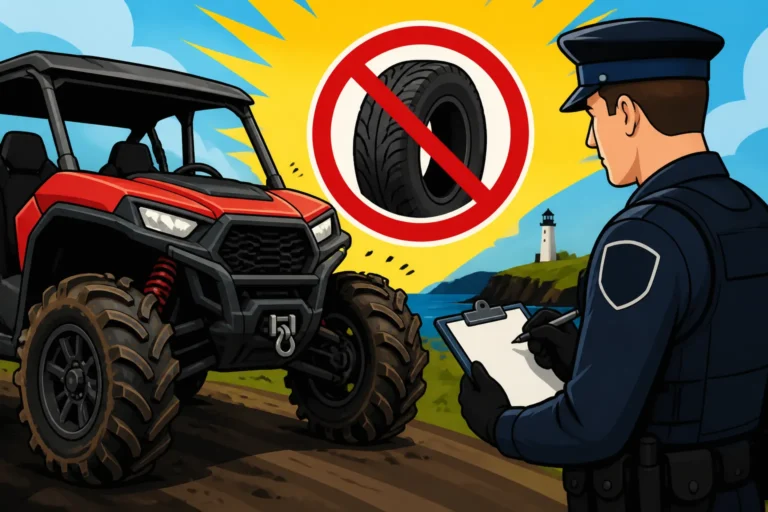
When considering aftermarket upgrades like these harnesses, it's essential to ensure they are installed correctly and do not interfere with other safety systems. A poorly installed harness could be more dangerous than helpful. Always follow the manufacturer's instructions, and if you're unsure, have a professional install them. These upgrades, combined with other [Newfoundland Equipment Requirements] like proper lighting and tires, create a safer overall package for your side-by-side. Remember, the goal isn't just to meet the letter of the law, but to maximize your protection against potential hazards on the trail.
Helmets and Eye Protection: Non-Negotiable Essentials
No matter what kind of off-road vehicle you're operating—an ATV, a side-by-side, or a dirt bike—helmets are absolutely non-negotiable in Newfoundland. Even if you're in an enclosed cab of a side-by-side with a windshield, the law still requires an approved helmet for all occupants. This is a critical point that many side-by-side owners misunderstand, thinking the cab replaces the helmet. It doesn't. Your head is the most vulnerable part of your body, and a helmet is the best protection against serious injury.
Alongside helmets, eye protection is also mandated. This usually means goggles for ATV riders, but if your side-by-side has a windshield, that generally suffices for eye protection. However, if your UTV has an open cab or you're riding with the windshield down, goggles or safety glasses are a must. These aren't just for compliance; they protect your eyes from dust, debris, branches, and insects that can impair your vision and lead to an accident. The combination of a properly worn helmet and appropriate eye protection, along with seat belts in applicable machines, forms the core of personal safety gear for off-road enthusiasts in our province.
Consequences of Non-Compliance: Fines and Safety
Ignoring the safety equipment requirements, particularly seat belts where they are factory-installed, carries serious consequences in Newfoundland. It’s not just about getting a ticket; it’s about putting yourself and your passengers at undue risk. Peace officers on the trails and roads are keenly aware of these rules, and they're not shy about enforcing them. The goal of enforcement isn't to ruin your day, but to ensure everyone makes it home safely.
Fines and Enforcement: What Peace Officers Look For
When a peace officer stops you on your off-road vehicle, one of the first things they'll likely check is your safety equipment. For side-by-sides, this means verifying that everyone in a factory-equipped seat is wearing their seat belt. If you're found operating a UTV with unbuckled occupants, you could face significant fines. [Newfoundland Fines for No Seat Belt] can be substantial, and these penalties are designed to act as a deterrent. It’s a clear message: the province takes off-road safety seriously.
Beyond the immediate financial penalty, repeated infractions can lead to more severe consequences. Officers are also looking for other safety violations, such as not wearing a helmet, lack of proper registration, or operating outside approved areas. So, if you're stopped for one violation, they're likely to check for others. It’s part of a broader effort to ensure responsible riding practices across the province. Knowing that an officer can stop you at any time and request proof of compliance serves as a strong reminder to always ride prepared and legally.
Accident Risks: The Real-World Impact of Not Buckling Up
While the legal penalties are certainly a motivator, the most critical consequence of not wearing a seat belt in a side-by-side is the increased risk of serious injury or death in an accident. Side-by-sides, with their higher center of gravity and ability to traverse challenging terrain, are prone to roll-overs. When a UTV rolls, the roll-over protection structure (ROPS) is designed to create a survival space for occupants inside the vehicle. If you're not buckled in, you can be thrown from the vehicle, or worse, crushed by it.
Imagine a scenario: you're enjoying a beautiful day on a remote trail, maybe [Riding the T'Railway From St John's to Port aux Basques], and you hit an unforeseen obstacle or misjudge a turn. The vehicle tips. If you and your passengers are belted in, your chances of walking away with minor injuries are significantly higher. Without a belt, you could be ejected and suffer severe head trauma (even with a helmet if your body strikes an object first), broken bones, or internal injuries. The seat belt is literally your tether to safety within the protective confines of your machine. It's a small action with enormous implications for your well-being.
Practical Tips for Safer Riding: Making Smart Choices
Riding an ATV or UTV in Newfoundland is an exhilarating experience, offering unparalleled access to breathtaking landscapes. But to truly enjoy it, safety must always come first. Beyond just following the letter of the law, there are many practical steps you can take to make every ride safer for yourself and your companions. Making smart choices before, during, and after your ride ensures you can keep exploring for years to come.
Pre-Ride Checks: Inspecting Belts and Harnesses
Before you even turn the key, a thorough pre-ride inspection can catch potential safety issues. For side-by-sides, this absolutely includes checking all seat belts and any aftermarket harnesses. Look for fraying, tears, or cuts in the webbing. Ensure that the buckles latch securely and release smoothly. Test the retractor mechanism to make sure the belt tightens properly. If you have adjustable anchor points, make sure they are set correctly for each occupant. Just like you'd check your tires and fluid levels, your safety restraints deserve careful attention.
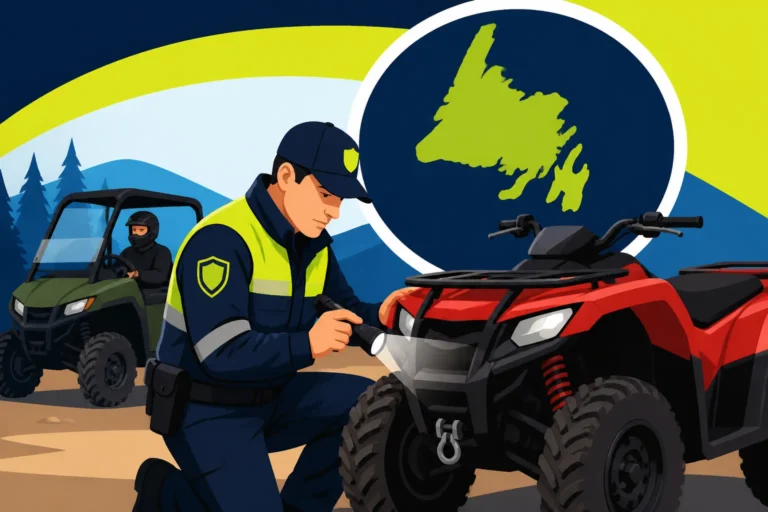
It’s also wise to check the mounting points for any signs of wear or damage. If a belt isn't in perfect working order, it won't provide the protection it's designed for. This is especially true for machines that see a lot of use in harsh conditions, where dirt, mud, and water can take their toll. Getting into the habit of these [Newfoundland Equipment Checks by Officers] will not only ensure compliance but, more importantly, can save lives. A few minutes spent before each ride can prevent a major problem down the trail.
Education and Training: The Foundation of Safe Riding
Beyond the physical equipment, the most important safety tool you possess is knowledge. Understanding how to operate your machine safely, how to assess terrain, and how to react in emergency situations is invaluable. This is why [Newfoundland Safety Training Is Mandatory] for new registrants and riders under 16, and highly recommended for everyone else. Taking an approved off-road vehicle safety course will teach you vital skills and reinforce good habits.
These courses cover everything from proper riding posture to emergency braking, environmental awareness, and of course, the proper use of safety equipment like helmets and seat belts. They teach you to anticipate hazards and how to handle your machine in a variety of conditions, whether it's navigating through a rocky section or crossing a small stream. Even if you've been riding for years, a refresher course can highlight new techniques or remind you of forgotten safety principles. After all, the best equipment in the world is only as good as the operator using it. Combining proper training with adherence to [Newfoundland Insurance Requirements for Riders] ensures you're protected on all fronts.
| ORV Type | Seat Belt Required? | Helmet Required? | Key Safety Principle |
|---|---|---|---|
| Side-by-Side (UTV) | Yes (if factory-installed) | Yes | Stay contained within the roll cage, prevent ejection |
| All-Terrain Vehicle (ATV) | No | Yes | Operator movement and balance, head protection |
| Trail Bike (Dirt Bike) | No | Yes | Operator movement and balance, head protection |
| Snowmobile | No | Yes | Operator movement and balance, head protection |
Disclaimer
This article is for general informational purposes only and does not constitute professional advice. Laws, prices and regulations vary by location and change over time. Consult a qualified professional for guidance on your specific situation.