Newfoundland Helmet Standards Accepted
Riding an ATV or UTV across Newfoundland’s incredible barrens, winding woods roads, and coastal trails is an experience like no other. But before you hit those trails, there's one piece of gear that's absolutely non-negotiable for your safety and for staying on the right side of the law: your helmet. It's not always clear which helmet standards are actually accepted here on the island, leaving many riders scratching their heads and worrying if their gear will pass muster. This guide is going to clear up all that confusion, detailing exactly which helmet certifications are recognized in Newfoundland so you can ride with confidence and peace of mind.
Why Helmet Standards Matter So Much Here on the Rock
When we talk about off-road vehicles like ATVs and UTVs, the thrill is undeniable. But so are the risks. Even a low-speed tip-over can result in serious injury if you're not properly protected. Here in Newfoundland, where our terrain can be unpredictable and the weather can change in a blink, having a helmet that meets recognized safety standards isn't just a suggestion; it’s a vital layer of protection for every rider and passenger.
The Core Reason for Wearing a Helmet
Let’s be real for a moment: nobody wants to think about having an accident. But the reality is that falls and collisions can happen, even to the most experienced riders. A helmet’s primary job is to protect your brain from impact. It’s designed to absorb and distribute the force of a blow, significantly reducing the risk of traumatic brain injury. Imagine hitting a rock, or even just falling awkwardly and striking your head on the ground. Without a properly certified and fitted helmet, the consequences can be life-altering. The sheer physics of it mean that your head, being one of the heaviest parts of your body, accelerates rapidly in a fall, and the sudden stop can cause severe damage. That’s why having that protective shell is so crucial—it acts as a deformable cushion, slowing down that impact and protecting your most valuable asset.
Newfoundland's Legal Mandate for Helmets
Beyond personal safety, there’s the law. Newfoundland takes off-road vehicle safety seriously, and that includes mandatory helmet use. You can't just throw on any old helmet you find in the shed; it needs to meet specific criteria. The [Newfoundland Helmet Law for Every Rider] clearly outlines this requirement. An officer out on patrol can pull you over if you or your passenger aren't wearing a compliant helmet. Getting caught without one isn't just a slap on the wrist; it can lead to fines and other penalties. It’s about creating a culture of safety, ensuring everyone understands the importance of this simple, yet incredibly effective, piece of gear. This mandate applies whether you're ripping through a managed trail or just heading down a cabin road.
The Goal of Helmet Regulations
Helmet regulations aren't arbitrary rules designed to make your life harder. They are put in place with one overarching goal: to save lives and prevent serious injuries. These standards ensure that helmets are subjected to rigorous testing for impact absorption, penetration resistance, and retention system strength. By setting clear standards, the province helps ensure that the helmets available to consumers actually offer the protection they claim. This isn't just about protecting individual riders; it’s also about reducing the strain on our healthcare system. Every serious head injury avoided is a win for the rider, their family, and the community. These regulations guide manufacturers in designing safer products and help riders make informed choices about their safety gear.
Understanding Accepted Helmet Certifications in Newfoundland
Navigating the world of helmet certifications can feel a bit like deciphering a secret code. You see acronyms like CSA, DOT, and ECE, and it's easy to wonder which ones actually count here in Newfoundland. The good news is that the province recognizes several major international safety standards, making it easier for riders from different places, or those buying helmets manufactured globally, to comply with local laws.
The Canadian CSA Standard: Our Homegrown Hero
Here in Canada, the Canadian Standards Association (CSA) approval is our national benchmark for safety equipment, and it's certainly recognized for helmets. A CSA-approved helmet has undergone stringent testing in Canadian laboratories, designed to meet the specific safety needs and conditions relevant to our country. When you see that CSA sticker, you know the helmet has passed rigorous impact tests, ensuring it can absorb energy effectively in a crash. It's tested for chin strap integrity to make sure it stays on during an impact, and also for its resistance to penetration from sharp objects. For many Newfoundland riders, choosing a CSA-certified helmet feels like a natural fit, offering that extra layer of local trust and assurance. Many riders prefer to support Canadian-certified products, knowing they meet the standards set within our own regulatory framework. You’ll often find these helmets clearly marked, confirming they adhere to [Helmets Carrying the Canadian CSA Approval Marking].
US-Approved Helmets: Welcome Across the Border
Given our close ties and frequent travel to and from the United States, it's a huge relief that helmets meeting US safety standards are also fully accepted here. Specifically, the Department of Transportation (DOT) certification is what you'll typically see on helmets sold south of the border. A DOT-certified helmet means it complies with Federal Motor Vehicle Safety Standard (FMVSS) 218. This standard requires specific testing for impact attenuation, penetration resistance, and peripheral vision. If you bought your helmet in the US, or perhaps brought your machine and gear up for a long ride, rest assured that as long as it bears that DOT sticker, you’re good to go. This recognition simplifies things considerably for tourists and new residents alike. It's clearly stated that [US-Approved Helmets Are Accepted on Provincial Trails], ensuring a seamless experience for visitors.
European ECE Standards: International Recognition
For those riders with a more global perspective, or perhaps those who have purchased high-performance helmets from European manufacturers, the Economic Commission for Europe (ECE) standard is also recognized in Newfoundland. The ECE 22.05 (and newer 22.06) standard is widely accepted around the world and is often considered one of the most comprehensive safety certifications available. ECE testing involves dynamic tests, abrasion resistance for the outer shell, and specific tests for chin bar protection on full-face helmets. Many top-tier helmet brands globally seek ECE certification due to its thoroughness. So, if your helmet proudly displays an ECE sticker, you can ride confidently knowing it meets accepted safety benchmarks here on the island. Understanding [European ECE Helmets and What the Marking Means] is useful for many riders who appreciate the global scope of this standard.
Other Recognized Global Standards
While CSA, DOT, and ECE are the most commonly cited and recognized standards, some helmets also carry certifications like Snell or FIM. Snell Memorial Foundation certifications, for instance, are often considered to exceed the minimum requirements of DOT and ECE, pushing the boundaries for even higher levels of protection. These certifications are generally accepted because they demonstrate an exceptional level of safety and rigorous testing. Essentially, if a helmet meets a higher, globally recognized standard for impact protection and structural integrity, it will typically satisfy Newfoundland's requirements. The key is to look for a clearly marked certification label on the helmet itself, usually on the back or inside the padding.
Beyond the Sticker: What Makes a Helmet Safe?
Having the right certification sticker on your helmet is a fantastic start, but it's only part of the story when it comes to true safety. A certified helmet that doesn't fit correctly, is damaged, or isn't worn properly offers little more protection than wearing a baseball cap. It's crucial to understand the other factors that contribute to a helmet's effectiveness in protecting you out on the trails.
Proper Fit is Non-Negotiable
This is perhaps the single most overlooked aspect of helmet safety. A helmet, no matter how highly rated or expensive, cannot do its job if it doesn't fit your head properly. It should feel snug all the way around, with no excessive pressure points, and definitely no movement when you shake your head from side to side or front to back. If the helmet slides around, it won't stay in place during an impact, potentially leaving parts of your head exposed or even coming off entirely. The cheek pads should press firmly against your cheeks, and there should be no gap between your forehead and the helmet's brow pad. A common test is to try and roll the helmet forward off your head with the chin strap fastened; if you can, it’s too big. Investing time in finding the right size and trying on different brands is just as important as checking for the certification sticker.
The Importance of a Fastened Chin Strap
Another simple but critical element is the chin strap. A certified helmet, perfectly fitted, is rendered useless if the chin strap isn't properly fastened and adjusted. In the event of a fall or collision, an unfastened strap means the helmet can easily fly off your head, leaving you completely unprotected. The strap should be snug under your chin, allowing for only one or two fingers to fit comfortably between the strap and your throat. You shouldn't be able to pull the helmet off your head with the strap fastened. It sounds basic, but in the excitement of heading out, it's easy to forget this small but vital step. Remember, [Newfoundland Helmet Straps Must Be Fastened] for your safety and to comply with regulations.
Inspecting Your Helmet for Damage
Helmets are designed to protect you, but they aren't indestructible. Over time, or after an impact, their protective qualities can degrade. You should regularly inspect your helmet for any signs of damage. Look for cracks in the outer shell, even hairline ones, which can compromise its structural integrity. Check the inner foam lining for compression or signs of deterioration. The chin strap should be free of frays or tears, and the buckles should function perfectly. A general rule of thumb is to replace a helmet after any significant impact, even if there's no visible damage, as the internal foam may have compressed and lost its ability to absorb further shocks. Also, most manufacturers recommend replacing helmets every five years, as materials can degrade due to UV exposure, sweat, and general wear and tear, even if the helmet hasn’t been in an accident.
Goggles and Eye Protection
While not strictly a helmet standard, eye protection is intimately linked with helmet use and overall rider safety. Out on Newfoundland's trails, you're going to encounter dust, mud, branches, and insects – not to mention the possibility of a rock being kicked up by another rider. Proper eye protection is crucial to maintain visibility and prevent serious injury. The law requires you to wear eye protection unless your machine has a windshield or an enclosed cab, which is especially important for side-by-sides. If you ride an ATV or a UTV without a full enclosure, a good pair of goggles is a must. They should fit snugly with your helmet and offer clear, unobstructed vision. You'll find many reputable brands offering durable goggles. For side-by-sides, a quality windshield can make a huge difference, protecting you from debris and the elements. Companies like SuperATV offer a range of windshields and accessories designed for various UTV models, which can be a great option for enhanced protection. Always make sure your choice complies with [Newfoundland Eye Protection Requirements].
Choosing the Right Helmet for Newfoundland Riding
With so many helmet options on the market, choosing the right one can feel a bit overwhelming. But by considering the types available, key features, and our unique Newfoundland riding conditions, you can make an informed decision that maximizes both safety and comfort.
Types of Helmets for Off-Road Use
When you walk into a store or browse online, you'll see a few main types of helmets suitable for off-road riding:
- Full-Face Helmets: These offer the most comprehensive protection, covering your entire head and chin. They are often a top choice for ATV and UTV riders, providing excellent impact absorption and protection from flying debris. They come in various styles, from those designed for motocross (with prominent chin bars and visors) to more road-oriented designs that can still work off-road.
- Open-Face Helmets (3/4 Helmets): These helmets cover the top, back, and sides of your head, but leave your face exposed. While they offer better airflow and a wider field of vision, they lack chin protection, which is a significant drawback in an off-road crash. If you opt for an open-face helmet, robust eye protection is absolutely essential.
- Modular Helmets: These are a hybrid, offering the versatility of an open-face helmet with the option to flip down a chin bar for full-face protection. They're popular for their convenience but can sometimes be heavier than dedicated full-face helmets. Their chin bars are generally less robust than a fixed full-face design.
- Motocross/Off-Road Helmets: These are easily identifiable by their elongated chin bars and visors. The extended chin bar provides excellent airflow and protection, while the visor helps shield your eyes from roost and sun glare. They are almost always worn with goggles, not a face shield. These are a very popular choice for aggressive ATV riding.
Features to Look For in a Quality Helmet
Beyond the certification, several features contribute to a helmet's overall quality, comfort, and safety:
- Ventilation: Riding can be hard work, and good airflow helps keep you cool and prevents fogging of goggles or visors. Look for helmets with multiple vents that can be opened or closed.
- Weight: A lighter helmet reduces neck fatigue, especially on longer rides. Advanced materials like fiberglass, carbon fiber, or composite blends contribute to lighter, stronger shells.
- Comfort and Padding: The interior padding should be comfortable, hypoallergenic, and ideally removable and washable. This helps with hygiene and extends the life of the helmet.
- Visibility: Ensure the helmet design, combined with your eye protection, offers a wide field of vision. This is crucial for situational awareness on the trails.
- Retention System: While the D-ring strap is common and secure, some helmets feature quick-release buckles. Ensure whatever system is used is robust and easy to operate with gloves on.
- Accessory Compatibility: Consider if you want to integrate communication systems, action cameras, or other accessories. Some helmets are designed with this in mind.
Considering Weather and Terrain
Newfoundland's environment is unique, and your helmet choice can reflect that:
- Fog and Rain: Our coastal climate means fog and rain are common. A helmet that pairs well with anti-fog goggles or has good ventilation to prevent visor fogging is a real advantage. The protection of a full-face helmet in cold, wet conditions is also a big plus.
- Cold Weather: For winter riding, you might consider a helmet designed for snowmobiling, which often includes features like heated shields or enhanced cold-weather insulation. However, ensure it still meets accepted off-road standards for impact protection.
- Dust and Mud: The barrens can get incredibly dusty in dry weather, while boggy areas mean flying mud. A full-face helmet with goggles or a sealed visor helps keep this out of your eyes and mouth. The extended chin bar of a motocross helmet is great for airflow when working hard and keeping your face away from flying debris.
Where to Purchase a Certified Helmet
Always buy your helmet from a reputable dealer, whether online or in person. Avoid second-hand helmets unless you know their complete history, as internal damage might not be visible. When buying online, ensure the retailer is legitimate and provides clear information about the certifications. While it's great to find a deal, prioritizing safety over a low price is always the smart move. Some accessory providers, like SuperATV, also carry safety gear or can guide you to reputable retailers, ensuring you get a genuine, certified product. Always verify the certification sticker before making a purchase.
Common Rider Questions and Misconceptions
Even with clear regulations and guidelines, riders often have lingering questions or fall prey to common misconceptions about helmet use in Newfoundland. Let’s tackle some of these head-on to ensure everyone is fully informed.
"Is My Old Helmet Still Good?"
This is a question many riders ask, especially if they haven't had a major accident. While it's tempting to keep using a helmet that "looks fine," the reality is that helmets have a finite lifespan. Most manufacturers recommend replacing a helmet every five years from its manufacturing date, or immediately after any significant impact, even if there's no visible damage. Why? Because the materials that make up the helmet – the glues, resins, and EPS (expanded polystyrene) foam liner – degrade over time due to exposure to UV light, sweat, chemicals from cleaning products, and general wear and tear. This degradation reduces the helmet's ability to absorb energy effectively during an impact. Think of it like a car's airbag; it's designed for one deployment. A helmet, after a crash, has done its job absorbing energy, and its protective capacity is compromised. Always check the manufacturing date, usually found on a sticker inside the helmet.
"Do Passengers Need Helmets Too?"
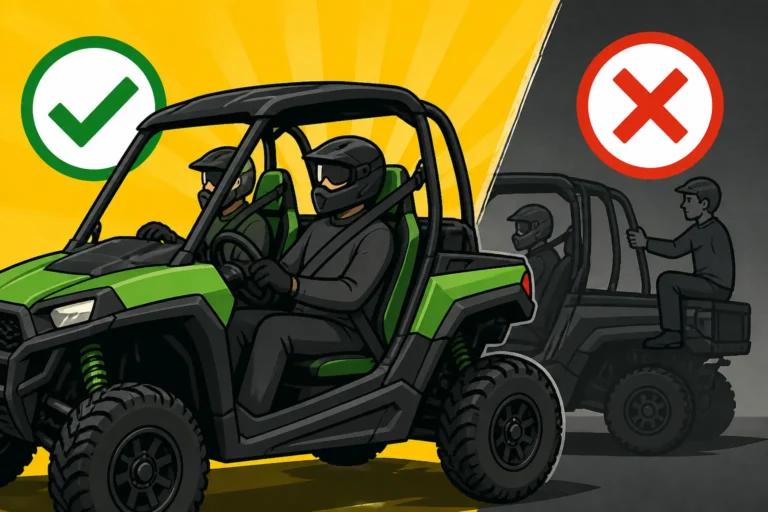
Absolutely, yes! The law in Newfoundland is crystal clear on this point: all occupants of an off-road vehicle must wear a properly certified and fastened helmet. This isn't just for the operator; it includes every passenger, regardless of their age or where they are seated on the machine. Whether you're taking your partner for a spin on the back of your ATV or carrying your kids in the passenger seats of your side-by-side, everyone needs appropriate head protection. There's no exemption for passengers. It's explicitly stated that [Helmets Are Required for Operators and Passengers Alike], so make sure you have enough compliant helmets for everyone riding with you.
"What if I'm Only Riding on Private Land?"
While the enforcement might differ, the principles of safety do not. Legally, the provincial Off-Road Vehicles Act applies to all off-road vehicles operated in Newfoundland and Labrador, regardless of whether it’s Crown land, managed trails, or private property. Even if you're just puttering around on your own property or a friend's land, the risk of a head injury remains the same. Wearing a certified helmet protects you, period. Relying on the idea that "nobody will see me" or "it's just a short ride" is a dangerous gamble. Treat every ride, no matter how short or where it takes place, as an opportunity to prioritize your safety by wearing your helmet.
Helmet Exemptions: Hunting and Trapping
Now, there is one very specific and limited exemption that sometimes causes confusion: [Newfoundland's Hunting and Trapping Helmet Exception]. This exemption allows an operator or passenger engaged in hunting or trapping activities to remove their helmet while stationary at a hunting or trapping site, or while retrieving game. It is important to stress the "stationary" and "retrieving game" aspect. You are still required to wear your helmet while operating the machine to and from these sites. This exemption is not an open invitation to ride without a helmet during hunting season. It's a very narrow allowance to accommodate practical needs during specific activities, not a general waiver of the helmet law. Always interpret exemptions very strictly and err on the side of caution.
Enforcement and Penalties for Non-Compliance
It's one thing to know the rules, and another to understand the consequences of breaking them. In Newfoundland, law enforcement agencies, including the RCMP and various provincial enforcement officers, actively patrol off-road trails and areas. They are vigilant about ensuring riders comply with the Off-Road Vehicles Act, and that includes proper helmet use.
What an Officer Looks For
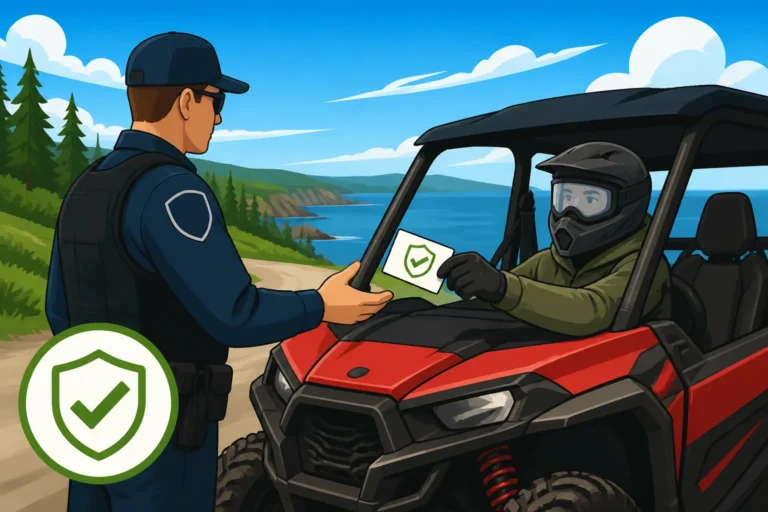
When an officer stops you on the trail or a woods road, they're not just checking for a helmet. They're doing a comprehensive check of compliance with the Act. For helmets specifically, they'll verify that you and any passengers are wearing one. They will look for the appropriate certification sticker (CSA, DOT, ECE, or equivalent) on the helmet. They'll also check that the helmet is properly fastened. Beyond helmets, they'll be looking for your valid registration, an identification plate that is visible and not obstructed (maybe you added SuperATV cargo racks that block the plate without thinking!), proof of insurance, and evidence of mandatory safety training. So, when an officer signals you to stop, be prepared to produce all your necessary documentation and ensure your gear is in order. Being able to produce [What an Officer Can Ask You to Produce] quickly and efficiently can make the stop much smoother.
Consequences of Not Meeting Standards
Operating an off-road vehicle without a compliant helmet (or with one unfastened) can lead to significant penalties. The specific fines can vary, but generally, expect a monetary penalty for such an infraction. These fines are designed to be a deterrent and reflect the serious safety implications of riding unprotected. Repeated offenses or multiple infractions can lead to higher fines, and in some cases, your machine could even be seized. The aim of these penalties is to underscore the importance of safety regulations and to encourage responsible riding habits throughout the province. Always consult the latest legislation for [Newfoundland Fine Ranges by Offence] and [Newfoundland Penalties for Riding Illegally] to understand the full scope of potential consequences. It's far better to invest in a proper helmet and follow the rules than to face a hefty fine or, worse, a serious injury.
Here's a quick look at the commonly accepted helmet standards in Newfoundland:
| Standard | Origin | Key Features | Recognition in NL | Typical Marking |
|---|---|---|---|---|
| CSA | Canada | Rigorous testing for impact, penetration, retention. | Fully Accepted | CSA (often with a number) |
| DOT | United States | Meets FMVSS 218; impact, penetration, peripheral vision. | Fully Accepted | DOT FMVSS No. 218 (often with manufacturer name) |
| ECE | Europe (UN/ECE Regulation) | Widely accepted global standard; dynamic tests, abrasion, chin bar. | Fully Accepted | ECE R 22.05 (or 22.06) with a circle 'E' mark |
| Snell | United States (Private) | Often exceeds DOT/ECE; higher impact/penetration resistance. | Generally accepted due to higher safety thresholds | SNELL M2015 (or M2020) |
Remember, your safety is paramount when enjoying Newfoundland's fantastic ATV and UTV trails. A properly certified and fitted helmet is your first and most important line of defense against injury. Combine this with mandatory [Newfoundland Safety Training Is Mandatory] and adherence to all other provincial regulations, and you're set for countless safe and enjoyable adventures on the Rock!
Disclaimer
This article is for general informational purposes only and does not constitute professional advice. Laws, prices and regulations vary by location and change over time. Consult a qualified professional for guidance on your specific situation.