Newfoundland Amphibious Machines and Dune Buggies
So, you've got your eye on something a little different, maybe an amphibious machine that can traverse land and water, or a zippy dune buggy designed for off-road thrills. You're probably scratching your head, wondering how on earth you go about registering something so unique here in Newfoundland and Labrador. It's a common frustration, because these aren't your typical ATVs or snowmobiles, and the rules can seem a bit murky. This guide is here to cut through that confusion, helping you understand how these specialized off-road vehicles fit into the province's registration system.
What Exactly Are We Talking About? Defining Amphibious Machines and Dune Buggies in Newfoundland
Before we dive into the nitty-gritty of paperwork and regulations, let's make sure we're all on the same page about what these machines actually are. When the provincial government talks about "off-road vehicles," they usually have ATVs, dirt bikes, and snowmobiles in mind. But the world of ORVs is much bigger than that, and it's these less common machines that often cause the most head-scratching when it comes to getting them registered.
Amphibious Vehicles: More Than Just a Boat on Wheels
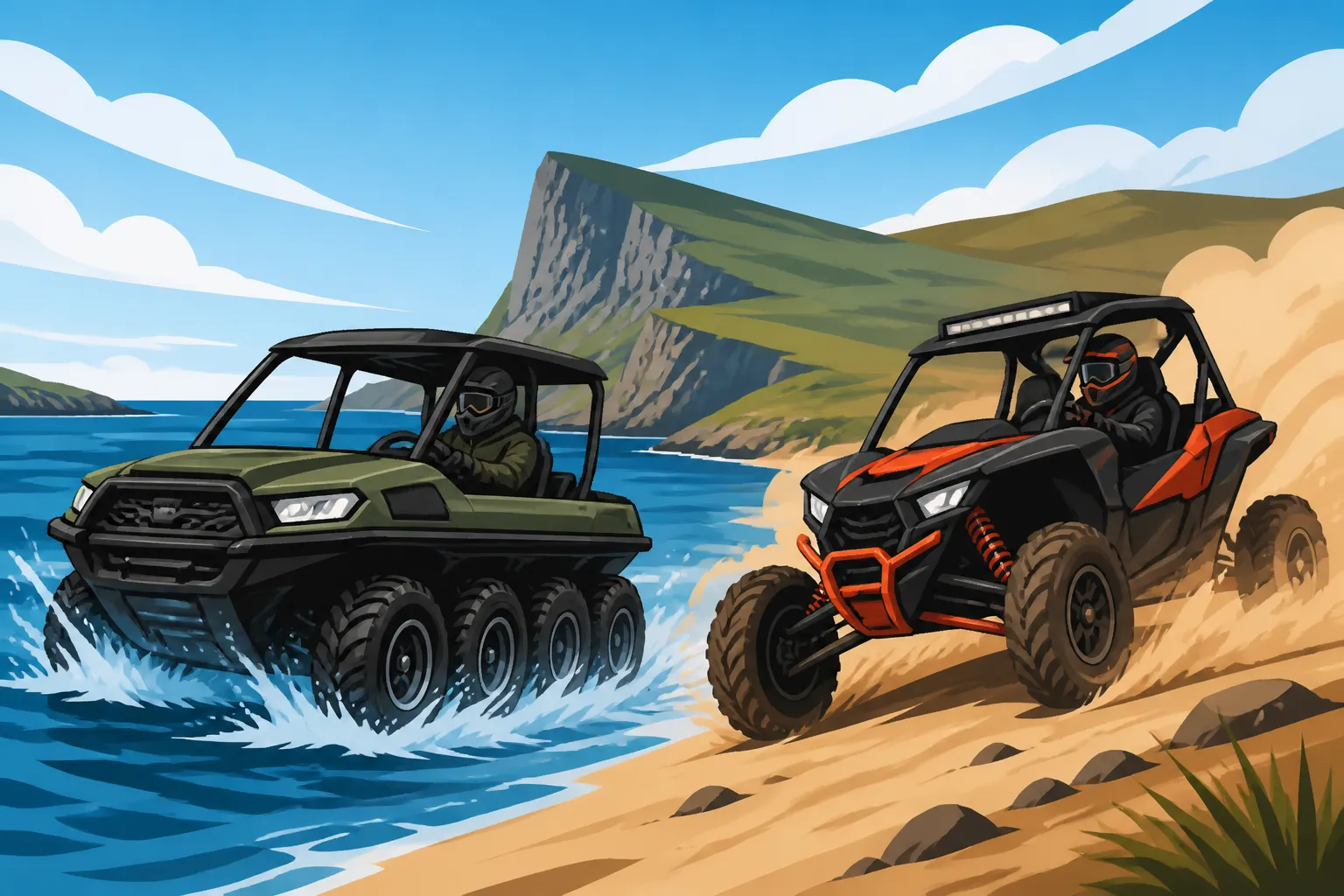
Imagine a machine that can crawl over rocky terrain, then drive straight into a pond and swim across. That's an amphibious vehicle, and they're becoming increasingly popular for cabin owners, hunters, and adventurers who need to navigate Newfoundland's incredibly diverse landscape. Brands like Argo are well-known for their multi-wheeled, skid-steer amphibians that are equally at home on land or water. These machines are incredibly versatile, offering access to remote areas that would be impossible for a standard ATV.
The challenge with these machines lies in their dual nature. While they clearly operate off-road and on land, their ability to float and propel themselves in water adds a layer of complexity. For registration purposes, Newfoundland and Labrador primarily view them through the lens of their off-road capability. They are generally considered off-road vehicles under the provincial act, meaning they need to be registered just like any other quad or snowmobile when used on Crown land or managed trails. However, it’s always wise to remember that once you hit the water, separate rules for pleasure craft might also apply, depending on the body of water and engine size, though this usually doesn't affect the land-based ORV registration.
Dune Buggies: From Beach Cruisers to Trail Blazers
Dune buggies, on the other hand, are often stripped-down, lightweight vehicles designed for sandy terrain, though here in Newfoundland, they're more likely to be found tackling barrens and gravel roads. They can range from simple, custom-built frames using Volkswagen Beetle components (the classic "Baja Bug" style) to more robust, purpose-built off-road buggies that resemble miniature racing machines. Their open-air design and rugged suspension make them a blast to drive, offering a different kind of off-road experience compared to an enclosed side-by-side or a traditional ATV.
The main confusion with dune buggies often stems from their origin and construction. Many are custom-built or assembled from kits, which means they might not come with the standard manufacturer documentation that a brand-new ATV would. If your dune buggy is intended solely for off-road use, it will fall under the off-road vehicle act. However, if it has any features that might make it appear road-legal, like full lighting, turn signals, and a windshield, you need to be very clear about its intended use and classification. Newfoundland's rules for road vehicles are distinct, and attempting to register an ORV as a regular car can lead to a bureaucratic headache. For the purposes of this guide, we're talking about dune buggies that are, unequivocally, off-road machines.
The Off-Road Vehicles Act and Unique Machine Classifications
Newfoundland and Labrador's approach to off-road vehicles is laid out in its [Newfoundland's Off-Road Vehicles Act], which saw a significant update in 2022. This legislation is the bedrock for everything from registration to riding rules, and it’s where you’ll find the framework for classifying all sorts of machines, even the less common ones.
How Newfoundland Classifies ORVs Beyond ATVs and Snowmobiles
The Act broadly defines "off-road vehicles" to include a range of machines, encompassing everything from your standard quads and snowmobiles to the more niche offerings like side-by-sides, which saw specific recognition in the 2022 updates. [Newfoundland Side-by-Sides Added in 2022] clarified their place in the regulatory landscape, and while amphibious machines and dune buggies aren't given their own explicit categories like "amphibious vehicle" or "dune buggy," they generally fall under the broader definition of an off-road vehicle if they meet the criteria.
Essentially, if it's designed or adapted for travel over land, water, snow, ice, or other natural terrain, and it's not a highway vehicle, it's likely an ORV. This broad definition is actually helpful, as it means even your unique machine has a place within the system. The key is that the Registrar of Motor Vehicles, or their authorized agents, will assess your specific machine based on its characteristics and intended use. They'll look at engine size, wheel configuration, and how it's designed to be operated to ensure it fits within the spirit of the Act, even if it doesn't have its own named category. This flexible approach means that even less common machines like yours can be integrated into the provincial registration system, ensuring you can ride legally.
The Importance of a Proper NVIS or Bill of Sale
Regardless of how unique your off-road vehicle is, proving ownership and origin is paramount for registration. For new machines, especially those sold through a dealer, you’ll typically receive a New Vehicle Information Statement (NVIS). This document is like a birth certificate for your ORV, detailing its make, model, VIN, and other crucial identifiers. For any new off-road machine, whether it's an Argo amphibious vehicle straight from the factory or a new dune buggy kit, [Newfoundland Requires an NVIS for a New Machine] to start the registration process. It provides an unbroken chain of ownership and ensures the vehicle is recognized as legitimate.
However, many dune buggies or older amphibious machines are purchased used, or are custom-built, which means an NVIS might not be available. In these cases, a detailed [Newfoundland Bills of Sale From Each Owner] is absolutely critical. You need a clear, legible bill of sale for every change of ownership, tracing the machine back as far as possible. This chain of ownership proves you legally acquired the vehicle and helps prevent the registration of stolen machines. If you're buying a used machine privately, always insist on a comprehensive bill of sale that includes the VIN, buyer and seller details, and the date of sale. Don't be afraid to ask for copies of previous bills of sale if the seller has them, as a robust paper trail can save you a lot of headaches at Motor Registration. Without proper documentation, getting your unique ORV registered can become a lengthy and frustrating process.
Navigating the Registration Process for Unusual ORVs
Getting a standard ATV registered is usually a straightforward process, but when you're dealing with an amphibious machine or a dune buggy, you might encounter a few more questions at the Motor Registration counter. It's not because they're trying to make things difficult, but because these machines don't always fit neatly into the predefined boxes.
The Initial Hurdles: Documentation and Inspection Challenges
The biggest hurdle for owners of unique ORVs is often the documentation. If you've got an NVIS or a clear chain of bills of sale, you're off to a great start. But what happens if your custom-built dune buggy never had a formal NVIS, or if you've inherited an older amphibious machine with patchy paperwork? This is where the process can get tricky. [Newfoundland Registration Paperwork Explained] provides a good overview of standard requirements, but for machines that are a bit "outside the norm," you might face additional scrutiny.
Sometimes, if the origin or ownership is unclear, Motor Registration might require an inspection to verify the VIN or other identifying marks. This is especially true if you’re dealing with a machine that has a homemade frame or if the VIN plate is missing or unreadable. [Newfoundland Registration When the VIN Is Gone] outlines the challenges here, and for unique machines, this can be a real sticking point. You might also need to demonstrate that the vehicle is indeed an off-road vehicle and not, for example, a modified car attempting to bypass road safety standards. Be prepared to discuss the machine's primary design and intended use with the registry staff. It’s always best to be proactive and bring any manuals, photos, or descriptive literature you have about your specific model to help clarify its nature.
Specifics for Amphibious Machines
Registering an amphibious machine largely follows the same process as any other ORV once its classification is confirmed. You'll still need to provide proof of ownership, your identification, and pay the registration fee. The good news is that for many amphibious machines like the popular Argo models, they are clearly manufactured as ORVs, so their documentation tends to be robust. Once registered, you'll receive your unique identification plate and registration permit. This means you’ve secured your [Newfoundland ORV Registration You Pay Once], giving you continuous legal access to designated trails and Crown lands without annual renewals.
The main difference for amphibious machines, as mentioned earlier, is their dual nature. While the ORV registration covers its land-based use, it's worth noting that if you're using it extensively on larger bodies of water, you might also need to adhere to federal pleasure craft regulations, including carrying specific safety equipment. However, for the provincial ORV registration itself, the focus remains on its status as an off-road vehicle. Ensure that the VIN is easily accessible and verifiable, as this is the primary identifier for your machine in the provincial system. Remember, transparency about its capabilities can help clarify any ambiguities at the counter.
Specifics for Dune Buggies
Dune buggies present their own set of considerations. Because many are custom-built or heavily modified, the challenge often lies in proving the vehicle's identity and value. If your dune buggy is a kit car, ensure you have all the original receipts and manuals for the kit, as well as documentation for any major components like the engine. If it's a completely custom build, you might need to compile a detailed list of components and provide a sworn affidavit explaining its construction and origin.
Another point of clarity needed for dune buggies is to firmly establish that it is an off-road vehicle and not a modified passenger car. The province has strict rules about what constitutes a road-legal vehicle, and trying to pass off a dune buggy as such can lead to serious legal issues. Your registration at Motor Registration will be for an off-road vehicle, not a car, meaning it won't be permitted on public highways except for very specific crossings or shoulder riding under strict conditions. Be ready to explain its design and purpose, emphasizing its dedicated off-road nature. Having clear photographs of the vehicle can also be helpful for the registry staff if they need to determine its classification.
What Happens When Your Machine Doesn't Fit the Mold?
It's entirely possible that when you present your amphibious machine or dune buggy for registration, the process isn't as cut-and-dried as for a new ATV. Don't get discouraged! The system has provisions for these situations, even if it requires a little more legwork on your part.
Dealing with Ambiguous Classifications at Motor Registration
Sometimes, you might encounter a situation where your machine doesn't quite fit the typical descriptions, or perhaps the Motor Registration staff aren't immediately familiar with your specific type of vehicle. This can lead to questions about its classification or specific requirements. It's important to approach these situations with patience and a willingness to provide as much detail as possible. Remember, they're trying to ensure all vehicles are registered correctly and safely.
You might need to schedule a [Newfoundland Registration by Appointment] to allow for a more in-depth discussion, or even bring photos or manufacturing specifications to help clarify the vehicle's design and intended use. If there's any ambiguity, the Registrar will ultimately make a decision on how your machine is classified under the [What the Registrar's Permit Says About Your Machine] and the Act. Being prepared with information about your specific model, its capabilities, and why it's considered an off-road vehicle can greatly streamline this process. Don't assume the first person you speak to will be an expert on every type of ORV out there; sometimes a little education from your end can go a long way.
The Role of Sworn Affidavits and Indemnity Forms
When documentation is incomplete or missing – a common scenario for custom builds, older machines, or those with unclear ownership histories – sworn affidavits and indemnity forms become invaluable tools. A sworn affidavit is a legal document where you solemnly declare certain facts under oath, such as how you acquired the machine, its history, or its specifications. This can be crucial if you don't have a complete chain of bills of sale for your dune buggy, or if the original manufacturer is no longer in business for an older amphibian. You can often find templates for these forms from legal document providers, and services like LawDepot offer customizable templates that can help you draft a legally sound affidavit quickly.
An indemnity form, often signed directly at Motor Registration, protects the provincial government should any issues arise regarding the vehicle's ownership or legality after registration. By signing it, you're essentially taking full responsibility. [Newfoundland Sworn Affidavits and Indemnity Forms] are typically used in conjunction with affidavits when ownership is less than crystal clear. These forms are not to be taken lightly, but they are essential mechanisms that allow for the registration of vehicles that might otherwise be unregistrable due to missing or incomplete paperwork. If you find yourself in this situation, preparing a detailed affidavit beforehand, potentially with the help of a service like LawDepot, can significantly speed up the process.
Ongoing Responsibilities After Registration
Getting your unique off-road vehicle registered is a major milestone, but your responsibilities don't end there. Just like any other ORV, your amphibious machine or dune buggy will have ongoing requirements that ensure you're riding safely and legally.
Plates, Decals, and Display Requirements
Once your amphibious machine or dune buggy is registered, you'll be issued an identification plate or decal. The [Newfoundland Permits, Plates and Decals] specify that this must be prominently displayed on your machine. For a typical ATV or snowmobile, there are clear guidelines for placement. However, with a less conventional vehicle, you might need to get a bit creative. The key is that the plate must be clearly visible from the rear, unobstructed by cargo, equipment, or mud.
For some dune buggies, particularly those with minimalist designs, finding a suitable, secure spot might require a small bracket or custom mount. For amphibious vehicles, you'll need to consider how the plate holds up to water exposure and ensure it remains visible even after traversing a bog or crossing a pond. The important thing is that law enforcement must be able to easily identify your vehicle by its plate. If you have any doubts about the best placement, it's always wise to err on the side of caution and ensure maximum visibility. Remember, an unreadable or missing plate can lead to fines, even if your machine is properly registered.
Insurance and Safety Considerations for Unique ORVs
Just like any other off-road vehicle in Newfoundland and Labrador, your registered amphibious machine or dune buggy needs to be insured. The province mandates a [Newfoundland Minimum Insurance Requirement], typically a minimum of $200,000 in third-party liability coverage. This insurance protects you financially in case your machine causes injury or property damage to others while you're operating it. It’s a non-negotiable part of riding legally, and officers can ask for proof of insurance at any time.
Beyond the legal requirement, unique ORVs often come with their own specific safety considerations. Amphibious machines, with their ability to operate in water, require operators to be familiar with both land and water safety protocols. Understanding its buoyancy, stability in different water conditions, and proper entry/exit techniques are crucial. Dune buggies, with their open design and potentially high-performance engines, demand an operator who is skilled in handling such a machine on varying terrain. Always wear appropriate safety gear, including an approved helmet, and ensure your machine is well-maintained and in good working order. Given the specialized nature of these vehicles, it’s even more critical to prioritize safety and ensure you’re adequately prepared for the unique environments they can access.
Here's a quick comparison of some challenges unique machines might present:
| Feature | Amphibious Machines | Dune Buggies (Custom/Kit) |
|---|---|---|
| Primary Use | Land and Water traversal | Off-road terrain, typically dry/sandy, barrens |
| Classification | Generally ORV, but dual land/water nature | Explicitly ORV (not road-legal vehicle) |
| Documentation | NVIS common for new, older may have gaps | Often no NVIS, reliant on bills of sale or affidavits |
| VIN Verification | Standard VIN, can be challenging if obscured by mud | May be custom-stamped, or component VINs used |
| Plate Placement | Must be visible, durable for water/mud exposure | Can be challenging on minimalist designs |
| Insurance Needs | Standard ORV liability | Standard ORV liability |
| Safety Gear | Standard ORV gear, plus water-specific considerations | Standard ORV gear, often with specific harnesses |
| Ambiguity at Registry | Less common if clear ORV, but dual use can raise questions | More common due to custom nature, "car-like" appearance |
| Tools for Gaps | Affidavits (e.g., via LawDepot) for ownership | Affidavits (e.g., via LawDepot) for construction/ownership |
Disclaimer
This article is for general informational purposes only and does not constitute professional advice. Laws, prices and regulations vary by location and change over time. Consult a qualified professional for guidance on your specific situation.