Newfoundland Charges $10 for a Snow Groomer
It can feel a little confusing trying to figure out all the different registration fees for off-road vehicles here in Newfoundland, especially when the costs seem to vary so wildly depending on the machine. You might expect a hefty fee for any motorized vehicle, but then you stumble upon a surprisingly low amount for something like a snow groomer. This guide will help clarify why some machines, like the essential snow groomer, have such a modest registration charge, breaking down the rules and costs you'll encounter at Motor Registration.
Understanding Newfoundland's ORV Registration Framework
Navigating the world of off-road vehicle (ORV) registration in Newfoundland can sometimes feel like trying to untangle a stubborn fishing knot. You've got ATVs, snowmobiles, side-by-sides, and then these more specialized machines like snow groomers, all falling under the same general umbrella but often with very different rules and fees. It's easy to get frustrated thinking everything will cost an arm and a leg, only to find out some things are surprisingly affordable, while others hit your wallet a bit harder. The key is understanding that the province's system isn't just about collecting money; it's about categorizing machines based on their primary use, impact, and often, their necessity for community services or specific industries.
The Off-Road Vehicles Act and Its Scope
Our provincial government, through the [Newfoundland's Off-Road Vehicles Act], updated in 2022, sets out the comprehensive legal framework for all off-road vehicles operated within Newfoundland and Labrador. This Act isn't just a dry list of regulations; it's designed to ensure public safety, protect our natural environment, and provide clarity for owners and operators of everything from a kid's dirt bike to the heavy machinery used to maintain our extensive trail systems. It's under this Act that specific definitions for various ORV types are established, which in turn dictates everything from where you can ride to how much it costs to register your machine. Without this framework, we'd have chaos on the trails and confusion at the registration counter.
What's really important to grasp is that the Act covers a broad spectrum of vehicles. It defines what constitutes an "off-road vehicle" in the first place, ensuring that even something as unique as an amphibious machine or a dune buggy is considered within its scope. This comprehensive approach means that almost any vehicle designed for off-highway travel will need to go through some form of registration. The details might vary, but the fundamental requirement for official recognition from Motor Registration remains constant, laying the groundwork for safe and responsible enjoyment of our vast wilderness and trail networks.
Why Some Machines Cost More Than Others
The varying costs for ORV registration in Newfoundland aren't arbitrary; they typically reflect a combination of factors, including the machine's perceived impact, its common usage, and sometimes even a historical precedent. For instance, you might notice that a standard ATV or a side-by-side carries a higher registration fee than a small trail bike. This difference isn't just about engine size; it often relates to the type of trails they typically traverse, their potential for environmental impact, and their broader recreational use across the province. The government makes these distinctions to ensure that the fee structure is somewhat proportionate to the administrative burden and the resources required to manage and maintain the ORV network.
Consider the case of a snow groomer versus a recreational ATV. While an ATV is often used by individuals for personal recreation, covering many miles of diverse terrain, a snow groomer serves a very specific, often community-oriented, purpose. These machines are typically heavier, slower, and operate in defined areas, primarily for the benefit of snowmobile clubs or specific property owners to maintain trails. The lower fee for a snow groomer acknowledges its distinct role, which is less about broad recreational access and more about infrastructure maintenance. This nuanced approach helps keep essential services affordable for the groups and volunteers who keep our winter trails pristine.
The Specifics of Snow Groomer Registration in Newfoundland
When it comes to specialized equipment, especially those that serve a vital function for our communities, the province often has a unique way of categorizing them. This is certainly true for snow groomers, machines that are indispensable for maintaining the vast network of snowmobile trails that crisscross Newfoundland and Labrador every winter. While many ORVs come with a significant registration fee, snow groomers stand out with a surprisingly modest charge. It's a testament to the recognition of the important work these machines do, often for the enjoyment and safety of hundreds of snowmobilers.
What Qualifies as a "Snow Groomer" Under the Act
Under the [Newfoundland's Off-Road Vehicles Act], a "snow groomer" isn't just any old machine that can push snow around. It's specifically defined by its purpose: a self-propelled machine designed primarily for grooming snow-covered trails. This distinction is crucial because it separates these specialized units from, say, a regular side-by-side fitted with a plow for clearing a driveway, or an ATV with a small drag. The key is its primary design and intent for grooming snow. These are robust pieces of equipment, often tracked, with specialized implements for levelling, packing, and shaping snow trails to create smooth, safe riding surfaces for snowmobilers.
Because of this clear definition, if your machine is specifically engineered and predominantly used for maintaining snowmobile trails, it will likely fall into this category. This might include larger snow groomers operated by organized snowmobile clubs, or even smaller, purpose-built units used by a group of cabin owners to keep access trails open. The province understands that these machines aren't for joyriding; they are tools essential for the functioning of our winter recreational economy and the enjoyment of countless residents and visitors.
The Rationale Behind the Modest Fee
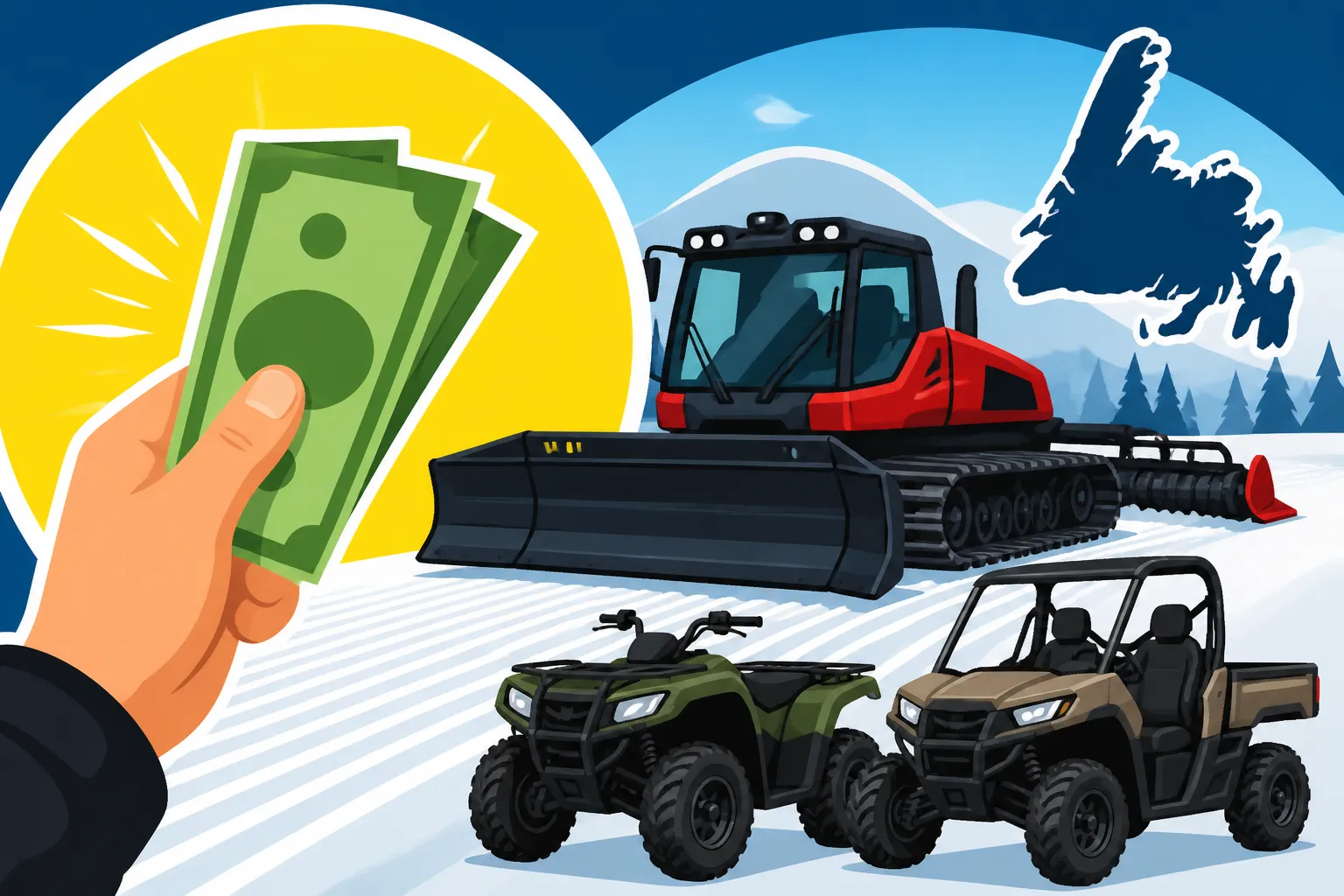
The reason Newfoundland Charges $10 for a Snow Groomer is rooted in a pragmatic understanding of the role these machines play. Unlike the general recreational use of ATVs or side-by-sides, snow groomers are typically operated by non-profit clubs, volunteer groups, or commercial entities primarily focused on trail maintenance. These organizations often rely on membership fees, fundraising, and grants to operate. Imposing a high registration fee on such essential equipment would significantly burden these groups, potentially leading to less groomed trails or higher costs for snowmobilers. The $10 fee is essentially an administrative charge, covering the cost of processing the registration and issuing the necessary permit and plate, without becoming a barrier to the vital service these machines provide.
This approach reflects a policy decision to support the infrastructure that enhances winter recreation across the province. By keeping the registration cost minimal, the government indirectly supports the efforts of snowmobile clubs and other organizations that contribute significantly to the local economy and community well-being. It’s a way of saying, "We recognize your contribution, and we don't want bureaucracy to hinder your good work." This low fee ensures that the focus remains on keeping the trails accessible and safe, rather than on recouping significant revenue from these specialized machines.
The Registration Process for a Snow Groomer
Registering a snow groomer in Newfoundland follows a similar, albeit simpler, path to other off-road vehicles, but with that distinctive $10 price tag. First, you'll need to gather your paperwork. This typically includes a bill of sale or proof of ownership, especially if you're transferring a machine from a previous owner. If it's a brand-new groomer, you'll need the New Vehicle Information Statement (NVIS) from the dealer. Just like any other ORV, you'll also need to provide your personal identification and proof of address. When it comes to things like bills of sale, a reliable template from a service like LawDepot can be incredibly helpful to ensure all the necessary details are captured accurately, making the process smoother at Motor Registration.
Once you have your documentation in order, you'll need to book an appointment at a Motor Registration office. While walk-ins might sometimes be accommodated for quick inquiries, booking ahead ensures you'll have dedicated time to complete the registration without unnecessary delays. During your appointment, the agent will review your documents, process the registration, and collect the $10 fee. Upon successful registration, you'll be issued an identification plate and a registration permit for your snow groomer. Remember, having your [Newfoundland Registration Paperwork Explained] and in hand, along with the plate attached correctly to your machine, is crucial for legal operation on provincial trails.
Comparing Snow Groomer Fees to Other ORV Categories
It's easy to look at the $10 registration fee for a snow groomer and wonder why other machines cost so much more. The discrepancy isn't random; it's part of a structured approach to ORV management in Newfoundland and Labrador, reflecting different uses, impacts, and administrative considerations. Understanding these differences can help clarify the broader fee structure and the provincial government's priorities when it comes to regulating off-road activities.
ATV and Side-by-Side Registration Costs
For many recreational riders, the registration cost for an ATV or a side-by-side is the benchmark. Here in Newfoundland, [Newfoundland Charges $95 for an ATV] for a standard machine. Side-by-sides, which were explicitly added as their own class in 2022, typically fall into a similar higher fee category as they are often used for similar recreational purposes, carrying multiple passengers and frequently traversing diverse terrains. This higher fee acknowledges their widespread recreational use, the broader scope of trails they access, and the greater administrative overhead associated with managing their presence across the province.
There are also specific considerations for certain demographics. For instance, seniors, who are often active participants in the ORV community, receive a discounted rate. A senior registering an ATV, for example, pays a reduced fee. This tiered pricing for recreational vehicles reflects an effort to make off-road activities accessible to a wider range of residents, while still covering the costs associated with broader enforcement, trail monitoring, and safety initiatives. It's a balance between promoting recreation and responsible management.
Trail Bike and Other Niche Machine Fees
Beyond ATVs and side-by-sides, you'll find other ORV categories with their own distinct registration costs. For example, [Newfoundland Charges $5 for a Trail Bike]. This incredibly low fee for trail bikes, much like the snow groomer, speaks to a particular understanding of their use. Trail bikes are often lighter, used more for single-track riding or by younger riders learning the ropes, and generally have a smaller footprint than a larger ATV. The province likely views their impact and typical usage as less extensive or more specialized, thus justifying a minimal administrative fee.
Other niche machines, while perhaps not explicitly listed with their own separate fee as low as a snow groomer or trail bike, would generally be assessed based on their closest functional equivalent. For instance, an amphibious machine might be categorized based on its weight or engine size if it doesn't clearly fit into one of the other ORV classes, but the spirit of the legislation is to apply a reasonable fee based on use and impact. The overarching goal is to ensure all off-road vehicles are registered and identifiable, contributing to safer trails and better resource management, regardless of their specific type.
The Impact of Usage on Registration Rates
The provincial government's philosophy on ORV registration fees heavily leans on the intended use and operational impact of the machine. Recreational machines like ATVs and side-by-sides, which are used for a wide range of activities and cover extensive distances on public and private lands, generally incur higher fees. These machines require more robust regulation, enforcement, and often contribute to greater wear and tear on shared trail systems, necessitating a higher fee to help offset these costs.
In contrast, machines like snow groomers and trail bikes, which have more specialized or limited operational profiles, benefit from significantly reduced fees. Snow groomers provide a community service, enhancing safety and access for snowmobilers, while trail bikes might be seen as having a lower environmental impact or are used more in confined settings. This distinction based on usage pattern and societal benefit, rather than just raw machine value or power, is a fundamental principle behind Newfoundland's tiered registration system. It's about recognizing the diverse roles off-road vehicles play across our province.
Essential Paperwork and Considerations for Snow Groomer Owners
Owning a snow groomer, whether for a snowmobile club, a commercial operation, or even personal cabin maintenance, comes with specific responsibilities beyond just operating it. Ensuring your machine is properly registered and that you have all the necessary documentation in order is paramount. It’s not just about avoiding fines; it’s about proving legal ownership and ensuring smooth operations, especially if you ever need to sell the machine or, heaven forbid, recover it after a theft. The provincial government has a clear set of requirements, and being prepared makes all the difference.
Documents You'll Need at the Registry
When you head to Motor Registration to finalize your snow groomer's $10 registration, having all your ducks in a row paperwork-wise will save you a lot of hassle. The absolute core document is proof of ownership. For a brand-new snow groomer, this means the New Vehicle Information Statement (NVIS) provided by the dealer. This statement essentially proves that the machine is new and has never been registered before. For a used groomer, you'll need a proper bill of sale. It's not enough to have a scrap of paper; the bill of sale should clearly identify the machine by its Vehicle Identification Number (VIN), the names and addresses of both buyer and seller, the date of sale, and the purchase price.
Alongside proof of ownership, you'll need your personal identification – typically a valid driver's license or other government-issued photo ID – and proof of your Newfoundland and Labrador address. If the machine is being registered to an organization, you'll need appropriate corporate documentation. For any transaction, especially for a used machine where the chain of ownership might be a bit fuzzy, having a sworn affidavit or an indemnity form might be necessary. Tools like LawDepot can be invaluable here, offering professionally drafted bill of sale templates and affidavit forms that ensure all legal requirements are met, preventing future headaches at the registry.
Transferring Ownership of a Used Snow Groomer
Transferring ownership of a used snow groomer requires careful attention to detail, much like any other ORV. The process is critical to ensure the new owner legally possesses the machine and can register it in their name. The previous owner is typically responsible for providing a valid bill of sale, ensuring the VIN is correctly documented. The new owner then takes this bill of sale, along with their identification, to Motor Registration to complete the [Newfoundland Transfer of Ownership Explained]. Even though the initial registration fee for a snow groomer is only $10, there might be a nominal fee associated with transferring ownership, so it's always good to check current rates.
It's also essential to note that the seller has a responsibility to notify the registrar within 10 days of selling the machine. This ensures that their name is removed from the record for that specific ORV, preventing any future liability issues. For the buyer, completing the transfer promptly means the machine is legally theirs and they can secure a valid registration. If you're buying from a private seller, and especially if there's any doubt about the paperwork, insist on a comprehensive bill of sale, perhaps even a notarized one, to protect yourself. A robust document, easily generated through resources like LawDepot, provides peace of mind for both parties.
Maintaining Your Registration and Plate
Once your snow groomer is successfully registered, you'll receive an identification plate and a registration permit. This permit serves as your official proof of registration. Unlike many other vehicle registrations, [Newfoundland Registrations Never Expire] for off-road vehicles; you pay once, and it's valid for as long as you own the machine. This means you won't get annual renewal notices in the mail, which can be a relief, but also means it's up to you to keep your paperwork safe. However, if your permit is lost or damaged, you'll need to apply for a duplicate, which typically costs a small fee.
The identification plate, which you must securely attach to your snow groomer, is just as important as the permit. It must be clearly visible and kept free of mud, snow, or any obstruction that would prevent an officer from reading it. Regularly inspect the plate to ensure it hasn't been damaged or lost during operation, especially when working in harsh winter conditions. If your plate ever needs replacing due to damage or loss, there's a specific process for obtaining a [Newfoundland Replacement Plates at $30]. Keeping your registration documents handy, perhaps in a waterproof pouch on the machine or with your other essential papers, is also a smart practice for quick verification if ever requested by an enforcement officer.
Beyond Registration: Operational Rules for Snow Groomers
While securing your $10 registration for a snow groomer is an important first step, it's far from the only consideration for operating these machines in Newfoundland and Labrador. The province's Off-Road Vehicles Act, along with associated regulations, outlines a broader set of rules that govern where and how ORVs, including snow groomers, can be operated. These rules are designed to ensure safety for everyone using shared trails, protect the environment, and provide a clear framework for responsible off-road activity.
Where Snow Groomers Can Legally Operate
Snow groomers, by their very nature, have a distinct operational profile compared to recreational ATVs or snowmobiles. Their primary purpose is trail maintenance, meaning they typically operate on designated snowmobile trails, club-managed corridors, or private lands specifically used for winter recreation access. They are generally not permitted on public roads or highways, except for specific, limited crossings or short stretches where absolutely necessary to access a trail, and only under strict conditions as outlined in the Act. This includes requirements for visibility and speed when on public roadways.
It's crucial for snow groomer operators to be intimately familiar with the specific routes and areas where they are authorized to work. This means understanding the boundaries of managed trail systems, checking for any local municipal bylaws that might affect operations, and ensuring they have permission if operating on private property. While a snow groomer registration is proof of legal ownership, it doesn't grant unrestricted access everywhere. Staying within approved areas is key to avoiding penalties and ensuring the continued access that these machines are designed to support.
Safety Equipment and Operational Best Practices
Operating a snow groomer, especially in often remote and challenging winter conditions, demands a high level of safety awareness and appropriate equipment. While the Act specifies general safety requirements for all ORVs, such as helmet use for operators and passengers (though a fully enclosed cab might offer an exemption for eye protection), snow groomers have additional practical considerations. Given their size, weight, and the nature of their work, ensuring visibility, especially during low light or inclement weather, is paramount. This includes having functioning head and tail lamps, as well as amber lights if operating near or on public access points.
Beyond legal requirements, best practices dictate that operators should always be trained, operate defensively, and be aware of other trail users. Snow groomers are large and can be slow-moving, making it essential to signal intentions clearly and yield to other traffic where appropriate. Carrying a comprehensive first-aid kit, communication devices (especially in areas with cell service gaps), and emergency repair tools are also vital. Operators should always inform someone of their planned route and estimated return time, particularly when working alone in remote areas. This focus on safety protects not only the operator but also the general public who rely on well-maintained and safely groomed trails.
Common Questions and Misconceptions
Despite the clear guidelines laid out in the Off-Road Vehicles Act, some aspects of ORV registration and operation can still lead to confusion, especially when dealing with specialized machines like snow groomers. Riders and operators often have practical questions that go beyond the black-and-white text of the regulations. Understanding these nuances is crucial for staying compliant and avoiding unexpected issues down the road.
What if My Machine Serves Multiple Purposes?
A common question, especially for those who own versatile machines, is what happens if a snow groomer also happens to be capable of other tasks. Perhaps you use it primarily for grooming snow trails in winter, but in the off-season, you use it to move heavy materials around a private cabin property or pull a utility trailer. The key distinction under the Act, as it pertains to the $10 snow groomer fee, is the primary design and intended use of the machine. If the machine is clearly engineered and predominantly used for snow grooming, it will generally qualify for that specific registration class and its associated fee.
However, if your "snow groomer" is actually a modified side-by-side or a large ATV that you've simply attached a grooming implement to, it would likely be registered as its base vehicle type (e.g., a side-by-side or ATV) and incur that higher fee. The $10 fee is specifically for machines whose raison d'être is snow grooming. It's not about what accessories you attach but what the machine inherently is and how it's primarily designed to be used. If in doubt, contacting Motor Registration directly to clarify your machine's classification is always the best approach to ensure you're compliant and avoid any potential issues.
Differences for Commercial vs. Personal Use
Another area of occasional confusion revolves around whether the $10 snow groomer registration fee changes based on commercial versus personal use. For instance, if a snowmobile club owns a groomer for community trails, that's generally seen as a community service. But what if a private company offers snow grooming services to multiple clients or if an individual uses a groomer solely on their own extensive private property? The good news is that the Act's definition of a snow groomer and its associated fee typically does not differentiate based on the commercial or personal nature of its use. As long as the machine meets the definition of a "snow groomer" under the Act, the $10 registration fee applies.
The focus remains on the machine's inherent design and primary function. However, if a machine is used commercially, especially for hire, there might be other commercial regulations, insurance requirements, or business licensing considerations that apply, separate from the ORV registration itself. These would be external to the Off-Road Vehicles Act but are important for any commercial operator to be aware of. The low registration fee is a consistent benefit for any machine that qualifies as a snow groomer, recognizing the specialized nature of its operation.
| ORV Type | Standard Registration Fee (Newfoundland) | Common Use Case | Key Rationale for Fee |
|---|---|---|---|
| Snow Groomer | $10 | Trail maintenance for snowmobiling | Essential community service, specialized use |
| Trail Bike | $5 | Single-track riding, often lighter impact | Smaller footprint, niche recreation |
| ATV (All-Terrain Vehicle) | $95 (Seniors $55) | General recreational riding, utility work | Broad recreational use, widespread impact |
| Side-by-Side | $95 (Similar to ATV rates) | Recreational riding, multi-passenger, utility | Broad recreational use, widespread impact |
| Duplicate Registration | $25 | Replacing a lost or damaged permit | Administrative cost of re-issuance |
| Replacement Plate | $30 | Replacing a lost or damaged identification plate | Manufacturing and administrative cost |
| Transfer of Ownership | Variable (e.g., Seniors $16, others higher) | Change of legal owner for any ORV | Administrative cost of updating records |
Disclaimer
This article is for general informational purposes only and does not constitute professional advice. Laws, prices and regulations vary by location and change over time. Consult a qualified professional for guidance on your specific situation.