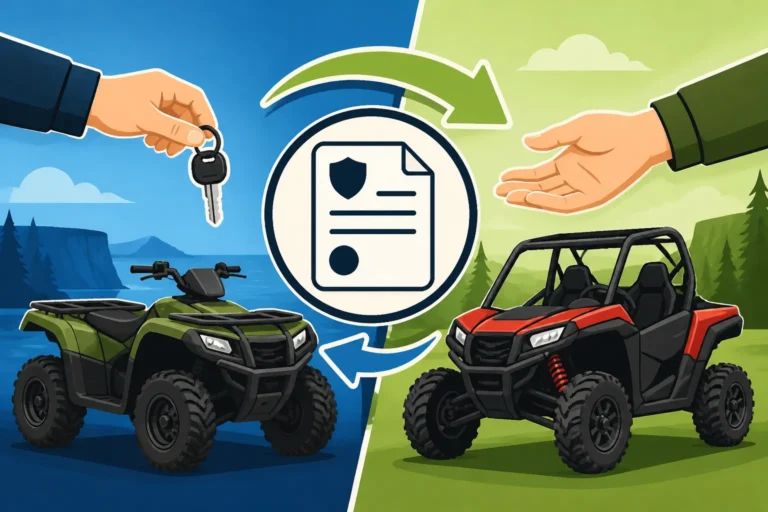
Newfoundland Registrations Never Expire
One of the most common hassles for vehicle owners is that dreaded annual renewal notice in the mail or the inevitable scramble to re-register. We've all been there, wondering why we have to pay again and again for something we already own. But if you’re a proud ATV or UTV owner in Newfoundland, you can breathe a sigh of relief because the provincial off-road vehicle registration system is wonderfully, refreshingly different. This guide will walk you through everything you need to know about Newfoundland's unique "never expire" registration, from getting started to understanding what happens when you sell your machine.
Understanding Newfoundland's Unique Registration System
Let's face it, dealing with government paperwork can feel like a never-ending cycle, especially when it comes to vehicle renewals. You buy a car, pay the registration, and then every year or two, you're back at square one, shelling out more money and filling out more forms. It's a frustrating, recurring task that often feels like an unnecessary burden. This constant cycle of renewals can make planning your finances difficult and often leads to last-minute rushes to avoid penalties.
Why "Never Expire" Is a Game Changer for Riders
This is where Newfoundland truly stands out for off-road vehicle enthusiasts. Unlike passenger vehicles or even ORVs in some other Canadian provinces, once you register your ATV or UTV here, that registration is valid for as long as you own the machine. Think about that for a moment: no more annual fees, no more renewal reminders, no more frantic trips to Motor Registration before a deadline. It's a one-time investment that frees up your time and your wallet for years to come. This "set it and forget it" approach dramatically reduces the administrative load on riders, letting them focus more on enjoying the vast trails and stunning barrens Newfoundland has to offer, rather than worrying about expiration dates. This unique feature is a huge benefit and a point of pride for many local riders. Newfoundland Registrations Never Expire.
For many riders, the peace of mind that comes with a never-expiring registration is invaluable. Imagine not having to budget for an annual fee, or worse, finding out your registration has lapsed just when you're planning a weekend trip to your cabin. This system removes that stress entirely. It’s a policy designed with the long-term enjoyment of the province’s incredible off-road landscape in mind, encouraging responsible ownership without piling on continuous administrative requirements. When you consider the longevity and potential for multiple owners over a machine's lifespan, this single-payment model truly makes sense for the off-road community.
The financial implications are also significant. While there's an initial fee, which we'll cover later, it's the only registration fee you'll ever pay for that specific machine under your ownership. Over years, this adds up to substantial savings compared to provinces with yearly or biennial renewal fees. This long-term cost-effectiveness allows riders to allocate their funds to other aspects of their passion, such as machine maintenance, gear upgrades, or planning more extensive trips across the island. It's a clear demonstration of how a well-thought-out system can truly benefit the community it serves.
The Legal Basis: The Off-Road Vehicles Act
This "never expire" policy isn't just a convenient practice; it's a fundamental part of the provincial legislation governing off-road vehicles. The current framework is rooted in [Newfoundland's Off-Road Vehicles Act], which came into force relatively recently, replacing older statutes. This Act provides clear definitions for various off-road vehicles, establishes registration requirements, and outlines the rules of the trail, ensuring that riders understand their responsibilities from a legal standpoint. It's comprehensive legislation that guides everything from helmet use to highway crossings, all designed to promote safety and enjoyment.
The Act was a significant update, bringing the regulations into the modern era of off-road vehicle use. It recognized the growing popularity of machines like side-by-sides and updated categories to reflect the diverse range of ORVs now in use across the province. This legislative clarity means that the "never expire" provision is not some loophole or an oversight, but a deliberate policy choice made by the provincial government. It provides a solid legal foundation for your registration, ensuring that its validity is clearly defined and protected by law, offering reliability and predictability to all ORV owners.
Understanding that this system is legally mandated adds another layer of confidence for owners. You're not relying on an informal arrangement; you're operating within a clear legal framework. This means that law enforcement and government agencies operate with the same understanding of ORV registration rules. This consistency is crucial for both compliance and enforcement, creating a stable environment for the off-road community. So, rest assured, your one-time registration is not only convenient but also firmly established in provincial law.
What "Never Expire" Truly Means for Ownership
It's important to understand the nuance of "never expire" – it's tied to your ownership of the machine, not just the machine itself. This means that [Newfoundland Registration Valid While You Own It]. As long as the machine is in your name, the registration remains active. You don't need to do anything else. This clarity avoids any confusion about ongoing responsibilities or hidden fees down the line. It's truly a testament to the simplicity and rider-friendly nature of Newfoundland's system, minimizing bureaucratic hurdles for the individual owner.
However, this also means that if you sell your ATV or UTV, or transfer ownership in any other way, your personal registration for that specific machine is effectively retired. The new owner must then complete their own initial registration process, restarting the "never expire" clock for them. This mechanism ensures that the provincial registry always has the most current owner information on file, which is crucial for things like contacting owners in case of an issue, accident reporting, or tracking ownership history. It makes the transfer process clean and ensures accountability for each successive owner.
So, while the machine's registration status changes with ownership, the principle of a one-time registration for each owner remains. This system strikes a balance between providing long-term convenience to individual owners and maintaining an accurate and up-to-date registry for all off-road vehicles in the province. It's a well-designed approach that benefits both riders and the provincial authorities, making the ownership experience straightforward and transparent from start to finish.
The Initial Registration Process: Setting You Up for Life
Getting your ATV or UTV registered in Newfoundland is usually a smooth process, provided you arrive prepared. Because it’s a one-time registration, getting it right the first time means you won’t have to revisit it until you decide to sell or transfer your machine. This initial step is your only real hurdle, so taking the time to gather all the necessary paperwork and understand the procedure is well worth the effort. It's the foundation for years of worry-free riding across the province.
Essential Documents for First-Time Registration
Whether you're bringing home a brand-new machine from a dealer or purchasing a seasoned quad from a private seller, the documentation requirements are crucial. For a new off-road vehicle, you'll need the New Vehicle Information Statement (NVIS) provided by the dealership. This document certifies that the machine is new and details its specifications, VIN, and other pertinent information. It’s essentially the birth certificate of your machine and is indispensable for its first registration. Make sure to keep it safe until your appointment at Motor Registration.
If you're buying a used machine, the most critical document is a comprehensive bill of sale. This isn't just a casual scribble on a napkin; it needs to clearly identify the seller, the buyer, the machine (including its Vehicle Identification Number or VIN), the sale price, and the date of sale. More importantly, you need a complete chain of ownership. If the previous owner didn't register the machine, you'll need bills of sale from all prior owners in Newfoundland, tracing back to the last registered owner or the original NVIS. This can sometimes be a sticking point for older machines without a clear paper trail. LawDepot can be a helpful resource for generating standardized, legally sound bills of sale, ensuring all necessary fields are covered and protecting both buyer and seller. [Newfoundland Registration Paperwork Explained].
Beyond the machine-specific documents, you'll also need personal identification and proof of address. This usually includes a valid driver's licence or other government-issued photo ID, along with a document showing your current residential address in Newfoundland, such as a utility bill or lease agreement. Having all these documents organized and readily accessible before your appointment will save you time and potential frustration, ensuring your registration goes through without a hitch. Double-checking your checklist before you leave home is always a good practice.
The Role of Motor Registration Offices
The provincial Motor Registration Division offices are where you’ll complete your off-road vehicle registration. While walk-ins might sometimes be accommodated, it's highly recommended to [Newfoundland Registration by Appointment]. Booking ahead ensures you have a dedicated slot, minimizing wait times and allowing staff to prepare for your visit. You can typically book these appointments online or by phone, making it a convenient first step in the process.
When you arrive for your appointment, be prepared to present all your carefully gathered documents to the clerk. They will review everything, verify your identity, and process your application. This is also the time when they will collect the registration fee. Don't hesitate to ask any questions you might have during the process; the staff are there to help ensure everything is correctly entered into the system. Remember, this is the one and only time you'll typically interact with Motor Registration for this specific machine's registration under your ownership, so making sure it's correct now prevents future headaches.
Once approved, you'll receive your official registration permit and the identification plate for your machine. It’s a simple, straightforward exchange after the initial documentation check. The permit is a crucial document, so keep it in a safe place, ideally a copy on you when riding, and the original secured at home. The plate, of course, needs to be affixed to your machine as required by law. This entire process, while requiring a bit of legwork upfront, sets you up for years of hassle-free riding.
Fees Involved: A One-Time Investment
The beauty of the "never expire" system truly shines when we talk about the fees. When you initially register your ATV or UTV in Newfoundland, you pay a one-time fee, and that's it for as long as you own that specific machine. This isn't an annual renewal cost, but a permanent registration charge. For most ATVs, for instance, the fee is a specific amount, making it a predictable cost for new owners. Similarly, trail bikes have a much lower, symbolic fee, acknowledging their different use patterns and lower impact. [Newfoundland ORV Registration Cost].
It’s worth noting that these fees are designed to be a one-time payment, not a recurring revenue stream like annual renewals in other jurisdictions. This model helps to fund the administrative costs of the registration system itself, without burdening owners with perpetual charges. Think of it as a lifetime membership fee for the privilege of legally operating your ORV in the province. This financial structure makes long-term ownership more economical and predictable for riders, a stark contrast to the continuous expenditures often associated with other vehicle types.
There are also specific rates for seniors, which are lower for some machine types, recognizing the contributions of older residents to the community. This senior discount further exemplifies the thoughtful consideration within Newfoundland's registration policy. While specific numbers change over time, the principle of these charges remains: a single payment for a permanent registration. Always check the official provincial website for the most current fee schedule, but rest assured, it’s a one-time transaction you won't repeat while you own your machine.
What Happens When Ownership Changes?
Even though your Newfoundland ATV or UTV registration never expires for you, the moment that machine changes hands, the registration process begins anew for the next owner. This isn't a flaw in the system; it's a vital part of maintaining accurate records and ensuring that accountability for the machine always lies with its current owner. Understanding this transition is crucial whether you're selling your beloved quad or purchasing a used side-by-side.
Selling Your Registered Machine
When you sell your registered ATV or UTV, your responsibility doesn't end the moment the cash changes hands. You are legally required to notify the Registrar of Motor Vehicles within 10 days of the sale. This notification effectively cancels your registration for that specific machine and removes it from your name in the provincial database. Failing to do so can leave you potentially liable for incidents involving the machine after you've sold it, which is a headache no one wants. [What Happens to Your Registration When You Sell].
The notification process is usually straightforward and can be done by submitting a specific form to Motor Registration. It's a critical step that protects you as the seller and formally concludes your ownership responsibilities under the Act. Providing the new owner's details on this form is helpful, but the primary goal is to ensure the machine is officially out of your name. This ensures that the "never expire" benefit applies to the owner, not just the machine itself in perpetuity, making it clear that each owner holds their own unique, one-time registration.
From the buyer's perspective, they will need a valid bill of sale from you to initiate their own registration. A well-documented transaction protects both parties. It’s always advisable to use a clear, comprehensive bill of sale, perhaps drafted with the assistance of resources like LawDepot, which provides templates for various legal documents. This not only fulfills legal requirements but also clearly outlines the terms of the sale, preventing future disputes. Handing over the machine's identification plate to the new owner is also part of the standard process, as it will be re-issued under their new registration.
Buying a Used Machine in Newfoundland
If you're on the other side of the transaction, purchasing a used ATV or UTV, the onus is on you, the buyer, to register the machine in your name. You cannot simply take over the previous owner's "never expire" registration. It's important to start this process promptly after purchase, as operating an unregistered off-road vehicle is illegal. Your first step will be to gather all necessary documents, most importantly a clear and complete bill of sale from the previous owner. [Newfoundland Transfer of Ownership Explained].
As mentioned earlier, if the previous owner didn't register the machine themselves, you might need a "chain of ownership" – meaning bills of sale from every owner dating back to the last registered owner or the original NVIS. This can sometimes be challenging for older machines where informal sales have occurred. In cases where a clear bill of sale is unavailable or the chain is broken, you may need to complete a sworn affidavit and indemnity form. These forms, often available through legal document services like LawDepot, attest to your ownership and indemnify the Registrar against future claims, allowing you to proceed with registration even without a perfect paper trail.
Before you finalize any purchase, especially from a private seller, it's always wise to perform a few checks. Verify the VIN on the machine matches the bill of sale. If possible, consider checking if there are any liens against the machine through a service like the provincial personal property registry. This protects you from unknowingly taking on someone else's debt. Once you have a clean bill of sale and have verified the machine's status, you can confidently approach Motor Registration to apply for your own permanent registration, securing your place in Newfoundland's ORV community.
Special Transfer Scenarios: Gifts, Estates, and More
Ownership changes aren't always about a straightforward sale. Sometimes, machines are gifted, inherited, or transferred under unique circumstances. In these situations, the underlying principle remains the same: the new owner must register the machine in their name, and their registration will also be a "never expire" one. However, the documentation required for these transfers can differ slightly from a standard sale.
For instance, if an ATV or UTV is transferred after the death of the owner, the process involves providing documentation such as the death certificate and proof of executorship or administration of the estate. While specific fees may apply for these transfers, there are notable exceptions. For example, [Newfoundland Transfers on Death Cost Nothing] in terms of the transfer fee itself, though the new owner will still need to apply for their initial registration. This is a compassionate provision, recognizing the difficulties associated with handling an estate.
Gifts between family members or friends will also require a bill of sale, even if no money changes hands, simply stating the value as "gift" or a nominal amount. This ensures a clear record of the transfer of ownership. Again, a properly executed document is crucial. LawDepot can assist in creating gift deeds or other transfer documents that meet legal requirements, ensuring the transaction is transparent and recorded accurately, which is essential for the subsequent registration process at Motor Registration. In all these scenarios, the goal is to establish a clear line of ownership to allow the new owner to obtain their own non-expiring registration.
Maintaining Your "Forever" Registration
While Newfoundland's ORV registration never expires, that doesn't mean you can forget about it entirely once you have your plate. There are still a few administrative details and responsibilities that come with owning a registered off-road vehicle. These are generally simple to manage and are designed to ensure the integrity of the registration system and the safety of all riders.
The Identification Plate: Your Permanent Marker
The identification plate issued by Motor Registration is your machine's visible proof of registration. It's not just a decorative item; it's a legal requirement that must be properly displayed. The Act specifies how and where this plate should be affixed to your ATV or UTV, ensuring it's clearly visible to law enforcement and other riders. Typically, this means on the rear of the machine, unobstructed by cargo, mud, or anything else. [Newfoundland Plates Kept Free of Mud] is more than just good practice; it's a legal expectation.
Imagine being on a trail, and a peace officer needs to verify your registration. If your plate is caked in mud, obscured by a cooler, or simply missing, you could face a fine. Keeping it clean and free from obstructions is a small but important part of responsible riding. It reflects your compliance with provincial regulations and contributes to a safer and more orderly riding environment for everyone. Make it a habit to give your plate a quick wipe down after a muddy adventure.
Beyond visibility, the plate itself is a durable, permanent identifier. Unlike temporary permits, this plate is meant to last the lifetime of your ownership. Treat it well, and it will serve you for years without issue. It's a tangible symbol of your one-time, "never expire" registration, a reminder of the convenience and cost savings you enjoy as a Newfoundland ORV owner.
What if Your Plate or Document is Lost or Damaged?
Accidents happen. Plates can get bent, fall off on a rough trail, or your registration permit might get misplaced or damaged. While your registration itself doesn't expire, these physical proofs of it can certainly get lost or deteriorate. Thankfully, replacing them is a straightforward process, though it does come with a small fee. It’s always better to replace these items sooner rather than later to avoid potential issues if you're stopped by authorities.
If you lose your identification plate, you'll need to apply for a replacement at a Motor Registration office. There's a specific fee for this service, such as [Newfoundland Replacement Plates at $30]. You'll typically need to provide your machine's registration information and some personal identification. The new plate will have a different number, so the provincial records will be updated to reflect this change. It’s important to secure the new plate properly to prevent a repeat loss.
Similarly, if your registration permit document is lost or damaged, you can obtain a duplicate. There's usually a lesser fee for a duplicate document, ensuring you always have official proof of your machine's registration status. Having a digital copy or a photograph of your permit on your phone can be a handy backup, but having the physical document (or a clear printed copy) is recommended when on the trails, especially in areas with no cell service.
Address Changes and Other Administrative Updates
While your registration doesn't expire, your personal details can change. Moving to a new house is a perfect example. While your ORV registration itself doesn't need to be renewed, the provincial authorities still need to know where to reach you. It is your responsibility to notify Motor Registration of any change to your mailing address within a specified timeframe. This ensures that any important correspondence related to your vehicle can reach you.
This notification process is usually simple and can often be done online or by submitting a form. It's not about re-registering your machine, but merely updating your contact information on file. This is crucial for maintaining accurate provincial records and ensures that you remain in compliance with administrative requirements. Imagine a recall notice for your specific machine model; if your address is outdated, you might miss critical safety information.
For those considering moving out of Newfoundland, or even just within the province, updating your information is key. If you're using LawDepot for other legal needs, such as updating your will or creating a power of attorney, you might also be reminded of the importance of keeping all your government records current. These administrative updates, though minor, are essential for ensuring the smooth and responsible ownership of your off-road vehicle within the province's non-expiring registration system.
Why This System Benefits Riders and the Province
The "never expire" registration system in Newfoundland isn't just a quirky local detail; it's a carefully considered policy that offers tangible advantages to both the off-road vehicle community and the provincial government itself. It fosters a more engaged and responsible riding culture while streamlining administrative processes, creating a win-win situation for everyone involved.
Reduced Administrative Burden
From a governmental perspective, processing millions of annual or biennial vehicle renewals is an enormous administrative undertaking, requiring significant staff, resources, and infrastructure. By adopting a one-time registration for ORVs, Newfoundland's Motor Registration Division drastically reduces this recurring workload. This frees up personnel and resources that can then be reallocated to other essential services, or to focus on more complex aspects of vehicle registration and enforcement, rather than the repetitive task of processing renewals.
For riders, the reduction in administrative burden is even more direct. No more remembering renewal dates, no more filling out forms every year, and no more budgeting for an annual fee. This simplicity saves valuable time and removes a common source of frustration. It simplifies the ownership experience, making it more appealing for individuals to legally register their machines from the outset, rather than trying to avoid a system they perceive as overly complex or costly in the long run.
This streamlined approach means fewer lines at the Motor Registration office, fewer calls to government service centres about renewals, and generally less bureaucracy for everyone. It’s a smart policy that recognizes the unique nature of off-road vehicle use, where machines might be seasonal or used less frequently than daily drivers, making annual renewals feel particularly onerous. The efficiency gained benefits both the service provider and the customer.
Encouraging Compliance and Safer Riding
A registration system that's easy to understand and involves a single, upfront cost is far more likely to encourage compliance than one with ongoing fees and complex annual procedures. When the barrier to entry is lower in the long term, more people will register their ATVs and UTVs, bringing more machines into the official provincial registry. This increased compliance contributes to more accurate data on ORV ownership, which can then inform policy decisions related to trail development, safety initiatives, and environmental protection.
Furthermore, with the core registration handled, the focus can shift from administrative compliance to operational compliance. This means law enforcement can concentrate on ensuring riders adhere to safety rules, such as wearing helmets, respecting speed limits, and staying on approved trails, rather than chasing down lapsed registrations. [Newfoundland Safety Training Is Mandatory] for new registrants, and ensuring riders complete this training and follow trail etiquette becomes paramount when the basic registration is a given.
A system that encourages broad participation through simplicity also inherently promotes a safer riding environment. When more machines are registered, more owners are exposed to the rules and regulations outlined during the registration process, including safety information. It cultivates a sense of responsibility within the riding community, knowing that everyone is part of a regulated system that prioritizes safe and enjoyable recreation. This leads to a more orderly trail system and fewer preventable incidents.
Long-Term Financial Planning for ORV Owners
One of the most significant benefits for individual riders is the ability to incorporate the registration fee into their long-term financial planning as a one-time expense. Unlike a car, where insurance, fuel, and registration are ongoing costs, your ORV registration is a fixed, one-and-done payment. This makes budgeting for your off-road adventures much simpler and more predictable. You know exactly what you're paying for registration, and that figure won't change as long as the machine is in your name.
This predictability allows riders to allocate their funds to other crucial aspects of ORV ownership, such as maintenance, upgrades, or even investing in quality safety gear. Instead of saving up for an annual renewal, you can put that money towards new tires, a winch, or a comfortable riding jacket. It empowers owners to make more informed financial decisions regarding their hobby, without the constant surprise of recurring governmental fees.
Ultimately, the "never expire" registration model treats your ORV registration more like a deed to property rather than a short-term permit. It acknowledges the significant investment owners make in their machines and reduces the ongoing financial friction. This approach aligns well with the lifestyle of many ORV enthusiasts who value self-sufficiency and straightforward regulations, allowing them to enjoy their machines with minimal bureaucratic interference and maximum financial clarity.
Common Misconceptions and Troubleshooting
Even with such a clear and beneficial system, common questions and misunderstandings can arise, especially for those new to Newfoundland or new to off-road vehicle ownership. Clarifying these points can save riders a lot of unnecessary worry and ensures everyone stays on the right side of the regulations.
"But I Still Get Mail About My Car Registration!"
This is perhaps the most frequent point of confusion. Many people are accustomed to receiving annual or biennial renewal notices for their cars, trucks, and other highway-bound vehicles. So, when they don't receive one for their ATV or UTV, they naturally assume something is wrong, or that they've missed a payment. This can lead to anxiety and unnecessary calls to Motor Registration. The key takeaway here is simple: if you own an ORV registered in Newfoundland, you will NOT receive a renewal notice. [Why No Renewal Notice Arrives in the Mail].
The reason is precisely because your ORV registration never expires under your ownership. There’s nothing to renew, and therefore, no notice needs to be sent. The provincial system is set up to differentiate between these vehicle types, and your ORV record simply indicates a permanent status. This is a good thing – it’s proof that the system is working as intended, not that you’ve fallen through the cracks.
So, if you find yourself fretting about a missing renewal notice for your quad, stop right there. Take a moment to remember the unique system we have in Newfoundland. Your registration is valid, permanent, and doesn't require any action unless you sell the machine or need to update your contact information. Enjoy the freedom from those recurring bills!
Out-of-Province Visitors and New Residents
Newfoundland is a popular destination for tourists, and many visitors like to bring their own off-road vehicles to explore the province's stunning landscape. This often raises questions about registration requirements. Thankfully, Newfoundland has provisions for visitors. If you're visiting from another province or territory and your ORV is properly registered in your home jurisdiction, you generally benefit from [Newfoundland's 30-Day Visitor Exemption]. This means you can ride for up to 30 days without needing to register your machine in Newfoundland, provided you adhere to all other provincial ORV rules.
However, if your stay extends beyond 30 days, or if you decide to become a new resident, the rules change. New residents bringing a machine from another province have a 90-day grace period to register their ORV in Newfoundland. This allows time to settle in and complete the necessary paperwork. After this period, your out-of-province registration is no longer sufficient, and you must complete the Newfoundland registration process, obtaining your own "never expire" plate. This ensures that all machines primarily operated within the province are accounted for under its regulations.
This grace period for new residents is a practical approach, recognizing that moving involves many administrative tasks. It gives you ample time to get your affairs in order, including registering your ORV. Remember, even as a visitor or new resident, all other aspects of Newfoundland's Off-Road Vehicles Act apply, including helmet laws, insurance requirements, and rules for operating on specific terrains.
What About Managed Trail Stickers?
Another point of confusion for new riders often involves the distinction between provincial registration and managed trail stickers. While your provincial ORV registration never expires and allows you to legally operate your machine on approved lands, it is separate from a managed trail sticker. [Newfoundland Managed Trail Stickers] are typically required for access to specific, maintained trail networks operated by clubs or other organizations, such as sections of the T'Railway.
These stickers are not issued by Motor Registration; they are usually purchased from the trail operating authority, often a local ATV or snowmobile club. The fees collected from these stickers go directly towards the maintenance, grooming, and development of these managed trails, ensuring they remain safe and enjoyable for all users. Think of it as a user fee for specific amenities, distinct from your vehicle's fundamental legal registration.
So, while you'll enjoy a permanent provincial registration, if you plan to ride on managed trails, you'll need to inquire about and purchase the necessary trail sticker from the relevant operator. It's a small additional cost that directly supports the infrastructure that many riders rely on for their adventures. Always check with local clubs or the provincial snowmobile federation for information on where and how to obtain these stickers, ensuring you have everything you need before hitting the trails.
Comparing Registration Types
To help solidify the unique aspects of Newfoundland's ORV registration, let's look at how it stacks up against other common vehicle registrations. This table will highlight the key differences, emphasizing why the "never expire" feature is such a significant benefit for off-road enthusiasts in the province.
| Feature | Newfoundland ORV Registration (ATV/UTV) | Newfoundland Highway Vehicle Registration (Car/Truck) | Other Provincial ORV Registration (Example) |
|---|---|---|---|
| Expiry | Never expires (while you own the machine) | Annual or Biennial Renewal Required | Varies, often annual or biennial |
| Renewal Notices | No renewal notices sent | Renewal notices typically mailed/emailed | Varies, often receive renewal notices |
| Fees | One-time payment (initial registration) | Recurring annual/biennial fees | Recurring annual/biennial fees |
| Transfer | New owner must re-register | New owner assumes current registration, then renews | New owner must re-register, then renews |
| Identification | Permanent metal plate | Permanent metal plate, renewed by decal | Varies, plates/decals often renewed |
| Administrative Ease | Very high (after initial registration) | Moderate (due to recurring renewals) | Moderate (due to recurring renewals) |
| Legal Basis | Off-Road Vehicles Act | Highway Traffic Act | Varies by provincial ORV Act |
This table clearly illustrates the distinct advantage of the Newfoundland ORV registration system. The "never expire" aspect dramatically sets it apart from typical vehicle registrations, offering unparalleled simplicity and long-term cost predictability for owners. It's a system designed to reduce ongoing bureaucracy, allowing riders to focus more on their passion for off-road exploration.
Disclaimer
This article is for general informational purposes only and does not constitute professional advice. Laws, prices and regulations vary by location and change over time. Consult a qualified professional for guidance on your specific situation.