Newfoundland’s Off-Road Vehicles Act
Navigating the legal landscape for off-road vehicles in Newfoundland and Labrador can feel like trying to cross a bog in a whiteout – confusing, frustrating, and easy to get stuck. Many riders feel overwhelmed by the sheer volume of regulations, unsure if their machine is properly registered or if they're even allowed to ride where they want. This comprehensive guide is here to untangle the complexities of Newfoundland's Off-Road Vehicles Act, helping you understand your rights and responsibilities so you can ride with confidence and peace of mind.
Understanding the Genesis: Why a New Act?
For years, the rules governing off-road vehicles (ORVs) in Newfoundland and Labrador felt a bit like old fishing gear—functional, but definitely showing its age. As machines evolved and more people took to the trails, the existing legislation struggled to keep up with the changing realities of the riding community. This led to a lot of ambiguity and, frankly, a lot of head-scratching moments for riders trying to do the right thing.
The Need for Modernization
The older legislation simply didn't account for the dramatic shifts in ORV technology and popular usage. Imagine trying to regulate modern side-by-sides with rules designed primarily for simple ATVs and snowmobiles from decades past. It just didn't fit. The province saw a growing need for clearer definitions, updated safety protocols, and a more robust framework that reflected how people actually use their machines today. There was a clear push to enhance safety for all trail users and ensure that the provincial government could effectively manage the growing number of ORVs on our vast landscape. This wasn't about stifling enjoyment; it was about bringing the rules into the 21st century for everyone's benefit.
The previous act, while well-intentioned in its time, had simply become too vague in certain areas and completely silent in others. This often left riders guessing, and enforcement officers with a tricky job trying to interpret outdated provisions for modern situations. The goal of rewriting the act was to create a comprehensive, easy-to-understand document that would serve the riding community and the general public better. It aimed to provide clarity on everything from registration to riding areas, ensuring that the passion for off-roading could continue in a safe and sustainable manner. The province recognized that a healthy riding culture relies on clear, consistent rules that everyone can follow. This significant update replaced older, less comprehensive statutes, ensuring that Newfoundland and Labrador's ORV community operates under a contemporary and relevant legal framework, finally moving past legislation that no longer fully served its purpose. For a deeper dive into what was replaced, check out [The Act Newfoundland Replaced in 2022].
Key Changes Introduced in 2022
The most significant change arrived with the new legislation, [A Statute in Force Since May 2022], which came into effect to address many of these long-standing issues. One of the most notable updates was the formal recognition and specific classification of side-by-sides (UTVs). Before this, these increasingly popular machines often existed in a grey area, leaving owners unsure about their legal standing. The 2022 Act finally carved out a clear space for them, acknowledging their unique characteristics and establishing specific rules tailored to their operation. This was a massive relief for UTV owners who had been patiently waiting for their machines to be explicitly covered.
Beyond side-by-sides, the Act introduced clearer definitions for various types of off-road vehicles, refined rules around registration, and outlined more precise guidelines for safe operation. This included updates to equipment requirements, age restrictions, and where machines could and could not be operated. The overarching aim was to leave fewer questions unanswered, creating a more cohesive and understandable set of regulations for everyone. Riders now have a much clearer picture of what's expected of them, from the moment they purchase a machine to every time they hit the trails. This rewrite truly brought Newfoundland and Labrador's ORV governance into the modern era, setting a new standard for responsible riding. For more on how these machines are now defined, see [Newfoundland Side-by-Sides Added in 2022].
Defining Your Machine: What Does the Act Cover?
One of the biggest sources of confusion for new and even experienced riders is understanding exactly what kind of machine the province considers an "off-road vehicle." The Act isn't just about the typical quad or snowmobile you might imagine; its definitions cast a wide net, ensuring comprehensive coverage for almost anything that runs off the beaten path. Getting this straight is the first step to knowing which rules apply to you.
What is an "Off-Road Vehicle" in Newfoundland?
At its core, Newfoundland's Off-Road Vehicles Act defines an "off-road vehicle" quite broadly. It essentially encompasses any self-propelled vehicle designed for travel on or over land, ice, or snow, that's not a motor vehicle generally used on a public highway. This means your typical all-terrain vehicle (ATV), whether it's a utility quad for the cabin or a sport model for tearing up the trails, falls squarely under this definition. The same goes for snowmobiles, which are explicitly covered, ensuring that winter enthusiasts are also part of the regulatory framework. If it’s got an engine and isn’t primarily for paved roads, chances are it’s an ORV in the eyes of the law.
The Act also explicitly includes other categories, like side-by-sides, dirt bikes (often referred to as trail bikes), and even more specialized machines such as amphibious vehicles or dune buggies. The intention is to cover the vast array of recreational and utility vehicles that operate off the highway system. This broad definition ensures that safety and environmental considerations are applied consistently across various types of machines, preventing loopholes that could compromise public safety or the natural environment. So, before you even think about hitting the trail, knowing that your machine is indeed an "off-road vehicle" under the Act is crucial for understanding all the subsequent rules and regulations you need to follow. Understanding these classifications is key to responsible riding, and you can learn more about them in [Newfoundland Classes the Act Covers].
Specific Categories and Their Distinctions
While the Act has a broad definition for "off-road vehicle," it also recognizes specific categories within this umbrella, sometimes with subtle distinctions that impact regulations. For instance, ATVs, side-by-sides, and snowmobiles, while all ORVs, may have different rules regarding passenger capacity, minimum age for operators, or specific equipment requirements. A single-rider ATV, for example, will have different passenger rules than a multi-seat side-by-side. These distinctions are not arbitrary; they reflect the inherent design and typical use of each machine, aiming to enhance safety for operators and passengers alike.
The inclusion of side-by-sides as their own distinct class in the 2022 rewrite was a game-changer, acknowledging their growing popularity and specific operational characteristics. This means that while they share many common ORV regulations, there might be unique provisions for things like seatbelts, roll-over protection, and passenger age requirements that differ from an open-frame ATV. Similarly, specialized machines like [Newfoundland Amphibious Machines and Dune Buggies] might also have their own nuanced rules within the broader framework. It’s important for owners of these diverse machines to delve into the specifics of the Act and associated regulations to ensure full compliance. Just because it's an ORV doesn't mean all ORV rules are identical across every type of machine; these detailed classifications ensure that the regulations are appropriate for the vehicle in question.
The Cornerstone: Registration Requirements
One of the foundational aspects of riding an off-road vehicle legally in Newfoundland and Labrador is proper registration. This isn't just a bureaucratic hurdle; it's a vital component of accountability and identification, ensuring that all machines operating on Crown lands, designated trails, or even crossing highways can be traced back to a responsible owner. Ignoring this step can lead to significant headaches down the road.
Mandatory Registration for Most Machines
Let's cut right to it: yes, if you own an off-road vehicle in Newfoundland and Labrador, it almost certainly needs to be registered. This isn't an optional step, and it's not something you can put off indefinitely. The Act mandates registration for virtually all ORVs that will be operated anywhere outside of fully enclosed private property. This includes your ATV, side-by-side, snowmobile, and even those trail bikes that might seem like they fly under the radar. The purpose of this mandatory registration is multifold: it helps track ownership, aids in law enforcement during incidents or thefts, and contributes to the overall management of off-road vehicle use in the province. Think of it like a vehicle plate for your car – it's how your machine is identified. If you've ever wondered, [Do You Need to Register an ATV in Newfoundland?], the answer is almost certainly yes.
The good news is that Newfoundland and Labrador offers a rather unique and rider-friendly approach to this requirement. Unlike many other jurisdictions where you're constantly renewing your registration and paying annual fees, Newfoundland's system is a breath of fresh air. While you do pay an initial fee, once your machine is registered, it remains registered for as long as you own it and it remains in the province. This "pay once" model is a significant benefit for long-term owners, cutting down on recurring administrative burdens and costs. It's a key feature of the Act designed to make compliance easier while still maintaining a robust system for identifying machines. For many, this is a relief, as it means one less thing to worry about each year when you're just trying to enjoy the trails. This singular payment makes the process much more straightforward for many riders, and you can find more details on this aspect in [Newfoundland ORV Registration You Pay Once].
Understanding the "One-Time" Fee
The concept of a "one-time" registration fee is arguably one of the most distinctive and beneficial aspects of Newfoundland and Labrador's Off-Road Vehicles Act. For riders accustomed to the annual renewal grind in other provinces or for other types of vehicles, the idea that you pay a fee just once for the lifetime of your ownership can almost seem too good to be true. But it is! Once your ATV, side-by-side, or snowmobile is properly registered with the provincial Motor Registration Division, that registration is valid indefinitely, for as long as you own the machine and it remains in the province. You won't receive annual renewal notices, nor will you have to budget for recurring registration expenses year after year. This means more money in your pocket for gear, fuel, or trail maintenance contributions. You might be curious why your registration never expires, and the simple truth is [Newfoundland Registrations Never Expire].
This unique system simplifies things immensely for riders. Imagine buying a brand-new quad and knowing that, apart from keeping your personal information updated (like a change of address), you're set for registration without further annual payments or paperwork. It removes a common administrative burden and cost that can deter some from registering their machines, or cause them to accidentally let their registration lapse. This forward-thinking approach reflects an understanding of the long-term commitment many riders have to their machines and the trails. It’s a testament to the province's desire to make compliance user-friendly, ensuring that once you've done the initial legwork, you're good to go for the duration of your ownership. This fundamental difference is a point of pride for many local riders, as it truly sets Newfoundland apart. Discover more about this feature in [Why a Newfoundland ATV Registration Never Needs Renewing].
Paperwork and Process: What to Bring
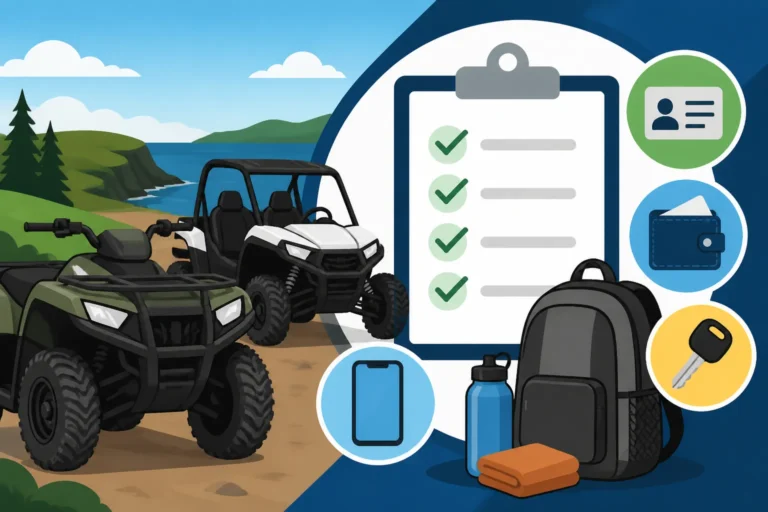
Alright, so you know you need to register, and you love the idea of that one-time fee. Now comes the practical part: getting it done. Like any official process, registering your ORV requires specific documentation to prove ownership, identity, and ensure everything is above board. Don't show up empty-handed, or you'll likely face a frustrating second trip! When you head to Motor Registration, whether by appointment or walk-in (though an appointment is highly recommended for efficiency, see [Newfoundland Registration by Appointment]), you'll need a few key pieces of paper.
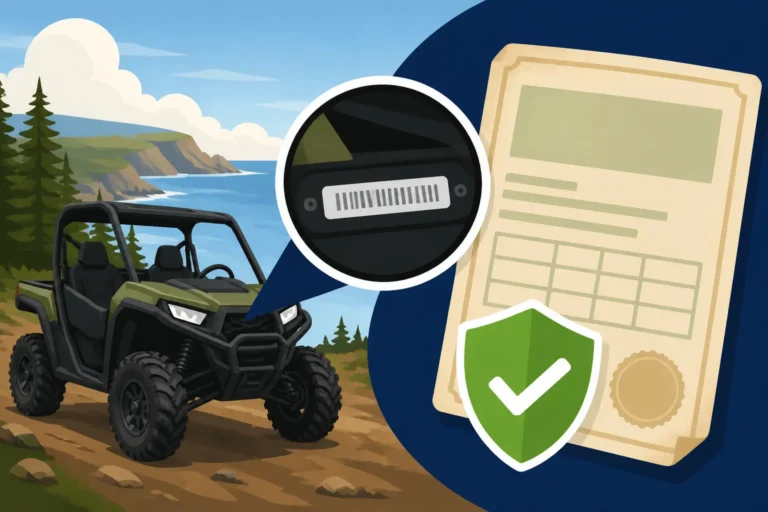
First off, if your machine is brand new, you'll need the New Vehicle Information Statement (NVIS) from the dealer. This document is like the birth certificate for your ORV and is absolutely essential. For used machines, the situation requires a bit more diligence. You’ll need a complete chain of ownership, meaning a bill of sale from every prior owner. This can sometimes be a sticking point, especially with older machines or those acquired through less formal means. A comprehensive bill of sale should clearly identify the machine (VIN, make, model), the seller, the buyer, the sale price, and the date. This is where resources like LawDepot can be incredibly helpful for drafting a legally sound [Newfoundland Bills of Sale From Each Owner] if you're selling or buying privately, ensuring all necessary details are included. Without this clear paper trail, proving ownership can be a real challenge.
If you find yourself in a situation with missing paperwork—perhaps a very old machine, a gift, or an inheritance where the original bill of sale is long gone—you might be asked to provide a sworn affidavit or an indemnity form. These documents essentially declare your ownership under oath and protect the government should any prior ownership claims arise. Again, LawDepot offers templates for these kinds of legal documents, making a potentially complex situation a bit more manageable. You’ll also need valid identification, and often proof of your Newfoundland and Labrador address. Having all your ducks in a row before you go will save you immense time and hassle. Being prepared with all the required documentation is crucial for a smooth process; for a full list, review [Newfoundland Registration Paperwork Explained].
Beyond Registration: Operating Rules and Regulations
Registration is just the first step. Once your off-road vehicle is legally registered, the next big piece of the puzzle is understanding the rules for operating it. This isn't just about common sense; the Off-Road Vehicles Act has specific, enforceable regulations designed to keep you, your passengers, and everyone else on the trails and roads safe. Ignoring these rules can lead to hefty fines and even machine seizure.
Essential Equipment and Safety Gear
Riding an ORV is an exhilarating experience, but it comes with inherent risks. That's why the Act has very specific requirements for equipment and safety gear, not just for the operator but for passengers too. The most critical piece of equipment? A helmet. [Newfoundland Helmet Law for Every Rider] is clear: operators and passengers alike must wear an approved helmet, and it needs to be properly fastened. This isn't just a suggestion; it's a non-negotiable safety standard designed to protect against head injuries, which can be devastating. Approved helmets generally include those certified by organizations like the Canadian Standards Association (CSA), US Department of Transportation (DOT), or the Economic Commission for Europe (ECE).
Beyond helmets, eye protection is mandatory unless your machine has a windshield that provides adequate protection. Imagine a stone or a branch hitting your eye at speed – not a pleasant thought. For side-by-sides, any factory-installed seat belts must be worn by the driver and all passengers. Furthermore, your machine needs to be in good working order, with functional head and tail lamps for visibility, especially if you're out near dusk or dawn, or on those unexpectedly foggy days. Mufflers are also regulated to control noise, and while Newfoundland doesn't have a specific spark arrestor rule, common sense and consideration for fire safety are always paramount. Your machine also needs to carry the [Newfoundland Minimum Insurance Requirement], typically $200,000 in liability coverage, to protect against potential accidents. Officers can ask for proof of this at any time, so always have it readily accessible. Adhering to these [Newfoundland Equipment Requirements] isn't just about avoiding a ticket; it's about protecting yourself and others.
Age, Supervision, and Licensing Requirements
The Off-Road Vehicles Act takes a responsible approach to who can operate these powerful machines, especially when it comes to younger riders. It's not a free-for-all; there are clear age restrictions and supervision rules in place to ensure that operators have the necessary maturity and skill. Generally, minors are restricted from operating certain types of ORVs or in certain areas without adult supervision. For example, specific engine size limitations often apply to riders under a certain age, aligning the machine's power with a child's developmental stage and physical ability. [Newfoundland ATV Age Requirements] dictate that riders must meet specific criteria before hitting the trails solo.
For those under the age of 16, direct supervision by an adult who is at least 18 years old and holds a valid driver's licence is typically required. This supervisor isn't just a bystander; they're responsible for ensuring the young rider follows all rules and operates the machine safely. This setup recognizes that learning to ride takes time and guidance. When it comes to operating an ORV on a public road, even just to cross it or ride a short distance on the shoulder, a valid driver's licence becomes essential. While you generally don't need a driver's licence to operate an ORV off-highway, the moment you interact with public road systems, the rules of the road (and their associated licensing requirements) come into play. Understanding these [Newfoundland Supervision Rules for Young Riders] is crucial for families who enjoy riding together, ensuring everyone stays safe and legal.
Where You Can and Can't Ride
This is often where the rubber meets the trail, literally and figuratively, for many riders: knowing precisely where it's legal to operate your off-road vehicle. Newfoundland and Labrador offers vast and beautiful landscapes perfect for ORV adventures, but access isn't universal. The Act clearly distinguishes between approved riding areas, restricted areas, and places where ORVs are strictly prohibited. Generally, riding on designated trails and approved Crown land is permissible. The T'Railway Provincial Park, which stretches across the island, is a prime example of a multi-use corridor where ORVs are welcomed, though specific rules apply. For general guidance on provincial land, you'll want to review [Newfoundland Crown Land Riding Rules].
Where things get tricky is around highways and private property. You cannot simply ride your ORV along public roads or highways. There are, however, specific allowances for crossing highways, but these come with strict conditions: you must have at least [Crossing a Newfoundland Highway Needs 150 Metres of Visibility] in both directions, come to a complete stop, and yield to all highway traffic. Similarly, riding on the shoulder of a highway is generally restricted to a maximum of [Riding the Shoulder 1 Kilometre to Reach a Trail] to access a trail or private property, and you must maintain a slow speed, typically [20 km/h on a Shoulder]. On private land, the golden rule is simple: if you don't own it, you need explicit permission from the landowner. Trespassing is a serious offence. Additionally, municipalities can have their own bylaws, so what's legal in one town might be prohibited in another. It’s always best to check local regulations before you ride. For a detailed breakdown of road interactions, check out [Can You Ride an ATV on the Road in Newfoundland?].
Ownership Changes and Legalities
Life happens. Machines are bought, sold, gifted, or passed down through generations. When ownership of an off-road vehicle changes hands, the Newfoundland Off-Road Vehicles Act has specific requirements to ensure that the change is legally recognized, the correct party is held responsible, and the provincial registry remains accurate. Getting this wrong can lead to headaches for both the buyer and the seller.
Transferring Ownership: The Seller's Responsibilities
When you decide to sell your off-road vehicle in Newfoundland and Labrador, your responsibilities don't end the moment the money changes hands. The Act places a clear obligation on the seller to notify the provincial Motor Registration Division of the change in ownership. This notification needs to happen quickly, typically within [Newfoundland Notification Within 10 Days] of the sale. Why is this so important? Because until you notify the registry, the machine is still officially associated with you. If the new owner gets a ticket, is involved in an accident, or commits any infraction, that liability could, in theory, still fall back on you. It's a critical step to ensure you're no longer held responsible for a machine you no longer own. For a complete understanding of this process, see [What Happens to Your Registration When You Sell].
Beyond notification, providing the buyer with a clear and legally sound bill of sale is paramount. This document isn't just a receipt; it's the legal proof of the transaction and the new owner's claim to the machine. A good bill of sale should include the machine's full description (VIN, make, model), the sale price, the date of the transaction, and the full names and contact information of both the buyer and the seller. It's also wise to include your tax registrant details as the seller. For private sales, if you're unsure how to draft a comprehensive document, resources like LawDepot can provide excellent, customizable templates for a bill of sale, ensuring you cover all your bases and protect yourself legally. A well-executed transfer protects both parties and maintains the integrity of the provincial registry.
Buying a Used Machine: Your Due Diligence
If you're on the other side of the transaction, buying a used off-road vehicle from a private seller in Newfoundland and Labrador, the principle of caveat emptor—buyer beware—definitely applies. While the one-time registration is a perk, it also means there isn't an annual renewal process to force regular updates, so a buyer needs to be vigilant. Your primary responsibility is to ensure you're getting clear title and proper documentation. The most crucial step is securing a complete bill of sale from the seller, and ideally, a chain of bills of sale from previous owners if possible, to demonstrate clear ownership history. This paperwork is your legal lifeline and is essential for successfully registering the machine in your name. Detailed guidance on the process can be found in [Newfoundland Transfer of Ownership Steps].
Before you hand over any cash, make sure to thoroughly inspect the machine and verify its Vehicle Identification Number (VIN). Check the VIN on the machine against any paperwork provided. Also, it’s highly recommended to perform a lien check. A lien means there’s an outstanding debt attached to the machine, and if you buy it, you could become responsible for that debt. Services exist that allow you to check for registered liens, and skipping this step can be a costly mistake. Don't assume everything is fine; verify it. Finally, understand that when buying from a private seller, you'll likely be responsible for paying HST on the fair market value of the machine when you register it, even if no tax was explicitly charged by the private seller. This is a common point of confusion for buyers. For more information on this, see [Newfoundland Registration and Lien Records] and [Newfoundland Tax on a Private ATV Sale].
Special Cases: Gifts, Estates, and Missing Paperwork
Sometimes, ownership changes hands in ways that aren't a straightforward sale. You might receive an ORV as a gift, or inherit one after the passing of a family member. These situations can present unique challenges when it comes to transferring registration, especially if the usual paperwork (like a standard bill of sale) isn't readily available. However, the Newfoundland Off-Road Vehicles Act does provide pathways for these scenarios, recognizing that not all transfers fit a neat commercial transaction. Understanding these options can prevent unnecessary stress and ensure your machine is legally yours.
For machines received as a gift, a formal gift letter from the donor, clearly stating the transfer of ownership, is often sufficient in lieu of a bill of sale. For machines acquired through an estate after an owner's death, the process usually involves presenting documentation such as the will, letters of probate, or an affidavit of executor. The good news here is that transfers upon death generally incur no transfer fee, which is a small relief during a difficult time. For detailed information, see [Newfoundland Transfer of Ownership Explained] and [Newfoundland Registration After the Owner Dies].
The trickiest situation arises when you have a machine with truly missing paperwork—no bill of sale, no NVIS, and no clear prior owner. This might happen with very old machines or those passed down informally through generations. In these cases, the Motor Registration Division may require you to sign a sworn affidavit and an indemnity form. An affidavit is a sworn statement affirming your ownership of the machine, detailing how you acquired it. The indemnity form protects the provincial government from any future claims against the machine if another owner were to suddenly appear. These forms provide a legal pathway to establish ownership when traditional documentation isn't available. Again, this is where resources like LawDepot can be invaluable, offering professionally drafted templates for [Newfoundland Sworn Affidavits and Indemnity Forms] to help you navigate these more complex situations, ensuring you can eventually get your machine registered legally.
Enforcement and Penalties
The Newfoundland Off-Road Vehicles Act isn't just a set of suggestions; it's a legal framework with real teeth. Riding an ORV in the province comes with a responsibility to understand and abide by these rules. Failure to do so can lead to a range of consequences, from fines and tickets to the seizure of your machine, and in severe cases, even court appearances and long-term repercussions.
Common Offences and Associated Fines
When you're out on the trails or crossing a road, peace officers, including the Royal Newfoundland Constabulary (RNC) and the RCMP, are empowered to enforce the Off-Road Vehicles Act. They're not just looking for reckless behaviour; they're also checking for basic compliance. Common offences that can lead to a ticket include operating an unregistered machine, riding without an approved helmet, failing to carry proof of insurance, or operating in a prohibited area. Other infractions might include excessive noise from a modified exhaust, riding too fast on a shoulder, or failing to yield when crossing a highway. Each of these carries a specific fine range, which can add up quickly.
While I cannot provide specific dollar amounts (as these can change), rest assured that these fines are designed to be a significant deterrent. A single ticket can easily put a dent in your wallet, forcing you to rethink your approach to the rules. The purpose of these penalties isn't to punish riders unnecessarily, but to ensure that the safety and environmental integrity outlined in the Act are upheld. An officer might observe you riding on a restricted piece of Crown land, or simply pull you over during a routine check near a trail access point to verify your documents and compliance. It’s always best to assume you could be checked at any time and ensure your machine and your practices are fully compliant with [Newfoundland Penalties for Riding Illegally] and [Newfoundland Fine Ranges by Offence].
Machine Seizure and Impoundment
For more serious infractions, or repeated non-compliance, the consequences can escalate dramatically beyond a simple fine. The Off-Road Vehicles Act grants peace officers the authority to seize and impound your off-road vehicle. This is a significant penalty that can severely disrupt your riding plans and impose substantial financial burdens. Impaired operation (riding under the influence of alcohol or drugs) is a primary trigger for seizure, as are repeated instances of riding unregistered machines, operating in highly restricted areas, or other dangerous behaviours that pose a direct threat to public safety.
Once your machine is seized, it's typically towed to an impound lot, and you will be responsible for all associated towing and storage fees. These fees can accrue daily, quickly turning an initial offence into a very expensive ordeal. Getting your machine back often requires not only paying off any outstanding fines and impound fees but also demonstrating to the authorities that the original cause for seizure has been rectified. For example, if it was seized for being unregistered, you'd need to complete the registration process. This is a severe consequence designed to prevent unsafe or illegal operation and underscores the province's commitment to enforcing the Act. For a breakdown of the costs involved in getting your machine released, see [Newfoundland Early Release Fees] and [Newfoundland Machine Seizure Rules].
Court Appearances and Long-Term Consequences
While most minor infractions might only result in a fine, more serious breaches of the Off-Road Vehicles Act can lead to court appearances and potentially more significant, long-term consequences. This is particularly true for offences like impaired operation, which carries severe penalties similar to those for impaired driving of a highway vehicle, including substantial fines, licence suspensions, and even jail time for repeat offenders. Contesting a ticket in court, while your right, also involves legal costs, time, and the uncertainty of a judicial ruling.
A conviction, especially for serious offences, can also have ripple effects beyond the immediate penalties. It could impact your insurance rates, lead to further restrictions on your driving privileges (both on and off-road), and create a criminal record for impaired operation. This isn't just about a weekend ride gone wrong; it's about respecting the law and the safety of the community. The Act is designed to deter irresponsible behaviour by making the consequences impactful. Understanding the gravity of these potential outcomes should reinforce the importance of adhering to all regulations and riding responsibly every time you head out. For details on potential legal costs, refer to [Newfoundland Court Costs for a Citation] and [Newfoundland Impaired Riding Penalties].
Visitor and New Resident Considerations
Newfoundland and Labrador is a popular destination for visitors, and many new residents choose to make this beautiful province their home. For those who bring their off-road vehicles with them, or who are considering buying one after moving here, understanding how the Act applies to them is crucial. The rules aren't always the same for everyone, and there are specific exemptions and requirements designed for those who are new to the province.
Riding as a Visitor: The 30-Day Exemption
If you're visiting Newfoundland and Labrador and want to bring your off-road vehicle along for some epic trail riding, you're generally in luck, at least for a limited time. The province offers a convenient [Newfoundland's 30-Day Visitor Exemption]. This means that if your ATV, side-by-side, or snowmobile is properly registered and insured in your home province or state, you can operate it in Newfoundland and Labrador for up to 30 consecutive days without having to register it provincially. This exemption is a fantastic way for tourists to experience our vast trail network without the hassle of temporary registration. Just make sure you carry proof of your home registration and insurance at all times.
However, it’s vital to understand that "exempt" doesn't mean "exempt from all rules." Even as a visitor, you are still expected to abide by all other aspects of the Newfoundland Off-Road Vehicles Act, including helmet laws, age restrictions, and rules for where you can and cannot ride. The 30-day window is a grace period for registration only. If your visit extends beyond those 30 days, or if you plan to stay in the province long-term, you will then be required to register your machine with the provincial Motor Registration Division. So, while it's a generous allowance for a vacation, keep a close eye on your calendar. Knowing [When a Visiting Machine Has to Register in Newfoundland] is key for extended stays.
Moving to Newfoundland: The 90-Day Rule
For those making the exciting move to Newfoundland and Labrador, bringing your off-road vehicle with you is a common desire. Similar to visitors, new residents also get a temporary grace period, but it's a bit longer to allow for the logistics of settling into a new province. [Newfoundland's 90-Day New Resident Rule] stipulates that if you're establishing residency in Newfoundland and Labrador and you bring an ORV that was previously registered in another jurisdiction, you have up to 90 consecutive days to register it in this province. This gives you ample time to get your new address sorted, find your local Motor Registration office, and gather the necessary paperwork without immediately running afoul of the law.
This 90-day window is incredibly helpful, as moving is stressful enough without having to rush to register your machine the moment you arrive. However, just like with the visitor exemption, during this period, your machine must remain properly registered and insured in your previous jurisdiction, and you must carry that proof with you. Once the 90 days are up, you are legally required to complete the Newfoundland and Labrador registration process for your machine, including paying the one-time registration fee. Ignoring this deadline can lead to fines if you're stopped. It's a key step in fully integrating your ORV into its new home. For a complete guide to this process, see [Newfoundland Registration for a New Resident].
Insurance Requirements for All
Regardless of whether you are a long-time resident, a new arrival, or a short-term visitor, one requirement stands firm for every off-road vehicle operating in Newfoundland and Labrador: insurance. The Off-Road Vehicles Act mandates that all ORVs must carry a minimum level of liability insurance. This isn't just a recommendation; it's a legal obligation designed to protect all parties in the event of an accident. The minimum requirement is typically $200,000 in third-party liability coverage, though many riders choose to carry more for greater peace of mind.
This insurance covers damages or injuries you might cause to another person or their property while operating your ORV. Imagine an accident on a busy trail or a minor collision while crossing a road; without insurance, you would be personally responsible for potentially massive costs. Proof of this insurance must be carried with you whenever you are operating your ORV, and you must be able to produce it if requested by a peace officer. In some situations, you might even have [Newfoundland Insurance Proof Within Two Days] to provide the documentation. For visitors, this means your out-of-province insurance policy must meet or exceed Newfoundland’s minimum requirements. This isn't a small detail; it's a fundamental part of responsible ORV operation, ensuring that everyone on the trails and near public roads is financially protected. For more details on what you need, refer to [Newfoundland Insurance Requirements for Riders].
Trail Access and Land Use
Newfoundland and Labrador boasts some of the most spectacular, rugged, and diverse landscapes in Canada, making it an off-road rider's paradise. However, this freedom comes with responsibility. The Off-Road Vehicles Act, along with other provincial regulations and local bylaws, dictates where you can and cannot ride, aiming to balance recreational access with environmental protection, public safety, and private property rights.
Understanding Approved and Restricted Riding Areas
The vast majority of off-road riding in Newfoundland and Labrador occurs on Crown land or designated trail networks. The provincial government has a system of [Newfoundland Approved and Restricted Areas] that guides ORV use. Approved areas are generally open for riding, allowing explorers to traverse diverse terrains from barrens to bog lands, following existing trails or cutting new tracks responsibly. However, even in approved areas, environmental sensitivity (like wetlands) and wildlife considerations (like caribou migration routes) can impose temporary or permanent restrictions.
Perhaps the most famous approved riding corridor is the T'Railway Provincial Park, an 883-kilometre multi-use trail built on the abandoned Newfoundland Railway bed. It stretches from St. John's to Port aux Basques and is a fantastic artery for ORV travel, though it also hosts hikers and cyclists, requiring shared-use etiquette. Restricted areas, on the other hand, might allow ORV use only on specific, marked trails, with strict penalties for straying off these paths. These restrictions are often put in place to protect sensitive ecosystems, historical sites, or to manage conflicts with other land users. Always consult provincial maps and local signage before venturing into unfamiliar territory. Knowing the general rules for Crown land is your first step to legal trail riding; see [Newfoundland Crown Land Riding Rules] for more information.
Municipal Bylaws and Park Restrictions
While the provincial Off-Road Vehicles Act sets the overarching framework, local governance plays a significant role in defining day-to-day riding rules, especially in and around communities. [Newfoundland Municipal Road Bylaws] can impose additional restrictions on ORV use within town limits, often prohibiting machines from certain streets, parks, or residential areas. What might be perfectly legal on a remote Crown land trail could land you a hefty fine if you try to replicate it on a town road. It's not uncommon for municipalities to have specific regulations regarding noise, hours of operation, or designated routes for ORVs to access trails from private properties. Always check with the local town council or municipal office for specific bylaws in any area you plan to ride through or near.
Beyond municipal boundaries, national and provincial parks impose even stricter regulations. For instance, [Newfoundland National Park Vehicle Rules] generally prohibit ORVs on any trails or off-road areas within their boundaries. Places like Gros Morne National Park have very stringent rules to protect their unique ecosystems and wilderness character; usually, ORVs are only permitted on public highways within the park, not on backcountry trails. These restrictions are often due to ecological sensitivities, preservation goals, or to ensure a specific type of visitor experience. Always assume that national and provincial parks are off-limits for ORV riding unless explicitly stated otherwise by park authorities. Ignorance of these local and park-specific rules is not a valid defence.
Protecting the Environment: Wetland and Wildlife Rules
Newfoundland and Labrador's natural beauty is a major draw for off-road enthusiasts, but with that access comes a critical responsibility to protect the environment. The Off-Road Vehicles Act, along with environmental regulations, places significant emphasis on preserving sensitive habitats and wildlife. Wetlands, for instance, are particularly vulnerable to damage from ORV tires, which can destroy vegetation, disrupt delicate ecosystems, and contribute to erosion. This is why [Newfoundland Wetland Protection Rules] are strictly enforced; riding through protected bogs and marshes can lead to substantial fines and environmental damage that takes years, if not decades, to recover from. Responsible riders always avoid wet and muddy areas if possible, or stick to designated trails that are built to withstand such conditions.
Furthermore, wildlife protection is a serious concern, especially regarding species like the province's iconic caribou herds. [Newfoundland Caribou Migration Protection] measures are in place, which can include seasonal or permanent closures of specific areas to ORV traffic to prevent disturbance to these animals during critical times, such as calving or migration. Disturbing wildlife can have long-lasting impacts on their health and population. Riders are expected to be aware of these restrictions, which are typically well-marked with signage. It's a constant reminder that our privilege to enjoy these wild spaces comes with a duty to protect them. Respecting these environmental guidelines ensures that future generations can also enjoy the unparalleled off-road experiences Newfoundland and Labrador offers.
Off-Road Vehicle Fees in Newfoundland and Labrador
The financial side of owning and operating an off-road vehicle in Newfoundland and Labrador is refreshingly straightforward compared to many other jurisdictions. While there are costs involved, especially upfront, the province’s unique "one-time" registration fee model significantly simplifies long-term budgeting for riders. Understanding these various fees is crucial for budgeting and ensuring you're fully compliant with the Off-Road Vehicles Act.
| Machine Type | Initial Registration Status | Expiry | Typical Registration Fee | Transfer Fee (Standard) | Transfer Fee (Seniors) | Transfer Fee (Death) |
|---|---|---|---|---|---|---|
| ATV (All-Terrain Vehicle) | Mandatory | Never | Check current government rates | Check current government rates | Check current government rates | Nothing |
| Side-by-Side (UTV) | Mandatory | Never | Check current government rates | Check current government rates | Check current government rates | Nothing |
| Snowmobile | Mandatory | Never | Check current government rates | Check current government rates | Check current government rates | Nothing |
| Trail Bike | Mandatory | Never | Check current government rates | Check current government rates | Check current government rates | Nothing |
| Snow Groomer | Mandatory | Never | Check current government rates | Check current government rates | Check current government rates | Nothing |
Please note that specific dollar amounts for fees can change. Always check the official government website for the most current figures.
Disclaimer
This article is for general informational purposes only and does not constitute professional advice. Laws, prices and regulations vary by location and change over time. Consult a qualified professional for guidance on your specific situation.