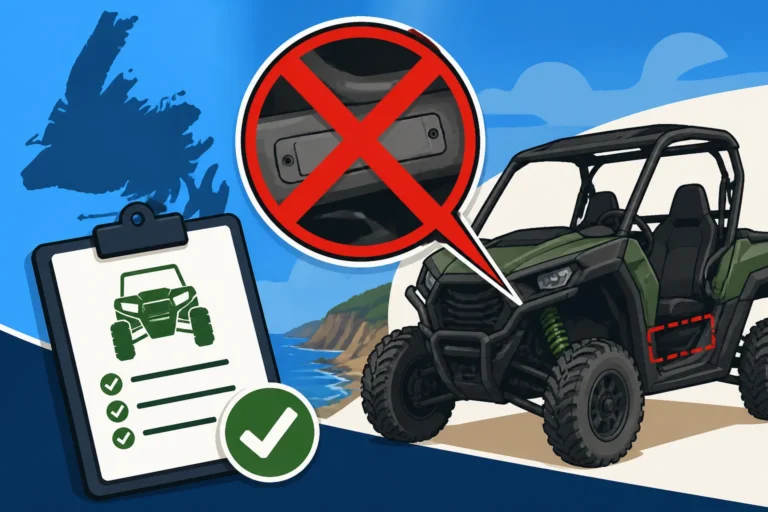
Newfoundland Senior Registration Rates
Many seniors in Newfoundland and Labrador look forward to hitting the trails on an ATV or UTV, but the thought of navigating government paperwork and the associated costs can feel like a daunting hill to climb. It's easy to get discouraged, wondering if you'll pay the same hefty fees as everyone else or if there's a more streamlined process tailored to your stage of life. This comprehensive guide is here to assure you that special consideration is given to senior riders in our province, detailing the reduced registration rates for your off-road vehicle and walking you through every step to make the process as smooth as possible.
Understanding Newfoundland's Senior Registration Rates for ATVs and UTVs
For many years, the provincial government has recognized the unique financial situations that often come with retirement, understanding that fixed incomes require careful budgeting. This recognition extends to various aspects of life, including the enjoyment of outdoor recreational activities. If you're looking to register an all-terrain vehicle (ATV) or a utility terrain vehicle (UTV), commonly known as a side-by-side, in Newfoundland and Labrador, you'll be glad to know there are specific benefits for seniors that acknowledge these realities. The aim isn't just to save you a few dollars, but to encourage continued active participation in the vibrant outdoor culture that defines our beautiful province, ensuring that owning and operating an off-road vehicle remains accessible.
Why Seniors Get a Break on Registration Costs
The philosophy behind offering reduced registration rates for seniors is rooted in supporting those who have contributed so much to our communities over the years. It’s a way of giving back, acknowledging that recreational activities like ATVing or snowmobiling are not just hobbies, but often a crucial part of maintaining physical and mental well-being in later life. We've all heard stories, or perhaps experienced it ourselves, where an unexpected cost can derail plans, especially when managing a retirement budget. The reduced rates aim to remove one such barrier, making it easier for seniors to enjoy the freedom of the trails without undue financial strain. This provincial policy helps ensure that a passion for the outdoors doesn't have to end just because your working career has. It's about respecting the financial realities of fixed incomes while promoting healthy, active lifestyles.
The Specific Machine Types Covered by Senior Discounts
When we talk about off-road vehicles (ORVs) in Newfoundland and Labrador, it’s a broad category, but the senior registration rates apply to several specific types that are widely popular on our trails. Primarily, this includes ATVs, often referred to as quads, which are four-wheeled machines designed for single riders or a driver and one passenger. It also encompasses UTVs or side-by-sides, which typically have bench or bucket seating for two or more occupants and often a cargo bed. Furthermore, snowmobiles, which are essential for winter enjoyment, and even trail bikes, often called dirt bikes, are included under these reduced rates.
It's important to know that these rates are specifically for recreational ORVs. Machines registered for commercial purposes, even if owned by a senior, generally do not qualify for the discount. So, if you're using your ATV primarily for hauling firewood to your cabin or simply enjoying a ride across the barrens, you’re in the clear. The province's Off-Road Vehicles Act outlines these classifications, and the Motor Registration Division applies the senior discount accordingly. This ensures that the benefits are directed toward personal recreational use, allowing many to continue their outdoor adventures without being penalized by standard fees. For example, while [Newfoundland Charges $5 for a Trail Bike] for standard registration, seniors will find their rates are even lower for these smaller machines.
Eligibility for Senior Registration Benefits
Understanding who qualifies for these senior registration rates is crucial before you head to Motor Registration Division. It's not just about age; there are a couple of key criteria that the province looks at to determine eligibility. These rules are in place to ensure that the benefits are directed to the intended residents, those who call Newfoundland and Labrador home and have reached a certain age. It might seem straightforward, but sometimes the details can be a little confusing, especially if you're a new arrival or have unique living arrangements.
Defining 'Senior' for Off-Road Vehicle Registration
In Newfoundland and Labrador, to be considered a "senior" for the purpose of off-road vehicle registration, you must be 65 years of age or older. This is a clear-cut age requirement, so there's no ambiguity about when you become eligible. When you go to register your machine, you'll need to provide proof of your age. The most common and easiest way to do this is by presenting a valid driver's licence, as it clearly shows your date of birth. Other acceptable forms of identification could include a birth certificate or passport, although a driver's licence is usually preferred for its photo identification and ease of verification at the registry office.
It’s worth noting that the senior rate applies to the owner of the machine. So, if you're 65 or older and the machine is registered in your name, you qualify for the reduced rate. This is distinct from the age of the person operating the machine, which has its own set of rules, especially for younger riders. This distinction is important because while your grandchild might enjoy riding your quad, the registration benefit is tied directly to your age as the principal owner. This simplified approach means that as long as the primary registrant meets the age criterion, the savings are yours.
Residency Requirements for Newfoundland Senior Rates
Beyond age, the other primary qualification for securing senior registration rates is being a resident of Newfoundland and Labrador. This means that your primary home and address must be within the province. The Motor Registration Division needs to ensure that these provincial benefits are extended to those who live here and contribute to our local economy and community. When you register, you’ll typically need to provide proof of your current residential address, such as a utility bill, government-issued mail, or another piece of official correspondence that clearly displays your name and local address.
This can sometimes raise questions for those with unique living situations, such as seasonal residents who split their time between Newfoundland and another province, or those who own a cabin here but primarily reside elsewhere. Generally, for the senior rate to apply, your main and permanent residence must be in Newfoundland and Labrador. For new residents who have recently moved to the province, there's typically a grace period before you need to fully register your out-of-province machine here. You can find more details on this in topics like [Newfoundland's 90-Day New Resident Rule], which outlines the timeframe for establishing residency and making the switch. Essentially, if you call Newfoundland and Labrador home for the majority of the year, you should be good to go.
Comparing Senior vs. Standard Registration Fees
One of the most tangible benefits of being a senior off-road vehicle owner in Newfoundland and Labrador is the significant reduction in registration fees. It's not just a token discount; it's a meaningful saving that can really make a difference, allowing you to put those funds towards other essentials like safety gear, maintenance, or even just more fuel for your adventures. Understanding the precise difference between what seniors pay and what everyone else pays highlights the value of this provincial policy.
The Significant Savings on Initial Registration
Let's talk numbers, because that's where the real impact of the senior rate becomes clear. For a standard ATV registration in Newfoundland and Labrador, the fee is typically $95. This is the amount most non-senior riders pay when they first register their machine. However, if you qualify as a senior (65 years or older), that fee is significantly reduced. Seniors pay only $55 to register an ATV. This represents a substantial saving, making it much more affordable to get your new or newly acquired quad legally on the trails. This discount also applies to side-by-sides, which fall under the same general off-road vehicle classification for registration purposes.
Imagine saving $40 right off the bat – that’s enough to cover a good portion of a new helmet, a tank of gas, or perhaps some essential trail tools. It’s a direct benefit that acknowledges the economic realities many seniors face. This initial saving is one of the most appreciated aspects of the senior registration policy, providing immediate financial relief. You can compare this to the standard rate discussed in articles like [Newfoundland Charges $95 for an ATV] to see the direct benefit.
Reduced Costs for Transfer of Ownership for Seniors
The savings don't stop at initial registration. If you're buying a used ATV or UTV, or if you're selling one to another senior, the transfer of ownership fees also come with a senior discount. When a machine's ownership is transferred from one person to another, there's usually a provincial fee associated with updating the registration records. For most residents, this transfer fee is a set amount. However, for seniors, this fee is significantly lower, typically $16.
This reduced transfer fee is particularly helpful if you're frequently updating your machine, perhaps moving from an older model to a newer one, or if you're helping a family member transfer a machine into your name. It removes another layer of expense, making the transaction smoother and more budget-friendly. It’s a great boon for those who might be buying an off-road vehicle from a private seller, as the transfer process is a critical part of securing legal ownership. For more specific details on the senior transfer cost, you can refer to [Newfoundland Transfers Cost $16 for Seniors].
Beyond direct purchases, there's an even more significant benefit for seniors in specific circumstances: when a machine is transferred after the owner has passed away. In these cases, the province recognizes the sensitivity and challenges involved, making the transfer completely free of charge. This compassionate policy ensures that family members, including seniors inheriting a machine, aren't burdened with additional fees during a difficult time. This is explicitly covered in policies like [Newfoundland Transfers on Death Cost Nothing], providing crucial relief when it’s most needed.
To give you a clearer picture of these savings, here’s a quick comparison:
| Machine Type | Standard Initial Registration | Senior Initial Registration | Standard Transfer Fee | Senior Transfer Fee | Transfer on Death |
|---|---|---|---|---|---|
| ATV/UTV | $95 | $55 | $20 | $16 | $0 |
| Snowmobile | $95 | $55 | $20 | $16 | $0 |
| Trail Bike | $5 | $5 | $20 | $16 | $0 |
| Snow Groomer | $10 | $10 | $20 | $16 | $0 |
Note: While the table shows "Snow Groomer" and "Trail Bike," the senior discount is primarily on the ATV/UTV/Snowmobile categories for initial registration. The transfer fees for seniors apply across the board where a fee is typically charged.
The Registration Process for Senior Riders
Navigating government offices and paperwork can sometimes feel like trying to find your way through a new bog – confusing, and a bit daunting if you don't know the best path. The good news is that the process for senior riders to register their off-road vehicles in Newfoundland and Labrador is essentially the same as for anyone else, but with the added benefit of those reduced fees once your eligibility is confirmed. Knowing what to expect and what documents to gather beforehand can make the experience much smoother and stress-free.
Gathering Your Documents: What Seniors Need to Bring
Preparation is key when heading to the Motor Registration Division. You’ll need a few essential documents to prove ownership, your identity, and your eligibility for the senior rate. First and foremost, you need proof of ownership for your ATV or UTV. If it's a brand new machine, the dealer will provide you with a New Vehicle Information Statement (NVIS). For a used machine purchased privately, you'll need a bill of sale signed by both you and the seller. This document is critical as it establishes the chain of ownership. Sometimes, especially with older machines, a formal bill of sale might be missing. In such cases, an affidavit of ownership might be required, which you can often draft using online legal document services like LawDepot before having it notarized.
Next, you'll need proof of your identity and age. A valid Newfoundland and Labrador driver's licence is usually the easiest and most accepted form, as it contains both your photo and date of birth, clearly showing you meet the 65+ age requirement. You’ll also need proof of residency, like a recent utility bill or property tax statement, confirming your address in the province. Having all these items organized in advance will save you a lot of time and potential frustration at the counter. For a comprehensive list, checking resources like [Newfoundland Registration Paperwork Explained] can be very helpful.
Booking Your Appointment and What to Expect
In most cases, especially at larger Motor Registration Division offices, you'll need to book an appointment to register your off-road vehicle. This isn't just a suggestion; it's often a requirement to ensure that staff are available to assist you without long wait times, which can be particularly helpful for seniors. You can typically book these appointments online through the provincial government's MyGovNL portal or by calling your local Motor Registration Division office. It’s always best to book ahead to avoid a wasted trip, especially if you're travelling a distance. For more details on this, look up [Newfoundland Registration by Appointment].
When you arrive for your appointment, ensure you have all your documents ready. The staff will review your paperwork, verify your identification, and confirm your eligibility for the senior rate. You'll typically be asked to fill out a brief application form, and then the staff will process the registration, assign an identification plate (if applicable for your machine type), and issue your registration permit. The process is usually quite efficient if all your documents are in order. Don't hesitate to ask questions if anything is unclear – the staff are there to help, and it’s always better to clarify something on the spot than to leave with uncertainty.
Special Considerations for Joint Ownership or Business Use
Sometimes, an off-road vehicle might be co-owned, perhaps with a spouse, adult child, or another family member. If one of the owners meets the senior age requirement, typically the senior registration rate will apply, which is a great benefit for families. This policy ensures that the age of one owner can secure the discount for the entire machine, regardless of the other owner's age. This flexibility acknowledges that machines are often shared family assets, and the intention is to support senior riders.
However, if the ATV or UTV is registered in a business name or primarily used for commercial operations – for example, a guiding outfit, a rental fleet, or a landscaping company – then the senior discount typically does not apply. The reduced rates are specifically for personal, recreational use. It's important to be upfront about the intended use of the machine during registration to avoid any complications down the line. If you're unsure about how joint ownership or business use might affect your senior rate, it's always best to call Motor Registration Division directly for clarification tailored to your specific situation. This ensures compliance and avoids any surprises.
Beyond the Initial Registration: Long-Term Benefits
The reduced initial and transfer fees for senior off-road vehicle owners are fantastic, but the benefits don't stop there. Newfoundland and Labrador's unique registration system offers a significant long-term advantage that applies to all ORV owners, including seniors, providing unparalleled peace of mind and further financial relief over the lifespan of your machine. This "set it and forget it" aspect of registration is particularly appreciated by many.
The Never-Expiring Registration Advantage
One of the most remarkable features of off-road vehicle registration in Newfoundland and Labrador is that it never expires as long as you own the machine. This is a game-changer! Unlike car registrations, which often require annual renewals and associated fees, your ATV or UTV registration is a one-time process. Once you've paid your initial senior rate fee and received your permit and identification plate, you are registered for as long as you remain the owner of that specific machine. This means no annual renewal notices, no yearly fees to budget for, and no worries about your registration lapsing. This applies equally to seniors, making that initial $55 (for an ATV) truly a one-time expense for that machine.
This policy significantly reduces the administrative burden and long-term costs of owning an ORV. For seniors, this can be an especially welcome relief. Remembering annual deadlines and managing recurring payments can sometimes be a hassle, but with a never-expiring registration, that stress is eliminated. You pay once, and you’re good to go. This fantastic system is detailed further in guides like [Newfoundland Registrations Never Expire] and [Why a Newfoundland ATV Registration Never Needs Renewing], highlighting how this unique provincial approach benefits all riders, especially those on fixed incomes.
Duplicate Registrations and Plate Replacements at Standard Rates
While the initial registration and transfer fees are reduced for seniors, it's important to understand that certain administrative services, such as obtaining a duplicate registration document or replacing a lost identification plate, are generally charged at the standard rates for all owners. For instance, if you misplace your registration permit and need a new copy, there's a fee for that, typically $25 for a duplicate. Similarly, if your identification plate is lost, stolen, or damaged and needs to be replaced, there's a fee, generally $30.
These standard fees for replacements and duplicates apply universally, regardless of age. While it's a small detail, it's worth being aware of. The best way to avoid these extra costs is to take good care of your original registration permit, perhaps keeping a digital copy on your phone and the physical copy in a safe, dry place when not actively on the trails. Always ensure your identification plate is securely mounted on your machine and free from mud or obstructions, as discussed in guidelines like [Newfoundland Replacement Plates at $30] and [Newfoundland Duplicate Registrations at $25]. Being mindful of these small details can help you avoid unexpected expenses down the trail.
Practical Advice and Resources for Senior Off-Roaders
Navigating any government process can bring up questions, and having the right resources at your fingertips can make all the difference. For senior off-roaders in Newfoundland and Labrador, there are several practical steps and resources that can help ensure a smooth registration experience and continued enjoyment of your ATV or UTV. From readily available forms to direct support, you don't have to tackle this alone.
Utilizing Online Resources for Forms and Information
In today's digital age, a wealth of information and many necessary forms are often available online, saving you a trip or a phone call. The provincial government's Motor Registration Division website is your primary source for official information regarding ORV registration. You can often download application forms, view lists of required documents, and find details on current fees. Before you even set foot in an office, a quick visit to their site can clarify many questions.
Furthermore, for preparing documents like a bill of sale or an affidavit of ownership, especially if you're dealing with a used machine without perfect paperwork, online legal document services can be incredibly helpful. Platforms like LawDepot offer templates for various legal documents, including bills of sale, that you can customize and print from the comfort of your home. Using such a service can ensure your documents are legally sound and formatted correctly, which can prevent delays when you go to register. This is particularly useful if you're not comfortable drafting these documents from scratch or simply want a reliable template. Having your paperwork professionally prepared, even if it's a self-service template, significantly streamlines the process at the registry.
Getting Support and Clarification
Even with all the online resources, you might encounter a unique situation or simply prefer to speak with someone directly. If you have specific questions about your eligibility, required documents, or any aspect of the registration process, don't hesitate to contact the Motor Registration Division directly. They have staff dedicated to assisting the public and can provide precise guidance tailored to your circumstances. A quick phone call can often clear up confusion much faster than trying to interpret regulations on your own.
Additionally, if you find the process of visiting the registry office daunting, consider asking a trusted family member or friend to accompany you. They can offer support, help with paperwork, or simply be there for an extra set of ears. Local ATV and snowmobile clubs can also be invaluable resources. These clubs are often filled with experienced riders, including many seniors, who have navigated the registration process multiple times. They can offer practical advice, share insights into local regulations, and provide a sense of community. Connecting with fellow enthusiasts can not only make the process easier but also enrich your overall off-roading experience.
Disclaimer
This article is for general informational purposes only and does not constitute professional advice. Laws, prices and regulations vary by location and change over time. Consult a qualified professional for guidance on your specific situation.