Newfoundland Rules for a Ten-Year-Old Rider
A ten-year-old may be able to ride an ATV in Newfoundland, but age alone does not make every machine suitable or legal. The key checks are the child’s age and weight, the ATV’s engine size, required training, and adult supervision. Here’s how to check those conditions before choosing a machine or heading out.
Can a ten-year-old operate an ATV in Newfoundland?
A ten-year-old is not automatically barred from operating an ATV, but the machine must meet Newfoundland’s youth rules. Those rules connect a young rider’s age and weight with the engine size of the vehicle. A large adult ATV is not appropriate simply because a child can reach the controls or has ridden before.
Before a ride, match the child to the current age-and-weight requirements and confirm the ATV’s engine displacement. Use the official requirements for the child’s actual age and weight, not a rule of thumb from another province, an online forum, or a seller’s description. A machine marketed as a “youth ATV” still needs to meet the applicable Newfoundland limit. For the related criteria, see Matching Engine Size to a Child’s Age and Weight and Newfoundland ATV Age Requirements.
Do not assume that a ten-year-old can operate a bigger ATV because an adult is nearby. Supervision does not replace the machine-size requirement. If the ATV is outside the child’s permitted category, the safer choice is to use a compliant youth machine or have an adult operate the larger one.
| Check before the ride | What to confirm |
|---|---|
| Rider’s age and weight | Use the child’s current details to identify the applicable youth category. |
| ATV engine size | Confirm the displacement against Newfoundland’s current requirements for that category. |
| Manufacturer guidance | Check the owner’s manual for the intended rider size, age guidance, and operating limits. |
| Training | Confirm the child has completed the required safety training and can show proof when required. |
| Supervision | Arrange a qualified adult supervisor who can actively watch the child. |
| Riding location | Confirm the route or property allows the machine and that any trail requirements are met. |
The ATV’s size and controls matter alongside engine displacement. A machine can meet an engine-size limit and still be too heavy, tall, or powerful for a particular child to control safely. The child should be able to reach and use the controls, steer without straining, and stop the machine reliably. If the child cannot do those things in a controlled setting, the ATV is not a good fit.
A ten-year-old riding an ATV is different from a ten-year-old riding as a passenger in a side-by-side. A passenger must use a seat and restraint designed for that machine. A side-by-side’s extra seats do not make it suitable for every child or every trip. Check Newfoundland Rules for a Child Passenger for passenger-specific considerations.
Training, supervision, and protective gear
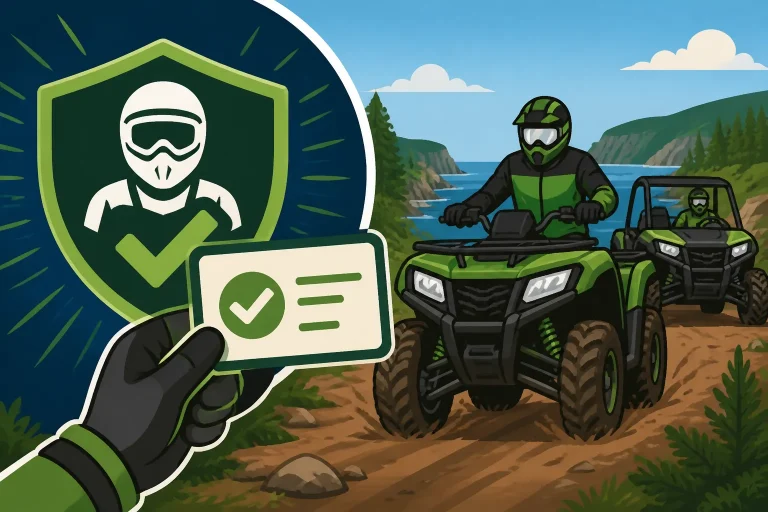
Newfoundland requires safety training for young riders. A ten-year-old should complete the training that applies before operating, and the adult responsible should make sure the child understands how to use the machine safely. The training requirement is separate from the engine-size rule: completing a course does not make an oversized ATV legal for that child. See Newfoundland Safety Training Is Mandatory and Newfoundland Training Required Under 16.
Keep the certificate or other accepted proof accessible while riding, as required. Before the first trip, ask the relevant training provider or registry contact what forms of proof are accepted and whether the child’s certificate is available to print or carry. Do not assume a parent’s training certificate covers a child.
A young rider also needs close adult supervision. The supervisor should meet Newfoundland’s requirements, including the applicable age and licence conditions. The adult should be close enough to intervene, not simply riding somewhere ahead or following far behind. Review Who Must Supervise a Young Newfoundland Rider before planning the ride.
Supervision works best when the adult sets clear limits and chooses a route that suits the child’s skill level. Agree on signals and stopping points before starting. Keep the child within sight and hearing, and slow down or stop if the route becomes harder than expected. A child who is tired, cold, upset, or struggling with the controls should not be pressured to continue.
Protective equipment is not an optional substitute for training or supervision, but it helps reduce risk. A properly fitted, approved helmet is central. Check that it fits the child snugly, is in good condition, and is secured with the chin strap fastened. Goggles or suitable eye protection help keep dust, branches, and insects out of the eyes. Gloves, sturdy footwear, and clothing that covers the arms and legs can also help protect against abrasion and weather.
When comparing helmets online, including on Amazon, check the approval markings and fit details rather than relying on a listing title or a child’s age alone. The helmet must fit the child’s head and meet the applicable standard. For more on the legal requirement, see Newfoundland ATV Helmet Law.
Before the engine starts, walk the child through the controls and basic safety steps:
- Show how to start and stop the ATV, use the brakes, and operate the throttle smoothly.
- Have the child practise turning and stopping in a flat, open area at low speed.
- Explain where the adult will ride and what signal means “stop now.”
- Confirm the child can reach the controls and keep both hands and feet in the intended positions.
- Stop the practice if the child cannot control the ATV consistently.
Where a ten-year-old can ride and what to check
A compliant ATV and trained rider still need a lawful place to ride. A private yard, cabin road, trail, or open piece of land may each have different access rules. Get permission before riding on land the family does not own, and check whether the area is approved or restricted for off-road vehicles. A property owner’s permission does not necessarily override other restrictions.
Managed trails may have separate requirements, such as a trail sticker or proof of training. Check with the trail operator before setting out, especially if the child is new to riding. Do not assume that an ATV can use a route simply because it is wide enough or has visible tire tracks.
For a first ride, choose a short, familiar route with room to stop and turn around. Avoid steep slopes, deep bog, fast traffic, water crossings, and crowded trails. Conditions can change quickly, and a route that is manageable for an experienced adult may be too demanding for a child. If the trail is rough or visibility is poor, turn back rather than trying to coach through a hazardous section.
An adult should also consider the child’s abilities beyond age and weight. Can the child understand instructions, keep a steady speed, recognize hazards, and stop promptly? Does the child remain calm when the machine behaves unexpectedly? If not, delay solo operation and keep working on basic control in a low-risk setting.
Riding on a road or shoulder is not the same as riding on private land or a trail, and it may trigger additional rules. Do not take a child onto a public road unless the machine, rider, route, and circumstances meet the applicable requirements. Check Can You Ride an ATV on the Road in Newfoundland? before planning any road connection. Insurance obligations also matter, so review Newfoundland ATV Insurance Requirements.
A practical pre-ride checklist for parents
Use this checklist before every ride, not just the first one. A child’s size, confidence, and equipment can change, and a route may be different from the last outing.
- Confirm the correct machine. Check the engine displacement against the current age-and-weight requirements. Read the owner’s manual and do not rely only on the seller’s age recommendation.
- Check the child’s fit. Make sure the child can reach the controls, steer comfortably, and operate the brakes without stretching or losing control.
- Verify training. Confirm the child has completed the required training and that the required proof is available.
- Choose the supervisor. Make sure the supervising adult meets the applicable requirements and can stay close enough to monitor the child.
- Inspect the ATV. Check brakes, tires, throttle, controls, lights where needed, and any manufacturer-recommended safety features.
- Fit protective equipment. Check the helmet, strap, eye protection, gloves, clothing, and footwear before the child gets on.
- Plan a suitable route. Confirm access permission, trail rules, restrictions, and any managed-trail requirements.
- Set clear limits. Agree on speed, distance, stopping signals, and what the child should do if separated or worried.
- Check conditions. Avoid riding if weather, visibility, trail conditions, or the child’s energy level makes safe control less likely.
If any required detail is unclear, pause and confirm it with the appropriate Newfoundland authority or trail operator before riding. The most important point is that several conditions apply together: a suitable machine, required training, proper supervision, protective equipment, and a lawful route. Meeting only one or two of them is not enough.
Disclaimer
This article is for general informational purposes only and does not constitute professional advice. Laws, prices and regulations vary by location and change over time. Consult a qualified professional for guidance on your specific situation.