Which Driver’s Licence You Need on a Highway
It’s a common scenario across Newfoundland: you're out on the trails, maybe heading towards your cabin, or just enjoying a Sunday ride, and suddenly you realize you need to traverse a short stretch of public highway to connect to the next section of trail or even just to get home. This is where a lot of off-road vehicle (ORV) owners—whether you're on a trusty ATV or a comfortable side-by-side—get a bit of a knot in their stomach. What exactly are the rules for riding on pavement, even for a short hop? The biggest question often boils down to: what kind of driver's licence do you actually need when your wheels touch the highway? This guide is here to clear up that confusion and make sure you're riding legally and safely.
The Basics: Why Licensing Matters on Newfoundland Highways
Let's face it, the raw appeal of an ATV or UTV is often the freedom of the trail, the wide-open barrens, or those winding woods roads. You're far from traffic, speed limits, and the watchful eye of the law, right? Well, not entirely. The moment your machine—your beloved quad or your capable side-by-side—rolls onto a public highway, even just the shoulder, the rules of the road kick in, and with them, the requirements for a proper driver's licence. It’s a distinction that often catches riders off guard, but it’s absolutely critical for your safety and to avoid costly fines.
The Legal Line Between Trail and Tarmac
It’s easy to think that if you’re riding an ORV, you’re exempt from the same rules as cars and trucks. After all, your machine isn't really designed for highway speeds, is it? And you probably don't have turn signals or passenger airbags. But the law sees things a bit differently. When you transition from a gravel trail, an old logging road, or even your own private property onto a designated public highway in Newfoundland, you are now operating a vehicle in a public traffic domain. This shift brings with it a whole new set of responsibilities and legal requirements that are much closer to driving a car than navigating a bog.
Many riders, especially those new to the province or new to ORV ownership, assume that because they're on an off-road machine, the standard vehicle laws don't apply. This is a dangerous misconception. The Newfoundland Off-Road Vehicles Act is quite clear about where you can and cannot ride, and what rules apply in specific zones. The moment you enter that "highway" zone, even if it's just for a quick dash across, you're subject to regulations designed for the safety of all road users. This is a fundamental concept that underlies all [Newfoundland ORV Road Rules Explained]. Understanding this distinction is the first step in ensuring you're compliant and safe.
Understanding "Highway" in the Act
So, what exactly does the law mean by "highway"? It’s not just the Trans-Canada or the main roads through towns. In the context of the Off-Road Vehicles Act, a "highway" is broadly defined to include any street, road, lane, or place designed or ordinarily used by the public for the passage of vehicles. This definition is quite encompassing. It includes the paved sections, naturally, but also the gravel shoulders, the median, and even adjacent ditches or embankments if they're considered part of the public right-of-way. This broad definition means that even if you're just hugging the edge of the road, you're still considered to be on a "highway."
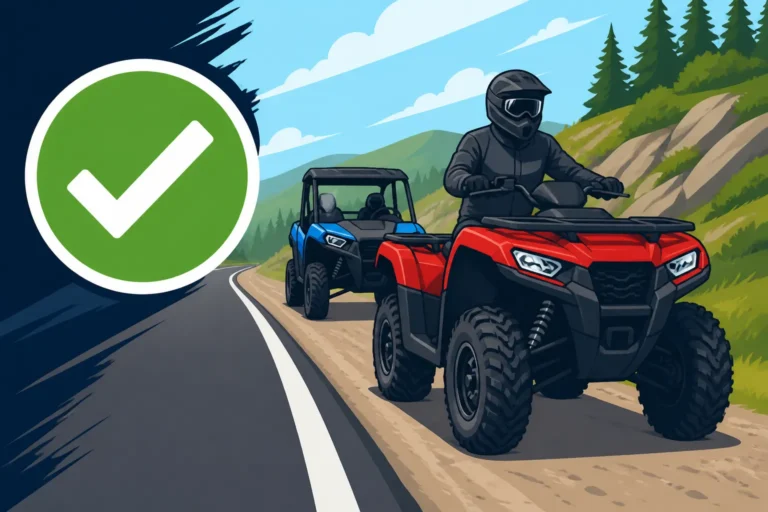
This comprehensive definition is often surprising to riders who imagine "highway riding" as cruising down a four-lane road. But even a rural road or a municipal street falls under this umbrella. This is particularly relevant when you consider the rules around limited highway use, such as [Newfoundland's 1-Kilometre Shoulder Rule], which allows for short-distance travel on a highway shoulder to connect trails. Even in these very specific, limited scenarios, because you are on a "highway," the standard licensing rules still apply. It's not about the speed you're going or how long you're there; it's about the type of road you're on. This distinction is paramount and often where many riders inadvertently fall afoul of the law.
Which Driver's Licence You Absolutely Need
Now for the direct answer that every rider needs to know: when you're operating an off-road vehicle on a public highway in Newfoundland, whether it's for a permitted crossing, a short shoulder run, or if your machine is specifically equipped for legal road use, you absolutely need a standard driver's licence. This isn't just a suggestion; it's a legal requirement designed to ensure that anyone operating a vehicle on a public road has demonstrated a basic level of competency and understanding of traffic laws.
The Standard Requirement: Class 5 or Higher
For most recreational riders in Newfoundland, this means you need at least a Class 5 driver's licence. A Class 5 licence is what permits you to operate most passenger vehicles, light trucks, and, crucially, off-road vehicles when they are on a highway. It signifies that you’ve passed the necessary tests, understand road signs, traffic laws, and safe driving practices. This isn't about how well you can navigate a rocky trail; it's about how you interact with other vehicles and pedestrians on paved or public roads.
Think of it this way: if you're taking your ATV across a highway, you're interacting with cars and trucks that are moving at much higher speeds. You need to know how to judge traffic, signals, and yielding rules. These are skills taught and tested for a Class 5 licence. Even for a brief moment, such as when following [Newfoundland Rules for Crossing a Highway] or when you need to use the shoulder for a short distance as outlined in [Newfoundland Rules for Riding a Shoulder], that standard licence is your proof that you understand how to navigate that environment safely. It's not about the machine you're driving, but the environment you're driving it in. Without that Class 5 or higher, you're not just risking a ticket; you're risking a serious accident.
Side-by-Side Specifics and Enclosed Cabs
Side-by-sides (UTVs) often blur the lines even more for riders. With their steering wheels, bench seats, seatbelts, and sometimes even enclosed cabs, they can feel much more like a small car than a traditional ATV. This can lead to the mistaken belief that perhaps different licensing rules apply, or that their car-like features somehow make them inherently more "road-legal." However, the truth is, when a side-by-side ventures onto a public highway in Newfoundland, the same Class 5 driver's licence requirement applies.
Regardless of how many seats your UTV has, or whether you've outfitted it with additional safety features like advanced lighting or mirrors (perhaps even high-quality aftermarket parts you might find from a brand like SuperATV to enhance visibility and safety for any road use), the licence requirement remains steadfast. The province recognizes side-by-sides as their own distinct class of ORV, a change that came with the updated regulations in [Newfoundland Side-by-Sides Became Their Own Class in 2022], but this classification doesn't alter the fundamental licensing rule for highway operation. If you're behind the wheel of a side-by-side and navigating a public highway, you need to be holding that Class 5 licence. There's no special "UTV highway licence" – it’s the standard road licence that governs all on-highway vehicle operations.
What if You Only Have a Learner's or Restricted Licence?
This is where things can get a bit confusing for new drivers or younger riders. It’s natural to wonder if the rules for a learner's permit (Class 7) or other restricted licences apply to ORVs on highways in the same way they do for cars. The short answer is: don't count on it as a viable option for most ORV highway use. While these licences have their place in the graduated licensing system, they come with significant restrictions that make highway operation of an ORV, even for a short distance, either impractical or outright illegal.
Rules for Class 7 (Learner's Permit)
If you hold a Class 7 learner’s permit in Newfoundland, you are permitted to drive a passenger vehicle only if you have a qualified supervisor with you. This supervisor must be seated beside you, holding a valid Class 5 (or higher) licence, and have at least four years of driving experience. Now, imagine trying to apply this to an ATV or a typical side-by-side for a highway crossing.
On most ATVs, having a "supervisor" seated beside you is physically impossible and inherently unsafe, as ATVs are typically designed for a single rider or, in some cases, a second passenger on a designated seat. Even on many side-by-sides, while there's a passenger seat, the "supervisor" requirement means they need to be able to directly supervise your driving, which can be challenging and potentially illegal given the design and intended use of these vehicles. The spirit of the Class 7 rule is direct instruction and immediate intervention if needed. An ORV on a highway, even for a quick crossing, is generally not the appropriate or legal environment for a learner driver. It’s far too risky and goes against the intent of supervised learning for standard road vehicles. The safest and most compliant approach is to only operate an ORV on a highway once you hold a full Class 5 licence.
Age and Engine Size: Not a Substitute for a Licence
Another area of common misunderstanding revolves around age and engine size restrictions. The Off-Road Vehicles Act has specific provisions for how old a person must be to operate an ORV and guidelines regarding engine displacement relative to a rider’s age and weight. For instance, [Newfoundland ATV Age Requirements] dictate minimum ages for operating certain machines. A 12-year-old might be legally permitted to operate a small-engine ATV on an approved trail under supervision, or a 16-year-old might be fine on a larger machine.
However, these rules do not extend to highway operation. Just because a young rider meets the age and engine size requirements for operating an ORV on a trail does not grant them permission to operate that same machine on a public highway. The highway is a completely different domain with different legal requirements, and the primary one is a valid Class 5 (or higher) driver's licence. No amount of trail experience, or meeting [Newfoundland Engine Size for Age and Weight] guidelines for off-road use, can bypass the need for a standard road licence when your machine is on a highway. Even if you've invested in high-quality accessories from a brand like SuperATV to make your machine more durable for tough trail conditions, those enhancements don't change the licensing rules for highway use. The licence is about the driver's qualification for the road, not the machine's capability off-road.
Common Misconceptions and Crucial Advice
The rules around ORV use on highways are definitely a sticky wicket for many riders. It’s not always intuitive, especially when you’re used to the freedom of the trails. But understanding these nuances is crucial for staying safe and on the right side of the law. Let’s tackle a couple more common points of confusion and offer some essential advice to keep you riding responsibly.
"Just a Quick Cross" – Still Needs a Licence
Perhaps the most persistent misconception is the idea that a "quick dash" across a highway, or a very short stint on the shoulder, doesn't really count as "highway use" in the eyes of the law. Riders often tell themselves, "I'm only on it for a minute," or "It's just to get from one trail to another, so it's not like I'm actually driving on the highway." This line of thinking, while understandable, is unfortunately incorrect and can lead to significant problems.
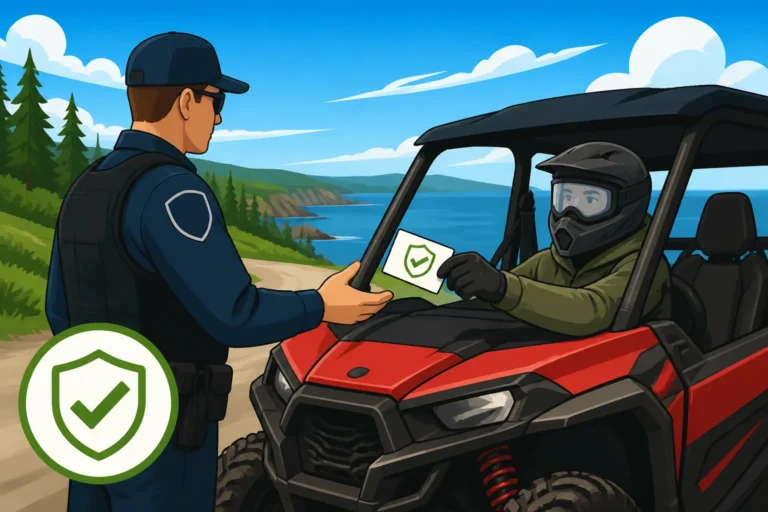
As we've discussed, the definition of a "highway" in the Act is broad. The moment your wheels touch that public road surface, you are subject to highway traffic laws, including the requirement for a valid driver's licence. There's no grace period for brief crossings or short shoulder rides. An enforcement officer isn't going to gauge the length of your highway journey before deciding if a licence is required; if you're on the highway, you need the licence. The penalties for operating an ORV illegally on a highway, especially without the proper licence, can be severe, including fines and potential impoundment of your machine. [Newfoundland Penalties for Riding Illegally] can put a real damper on your riding season, and it's simply not worth the risk. Always assume that if you're on a public road, even for the briefest of moments, your Class 5 or higher licence needs to be valid and in your pocket.
Beyond the Licence: Other Highway Requirements
Having the correct driver's licence is a foundational requirement, but it’s just one piece of the puzzle if you plan any kind of highway interaction with your ORV. Even with a Class 5, your machine itself needs to meet certain standards, and you need to carry other important documentation. This isn't just about avoiding a ticket; it's about making sure your off-road machine is as visible and predictable as possible when sharing space with traditional road traffic.
Here’s a quick rundown of other critical elements:
- Registration: Your ORV must be properly registered with the province. This includes having a valid identification plate (often simply called a "plate") displayed clearly on your machine.
- Insurance: You need to have the minimum mandatory third-party liability insurance coverage, typically set at a certain amount, for your ORV. [Newfoundland Insurance Requirements for Riders] are non-negotiable for highway use.
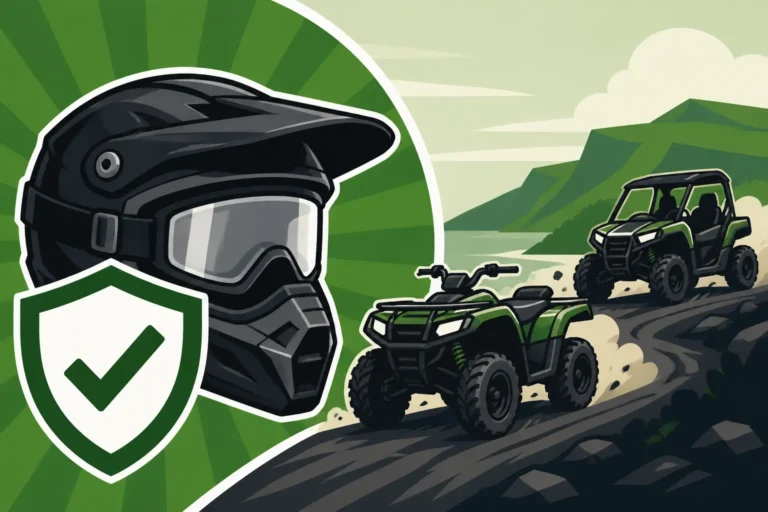
- Helmet: Every operator and passenger on an ORV must wear an approved helmet, securely fastened. This is a crucial safety measure that applies regardless of where you're riding, but it's especially vital when near highway traffic. See [Newfoundland Helmet Law for Every Rider].
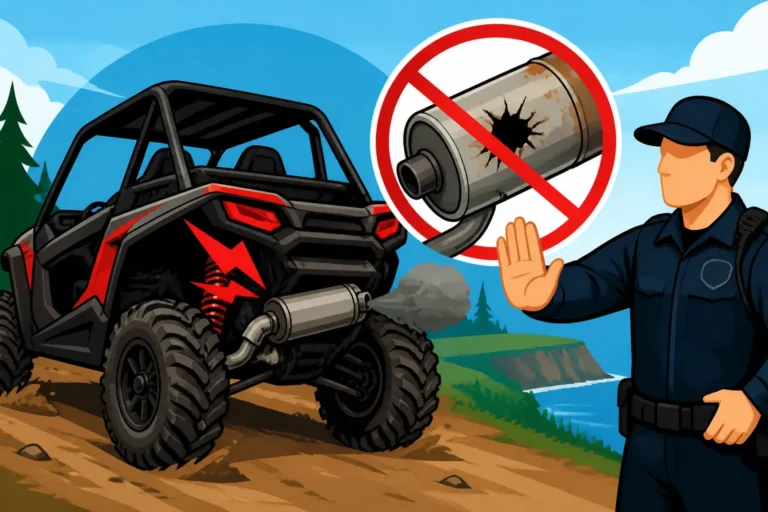
- Equipment: While an ORV isn't a car, if it's operating on a highway, it needs appropriate lighting (headlights, taillights, brake lights), mirrors, and in some cases, turn signals. While your ORV might not have come with all these features from the factory, some riders choose to add aftermarket accessories to enhance visibility and safety for limited highway use. Brands like SuperATV offer a range of products that can help improve the lighting or mirror setup on your UTV, making it safer for those short dashes across the pavement. This ensures your machine is visible and your intentions are clear to other drivers.
Navigating the rules for ORVs on Newfoundland highways can feel like a minefield, but by understanding the definition of a highway, carrying the correct driver's licence, and ensuring your machine is properly equipped and insured, you can ride with confidence and keep your adventures enjoyable and lawful.
| Type of ORV Highway Use | Driver's Licence Required | Other Key Requirements |
|---|---|---|
| Crossing a Public Highway | Class 5 or higher | Valid Registration, Minimum Insurance, Helmet, Functional Lights, Yield to Traffic, 150m Visibility |
| Riding the Highway Shoulder | Class 5 or higher | Valid Registration, Minimum Insurance, Helmet, Functional Lights, Yield to Traffic, Limited to 1 km, Max 20 km/h |
| Operating a Road-Legal Side-by-Side | Class 5 or higher | Valid Registration, Minimum Insurance, Helmet (unless enclosed cab), All Road Safety Equipment (lights, mirrors, etc.) |
| Operating with a Learner's (Class 7) | Not permitted alone | Requires supervising Class 5+ driver, impractical for most ORVs and generally not recommended due to safety/legal concerns. |
| Riding on Private Land | No licence specifically | Still subject to ORV age/training rules, but not highway licensing requirements. |
Disclaimer
This article is for general informational purposes only and does not constitute professional advice. Laws, prices and regulations vary by location and change over time. Consult a qualified professional for guidance on your specific situation.