Newfoundland Safety Training Cost
If you’re budgeting for an ATV or side-by-side in Newfoundland, it helps to separate the safety requirement from the cost of taking a course. The provincial online test is free, while an approved course may charge its own fee. Here’s how to tell which route applies, what to check before paying and what proof to keep with you.
What Newfoundland ATV safety training costs
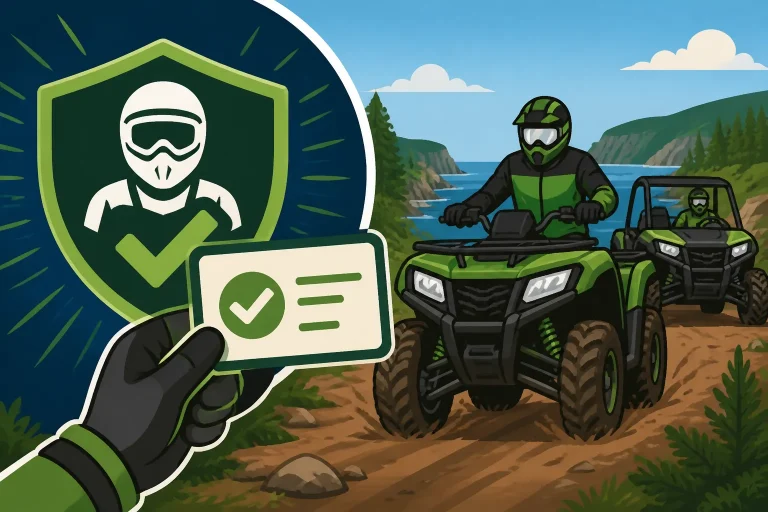
The online safety test available through MyGovNL is free. If you meet the requirements for that route, you can complete the test without paying a course provider. After passing, you can print your certificate.
A course from an approved provider is a different option. Providers set their own fees, and the cost may depend on the course format and what it includes. Check the provider directly for its current price, schedule, delivery method and any materials or other charges. A course fee is not the same thing as a government registration fee or a managed-trail sticker fee.
| Training route | What you may pay | What to check |
|---|---|---|
| MyGovNL online safety test | The test is free | Confirm you are eligible, and check how to access and print your certificate |
| Approved training course | The provider may charge a fee | Ask for the total cost, course format and accepted proof of completion |
| Training required after a suspension or other restriction | Requirements may depend on your situation | Confirm the required route with the Registrar before enrolling |
The free test can be the lowest-cost option, but it is not automatically the right choice for everyone. Some riders may be required to take a course or satisfy another training condition instead. Before spending money, confirm which option applies to your age, riding situation and registration history. The rules and approved options are explained in Newfoundland Safety Training Is Mandatory and Newfoundland Approved Course Providers.
If you already hold a certificate from an accepted course, check whether it meets Newfoundland’s requirements before registering for another one. Don’t assume that a certificate from another jurisdiction, an informal lesson or a general online course will count. If you are unsure, ask the Registrar or the course provider to confirm acceptance before paying.
Who needs training and what counts
Training requirements can depend on the rider and the circumstances. In particular, rules for young operators differ from the rules that apply to adults. A minor may need to complete training and have a qualified supervisor meet their own responsibilities before riding. Age, machine type and supervision requirements are separate issues, so a training certificate alone does not mean a young rider can operate any machine in any situation.
For details about the age-related rules, see Newfoundland Training Required Under 16 and Newfoundland Supervisors and Training Duties. If the rider is a child, also check Newfoundland ATV Age Requirements before choosing a machine or planning a ride. Engine size, the rider’s age and weight, passenger rules and supervision can all matter.
Adults should not assume they need to pay for a classroom course just because they are new to riding. The available route may depend on the applicable rules and the rider’s circumstances. The free online test may be an option, but verify eligibility and whether it satisfies the requirement in your case. If the Registrar has directed you to take a specific course, follow that direction rather than relying on a general description of the online test.
Training may also become relevant when you are registering a machine for the first time or when a suspension or cancellation has created a condition you need to meet. Those situations are not necessarily identical to the ordinary process for an adult rider. See [Newfoundland Training for a First Registration] and [Newfoundland Training After a Cancellation] for related details, then confirm the steps with the appropriate office if your circumstances are unusual.
It is useful to treat these as two separate questions:
- Does this rider need training or proof of training? Check the rider’s age and circumstances against the current requirements.
- Which kind of training will be accepted? Confirm whether the free test or an approved course is appropriate before booking or starting.
That distinction helps avoid two common problems: paying for a course when the free route would have been accepted, or taking a free test that does not satisfy a specific requirement.
How to complete training and keep proof
If the online test is available to you, use the official MyGovNL process rather than an unofficial quiz or a copied set of practice questions. The listed test has 15 questions, and you need 12 correct answers to pass. If you do not pass, review the material and check the instructions for retaking it. The rules and process are covered in Newfoundland’s Online Training Test and Fifteen Questions Stand Between You and a Certificate.
After passing, print the certificate and check that the information is readable. Keep a digital copy as a backup, but don’t assume a photo or saved file will replace the required proof while riding. The applicable rules call for proof to be carried, so have the certificate available in the form required. For more on that requirement, see Newfoundland Proof Carried While Riding.
If you choose an approved provider, ask these questions before enrolling:
- Is this course accepted for the training requirement that applies to me?
- What is the full fee, and are course materials included?
- Is the course in person, online or a mix of both?
- What certificate or other proof will I receive after completion?
- How long should I allow for the course and any assessment?
- What happens if I need to reschedule or repeat an assessment?
Get confirmation of acceptance before paying, especially if you are relying on a certificate earned outside Newfoundland or have been told to meet a particular condition. Save the receipt and completion document. If the provider uses an electronic certificate, download it and check that you can open or print it before heading out.
Do not leave training until the day of a planned ride. Even when the test is short, you may need time to review the material, access the service, resolve an account issue or contact a provider. If you are also registering a machine, keep the training process separate from the ownership paperwork. The registration process has its own requirements; Newfoundland Registration Paperwork Explained can help you prepare those documents.
Budgeting beyond the training fee
Training is only one part of the cost of getting ready to ride. You may also need to budget for registration, insurance, safety equipment and access requirements. These are distinct obligations: completing a safety test does not register your machine, provide insurance or automatically give you access to every trail.
Before your first ride, confirm the machine’s registration status and carry the required documents. If it is a new or used machine, the paperwork needed for registration can vary. See How to Register an ATV in Newfoundland for the registration process and Newfoundland Insurance Requirements for Riders for insurance information.
Some managed trails require a separate sticker from the trail operator. That sticker is not the same as a training certificate or vehicle registration. Check whether your planned route is managed and what the operator requires before you set out. How to Get a Newfoundland Trail Sticker explains that process.
A practical budget checklist is:
- Training: Free for the MyGovNL test; an approved provider may charge.
- Registration: A separate process with its own fee and documentation.
- Insurance: Check that your policy meets the applicable requirements and covers your intended use.
- Trail access: Confirm whether a managed-trail sticker or other permission is needed.
- Equipment: Make sure the rider and machine meet applicable safety rules.
If you are comparing an online test with a paid course, compare more than the price. Consider whether you qualify for each route, whether the course is accepted for your situation, how quickly you need proof and whether you benefit from instructor support. The free option is economical when it meets the requirement; a paid course can make sense when it is required or when its structure and instruction are useful to the rider.
Before paying or riding, confirm current details with MyGovNL, an approved provider or the appropriate registration office. Requirements can vary by rider and change over time, so verify the route and proof you need rather than relying on an old certificate or someone else’s experience.
Disclaimer
This article is for general informational purposes only and does not constitute professional advice. Laws, prices and regulations vary by location and change over time. Consult a qualified professional for guidance on your specific situation.