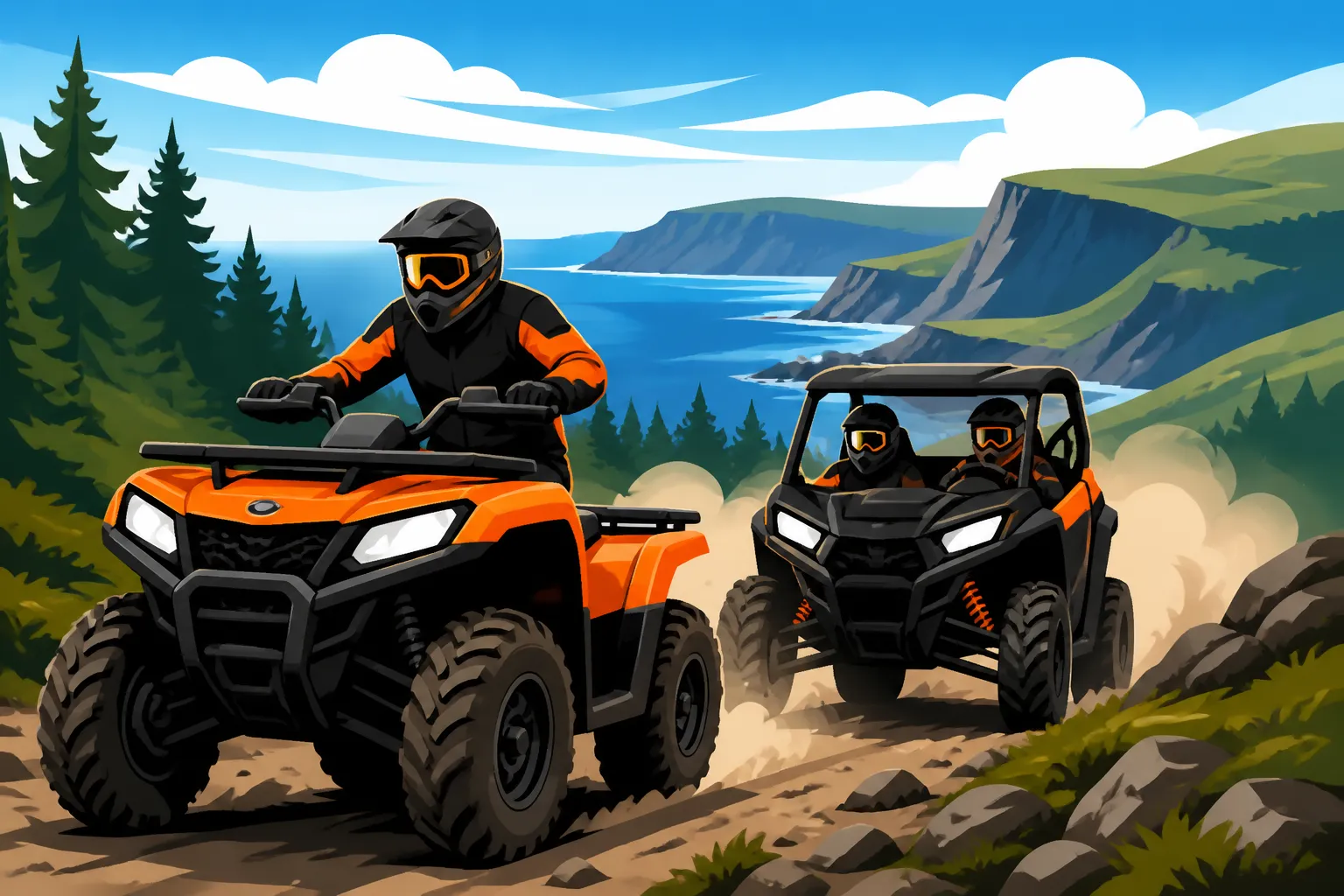
Newfoundland Guided Rides on the T’Railway
A guided ride on Newfoundland’s T’Railway can simplify the logistics of exploring the old rail corridor, especially if you are new to off-road riding or visiting without your own machine. The key is confirming exactly where the tour goes, what the price includes, and which riding and access rules apply. Use these questions to compare options and plan a safer, more realistic outing.
What a guided ride on the T’Railway involves
The T’Railway follows Newfoundland’s former railway corridor, stretching across the island between St. John’s and Port aux Basques. The rail line closed in 1988, and the route is now used for outdoor recreation. Its full length is about 883 kilometres, but that does not mean a visitor can book one continuous ATV tour from end to end. Guided rides, where offered, are usually planned around a particular area, a practical meeting point and the time available.
A tour may use a short section of the railbed as its main route, or combine part of the corridor with nearby trails or other riding areas. The word “T’Railway” in a tour description is not enough to tell you which one. Ask for the actual start and finish points, the expected riding distance, and whether the route returns to the start or requires a shuttle. If the tour uses only a small section, that can still make a worthwhile outing; the important thing is knowing what you are booking.
A guide can help with the parts of a ride that are easy to underestimate: finding the correct trail access, interpreting changing conditions, keeping a group together and adjusting the route when weather or trail conditions make the original plan unsuitable. That support can be especially useful for first-time riders, people unfamiliar with the area and visitors without local knowledge. A guide does not, however, make every route legal or every condition safe. Access, weather, machine suitability and rider requirements still matter.
The T’Railway is also a shared corridor, not a private ATV track. Other people may be walking, cycling or using permitted vehicles, and conditions can change along the way. The corridor’s former railway surface may feel different from a groomed trail, while connecting routes can bring their own obstacles and rules. Ask the operator what terrain is involved rather than assuming the whole outing will be smooth, fast or technically easy.
A guided ride is different from simply renting a machine. With a rental, you may be responsible for choosing and navigating the route yourself. With a guided outing, the operator sets the itinerary and leads the group, but you should still check what equipment is included, who is responsible for the machine, and what happens if the ride is delayed or cut short. For a broader overview of the choices available, see Newfoundland ATV Rentals and Tours.
| Tour detail | Why it matters | What to confirm |
|---|---|---|
| Exact route | “On the T’Railway” can describe different sections and nearby trails | Starting point, route area and whether the ride stays on the railbed |
| Ride duration | Advertised time may include briefing, gear fitting or travel to the trail | Approximate time actually spent riding |
| Machine type | An ATV and a side-by-side have different seating and operating arrangements | Vehicle model or type, passenger capacity and who drives |
| Group format | A private ride and a shared group can feel very different | Maximum group size and whether other bookings join |
| Included equipment | A helmet may be included while other protective gear is not | Helmet, eye protection, fuel and any clothing or gloves |
| Access and requirements | Registration, trail access, training or other conditions may apply | What the operator handles and what each rider must bring |
| Weather policy | Coastal weather can affect visibility and comfort | Cancellation, rescheduling and refund terms |
| Transportation | A trailhead may not be close to lodging or public transport | Whether pickup is offered and the exact meeting location |
Choose a tour format that fits your group
Not every guided outing suits every visitor. Before comparing destinations or looking for the longest ride, decide what you want the experience to feel like. A first ride with an instructor-led pace is different from a full day out with a group that already knows how to handle off-road machines.
Short introductory rides
A shorter ride can be a sensible choice if you have little or no ATV experience, are unsure how you will feel on uneven ground, or want to leave time for other activities. It gives you a chance to learn the controls, practice following instructions and see how your body responds to riding. It may cover less distance than a longer outing, but that is not necessarily a drawback. If the group needs more time for a briefing or practice, a shorter itinerary can leave room for that without turning the day into a rushed endurance test.
Ask whether the advertised duration includes check-in, equipment fitting and the safety briefing. A listing that says “two hours” might mean two hours from arrival to finish, rather than two hours of continuous riding. This difference matters when arranging transport, meals or another activity afterward.
Half-day and full-day outings
Longer tours can provide more time on the trail, but they also require more preparation. You may spend extended periods seated, exposed to wind or rain, and managing vibration from the machine. Longer does not automatically mean better for a beginner or a family. Ask how often the guide stops, whether there is a meal or rest break, and how the route changes if someone becomes tired.
An advertised “full day” may include time for transport, stops and instruction. Ask for a realistic schedule rather than planning around the headline duration. If the group includes riders with different experience levels, find out whether the operator can keep a manageable pace without leaving anyone behind.
Private and shared-group rides
A shared-group tour may be a practical way to join a guided outing, but you may ride with people you have not met and who have different levels of confidence. Confirm the group size, whether the operator divides riders by experience, and whether the guide leads one group or several. Ask how the tour handles a rider who needs to slow down or stop.
A private tour may offer more flexibility, but the operator decides what changes are possible. A custom route can still be constrained by trail access, weather, daylight, machine availability and the group’s abilities. Ask what “private” means in the booking terms: it could mean a private guide, a reserved machine, or simply a booking not shared with other customers.
ATV or side-by-side
An ATV is generally operated by a rider seated astride the machine. A side-by-side has seats and a steering wheel, and may allow a passenger to sit beside the driver. The right fit depends on the operator’s fleet, your comfort and the tour rules. Do not assume that a side-by-side is available just because a tour business offers ATV rides elsewhere.
For a side-by-side, confirm how many people can ride, whether every passenger needs to meet an age or size requirement, and whether the operator expects each participant to take a turn driving. If one person in the group will not drive, check whether they can ride as a passenger and whether the fare changes. For an ATV, ask if each booking includes one machine per rider or whether passenger arrangements are possible on the specific model.
Age, licence, training and supervision requirements can differ by vehicle, rider and circumstances. Do not rely on another tour’s booking page or a general statement about “family friendly” to settle the question. Ask the operator directly, and review Newfoundland Rental Age and Licence Rules and Newfoundland Rental Driver’s Licence Rules if you need help identifying the issues to confirm.
Guided ride or self-guided rental
A self-guided rental may suit people who already know how to operate the machine, can navigate the area and have confirmed where they are allowed to ride. A guided tour is more structured: the operator chooses the route and sets the pace. You are trading some independence for support and local route planning.
If you are comparing a tour with renting and riding on your own, consider the entire cost and workload, not just the machine hire. A self-guided outing may require you to arrange transport to the trailhead, understand local access rules, plan fuel and carry navigation tools. A guided option may bundle some of those elements, but included services vary. Use Newfoundland Guided Tour Cost as a starting point for comparing cost components, then ask each operator for the current total and inclusions.
Understand the route, terrain and conditions
A tour description should tell you more than the name of the trail. The T’Railway is a long corridor, and the experience can vary with location, maintenance, weather and the specific route an operator uses. Ask enough questions to picture the ride before you book.
Pin down the route
Request the trailhead or meeting location and a plain-language description of the route. Ask whether the tour travels on the T’Railway for most of the ride, uses it briefly to reach another area, or follows nearby trails instead. If the operator cannot share a detailed route in advance for safety or operational reasons, they should still be able to describe the general riding area and likely terrain.
Check whether the ride follows a return route or ends somewhere different. A point-to-point ride can require a shuttle or another transport arrangement. Find out whether that transfer is included and where the group finishes. Do not plan to meet the guide at a trailhead based only on a broad regional description; ask for the exact meeting instructions and when they will be sent.
The coast-to-coast route is much longer than a standard tour, and riding its full length is not a reasonable assumption for a short booking. For an overview of the broader corridor and its endpoints, see Riding the T’Railway From St John’s to Port aux Basques. Treat a tour as a local outing unless the operator clearly describes a multi-day itinerary and explains the logistics.
Ask what the surface is like
The former railbed can include compacted material, loose or uneven sections, wet ground, washouts, exposed stones or other conditions that vary by location. A route may also connect to narrower or rougher trails. The tour operator is the best source for current local conditions, but ask specific questions: Is the ride mostly firm railbed? Are there muddy sections? Will the route cross water or travel through soft ground? Are there steep or difficult sections? What does the operator mean by “easy” or “intermediate”?
A skill label is not a guarantee. One operator’s “beginner” route may still feel challenging to someone who has never driven an ATV. Explain your experience honestly, including whether you have ridden before, whether you have used the same kind of vehicle and whether you are comfortable with uneven terrain. The operator can then tell you whether the route is appropriate or recommend a different option.
Treat weather as part of the itinerary
Weather can change comfort and visibility, and wet conditions can make some surfaces harder to manage. An outing may go ahead in light rain, while fog, strong wind, heavy rain or a trail problem could lead to a delay, route change or cancellation. Do not assume that “rain or shine” means the ride will proceed in every condition.
Before paying, read the cancellation and weather policy. Ask who makes the final decision, how the operator contacts guests, and whether a weather cancellation leads to a refund, rescheduling or another remedy under the booking terms. If a third-party marketplace is involved, confirm whether the operator or the booking platform handles changes. The policy can vary by listing, so do not assume that one company’s terms apply to another.
Allow some flexibility in your travel schedule. If you have a ferry, flight or long drive, avoid booking a tour so close to departure that a delay would create a problem. A guided ride depends on more than your own arrival time: equipment checks, briefings and changing trail conditions can affect the schedule.
Remember the shared-trail setting
The T’Railway is used by more than ATV riders. A guide should explain how the group will approach other trail users, but each rider remains responsible for following instructions and travelling at a safe pace. Slow down when visibility is limited, leave room between machines and avoid surprising walkers or cyclists from behind. Keep to the route the guide identifies and do not assume that every side trail or shortcut is open to motorized use.
Good shared-trail manners are practical, not just courteous. Dust, noise, speed and blocked access can affect other users and the community. Review Newfoundland Trail Etiquette Locals Expect before your outing, especially if you have not ridden on a shared recreational corridor before.
Compare operators and booking terms carefully
A tour page can make an outing sound straightforward, but the useful details are often in the fine print or require a question. Compare operators on clarity, suitability and logistics—not only on the length of the ride or the appearance of the photos.
Check what the quoted total includes
Ask for the full amount payable and whether any costs are separate. The price may depend on the machine, group size, ride length, passenger arrangement or season. A quoted amount may not include transportation, protective gear, taxes or other charges. Named providers and booking platforms can change their rates and terms, so check directly with the operator before committing.
If you find a possible tour through Viator or another marketplace, use the listing as a starting point rather than treating it as the final authority on route details. Confirm the schedule, inclusions, meeting point and cancellation terms with the booking information for that specific outing. A listing may be managed by a local operator, and the platform’s general description may not answer practical questions about the ride.
Ask what happens if the minimum group size is not met or if a machine becomes unavailable. Find out whether the operator can substitute a different vehicle and whether that substitution affects passenger seating or the riding plan. If your group needs a particular machine type, make the requirement explicit before booking and get confirmation in writing.
Clarify who supplies equipment
Ask whether the operator supplies a helmet and whether it fits the rider securely. Check whether eye protection is included, particularly if the vehicle does not have an enclosed cab or windshield. Confirm what clothing and footwear you need to bring. A supplied helmet does not mean every item needed for a comfortable, compliant ride is supplied.
Do not assume that a tour provides gloves, rain gear, boots or a change of clothes. Operators may have different equipment policies, and some may have limited sizes. If you need specialized equipment or have a fit concern, ask before arrival. For a longer ride, take the forecast and expected terrain into account when deciding what to wear.
Verify rider requirements before booking
Ask the operator about minimum ages, licence requirements, driver eligibility, training requirements and passenger rules for the exact machine and route. Provide accurate ages and describe who plans to drive. If a minor is riding, ask whether a parent or guardian must be present, whether written consent is required and whether the child can operate the vehicle or only ride as a passenger.
The operator should explain which requirements it checks and what documents to bring. Do not treat a booking confirmation as proof that a rider is legally qualified for every circumstance. Requirements can depend on the machine, the person and where the ride takes place. If the operator gives a general answer, ask for clarification specific to your booking.
For ATV rentals, the machine’s registration, trail access and insurance arrangements are also worth confirming. Rental operators often handle some responsibilities for their vehicles, but that does not automatically settle every obligation for each rider. Ask what the operator supplies and what participants must carry or follow. See Newfoundland Rentals and the Trail Sticker and Newfoundland Rentals and the Insurance Floor for related points to clarify.
Read the waiver and damage terms
A waiver may describe risks, participant responsibilities and how the operator handles damage. Read it before the day of the ride, not while the group is waiting to depart. Ask what counts as damage, how damage is assessed, and whether there is a deposit or card hold. Clarify what happens if a machine needs recovery, if the ride is interrupted or if the participant leaves the route.
Do not assume that a waiver eliminates all responsibility, or that a tour’s insurance covers every loss a participant might face. The operator can explain its coverage and terms, but a general booking description may not set out every exclusion. Ask specific questions about damage, injury, recovery and passenger coverage. Keep the written answers with your booking details.
Evaluate the operator’s communication
Clear communication before payment is a good sign. A responsible operator should be able to explain what riders need to bring, where to meet, how long the experience lasts and what happens in poor weather. They should be willing to discuss whether the route matches a beginner’s experience and whether the machine suits the group.
Look for recent, relevant information about the specific tour rather than relying only on general reviews of the business. Reviews can help identify patterns around organization, equipment and communication, but they cannot confirm current trail access or guarantee conditions on your date. Ask the operator about any detail that could affect your decision.
Plan your arrival and prepare to ride
A good guided outing starts before you get on the machine. Work out the travel plan, arrive with the required documents and dress for a day that may feel colder, wetter or windier on an exposed route than it does at your accommodation.
Confirm the meeting point and transport
Get the exact meeting address, arrival time, parking details and a phone number for day-of changes. A general location such as a town or trail area is not enough if the operator expects you to meet at a particular access point. Ask whether the meeting point is accessible by an ordinary vehicle and whether a shuttle is part of the tour.
If you are staying outside the area, allow time for traffic, road conditions and finding the correct entrance. Do not assume that a rental vehicle, taxi or rideshare can reach a remote trailhead. If the operator offers pickup, confirm the pickup location and whether it is included in the booking. If you are using a ferry or flying in, avoid scheduling the ride immediately after arrival; delays can leave no time to reach the meeting point or complete the check-in.
Arrive ready for the briefing
The guide’s briefing is part of the safety plan, not a formality to rush through. Listen for instructions about throttle and braking, turning, spacing, hand signals, stopping and what to do if the group becomes separated. Ask questions before the ride starts, especially if you have never used that machine type.
Tell the guide about concerns that could affect the outing: limited experience, a passenger who is nervous, a mobility issue, a medical consideration relevant to riding or discomfort with a particular terrain. You do not need to disclose unnecessary personal details, but the guide needs enough information to judge whether the outing is suitable and how to manage the group.
If instructions are unclear, ask for a demonstration. Do not rely on watching another rider and copying them if you are unsure how to operate the controls. A short practice period can help reveal whether the machine feels manageable before the group sets out.
Dress for exposure and changing conditions
Choose clothing that allows you to move, protects your skin and suits the forecast. Long sleeves and long pants can reduce exposure to brush, dust and debris. Sturdy closed-toe footwear is more practical than sandals. Gloves can help with grip and comfort, while eye protection can reduce irritation from dust, rain and wind. The operator may specify particular gear, so follow those instructions.
Coastal weather can shift, and a moving machine can make a mild day feel cold. Bring a layer that fits under or over your riding gear, and use rain protection if conditions call for it. Avoid loose clothing, dangling straps or anything that could catch on the machine. Secure long hair and keep personal items in a closed pocket or bag.
If you rely on prescription glasses, ask whether they fit comfortably under the supplied helmet and whether the operator provides eye protection that works with them. If you use hearing aids or other equipment, explain any practical concern before the ride. The aim is not to overpack but to prevent a small fit or comfort problem from becoming a distraction on the trail.
Bring the essentials, not a heavy load
Ask what the operator recommends and what can be stored on the machine. Take water, any required medication and a phone in a secure, weather-resistant place. Do not assume that there will be cell service along the route. A guide should have a communication and emergency plan, but riders should still know how to stay with the group and what to do if separated.
For a longer outing, ask about food, rest stops and access to washrooms. Bring only what you can secure safely; loose items can fall off, interfere with controls or distract the rider. A large backpack may be uncomfortable, particularly when wearing protective gear. For remote or extended travel, consider the guidance in Cell Dead Zones Along the Railbed and What to Carry for First Aid on the Barrens, while following the operator’s own packing instructions.
Check your own readiness
A guided tour is still physical activity. Riding can involve vibration, cold, heat, uneven surfaces and sustained attention. Eat and drink appropriately before setting out, and do not ride impaired by alcohol, drugs or medication that affects alertness or coordination. Tell the operator if you feel unwell before the ride begins.
If you are uncertain whether the experience will suit you, ask for an honest description of the pace and conditions. It is better to choose a shorter or easier outing than to book a challenging route based on photos. A guide can make adjustments within the available route and safety plan, but cannot turn a machine into an appropriate fit for every participant.
Ride responsibly and understand access limits
A guide makes navigation easier, but the ride still takes place under rules and conditions that apply to the machine and the location. Follow the guide’s instructions, keep your actions predictable and avoid treating a tour as permission to ride anywhere beyond the planned route.
Stay with the group and follow the route
Do not pass the guide, leave the trail or take an unapproved shortcut. If you need to stop, signal or use the method explained in the briefing. Let the guide know if the machine feels difficult to control, if visibility is poor or if you are becoming tired. Continuing silently can put the rest of the group at risk.
Keep a safe following distance. The rider ahead may need to slow down or stop suddenly, and loose material can reduce visibility. Do not crowd other machines or assume the person behind can see every signal. At a stop, position the machine where the guide directs and leave the route clear for other users.
If a machine has a mechanical problem, do not attempt a repair or recovery unless the guide instructs you to do so. Stay in the designated safe area and keep clear of other vehicles. Recovery on wet or soft ground can be hazardous, and an improvised tow can create more risk than waiting for the operator’s plan.
Respect trail access and local restrictions
A tour provider should select a lawful route, but riders should not assume that every part of the T’Railway or every nearby trail is open to every machine at all times. Access can depend on the location, trail management, restrictions, closures and the type of vehicle. Do not continue onto an unsigned side route or follow another machine off the planned corridor because it looks passable.
Ask the operator whether the outing uses a managed trail and what access requirements apply. Clarify whether any trail sticker, permit or proof is handled by the operator or must be carried by riders. The answer may differ between a rental machine and a privately owned machine, and between routes. The relevant overview is Newfoundland Managed Trail Rules.
A tour booking is not a substitute for permission to cross private land or enter a restricted area. The guide should explain where the route goes and what boundaries matter. If the ride is rerouted, follow the guide’s directions rather than making your own choice about access.
Be considerate of other users and nearby communities
Slow down near people, buildings, road crossings and places where the trail narrows. Follow the guide’s directions about yielding and give walkers and cyclists room to pass. Avoid loud revving, unnecessary stops that block the corridor, and riding in a way that throws dust or debris toward others.
A guided group can have a larger impact than one machine, especially on a narrow or busy section. Stay in the order set by the guide and do not spread out across the trail. If the guide asks the group to wait, move aside or pass quietly, do so promptly. Responsible conduct helps protect access for future visitors and local riders.
Know what the guide can and cannot guarantee
A guide can share local knowledge and manage a planned outing, but cannot guarantee perfect weather, an empty trail, a particular wildlife sighting or uninterrupted riding. A route can change because of conditions, access or equipment issues. If the itinerary matters to you, ask what is flexible and what is fixed before booking.
A guided tour also does not remove the need to follow legal requirements that apply to riders. Do not assume that the operator’s insurance covers every passenger or situation, that the machine is suitable for every rider, or that a guide can authorize use of any trail. Keep the operator’s contact information and booking terms, and ask questions early enough to make an informed decision.
Frequently Asked Questions
Can visitors book a guided ride on the T’Railway?
Possibly, depending on the operator, location, season and available machines. Confirm that the specific tour actually uses the T’Railway, where it starts, and whether it is operating on your chosen date. A general listing for Newfoundland ATV tours does not confirm a guided ride on a particular section.
Do I need ATV experience to join a tour?
Not necessarily, but each operator sets its own experience and rider requirements. Tell the operator if you are a beginner and ask whether the machine and route are suitable for a first-time rider. The guide’s briefing is not a substitute for choosing an outing that matches your abilities.
Can children ride on a guided tour?
That depends on the child’s age, the vehicle, the operator’s rules and applicable requirements. Ask whether a child can drive or ride as a passenger, whether a parent or guardian must attend, and what documents or consent are required. Get an answer for the exact tour before paying.
What happens if the weather is poor?
The operator may continue, change the route, delay the start or cancel, depending on conditions and its policy. Check the booking terms before you reserve and ask how you will be notified. Do not assume that bad-weather cancellations automatically receive the same remedy across operators or booking platforms.
Is the entire T’Railway open to ATV tours?
Do not assume that it is. The corridor is extensive, and access can vary by location, management rules and conditions. A tour operator should identify the section it plans to use and explain any access requirements. Follow the approved route and do not treat a tour booking as permission to ride elsewhere.
Disclaimer
This article is for general informational purposes only and does not constitute professional advice. Laws, prices and regulations vary by location and change over time. Consult a qualified professional for guidance on your specific situation.