Fog on an Exposed Barren
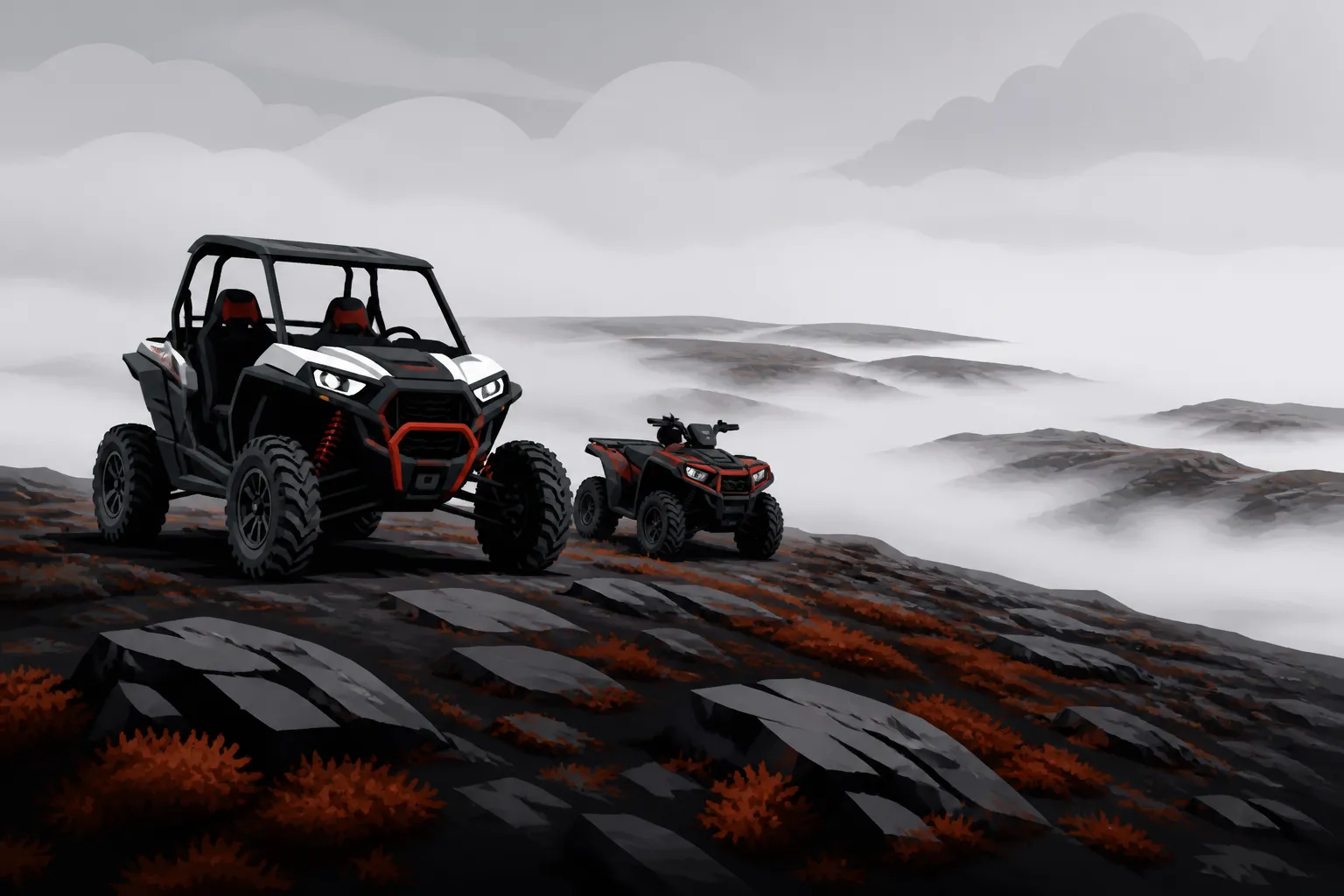
Fog on an exposed Newfoundland barren can erase landmarks, flatten the horizon and make a familiar trail feel unfamiliar in minutes. The safest response is to slow down, stay together and avoid pressing onward just because the route looks close on a map. This guide explains how to prepare, ride in poor visibility and decide when turning back is the smarter call.
Why fog on an exposed barren is especially challenging
Landmarks can disappear faster than expected
On a barren, there may be few trees, buildings or other fixed landmarks to help you judge where you are. Fog can blur the shape of the ground and hide trail edges, dips, rocks and waterlogged patches. Even riders who know the area can lose their sense of direction when the view changes suddenly.
Distance is hard to judge, too. A rise that looks close may be farther away than it seems, while a trail junction or group member may disappear into the fog sooner than expected. That can make it tempting to keep moving in search of a familiar feature. But travelling farther without a clear reference point can make it harder to retrace your route.
Fog also changes how the ground feels under the machine. A wet surface may be slippery, and a trail edge that was obvious in clear weather may blend into surrounding terrain. If the route crosses open rock, bog or uneven ground, poor visibility can make small steering errors more consequential. Before heading out, check the conditions and think through your options using Newfoundland Trail Conditions Before You Ride and Fog on an Exposed Barren.
Fog often arrives with other difficult conditions
Fog rarely needs to be the only concern. Wind, drizzle and a quick drop in temperature can make a rider cold and uncomfortable, particularly after stopping or getting damp. Wind can also make conversation difficult, and wet gloves or a fogged visor can distract you just when careful attention matters most.
Treat the forecast as a planning tool, not a guarantee that the weather will stay settled. Check conditions for the riding area and consider how exposed your route is. A sheltered forest section may feel manageable while a nearby barren is covered in fog. For a broader look at what can change during a Newfoundland ride, see Packing for Weather That Changes Every Hour.
| What you notice | Why it matters | Safer response |
|---|---|---|
| You can no longer see the next clear trail feature | It may be difficult to stay on route or spot hazards | Slow down and stop somewhere safely off the travel line |
| Riders are losing sight of one another | The group could separate without realizing it | Regroup and set a closer spacing before moving |
| The trail edge is hard to distinguish | You may drift onto rough, soft or unsuitable ground | Avoid guessing; turn back if you cannot identify the route |
| Your visor or goggles keep fogging | Poor vision can become worse while riding | Stop safely and clear them before deciding whether to continue |
| Wind or rain is making you cold | Fatigue and discomfort can affect judgment | Add dry layers, reassess the route and shorten the ride if needed |
Prepare before you reach the barren
Check the route, weather and backup options
Before leaving, agree on the route and identify places where the group could stop, shelter or turn back. Make sure everyone knows the planned turnaround point and what to do if visibility gets worse. A plan does not need to be complicated; it does need to be shared. If one rider assumes the group will continue while another expects to return, a weather change can create confusion.
Load or review your route while you have a reliable connection, and do not make a single digital map your only navigation method. onX Offroad may help you review route information and understand your position, but any app depends on a charged, functioning device and the maps or data available for the area. Check the details before setting out, and carry a paper map or another suitable backup. Read Carrying a Paper Map Where There Is No Signal for practical backup-planning ideas.
A phone or GPS device should be secured where you can use it without taking your attention away from riding. Bring a charging option if your trip length calls for one, and protect electronics from rain. If your map display stops working or your location becomes uncertain, do not keep riding simply because you expect the signal or screen to recover.
Pack for a slower, colder ride
Fog can turn a short stretch into a longer, more demanding one. Pack clothing that helps you stay warm when damp, plus gloves suited to the conditions. A dry spare layer stored in a waterproof bag can make a meaningful difference if a rider gets wet or chilled. Bring water, food and basic first aid, and make sure your machine has the equipment you need for the planned route.
Give every rider a chance to check their own gear before departure. A group can lose time if one person’s goggles fog repeatedly, a jacket leaks or a device runs out of battery. Anti-fog products may help with some eyewear, but follow the product instructions and test your setup before relying on it for a ride. A helmet visor or goggles that are clean and suited to the weather are easier to manage than gear you have not used before.
Review the route with the group, too. If someone is new to the area, explain where the exposed sections begin and where the group intends to turn around. Newfoundland Group Ride Planning can help you think through roles and communication, while What to Carry for First Aid on the Barrens is a useful prompt for checking your emergency kit.
What to do when visibility drops
Slow down, increase awareness and regroup
If the fog thickens, ease off the throttle and avoid abrupt steering or braking. Keep enough space to react to the terrain and to the rider ahead, but not so much that the group loses sight of one another. There is no universal following distance that fits every machine, surface and visibility level. If you cannot reliably see the rider ahead, close the gap only when it is safe to do so, or stop and regroup.
Choose a safe stopping spot away from the path of other riders and traffic. Once stopped, check that everyone is present, warm enough and able to see clearly. Agree on the next step before anyone moves. If the route is still identifiable and conditions are improving, the group may decide to continue cautiously. If not, retrace a known route or turn back rather than improvising a shortcut across open ground.
Use simple communication. A lead rider can signal the group to stop, and a sweep rider can check that no one has been left behind. If you use radios, confirm that they work before the trip and agree on clear instructions. Do not assume that a rider who has disappeared into fog has taken the right turn; stop and establish contact.
Decide whether the ride is still manageable
There is a difference between inconvenience and a condition that makes safe riding unrealistic. If riders cannot see the trail, identify the route or maintain contact with the group, stopping is the sensible choice. The same applies if a rider is cold, tired, anxious or struggling to keep their machine under control. No one should feel pressured to continue just because the group has already travelled a long way.
A helpful test is to ask: Can every rider see enough to make a controlled decision, and can the group retrace its route without guessing? If the answer to either question is no, do not press farther into the fog. Turn back along a route you recognize if it is safe to do so. If no safe movement is possible, stay together in a secure place and use your communication or emergency plan.
Digital navigation can support a decision, but it cannot tell you whether the ground ahead is safe to cross. onX Offroad or another mapping tool may show your recorded position or route, yet a line on a screen does not reveal every hidden bog, washout or obstacle. Use the map to orient yourself, not as permission to ride beyond what you can see. For related route-planning concerns, see Newfoundland Trail Closures After a Storm.
Know when to turn back and how to avoid getting separated
Make the turnaround decision early
It is easier to turn around while the route behind you is still familiar than after the group has travelled deeper into featureless terrain. Set a time or condition-based turnaround rule before the ride. For example, the group could agree to return if visibility falls below the point where riders can keep one another in sight, or if the route ahead is no longer recognizable.
That agreement helps take the emotion out of the decision. Riders sometimes continue because they have nearly reached a destination, have already spent time getting there or do not want to disappoint the group. But the cost of turning back is usually a shorter day; the cost of continuing without enough visibility can be a lost route, a damaged machine or an injury.
If conditions are deteriorating, do not split the group to “check just ahead.” A short scouting trip can quickly become difficult to track in fog. Keep the group together and use a known route for the return. If you are uncertain about your location, stop and consult your map and backup navigation rather than riding in several directions to search for a landmark.
Use a simple group procedure
Before the ride, make sure every rider knows the lead and sweep riders, the route and the regrouping plan. Keep the group size manageable for the terrain and conditions. At junctions or other decision points, pause until the last rider arrives and can confirm the direction. In fog, a missed turn can separate a group before anyone notices.
If a rider does become separated, the rest of the group should stop in a safe place and try the agreed communication method. Avoid sending multiple riders in different directions. If contact is not restored and the group cannot safely retrace its route, follow the trip’s emergency plan and seek appropriate help. Before setting off, someone outside the group should know where you are riding and when you expect to return.
After the ride, take note of where fog formed and how quickly conditions changed. That information can make future planning more realistic, especially if you return to the same area. Weather can differ from one outing to another, so a previous clear ride is not a reason to assume the next one will be safe in the same way. Use Newfoundland Riding After Heavy Rain and Newfoundland Riding Season and Weather to build a more complete picture of changing trail conditions.
Disclaimer
This article is for general informational purposes only and does not constitute professional advice. Laws, prices and regulations vary by location and change over time. Consult a qualified professional for guidance on your specific situation.