Carrying Papers on a Cabin Road
Riding your ATV or UTV out to the cabin is one of the true joys of living in Newfoundland and Labrador. The peace, the fresh air, the feeling of freedom – it's unmatched. But as much as we love to escape the everyday, the rules still follow us, even on those remote cabin roads. It can be a real head-scratcher knowing exactly what official documents you're supposed to have tucked away while you're out there, far from paved roads and busy towns. This guide is here to clear up that confusion, detailing precisely which papers you need to carry and why, ensuring your ride to the cabin and back is as stress-free as it is exhilarating.
Why Paperwork Matters Even on Remote Cabin Roads
It’s easy to think that once you leave the highway and hit the gravel, the rules melt away like snow in April. After all, you’re just going to your cabin, maybe checking a trapline, or heading to your favourite fishing spot. Who’s going to stop you way out there? The truth is, whether you’re on a well-travelled forest road or a barely-there path leading to your secluded retreat, off-road vehicles in Newfoundland are still subject to provincial regulations. It's a common misconception that being "out in the sticks" means you're off the hook for things like registration and insurance. But peace officers, including RCMP, local police, and even provincial park wardens or forestry officials, have the authority to enforce the Off-Road Vehicles Act wherever you may roam.
Getting caught without the proper documentation can turn a perfect day into a significant headache, costing you fines and potentially even impounding your machine. Imagine getting pulled over hours from home, only to have your quad seized because you forgot a simple piece of paper. Not only is it inconvenient, but it’s an unnecessary expense and a major disruption to your plans. It's far better to be prepared than to face the frustration and financial hit later. While you might only see a peace officer out there once in a blue moon, that one time is all it takes. For a deeper dive into what officers can request, check out [What an Officer Can Ask You to Produce].
What "Papers" Actually Means
When we talk about "papers," it's not just a vague idea of having something official. The Off-Road Vehicles Act is quite specific about the documentation required to operate an ATV or UTV. These typically include proof of your machine’s registration, evidence of valid insurance, a form of personal identification (like your driver's license), and for some, proof of mandatory safety training. Each of these serves a critical purpose. Registration links the machine to you as the owner and verifies it's legally recognized. Insurance protects you and others in case of an accident. Your identification confirms you are who you say you are and are legally permitted to operate the machine. And training ensures you have a basic understanding of safe operation.
It's not enough to just have the documents; they need to be legible and readily accessible. Faded, torn, or water-damaged papers stuffed into a muddy pocket won't do you much good. Think about how you’ll present them if asked – can you pull them out quickly and clearly for an officer? This often means protecting them from the elements you’ll encounter on a cabin road ride. For a full breakdown of the documentation requirements, you can refer to [Newfoundland Registration Paperwork Explained]. Furthermore, understanding your insurance obligations is crucial; explore [Newfoundland Insurance Requirements for Riders] for more details.
Common Misconceptions About Cabin Road Riding
One of the biggest misunderstandings out there is the "private land" fallacy. Many riders believe that if they're on their own property, or on a road that they consider "private" because it leads only to their cabin, then the rules don't apply. While there are some limited exemptions for machines used solely on private land owned by you or your immediate family, many cabin roads are actually on Crown Land, or are shared access roads that are still subject to provincial regulations. Even if a road dead-ends at your cabin, it doesn't automatically become an unregulated zone. Peace officers can and do patrol these areas, and the Act applies.
Another common thought is, "Nobody patrols out here anyway, so why bother?" This line of thinking can lead to complacency, but it's a gamble. While patrols might be less frequent than in urban areas, they do happen. Officers might be responding to a call, conducting routine checks, or simply patrolling areas known for off-road vehicle use. They might also be forestry or wildlife officers looking for compliance with other regulations, and they'll still check your ORV papers as part of their duties. The point isn't to live in fear of being stopped, but to understand that the rules exist for safety and accountability, even when you're seeking solitude. Many machines are used exclusively for cabin access; even these require proper registration. You can learn more about this specific scenario in [Newfoundland Machines Used Only at a Cabin].
Essential Documents to Carry on Your Newfoundland Cabin Road Ride
Knowing which documents are absolutely necessary before you head out on that cabin road adventure can save you a lot of hassle. It’s not about being overprepared, but simply being compliant and protected. Think of it as part of your pre-ride checklist, just like checking your fuel and tire pressure.
Proof of Registration
Every ATV and UTV operated on any land other than land owned by the operator or their immediate family (with specific conditions) in Newfoundland must be registered with the Motor Registration Division. This means you need to carry your official registration permit. This document serves as proof that your machine is legally recognized and has been properly recorded with the province. The permit will detail information about your machine, such as its make, model, VIN, and your ownership details. Along with the permit, your machine should display its identification plate or decal prominently. It's a quick visual confirmation for any officer that your machine is registered.
Losing or damaging your registration permit can be a minor annoyance. You can obtain a duplicate, though there's a fee involved. Understanding what your permit actually states can be quite informative; consult [What the Registrar's Permit Says About Your Machine]. Also, it's good to know whether your machine requires a plate or a decal for identification, a detail you can confirm by reading [Do You Get a Plate or a Decal?].
Proof of Insurance
Just like driving a car on the highway, operating an off-road vehicle often requires valid insurance. In Newfoundland, the Off-Road Vehicles Act mandates that every operator must have a minimum amount of third-party liability insurance. This insurance protects you financially if you're involved in an accident that causes injury to others or damage to their property. Even if you consider yourself a careful rider, accidents happen. A moment's lapse, an unexpected obstacle, or even a wildlife encounter can lead to a collision. Without insurance, you could be personally on the hook for substantial costs.
Your insurance company will provide you with an insurance card or a policy document that serves as proof of coverage. It’s crucial to carry this with you. Many riders keep a physical card, but a clear, accessible digital copy on your phone can also work, as long as you can reliably display it (think about battery life and signal strength). Don't just hope for the best; ensure you're covered and can prove it. For specifics on the minimum insurance requirements, refer to [Newfoundland Minimum Insurance Requirement].
Driver's License or Other Identification
While you don't always need a driver's license to operate an ATV or UTV off-highway, carrying a valid form of photo identification is highly recommended, and often legally required in certain situations. For instance, if you cross a highway, even at a designated crossing, you generally need a valid driver's license for that specific maneuver. Furthermore, if you're ever involved in an incident or stopped by an officer, having official identification readily available makes the process much smoother. It verifies your identity and age, which is important given age restrictions for operating certain machines or for supervising younger riders.
For minor operators, while they might not have a driver's license, they must still carry proof of identity and meet specific age and supervision requirements. Always be prepared to identify yourself and confirm your eligibility to operate the machine. The nuances of licence requirements, especially when interacting with highways, are explored in [Newfoundland Licence Requirements on a Highway].
Off-Road Vehicle Safety Training Certificate
For certain riders in Newfoundland, completion of an approved off-road vehicle safety training course is mandatory. This includes all first-time registrants of an ORV, and generally applies to operators under the age of 16. The training aims to equip riders with fundamental safety knowledge and practical skills, reducing the risk of accidents. If this requirement applies to you, you must carry proof of having completed this training. This usually comes in the form of a certificate.
This certificate is just as important as your registration and insurance, as failing to produce it if required can lead to penalties. Keep it protected and accessible, perhaps with your other documents. It's not just a piece of paper; it's a demonstration that you've invested in safe riding practices. To understand the mandatory nature of this training, read [Newfoundland Safety Training Is Mandatory].
Best Practices for Carrying and Protecting Your Documents
You've gathered all the necessary documents, but how do you carry them safely and effectively on a machine that's exposed to the elements, vibrations, and the occasional splash of bog water? Protecting your paperwork from the rough and tumble of cabin road riding is key.
Physical vs. Digital Copies
When it comes to carrying your documents, you have a couple of choices: physical copies or digital versions. Each has its pros and cons.
Physical Copies:
- Pros: Don't rely on battery life or cell service; always accessible regardless of technology.
- Cons: Susceptible to water damage, mud, tearing, and loss. Can be cumbersome to carry.
Digital Copies:
- Pros: Convenient to store on a smartphone or other device; less likely to be physically damaged (unless the device is damaged).
- Cons: Requires a charged device, can be hard to view in bright sunlight, and relies on signal strength if stored in the cloud. An officer may also prefer a physical copy for official verification.
Many experienced riders opt for a hybrid approach: carrying physical copies of the absolute essentials (registration, insurance card) in a waterproof pouch, and having digital backups of everything on their phone. This way, you’re covered no matter what.
Keeping Documents Safe and Accessible
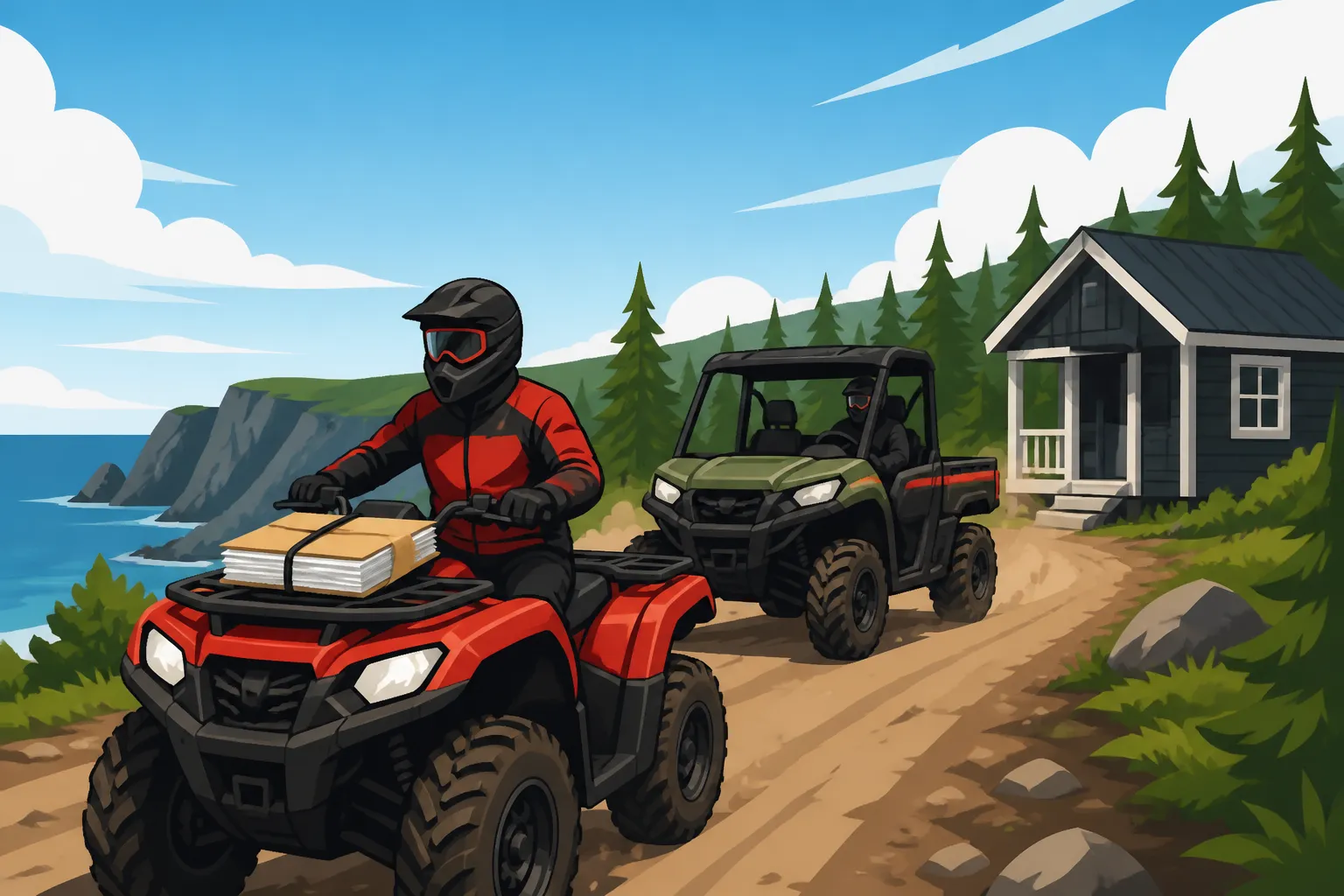
The best way to carry your documents is in a robust, waterproof container. Small, heavy-duty Ziploc bags are a good start, but purpose-built waterproof document holders, often sold for boating or camping, are even better. These can then be stored in a secure compartment on your machine – a glove box, a sealed storage bin, or even a backpack. Avoid stuffing them into a loose pocket where they can easily fall out or get soaked.
If you choose to carry them on your person, a waterproof pouch worn inside your jacket or pants is ideal. The goal is accessibility combined with protection. You want to be able to retrieve them quickly if asked, but also know they won't be ruined by a sudden downpour or a muddy splash. Regular checks of your documents for damage and legibility are a good habit.
What to Do If You've Lost Your Papers
It happens to the best of us: you misplace a document, or it gets ruined on a particularly rugged ride. If you find yourself without your essential papers, don't ride until you've replaced them.
- Lost Registration Permit: Contact the Motor Registration Division. You can apply for a [Newfoundland Duplicate Registrations at $25] (check for current fees, as these figures can change). They'll issue you a new copy.
- Lost Identification Plate/Decal: If your physical plate or decal is lost or damaged, you’ll need to apply for a replacement. There is a fee for [Newfoundland Replacement Plates at $30] (again, always verify current costs).
- Lost Insurance Card: Contact your insurance provider immediately. They can usually issue you a new card or send you an electronic proof of insurance very quickly.
- Lost Safety Training Certificate: If you completed the provincial online training, you can usually log back into the MyGovNL portal to print another copy of your certificate. If you took an alternative course, contact the training provider.
For any situation involving missing or unclear documentation, especially during the transfer of ownership of a used machine, ensuring you have a clear, documented history is vital. Services like LawDepot offer templates for various legal documents, including bills of sale or affidavits, which can be invaluable in establishing proof of ownership if your original registration is still pending or lost during a private sale.
Scenarios and What to Expect
Even on cabin roads, understanding common scenarios where your papers might be checked can help you prepare mentally and practically.
The Routine Stop on a Cabin Road
Imagine you're cruising down a gravel path, maybe near a popular fishing hole or hunting area, and you see an officer's vehicle. A routine stop on a cabin road usually goes much like a traffic stop on a highway. The officer will likely ask you to stop, produce your documentation (registration, insurance, ID, and possibly training certificate), and they might also check your machine for basic compliance (like working lights, proper muffler).
Be polite and cooperative. Have your documents ready in their waterproof pouch. Answer questions honestly. If everything is in order, the stop will be brief, and you'll be on your way. If you’re missing documentation, however, you could face a fine, and in some cases, your machine could even be seized. The key is prevention – always ride prepared.
If You're Involved in an Accident
While nobody wants to think about it, accidents can happen on cabin roads. Whether it's a single-vehicle rollover, a collision with another ORV, or an unexpected encounter with a tree or a rock, your papers become immediately critical. You'll need your identification for emergency services and for reporting the incident. Your insurance information will be vital for any liability claims, especially if another party or their property is involved.
In Newfoundland, there are specific requirements for reporting off-road vehicle accidents, particularly if there's significant damage, injury, or if a highway is involved. Having your papers readily available speeds up this process and ensures you comply with legal obligations. Be sure to review [Newfoundland Accident Reporting Rules] so you understand what is required of you should such an unfortunate event occur.
Buying or Selling a Machine
The journey of off-road vehicle ownership often involves buying and selling machines. When you're dealing with a private sale, ensuring the proper transfer of ownership and documentation is paramount, even if the machine is destined solely for cabin road use. As the buyer, you need the seller's registration permit, and a clear bill of sale is essential. As the seller, you're responsible for informing the Motor Registration Division of the transfer and providing the buyer with the necessary paperwork.
This is another area where good record-keeping tools become invaluable. A comprehensive bill of sale protects both parties, detailing the machine's condition, price, and the date of transfer. For private sales, using a standardized template, perhaps found on sites like LawDepot, can ensure all necessary details are covered, preventing disputes and facilitating smooth registration for the new owner. The process for transferring ownership is detailed in [Newfoundland Transfer of Ownership Explained].
Remember, having all your ducks in a row when it comes to paperwork isn't about bureaucracy; it's about protecting yourself, ensuring smooth operations, and staying legal while you enjoy the magnificent wilderness of Newfoundland and Labrador.
Essential Documents for Your Newfoundland Cabin Road Ride
| Document Type | Purpose | Where to Keep It | Replacement Cost (approx.) |
|---|---|---|---|
| ORV Registration Permit | Proof of legal machine registration with the province. Links machine to owner. | Waterproof pouch in storage compartment or on person. | [$25 (Duplicate Registrations)][Newfoundland Duplicate Registrations at $25] |
| Identification Plate/Decal | Visual confirmation of registration on the machine itself. | Affixed to machine as required by law. | [$30 (Replacement Plates)][Newfoundland Replacement Plates at $30] |
| Proof of Insurance | Demonstrates minimum third-party liability coverage, protecting against financial costs of accidents. | Waterproof pouch (physical card) or accessible on phone (digital copy). | Varies by provider (often free) |
| Driver's License / ID | Verifies operator's identity and age; required for highway crossings. | Wallet, secure pocket, or waterproof pouch on person. | Varies by province/issuing body |
| Safety Training Certificate | Proof of mandatory ORV safety training (for applicable riders). | Waterproof pouch or accessible on phone (digital copy) or a printed certificate. | Free (reprint from MyGovNL) |
| Bill of Sale (for used machines) | Documents the purchase details of a used machine; crucial for transferring ownership and proving legitimate acquisition. | Keep with registration permit or as a secure record. LawDepot offers templates. | N/A (cost of template) |
Disclaimer
This article is for general informational purposes only and does not constitute professional advice. Laws, prices and regulations vary by location and change over time. Consult a qualified professional for guidance on your specific situation.