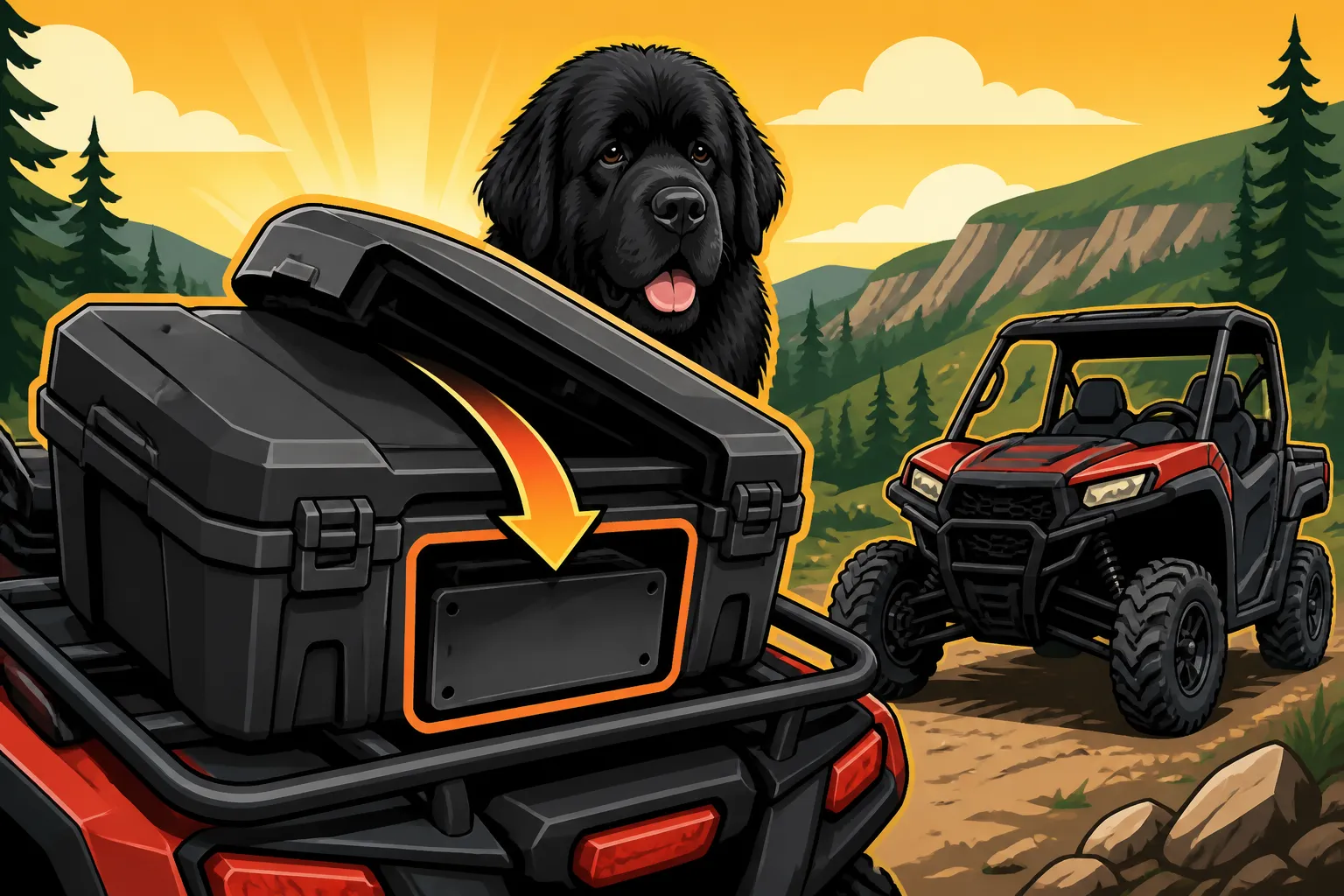
Cargo That Hides a Plate
It's a common scenario: you're out enjoying the stunning Newfoundland wilderness on your ATV or side-by-side, the air is fresh, the trails are calling, and then suddenly, you're pulled over. The reason? Your license plate is obscured. It's frustrating because you’re not trying to hide anything, but a cooler shifted, or a game bag got strapped on just a little too low. This guide is all about understanding why your plate needs to be visible, what usually causes it to be hidden, and practical strategies to ensure you stay on the right side of the law while still carrying all your essential gear.
The Unseen Threat: Why a Hidden Plate Spells Trouble
Riding off-road in Newfoundland and Labrador is an incredible experience, but it comes with responsibilities, and one of the most overlooked is ensuring your machine's identification plate is always clearly visible. It might seem like a small detail, but an obstructed plate can lead to big headaches, from fines to more serious encounters with enforcement officers.
The Letter of the Law in Newfoundland
The Off-Road Vehicles Act in Newfoundland and Labrador is quite clear: your identification plate must be displayed and unobstructed at all times. This isn't just a suggestion; it's a legal requirement. The whole point of registering your machine and being issued a plate is for identification purposes, much like a regular vehicle on the highway. Enforcement officers, whether they're with the Royal Newfoundland Constabulary, the RCMP, or a provincial park warden, need to be able to quickly and easily identify your machine for various reasons – verifying registration, checking for stolen vehicles, or even just confirming you're operating in an approved area. [Newfoundland's Off-Road Vehicles Act] lays out these expectations explicitly, so ignorance isn't really a valid excuse when you're stopped. This provincial act ensures that all registered off-road vehicles, from the smallest trail bike to the largest side-by-side, can be identified, contributing to overall trail safety and accountability.
More Than Just a Fine: The Real Risks
While a fine for an obstructed plate is certainly unwelcome, the potential consequences can extend beyond just a monetary penalty. Imagine a scenario where you're involved in an accident, even a minor one, and your plate is hidden. It immediately raises questions and can complicate matters for insurance claims or accident reporting. Or consider if your machine is flagged as being in a restricted area; if the plate can't be read, it might lead to further investigation or suspicion that you're intentionally trying to evade identification. Enforcement officers are trained to look for these things, and an obscured plate can be a red flag, prompting them to dig deeper into your registration, insurance, and even your riding practices. While the initial goal is simple identification, an obstructed plate can sometimes lead to an officer asking for your [Newfoundland Registration Paperwork Explained] and proof of insurance, and if anything else is amiss, you could be facing multiple charges or even have your machine seized. It’s a cascading effect that's best avoided.
Your Gear, Your Responsibility: Common Plate Obstructions
We all love to carry gear on our ATVs and UTVs. Whether it’s for a day trip, a weekend at the cabin, or a serious hunting expedition, having the right equipment makes the experience better. But it’s precisely this essential cargo that often ends up hiding that all-important identification plate.
The Usual Suspects: Coolers, Bags, and More
Let's be real, who doesn't take a cooler or a backpack on a ride? A refreshing drink or a packed lunch is part of the adventure. However, these items are incredibly common culprits for obscuring plates. A large chest cooler strapped to the rear rack of an ATV often hangs just low enough to block the view. Similarly, oversized backpacks or dry bags, especially when cinched down tightly, can easily drape over the plate. Even seemingly innocuous items like spare tires or fuel cans, when mounted improperly or shifted during a bumpy ride, can cover the plate entirely. It’s not intentional, of course, but it happens all the time. The key is to think about where your plate is located before you start loading up. Some ATVs have their plates mounted quite low or directly on the rear fender, making them particularly vulnerable to being covered by anything that extends past the back of the seat or hangs off a rack.
Hunting, Fishing, and Work Gear Challenges
Newfoundland's wilderness is a haven for hunters, anglers, and those who use their machines for work, like trappers or cabin owners. This kind of use often means specialized gear, which presents its own set of challenges for plate visibility. Gun scabbards, tackle boxes, or elaborate game racks designed to carry a moose quarter can easily be positioned in a way that completely blocks the plate. Imagine the pride of a successful hunt, only to have it overshadowed by a ticket because the strapping for your game bag covered your identification. Similarly, tools like shovels, axes, or chainsaws, when secured to racks, need careful placement. These items are often long or bulky and can swing or shift, especially on rough trails, potentially obscuring your plate without you even realizing it. The very nature of this gear—often large, heavy, and sometimes awkwardly shaped—demands extra attention to how and where it's mounted, especially with your [Newfoundland Plates Unobstructed by Cargo] in mind.
The Mud, Snow, and Ice Factor
Beyond physical objects, Mother Nature herself can conspire to hide your plate. Newfoundland's trails can be notoriously mucky after a rain, or challenging with snow and ice in winter. It’s not uncommon for plates to become completely caked in mud, slush, or snow, rendering them illegible. You might start your ride with a perfectly clean, visible plate, but after splashing through a few boggy sections or powering through deep snow, it can become entirely obscured. While this isn't due to cargo, the legal requirement for visibility still applies. [Newfoundland Plates Kept Free of Mud] is a regulation that applies year-round, regardless of whether it's cargo or environmental conditions doing the hiding. This means riders need to be vigilant, pulling over periodically to wipe down their plates, especially if conditions are particularly messy. A quick wipe can save you a lot of hassle.
Smart Solutions: Keeping Your Plate Clear
The good news is that preventing an obstructed plate isn't rocket science. With a little forethought and some smart packing strategies, you can enjoy your ride without worrying about an unnecessary stop from enforcement.
The Pre-Ride Ritual: A Quick Check
Before every single ride, make it a habit to do a quick visual check of your machine. It takes less than a minute and can save you a lot of trouble. Walk around your ATV or UTV and specifically look at your license plate. Is anything hanging over it? Is it covered in dirt, mud, or snow from a previous ride? Are all your bungee cords tight, and is your cargo secured in a way that leaves the plate clear? This simple ritual becomes second nature after a while, much like checking your tire pressure or fuel levels. It's especially crucial after you've loaded up for a trip or if you've recently installed new accessories.
Here's a handy pre-ride checklist:
| Checkpoint | Action | Notes |
|---|---|---|
| Plate Cleanliness | Wipe off any mud, dust, snow, or ice. | A dirty plate is an obscured plate. |
| Cargo Placement | Ensure coolers, bags, fuel cans are above or to the side of the plate. | No part of your cargo should hang over the plate. |
| Racks & Mounts | Verify any added racks or specialized mounts don't inherently block view. | Some aftermarket parts might need adjustment. |
| Straps & Bungees | Confirm all tie-downs are secure and not obscuring the plate. | Loose straps can shift and cover the plate. |
| Lighting (if applicable) | Ensure tail lights are not blocked by cargo. | Visibility at night includes both plate and lights. |
| Overall Clearance | Step back and view the machine from various angles. | Imagine an officer's perspective – can they read it clearly? |
Strategic Mounting and Cargo Management
This is where you get creative and proactive. If your machine's plate is in a particularly vulnerable spot, consider investing in a plate relocation kit. Many aftermarket options allow you to move the plate to a higher, more visible location, often above the rear rack or to a dedicated mount that keeps it entirely clear of cargo. When loading gear, always prioritize plate visibility. Use taller coolers, or soft-sided bags that can be cinched to sit higher on the rack. If you're using a rear box or cargo bag, make sure it's designed with plate cut-outs or allows for plate mounting on its exterior.
For hunters and those carrying tools, specialized racks that elevate firearms or fishing rods can be a game-changer. There are specific utility racks that extend upwards, allowing you to secure items like shovels or chainsaws vertically, well above your plate. Think about how the weight is distributed too; heavy items placed low and secured firmly are less likely to shift and cover your plate. It's all about planning your load before you hit the trail, not scrambling to fix it halfway through your adventure.
Dealing with the Elements: Cleaning on the Fly
Even with the best packing, Newfoundland weather and trail conditions can be unpredictable. You might find yourself knee-deep in a muddy bog or forging through fresh snowfall. In these situations, your plate is almost guaranteed to get dirty. Make it a habit to carry a small rag or a brush specifically for cleaning your plate. During your quick breaks or when you stop for a snack, take a moment to glance at your plate and wipe it down if needed. It’s a minor inconvenience that can prevent a significant fine. Some riders even apply a clear protective film to their plates, making them easier to wipe clean and protecting the plate from abrasive dirt and debris. Being proactive about cleaning is just as important as how you load your gear.
Beyond the Plate: Ensuring Full Compliance
While an unobstructed license plate is a primary concern, it's just one piece of the puzzle when it comes to legal off-road operation in Newfoundland. Ensuring you have all your documentation in order and understanding the broader regulatory framework can save you from many potential headaches.
Having Your Papers Ready
Even if your plate is perfectly visible, an enforcement officer might still ask for your registration papers. This is why it's critical to always carry your current [Newfoundland Registration Paperwork Explained] with you while riding. This might be a physical copy in a waterproof bag, or a clear digital photo on your phone (though a physical copy is often preferred in areas with no cell service). This documentation proves that your machine is properly registered and helps confirm you are the owner or have permission to operate it. Remember, [Newfoundland ORV Registration Cost] is a one-time fee, and the registration is valid for as long as you own the machine, so there's no excuse not to have it current.
If, for any reason, you're stopped and questioned, having your ownership details readily available can smooth things over. This is especially true if you've recently purchased a used machine. Ensuring you have a clear bill of sale is crucial for proving ownership. Services like LawDepot can be incredibly helpful here, offering templates for legally sound bills of sale, so you're not left scrambling if paperwork from a private sale is less than complete. A well-documented chain of ownership prevents a lot of complications.
When Things Go Wrong: Dealing with Damage or Loss
Sometimes, despite your best efforts, your plate can get damaged or even lost on a particularly rough trail. Maybe a branch scraped it, or it vibrated loose from its mount. If your plate becomes unreadable or goes missing, you need to address it promptly. Riding with a damaged or missing plate is akin to riding with an obscured one – it's still non-compliant. The good news is that obtaining a replacement is straightforward. You can apply for [Newfoundland Replacement Plates at $30] through Motor Registration. Don't put it off, as riding without a proper plate can lead to fines and legal complications.
In unfortunate situations where your machine might be involved in an incident or seized for a violation, having impeccable ownership records can be vital for its retrieval. If your original bill of sale or other ownership documents are missing or unclear, creating a sworn affidavit through a service like LawDepot can help establish your legal claim to the machine. This is particularly important for older machines where original paperwork might have been lost over the years.
Transferring Ownership Smoothly
For many riders, buying and selling used machines is part of the hobby. It's important to understand that proper plate visibility and documentation extend to the transfer of ownership. When you sell a machine, ensuring the new owner gets all the necessary paperwork, including a clear bill of sale, is important for both parties. Similarly, when buying, insist on a comprehensive bill of sale and ensure the previous owner removes their plate, as the [Newfoundland Transfer of Ownership Explained] process requires the old owner's plate to be returned and a new one issued to the buyer. This ensures the new owner can register the machine under their name and get their own plate, like the standard [Newfoundland Charges $95 for an ATV] fee for initial registration. Using reliable document services, such as LawDepot, to draft these agreements can add an extra layer of security and clarity to the transaction, protecting both the buyer and the seller from future disputes or legal ambiguities. It’s all part of ensuring that your machine, and its identification, is always properly accounted for.
Taking the time to ensure your plate is always visible and that your documentation is in order isn't just about avoiding fines; it's about being a responsible, safe, and respectful member of the Newfoundland ATV and UTV community. Happy trails, and ride safe!
Disclaimer
This article is for general informational purposes only and does not constitute professional advice. Laws, prices and regulations vary by location and change over time. Consult a qualified professional for guidance on your specific situation.