Winching a Machine Out of Deep Bog
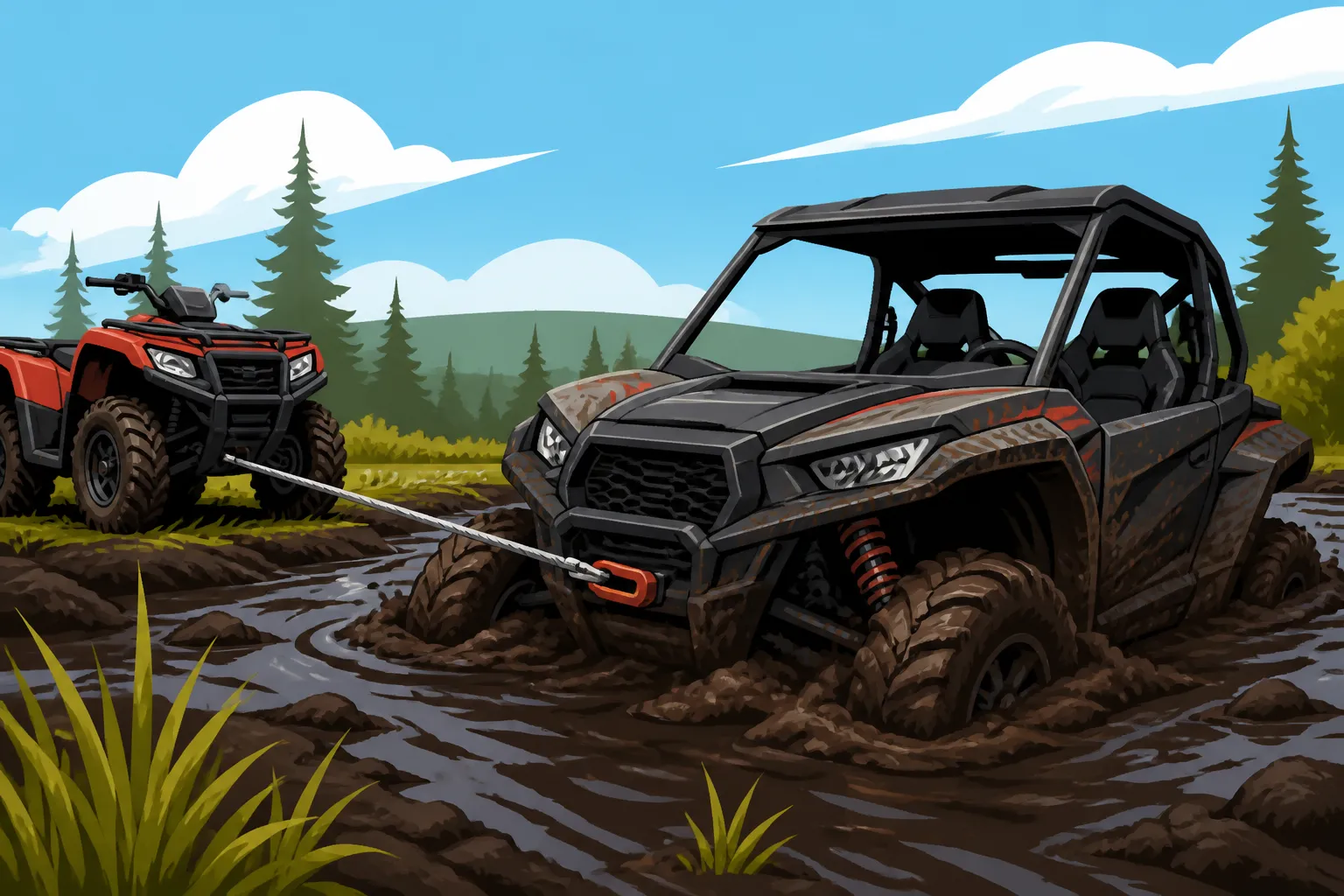
A Newfoundland ATV can go from confident progress to buried axles in a few seconds on soft peat, especially when the ground is wet or a trail edge looks firmer than it is. Spinning the tires usually makes the situation worse. This guide explains how to stop safely, choose an anchor, set up a winch, and recover without putting people, equipment, or sensitive ground at unnecessary risk.
Stop the Machine and Assess the Bog
Why spinning tires makes a bog recovery harder
When an ATV or UTV bogs down, the instinct is often to add throttle and try to power through. On soft ground, that can dig the tires deeper, pack wet peat around the frame, and turn a manageable recovery into a much more difficult one. Repeated wheelspin can also damage the trail, widen a rut, and make the same spot harder for the next rider to cross. The first useful move is usually to stop applying power.
Take a moment to work out what is actually stuck. Is one wheel buried, or are the skid plates resting on the ground? Is the machine hung up on a rut edge, or has the belly settled into the peat? Check whether the water is shallow surface water or a deeper pocket, and look for hazards such as hidden rocks, branches, or a steep drop in the trail. If the machine is leaning, the ground is shifting, or the bog is too deep to assess safely, do not walk into it to investigate.
Avoid trying several recovery attempts in quick succession. A rider might back up, accelerate forward, turn sharply, and then reverse again, all while the tires keep cutting into the same soft patch. Instead, pause, let everyone know what you plan to do, and clear passengers and bystanders from the recovery area. If water or mud has reached the air intake, electrical components, or another vulnerable part of the machine, shut it off and do not restart it until it has been checked.
For prevention, it helps to learn how your machine behaves on soft ground before you tackle a boggy section. Tire choice matters, but so do throttle control, machine weight, and the route you select. Which Tires Float Best on Soft Bog is useful background when you’re choosing equipment for Newfoundland terrain, while Newfoundland Trail Conditions Before You Ride can help you think ahead about changing ground and weather.
Decide whether winching is the right recovery
A winch is not automatically the safest answer. If the machine is only lightly stuck and the ground is firm enough to work from, you may be able to clear mud from around the tires, reduce tire pressure only if you know the manufacturer’s guidance and can reinflate afterward, or place appropriate traction aids under the tires. Avoid standing in front of or behind a machine that could suddenly lurch free. Keep hands and feet clear of wheels and pinch points.
Winching is more appropriate when the machine cannot move under its own power without digging deeper and you can identify a safe anchor and a stable place for the operator to stand. If there is no suitable anchor, the winch line would pull the machine sideways toward a hazard, or the machine is in deep water, stop and seek experienced help. A rushed recovery can put people in the line of fire or damage the frame, winch, anchor, or trail.
Before setting up, check your surroundings and the escape route. The goal is not merely to pull the machine out of the hole; it is to get it onto ground where it can stay put and be inspected. On a shared trail, consider whether the recovery could block other users or force them onto fragile ground. Follow local access guidance and avoid creating a new route around a bog. Newfoundland Wetland Protection Rules and Newfoundland Trail Damage and Bog Ruts offer more context on why keeping recovery work contained matters.
Set Up the Winch Carefully
Choose a safe anchor and connection point
A winch pull is only as reliable as its anchor and attachment point. Use a proper recovery point on the machine’s frame, following the manufacturer’s instructions. Do not attach the winch line to a tow ball, rack, bumper that is not rated for recovery, steering component, or any part that could bend or detach under load. If the machine has no suitable recovery point, don’t improvise with a questionable attachment.
The anchor should be stable, positioned to pull the machine in the direction it needs to travel, and appropriate for the load. A purpose-made ground anchor may be an option where the soil and conditions allow it, but soft bog can make an anchor unreliable. Trees can also be unsuitable: a small, unhealthy, or loose tree may fail, and strapping directly around a tree can damage its bark. Use a properly rated tree saver strap when a suitable tree anchor is allowed, and follow local land-use rules. If you cannot confirm that the anchor will hold, do not load the line.
A recovery strap and a winch line are not interchangeable. A winch line is designed for controlled pulling; a kinetic recovery strap stretches and can release energy if tensioned. Never use a stretchy strap as a winch extension unless the equipment manufacturer specifically approves that setup. Check the winch, line, hook or shackle, anchor strap, and remote for visible damage before you begin. If a component is frayed, cracked, bent, or otherwise suspect, stop and choose another recovery plan.
| Recovery item | What it helps with | What to check |
|---|---|---|
| Winch with a rated line | Controlled pulling toward an anchor | Line condition, mounting, controls, and manufacturer guidance |
| Rated recovery point | Transfers pulling force to the machine | That it is intended for recovery, not just towing or cargo |
| Tree saver or anchor strap | Connects to a suitable anchor with less damage risk | Rating, stitching, and secure placement |
| Winch gloves | Protects hands while handling the line | Fit, grip, and no loose material near moving parts |
| Traction boards or firm mats | Helps tires gain grip once the machine moves | Stable placement and safe clearance from the tires |
| Snatch block | Changes pulling direction or reduces line load when used correctly | Rating, compatible line, and correct setup |
Keep people clear of the loaded line
Before winching, make sure every person is away from the line, anchor, and likely path of the machine. No one should step over a tensioned winch line or stand in the area where a failed component could travel. Use a winch blanket or another purpose-designed line damper when appropriate, following its instructions. It can reduce some movement if a line fails, but it does not make standing near a loaded line safe.
Operate the winch from a position where you can see the machine and the line without standing in the direct line of pull. Use the remote as intended, keep your hands away from the fairlead and other moving parts, and stop if the line starts bunching, crossing itself, or rubbing against an edge. A second person can watch the line from a safe position, but should not approach it while it is under tension.
A straight, steady pull is generally easier to control than a sudden jerk. Don’t use the throttle to add force while the winch is pulling unless the manufacturer’s guidance allows that approach and the machine is stable. If the pull stalls, the anchor shifts, the machine starts to tip, or the line or mount makes an unusual sound, stop. Release tension only in a controlled way and reassess the setup before continuing.
Winch the Machine Out in a Controlled Way
Prepare the machine and the path
Before loading the winch, clear loose debris from around the tires and underside only if you can do so without stepping into unstable ground or reaching beneath a suspended or tensioned machine. If the machine is resting on its belly, removing some of the mud around the frame may reduce resistance, but do not put yourself beneath it. Keep the tires pointed in the direction the machine needs to travel, and make sure the route out does not lead straight into another hole, steep bank, or fragile trail edge.
If practical, place traction boards or firm recovery mats where the tires can reach them once the machine begins moving. Make sure nobody has to stand close to a turning tire to position them. A helper should never push on the machine while the winch is pulling unless there is a safe, clearly planned position away from wheels and pinch points. Passengers should remain off the machine during the recovery unless the manufacturer’s instructions and the recovery lead confirm that it is safe to stay seated.
If the winch pull needs a change of direction, a rated snatch block may help, but it changes the forces acting on the anchor and equipment. Use one only if you understand the setup and its limits. A poor angle can pull the machine sideways, roll it, or drag the anchor toward the load. When the only available setup looks awkward, stop and get help rather than trying to compensate with improvised rigging.
Pull steadily, then secure the machine
Take up slack slowly and check that the line is seated properly. Once tension builds, move the machine in short, controlled increments. Watch the anchor, line, mounting point, and tires throughout. If the machine shifts toward a hazard, the anchor begins to move, or the winch is straining, stop immediately and adjust the plan. Don’t wrap the winch line around an anchor or use a knot to shorten it; use the correct rated equipment for the connection.
As the machine comes free, keep it moving only as far as needed to reach stable ground. Once it is out, secure it so it cannot roll or slide back into the bog. Don’t disconnect the winch while the machine is still at risk of slipping. After it is stable, release the load carefully, following the winch and equipment instructions. Keep fingers clear of the hook, fairlead, and any connection that may still be under tension.
A bog recovery can leave the machine looking fine while hiding problems underneath. Check the tires, winch mount, suspension, steering, brakes, electrical connections, air intake, and underside for packed mud or damage. If the machine was submerged, stalled in water, or has unusual warning lights or noises, don’t ride it away just because it is moving again. Arrange an appropriate inspection or recovery to a repair location.
Reduce the Chances of Getting Stuck Again
Read the ground and choose a conservative line
Newfoundland ground can change quickly across a short distance. A patch of grass may conceal soft peat, and a dry-looking edge may be less stable than the established trail. If the route ahead is uncertain, stop on firm ground and check it from a safe vantage point. Don’t use another rider’s tracks as proof that a section is safe; water, temperature, traffic, and soil conditions may have changed since they passed.
Use a conservative line that keeps you on the established route and avoids pushing into unmarked wet areas. If a section looks too soft, turn around before the machine sinks. It can feel frustrating to backtrack, especially when you are close to a destination, but that is usually better than widening a rut or putting a rider into an unsafe recovery. Respect closures and local access directions, and avoid cutting a new bypass around a wet spot.
A navigation app such as onX Offroad can help you keep track of your route and mark a turnaround point, but it should not replace signs, posted closures, or information from the trail operator. Before leaving service, download or otherwise prepare the maps you’ll need, and carry a backup way to navigate. Conditions and access can vary, so use onX Offroad as one planning tool alongside local guidance rather than treating a mapped line as permission to ride.
Carry recovery gear and ride with a plan
A sensible recovery kit depends on your machine, route, group, and experience. At a minimum, think through how you would communicate, stay warm, and get help if the winch cannot solve the problem. Keep gear secured so it does not become a hazard in a rollover or sudden stop. Make sure everyone in the group knows where the recovery equipment is and who will lead if a machine gets stuck.
If you ride alone, be especially cautious about entering unfamiliar boggy terrain. A solo rider may have no safe way to manage the winch, monitor the anchor, and keep the machine stable at the same time. Tell someone your route and expected return, carry a charged communication option suited to the area, and turn around when conditions exceed your recovery ability. What to Carry for First Aid on the Barrens is a useful companion when preparing for remote riding, and Why a Tow Strap Belongs Under Your Seat covers another piece of recovery planning.
Good trail habits reduce the chance that another rider will face the same problem. Stay on the marked route, avoid spinning tires, and don’t leave loose equipment or damaged vegetation behind. If your machine creates a rut, don’t widen it by trying to ride around the damage. Consider reporting a serious hazard or closure issue to the trail operator. Newfoundland Trail Etiquette Locals Expect has more on sharing the route responsibly, and Washing Bog Mud Off a Machine can help you think about cleanup after a muddy ride.
Before heading out, a quick route check can prevent a long recovery: look at conditions, identify sensible turnaround points, carry suitable gear, and make sure the group understands the plan. onX Offroad may be helpful for tracking a planned route, but always give posted information and local access guidance priority. If you are unsure whether the ground, anchor, or recovery setup is safe, stop and get experienced assistance rather than forcing the pull.
Disclaimer
This article is for general informational purposes only and does not constitute professional advice. Laws, prices and regulations vary by location and change over time. Consult a qualified professional for guidance on your specific situation.