How to Judge 150 Metres Before You Cross
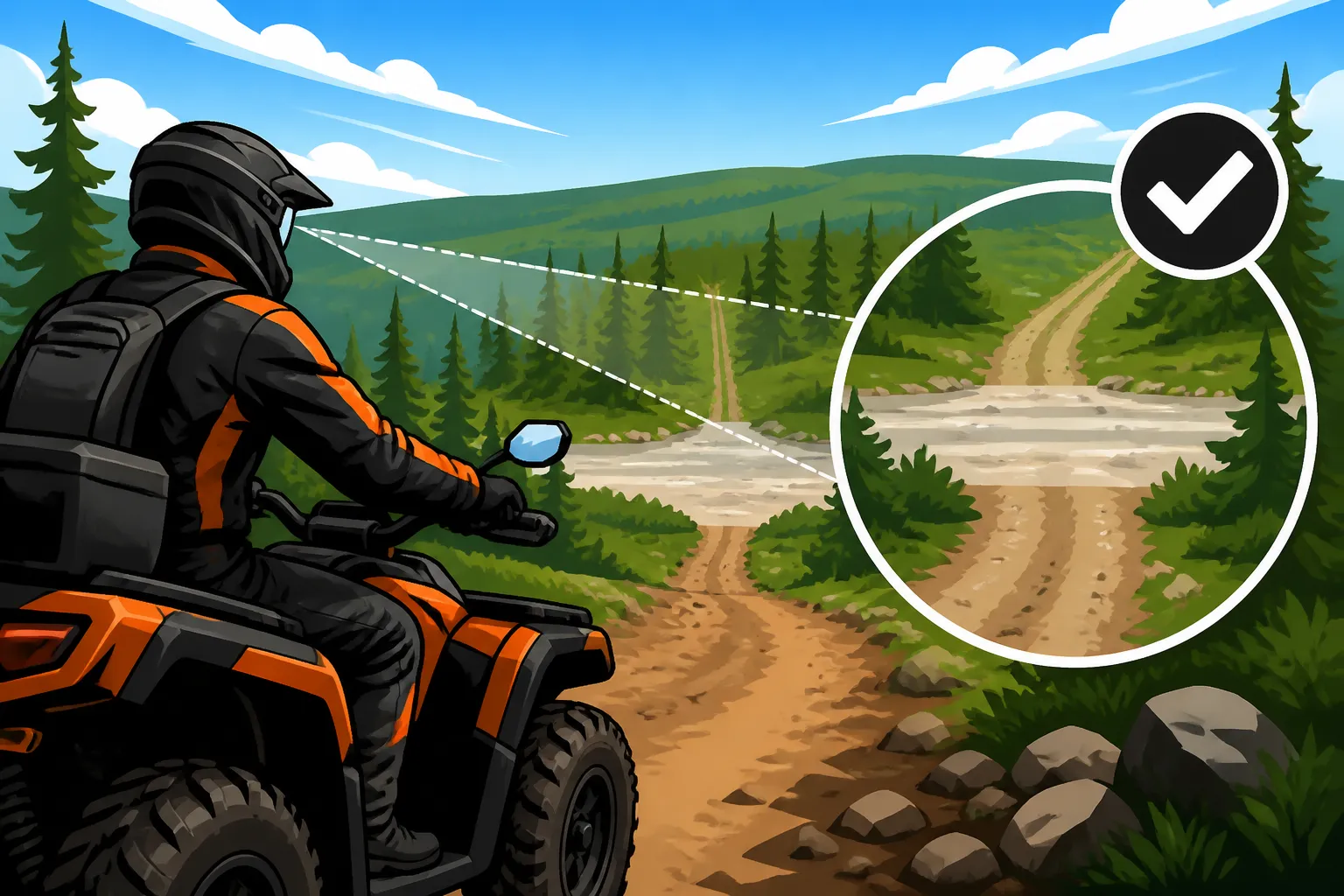
Hitting the trails and barrens of Newfoundland on your ATV or UTV is an experience like no other, but it comes with responsibilities, especially when it comes to navigating roads. One of the most head-scratching rules riders often grapple with is the requirement to have at least 150 metres of clear visibility in both directions before crossing a highway. It's a rule designed for safety, but out in the real world, far from a measuring tape, how do you actually gauge that distance? This guide will break down this crucial regulation, giving you practical strategies to confidently assess distances and keep your rides safe and compliant.
Why the 150-Metre Rule Exists for Newfoundland ATV Crossings
It can feel like a bit of a burden, having to stop, look, and essentially measure the road with your eyes before you can proceed. But trust me, this rule isn't just about making things complicated; it's rooted deeply in the safety of everyone on the road, yourself included. The raw power and versatility of an ATV or UTV are fantastic for the backcountry, but they're not designed for highway speeds, and their presence can be unexpected for highway drivers.
The Importance of Highway Visibility
Imagine you're driving your truck down the Trans-Canada Highway, perhaps near Grand Falls-Windsor, cruising along at 100 km/h. Suddenly, an ATV pops out from a side road, or worse, a blind curve. Your reaction time, even if you're hyper-alert, is limited. This is exactly the scenario the 150-metre rule aims to prevent. It's about giving both you, the ORV operator, and the highway driver ample time to see each other and react safely.
When you're approaching a highway crossing, you need to be able to see any oncoming traffic from far enough away that they have plenty of time to register your presence and adjust, and you have enough time to accurately judge if it's safe to cross. If there's a hill crest, a sharp bend, or dense woods right up to the shoulder, your visibility is compromised, and so is everyone's safety. That 150-metre buffer is designed to create a safety zone, allowing for slower ORV speeds versus high-speed highway traffic.
Protecting Both Riders and Drivers
Let's be real, an ATV or UTV doesn't have the same mass or protective features as a car or truck. In any collision with highway traffic, the ORV operator and passengers are incredibly vulnerable. By ensuring that you have 150 metres of clear sightline, the law significantly reduces the chances of such a devastating encounter. It’s not just about avoiding a ticket; it's about avoiding tragedy.
Think of it from the perspective of a driver on the highway. They might not be expecting to see an off-road vehicle crossing their path, especially if they're not familiar with areas where trails frequently intersect roads. Giving them that long visual lead time allows them to slow down, honk, or even change lanes if necessary, all in a controlled and safe manner. It's a mutual protection agreement built into the law.
Understanding the Law's Intent
The [Newfoundland ORV Road Rules Explained] are pretty clear on this point: you must approach a highway, stop, and ensure you have that critical 150 metres of clear visibility. This isn't just a suggestion; it's a legal requirement outlined in the province's Off-Road Vehicles Act. The intent is to keep our trails accessible while maintaining safety on our provincial road network.
This rule emphasizes caution above all else. It acknowledges that off-road vehicles operate in a different environment and at different speeds than highway vehicles. By imposing this visibility requirement, the government is essentially saying, "When you interact with the highway, you must adopt an extra layer of defensive driving." It's about minimizing risk in those brief but critical moments when two very different types of traffic intersect.
What 150 Metres Really Looks Like in the Newfoundland Wild
Alright, so the law says 150 metres. That's a specific number, but when you're perched on your quad, far from any measuring tape or neatly spaced markers, how do you actually visualize that distance? It’s tough, especially with the varied terrain we have here, from open barrens to dense forests and winding coastal roads. Let’s try to bring that number down to earth.
Visualizing the Distance with Common Objects
Most of us don't instinctively know what 150 metres looks like. To make it more concrete, let's compare it to things you might encounter or easily picture. Think about the length of a football field. A Canadian football field, including the end zones, is about 137 metres long. So, 150 metres is just a bit longer than a full football field! Imagine one and a half fields laid end-to-end – that's roughly the distance you need to see.
Another way to visualize it is with familiar structures. Picture a full-size tractor-trailer. Those are typically around 20-25 metres long. So, you'd need enough clear road to line up about six or seven of those big rigs, end-to-end, in both directions. That really gives you a sense of the significant distance required. When you're out there, try to pick out a landmark – a distinct tree, a bend in the road, a telephone pole – and ask yourself, "Is that at least one and a half football fields away?"
Different Landscapes, Different Challenges
The challenge of judging 150 metres can vary wildly depending on where you are in Newfoundland. On the vast, open barrens, seeing that far ahead might be easy – the problem then becomes the temptation to misjudge the speed of an approaching vehicle over a flat, seemingly endless stretch. Conversely, in areas with thick stands of spruce, around places like Butter Pot Provincial Park, or along winding roads near the coast, those sightlines can be severely limited. A seemingly clear path might quickly disappear behind a bend or over a small rise.
Consider the T'Railway, for example. In some sections, it runs alongside a road, and crossings are frequent. If you're riding through a section where the old railbed is elevated or in a cut, your view of the highway might be completely blocked until the last moment. You need to be extra vigilant in these spots, approaching very slowly, even dismounting to get a better look if necessary. The landscape dictates how easy or hard it is to meet the visibility requirement.
The Power Pole Trick and Other Visual Cues
Many of us grew up with the "power pole trick" for estimating distance. While power pole spacing can vary, a common distance between them in rural areas is often around 50 metres, sometimes more, sometimes less. If you can count three evenly spaced power poles in a row, you're likely looking at something in the neighbourhood of 150 metres. It’s not perfect, but it’s a handy quick reference when nothing else is around.
Another visual cue is simply knowing how long your own machine is. If your quad is, say, 2 metres long, you need to imagine 75 of your quads lined up. This might sound silly, but it starts to create a mental benchmark. When you're out riding, take opportunities to observe known distances. If you see a road sign indicating a town is 1 km away, try to eyeball a shorter distance, like a tenth of that, and gradually train your eye. The more you practice, the more intuitive judging that 150 metres will become. Companies like SuperATV, while known for performance parts, also offer accessories like wider rearview mirrors that can improve your situational awareness, helping you spot oncoming traffic sooner from your stopped position.
Strategies for Accurately Judging 150 Metres
Knowing what 150 metres looks like is one thing, but consistently and accurately judging it on the fly is another. This takes practice and some conscious strategies. You're essentially training your brain to become a human rangefinder.
Using Pace and Personal Reference Points
One of the oldest and most reliable methods for estimating distance is pacing. If you know your average stride length, you can walk out 150 metres from your crossing point to get a real-world feel for it. Most adult strides are roughly 0.75 to 1 metre. So, 150 paces would be a good approximation. Do this a few times in different environments – on flat ground, uphill, downhill – and you’ll start to build a solid internal reference.
Once you have that internal reference, find fixed landmarks on the road itself. Is there a certain type of culvert every 100 metres? A specific style of reflective marker? Over time, you'll start to recognize patterns in the infrastructure that can aid your judgment. This isn't about pulling out a measuring tape every time, but rather training your eye to see that distance naturally. Remember, it’s always better to overestimate the required distance than to underestimate it.
Leveraging Technology for Estimation
While you won't be pulling out a laser rangefinder every time you cross, modern technology can help in other ways. Many GPS devices or smartphone apps (when you have signal!) have mapping features that allow you to measure distances. Before you even head out on a new trail, you can review your planned route on a satellite map and identify potential highway crossings. Zoom in, use the measurement tool, and see what 150 metres looks like in that specific location. Note any unique trees, boulders, or road features that fall at that distance.
This pre-ride reconnaissance can be incredibly helpful, especially for new areas or for those sections of the [Newfoundland ATV Trail Map Downloads] that you haven't explored before. Even some advanced dashboard displays on newer side-by-sides might integrate GPS or mapping features that, with a bit of practice, could help you pre-visualize distances. Just remember that technology is a tool, not a replacement for your own careful observation and judgment at the crossing point itself.
Practicing Your Eye for Distance
The best way to get good at judging 150 metres is to practice, practice, practice. Whenever you're out riding, or even driving your car, make a conscious effort to estimate distances. Point to a tree and guess its distance, then check your odometer or pace it out. Over time, your eye will become much more calibrated.
One exercise you can do is to actively look for those 150-metre markers when you're a passenger in a vehicle. Try to spot a point 150 metres ahead on the road, then see how long it takes the vehicle to reach it. This helps you understand the time component involved, which is crucial for judging the speed of oncoming traffic. The better you are at judging distance, the safer and more confident you'll be every time you encounter a highway crossing. You can also explore accessories from brands like SuperATV that improve your riding posture or visibility, indirectly contributing to your overall awareness and ability to assess your surroundings more effectively.
Staying Safe Beyond the 150-Metre Rule
Meeting the 150-metre visibility rule is absolutely fundamental, but it's just one piece of the puzzle when it comes to safe highway interactions. There's a broader approach to safety that every rider needs to embrace, ensuring that every crossing is handled with the utmost care and responsibility. This isn't just about avoiding [Newfoundland Penalties for Riding Illegally]; it's about making sure you and your fellow riders come home safely after every adventure.
Always Yielding to Highway Traffic
This rule goes hand-in-hand with the visibility requirement. Even if you have more than 150 metres of clear sightline, you absolutely, unequivocally must [Yielding Every Single Time] to highway traffic. Off-road vehicles do not have the right-of-way on highways. It's not a negotiation; it's a non-negotiable part of responsible riding. Highway traffic is moving at speed, and expecting them to slow down or alter their course for you is both dangerous and illegal.
Always come to a complete stop at the edge of the pavement, or as close as safely possible. Look left, look right, look left again. Wait for a clear, safe gap in traffic – one that gives you plenty of time to cross without rushing. Even if you see a vehicle approaching in the far distance, if you have any doubt about your ability to cross safely and swiftly, wait. A few extra seconds of waiting is a small price to pay for your safety and peace of mind.
Maintaining Awareness and Visibility
Your machine's maintenance and your personal gear also play a huge role in highway crossing safety. Make sure your headlights and taillights are clean and fully functional. Even during the day, having your lights on can significantly increase your visibility to other drivers, especially in changing Newfoundland weather conditions like fog or drizzle. Consider adding extra reflective tape to your machine or helmet for nighttime riding, or if you're out during low-light hours.
And of course, wear appropriate safety gear. A good, brightly coloured [Newfoundland Helmet Law for Every Rider] is your first line of defense, and it also makes you more visible. Eye protection is critical for clear vision. Remember, your goal is not just to see the highway traffic, but for highway traffic to see you as early as possible. This proactive approach significantly reduces risk.
Knowing Your Newfoundland ORV Road Rules
The 150-metre crossing rule is just one of several critical regulations you need to know when operating an ORV near or on provincial roads. For instance, do you know the rules for [Newfoundland Rules for Riding a Shoulder]? Or the specific insurance requirements? Ignorance of the law is never an excuse, and understanding these rules is paramount to safe and legal riding.
It's also essential to carry your [Newfoundland Insurance Requirements for Riders] and [Newfoundland Training Is Mandatory] certification with you, along with your registration papers, whenever you're out. An officer may ask to see these documents, and being prepared means a smoother interaction. Take the time to review the province's Off-Road Vehicles Act. It's the best way to ensure you're a responsible rider and that our incredible trails remain open for everyone to enjoy.
| Distance Reference | Approximate Length | How to Visualize 150 Metres |
|---|---|---|
| Canadian Football Field (incl. end zones) | 137 metres | About 1.1 full fields |
| Standard Telephone Pole Spacing (rural) | 40-60 metres | Roughly 2.5 to 3.75 poles apart |
| Standard Tractor-Trailer (truck + trailer) | 20-25 metres | About 6-7 tractor-trailers lined up |
| City Block (variable) | 80-100 metres | Almost two city blocks |
| Your ATV/UTV (e.g., typical side-by-side) | 3 metres | Roughly 50 times your machine's length |
Disclaimer
This article is for general informational purposes only and does not constitute professional advice. Laws, prices and regulations vary by location and change over time. Consult a qualified professional for guidance on your specific situation.