Newfoundland Fines for No Seat Belt
It’s a beautiful day out on the Newfoundland barrens, the sun is shining, and you’re enjoying the freedom of your off-road vehicle. Then, you see flashing lights in your rearview mirror, and suddenly that perfect ride is overshadowed by the sinking feeling of a potential ticket. Many riders, especially those new to side-by-sides, might not realize that a simple oversight like an unbuckled seat belt can lead to a significant fine, not to mention putting your safety, and the safety of your passengers, at serious risk. This guide will walk you through Newfoundland's specific regulations regarding seat belts on off-road vehicles, the penalties you could face, and how to ensure you're always riding safely and legally.
Understanding Newfoundland's Seat Belt Regulations for ORVs
When we talk about seat belts on off-road vehicles (ORVs) in Newfoundland, it's really important to distinguish between different types of machines. Most traditional all-terrain vehicles (ATVs) aren't designed with seat belts, nor are they legally required. These machines rely on active rider input, shifting weight, and a different set of safety dynamics. However, side-by-sides, also known as Utility Terrain Vehicles (UTVs) or SXS, are a different beast entirely. These machines are built more like small cars, often with steering wheels, roll cages, and, yes, seat belts, which are absolutely crucial for their safe operation.
The Newfoundland government, through its [Newfoundland's Off-Road Vehicles Act], is quite clear on this. If your off-road vehicle is manufactured with a seat belt, then that seat belt must be worn by both the operator and any passengers whenever the vehicle is in operation. This isn't just a suggestion; it's a mandatory safety requirement designed to keep you and your loved ones protected. Ignoring this rule isn't just tempting fate; it's also a surefire way to find yourself on the wrong side of the law.
Think about it from a common-sense perspective: the manufacturer puts a seat belt in a side-by-side for a reason. These machines are capable of higher speeds, traverse challenging terrain, and can, unfortunately, roll over or experience sudden impacts. The seat belt is your primary restraint, keeping you contained within the protective structure of the roll cage. Without it, you could be ejected from the vehicle, leading to far more severe injuries than if you had simply buckled up. It’s a small action that makes a monumental difference in the event of an accident.
It’s worth noting that this rule isn't some arbitrary bureaucratic hurdle. It stems directly from the design and intended use of these vehicles. Unlike an ATV where you're meant to move with the machine, a side-by-side aims to keep you securely seated. Many aftermarket accessories, like those from SuperATV, focus on enhancing safety and protection, but they always complement, not replace, fundamental safety features like seat belts. Always check your machine's original equipment and adhere to what the manufacturer and the province require.
The Legal Framework: What the Act Says
The provincial Off-Road Vehicles Act and its associated regulations are the backbone of all ORV rules in Newfoundland. When it comes to seat belts, the wording is pretty straightforward: if your machine has them, use them. This covers a wide range of side-by-sides, from utility models used for cabin work to recreational sport models designed for trail riding. The law doesn't differentiate based on where you're riding—whether you're on a designated trail, a logging road, or simply crossing your own land. If the machine is moving and has seat belts, they must be fastened.
This applies to everyone in the vehicle, not just the driver. If you're riding with a friend or family member, they also need to be buckled in. It's the operator's responsibility to ensure that all passengers are properly secured, especially if you have children on board. The consequences of an accident where passengers aren't belted in can be devastating, not just physically, but also legally and emotionally. The law is designed to protect everyone on board, and it places the onus on the person operating the machine to uphold that standard.
It's also important to remember that these rules are part of a broader set of [Newfoundland Equipment Requirements] for ORVs. While helmets often get the most attention, seat belts for side-by-sides are equally vital. Enforcement officers are well-versed in these regulations, and a quick glance is often all it takes for them to spot an unbuckled rider or passenger. Don't assume that because you're "just going down the road a bit" or "on private land" that the rules magically disappear. They don't. The safety principles, and the legal obligations, remain constant.
Who Needs to Wear a Seat Belt? Operators and Passengers
Simply put, if you're in a side-by-side that has seat belts installed, everyone needs to be buckled up. This means the driver (operator) and every single passenger occupying a designated seating position must have their seat belt properly fastened. This isn't just a good idea; it's the law. The rule applies across the board, regardless of age, experience level, or where you're riding. There are no exemptions for quick trips or slow speeds; the moment the vehicle is in motion, those belts need to be clicked.
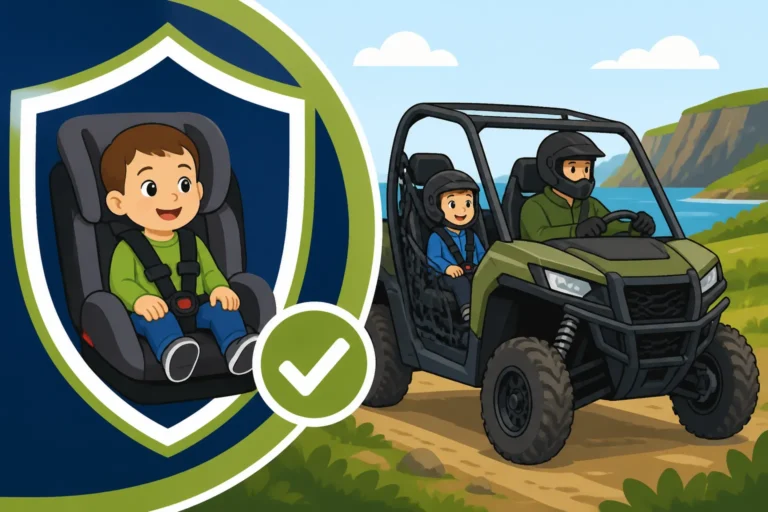
For parents, this carries extra weight. While the Act doesn't specifically mention child car seats, if your side-by-side has the appropriate attachment points, securing a child in an approved car seat, in addition to the machine’s seat belt, is paramount for their safety. Always follow manufacturer guidelines for both your ORV and any child restraint systems. Ensuring children are safely buckled in is an essential part of responsible [Newfoundland Rules for a Child Passenger].
The responsibility ultimately falls to the operator. As the person in charge of the machine, you are accountable for ensuring that everyone on board is compliant with the safety regulations. This means taking a moment before heading out to do a quick check: are all helmets on and fastened? Are all seat belts buckled? Are mirrors adjusted? It’s a small pre-ride routine that can save you a lot of grief—and a significant fine—down the trail.
The Specific Fines and Penalties You Could Face
Let's get down to the brass tacks: what happens if you're caught not wearing a seat belt in your side-by-side in Newfoundland? The short answer is: you're going to pay for it, both literally and potentially in other ways. The authorities here take off-road vehicle safety very seriously, and while fines are the most common immediate consequence, they're not the only one.
The fines for not wearing a seat belt are designed to be a deterrent. They aren't just a slap on the wrist; they are substantial monetary penalties that can put a serious dent in your wallet. And it’s not just a fine for the driver; if you have unbelted passengers, that could lead to additional penalties. This means a single stop by an enforcement officer could result in multiple tickets for one incident. Imagine planning a fun family ride, only to come home with hundreds of dollars in fines because someone forgot to buckle up. It’s a frustrating situation that’s entirely preventable.
Beyond the immediate financial hit, there can be other ramifications. Repeated offenses could lead to more severe penalties, potentially even impacting your ability to register or operate an ORV in the future. Nobody wants their riding privileges jeopardized over something as simple as a seat belt. That's why understanding these [Newfoundland Penalties for Riding Illegally] is so crucial.
Monetary Penalties: What to Expect
While specific fine amounts can vary and are subject to change, be prepared for a significant monetary penalty if you or your passengers are found not wearing a seat belt in a side-by-side. These aren't minor tickets; they are substantial. The idea is to make the financial cost of non-compliance high enough to encourage adherence to safety rules. This applies to every unbuckled person in the vehicle. So, if you're driving and have two unbuckled passengers, you could face three separate fines.
It’s not just the initial fine either. If you choose to dispute the ticket and lose in court, you could also be on the hook for court costs and other associated fees, further increasing the financial burden. The time lost from work or other activities to deal with a court appearance is also a hidden cost that many people don't consider when they decide to ignore a safety regulation. It’s always far easier, and cheaper, to simply buckle up.
Sometimes riders think that because they're on a less-travelled trail or out in a remote area, they won't be seen. This is a risky assumption. Peace officers, including the RCMP, municipal police, and provincial wildlife officers, routinely patrol all kinds of terrain. They are authorized to enforce the Off-Road Vehicles Act wherever it applies. So, that isolated trail might not be as private as you think, and the cost of complacency can be quite high. [Newfoundland Fine Ranges by Offence] can give you a clearer picture of the scale of these penalties.
Increased Scrutiny and Future Consequences
Beyond the immediate fine, being caught breaking ORV safety rules can lead to increased scrutiny from law enforcement. If you've been ticketed for a seat belt infraction, an officer might be more inclined to stop you again in the future to ensure compliance. This means potentially more roadside checks and more opportunities for other issues to be found. It can create an unnecessary hassle and a feeling of being targeted, all stemming from a preventable safety lapse.
In severe cases, or for repeat offenders, there could be more serious consequences. While less common for a first seat belt offense, persistent disregard for safety regulations could lead to discussions about suspension of riding privileges or even impoundment of your machine. While [Newfoundland Machine Seizure Rules] are typically reserved for more serious infractions like impaired riding, a pattern of unsafe behavior could certainly escalate the situation.
It's also worth considering the impact on your insurance. While ORV insurance isn't always mandatory for riding on private land, [Newfoundland Minimum Insurance Requirement] is in effect for many public areas and road crossings. If you're involved in an accident and weren't wearing a seat belt, your insurance provider might have grounds to deny or reduce your claim, leaving you personally responsible for medical bills, machine repair costs, and any damages to other property or individuals. This is a very real, and very costly, consequence that many riders overlook. Always double-check your policy.
Beyond the Fine: Other Consequences and Safety Implications
While the financial sting of a ticket is certainly a motivator, the most significant consequences of not wearing a seat belt go far beyond what you'll pay in fines. We're talking about personal injury, potentially life-altering harm, and the emotional toll an accident takes on you and your loved ones. No amount of money can truly compensate for serious injury or loss, which is why safety regulations like the seat belt rule are so critically important.
Off-road riding, while incredibly fun and exhilarating, carries inherent risks. Side-by-sides, with their power and capability, demand respect for those risks. A seat belt, along with proper use of a helmet, is one of your most effective defenses against severe injury in the event of a rollover, collision, or sudden stop. Ignoring it is like willingly going into battle without your armour.
Furthermore, consider the example you set. If you're riding with children, friends, or newer riders, your actions communicate what's acceptable. If you're not buckling up, why should they? As an experienced rider, you have a responsibility to model safe and responsible behavior. [Newfoundland Safety Training Is Mandatory] for new riders for a reason, and a big part of that training is reinforcing the importance of safety equipment.
The Real Cost: Injury and Harm
The most devastating consequence of not wearing a seat belt is, without a doubt, the increased risk of severe injury or fatality. In a side-by-side, a seat belt helps keep you secured within the protective roll cage, preventing ejection from the vehicle. Ejection is often what leads to the most catastrophic injuries in ORV accidents, as riders can be crushed by the machine, hit trees or rocks, or suffer impact injuries from the ground.
Even in less severe incidents, like a sudden stop or a minor roll, an unbelted occupant can be thrown around inside the cabin, impacting the steering wheel, dashboard, or other passengers. These internal impacts can lead to head injuries, broken bones, and internal trauma that are easily preventable by simply being buckled in. This isn't just about avoiding a ticket; it's about coming home safe to your family after every ride.
Think about the long-term implications. A severe injury could mean months of recovery, lost wages, significant medical bills, and a diminished quality of life. It could mean never being able to ride again. While aftermarket products from companies like SuperATV offer enhanced protection like upgraded cages, doors, and harnesses, these additions only work as intended if you use the primary safety equipment your machine was designed with—the seat belt. Don't underestimate the power of that simple buckle.
Setting a Poor Example
As an ORV enthusiast, you're part of a community. Your actions reflect on all riders. When you ride unsafely, including not wearing a seat belt, you not only endanger yourself but also contribute to a negative perception of the sport. This can have broader consequences, leading to stricter regulations, reduced trail access, and a more challenging environment for everyone who enjoys off-roading. Responsible riding, including buckling up, helps to preserve and expand access to our beautiful trails.
If you're a parent or guardian, you're also a role model. Children learn by watching. If they see you consistently disregard safety rules, they'll likely follow suit. This can put them at risk not just now, but throughout their riding life. Teaching good habits from a young age, like always wearing a helmet and buckling up, is one of the most important lessons you can impart. [Newfoundland Rules for a 12-Year-Old Rider] emphasize supervision and appropriate machine size, and the foundation of all that is consistent safety practice.
Ultimately, choosing to wear your seat belt is a personal decision that has far-reaching consequences. It's a choice that reflects your respect for your own safety, the safety of your passengers, and the integrity of the ORV community as a whole. It's a small habit that yields enormous benefits.
How to Ensure Compliance and Stay Safe on Newfoundland Trails
Navigating Newfoundland's ORV regulations, especially for newer riders or those upgrading from ATVs to side-by-sides, can feel a bit overwhelming at times. But it doesn't have to be. The goal is always to keep you safe and legal, so you can enjoy the incredible beauty of our province's trails without worry. The good news is that ensuring compliance with seat belt rules is one of the easiest safety measures to implement.
It really boils down to mindfulness and making safety a non-negotiable part of your riding routine. Just like you wouldn't leave home without your keys, you shouldn't start your side-by-side without everyone buckled in. This isn't about being overly cautious; it's about being intelligently prepared for the unpredictable nature of off-road adventures.
Let's look at some practical steps you can take to make sure you're always on the right side of the law and, more importantly, prioritizing safety for every single ride.
Make Seat Belts Part of Your Pre-Ride Checklist
The easiest way to ensure compliance is to build seat belt use into your routine. Before you even turn the key, make it a habit to check that everyone in the side-by-side is properly buckled. This is just as important as checking your tire pressure, fuel level, or that everyone has their helmet on. Create a mental or even a physical checklist for yourself and your passengers.
Consider these steps before you start your engine:
- Helmet Check: Is everyone's helmet on and chin strap fastened? [Newfoundland Helmet Law for Every Rider] is strict.
- Seat Belt Check: Are all occupants of the side-by-side buckled in, with the belt snug against their body?
- Machine Check: Are your lights working, is there enough fuel, and are all doors securely latched?
- Passenger Briefing: Remind passengers, especially children, about keeping their hands and feet inside the vehicle and the importance of staying seated and buckled.
Establishing this routine not only ensures compliance but also reinforces a culture of safety for everyone riding with you. When it becomes second nature, you're much less likely to overlook it, even on those quick trips or familiar routes. This diligence is crucial for all forms of ORV operation, whether you're taking your side-by-side on the [Newfoundland ATV Trails: The T'Railway and Beyond] or just running errands at the cabin.
Educate Yourself and Your Passengers
Knowledge is power, especially when it comes to safety and legal compliance. Take the time to fully understand [Newfoundland Seat Belt Requirements] and all other pertinent ORV regulations. Don't rely on hearsay or assumptions. The official provincial website or Motor Registration Division can provide the most accurate and up-to-date information.
Share this knowledge with anyone who rides with you. If you lend your side-by-side to a friend or family member, make sure they are aware of the seat belt rules and all other safety regulations. You, as the owner, have a responsibility to ensure your machine is operated legally and safely. For new riders, or those upgrading to a side-by-side, consider taking an approved ORV safety course. [Newfoundland Training for First-Time Registrants] can cover all aspects of safe operation, including the correct use of safety equipment.
A simple conversation before a ride can make all the difference. Explain why seat belts are important, not just that they are required. When people understand the safety implications, they are far more likely to comply willingly. This proactive approach ensures a safer and more enjoyable experience for everyone out on the trails.
Regularly Inspect Your Safety Equipment
Beyond simply using your seat belt, it’s important to regularly inspect all your safety equipment, including the seat belts themselves. Over time, seat belts can fray, buckle mechanisms can get sticky or damaged, and anchors can loosen. This is especially true for ORVs that operate in harsh, dusty, or wet environments.
Take a few moments periodically to:
- Check for Fraying: Look for any signs of wear, cuts, or fraying on the seat belt webbing.
- Test Buckles: Ensure the buckles latch securely and release smoothly.
- Inspect Anchors: Verify that the seat belt anchors are firmly attached to the frame of your side-by-side.
- Clean and Maintain: Keep seat belts free of excessive mud, dirt, and debris, which can affect their function.
If you find any damage or wear, address it immediately. Many aftermarket suppliers, including those like SuperATV, offer replacement seat belts or upgraded harness systems that can enhance safety and durability. Don't compromise on this critical piece of safety equipment. A damaged seat belt is a non-functional seat belt, and it puts you and your passengers at unnecessary risk. Maintaining your equipment is an integral part of responsible [Newfoundland Rules for a Side-by-Side Driver].
| ORV Type | Seat Belt Requirement | Typical Fines for Non-Compliance | Primary Safety Device |
|---|---|---|---|
| ATV (Quad) | Not typically equipped; not legally required | N/A | Helmet, active rider input |
| UTV (Side-by-Side) | Required if factory-equipped | Substantial monetary penalty | Helmet, Seat Belt |
Remember, off-roading in Newfoundland is an incredible privilege, offering access to some of the most stunning landscapes imaginable. By understanding and adhering to the safety regulations, including something as fundamental as wearing a seat belt in your side-by-side, you contribute to a safer, more sustainable riding culture for everyone. Don't let a preventable fine or, worse, a serious injury, ruin your adventure. Buckle up, stay safe, and enjoy the ride!
Disclaimer
This article is for general informational purposes only and does not constitute professional advice. Laws, prices and regulations vary by location and change over time. Consult a qualified professional for guidance on your specific situation.