Newfoundland Rules for a Visiting New Brunswick Rider
Hitting the trails in Newfoundland with your ATV or side-by-side sounds like an incredible adventure, but if you're coming from New Brunswick, you're probably wondering if your existing registration, insurance, and even your riding habits are still good to go. The last thing any rider wants is to arrive with a machine ready for fun, only to find themselves running afoul of local regulations or risking a fine. This guide will walk you through everything a visiting New Brunswick rider needs to know to legally and safely enjoy Newfoundland's breathtaking off-road landscape without any unexpected headaches.
Newfoundland's Short-Term Visitor Exemptions: What Applies to New Brunswick Riders
One of the biggest questions on any visiting rider's mind is whether they need to re-register their machine. The good news for New Brunswickers is that Newfoundland does offer a bit of a grace period, but it's crucial to understand the limits. You can't just assume everything carries over seamlessly, as each province has its own unique set of rules that have evolved to suit its specific environment and riding culture.
The 30-Day Exemption for Out-of-Province Machines
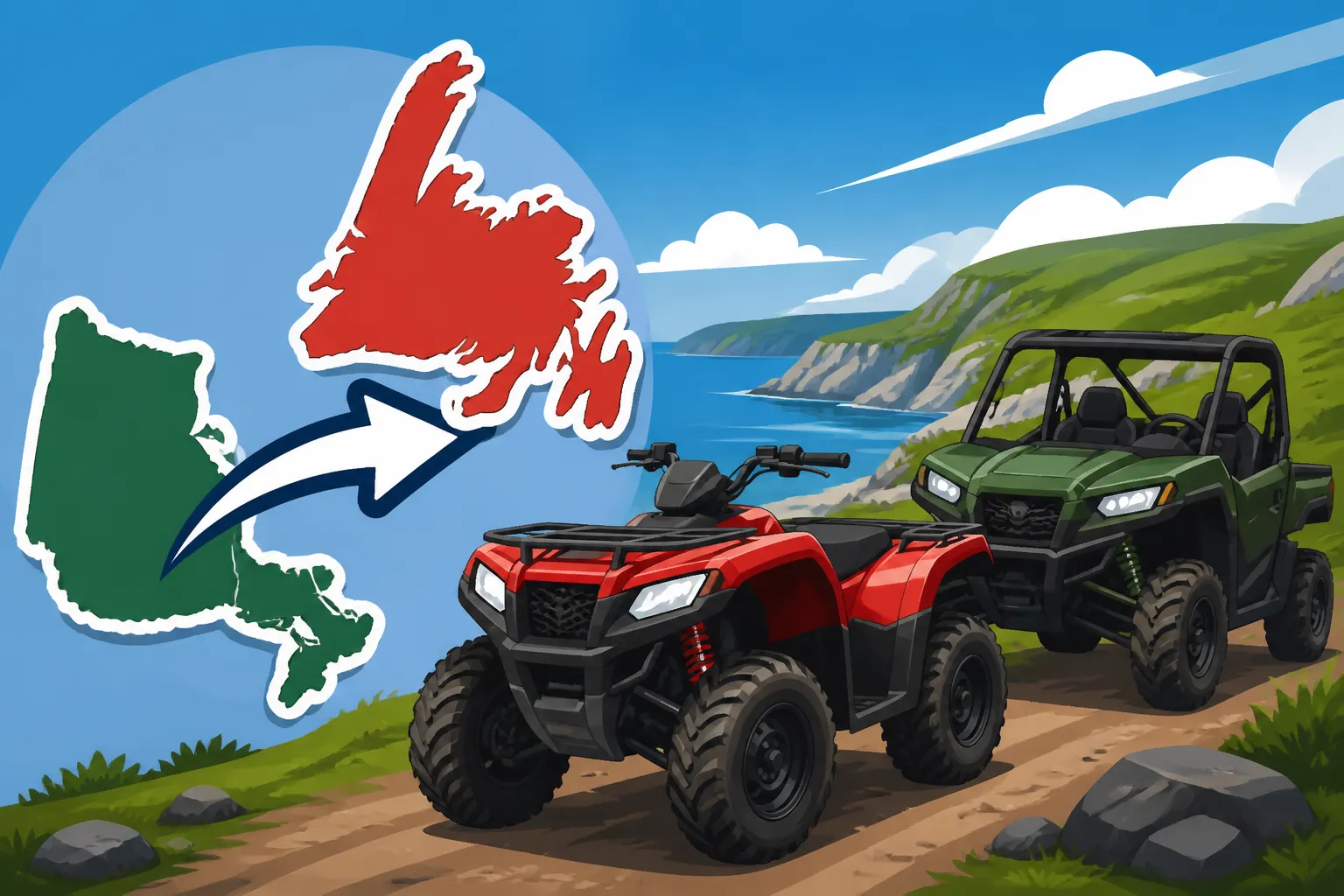
Newfoundland has a specific provision for visitors bringing their off-road vehicles (ORVs) from other provinces or territories. This is commonly known as the [Newfoundland's 30-Day Visitor Exemption]. Essentially, if your ATV or side-by-side is already validly registered in New Brunswick – meaning it has current plates and papers from your home province – you can operate it in Newfoundland and Labrador for up to 30 consecutive days without needing to register it here. This exemption is a lifesaver for those planning shorter trips, saving you the hassle and cost of temporary registration.
However, this 30-day window is firm. It's not 30 days over the course of a year; it's 30 consecutive days from the moment you start riding in the province. If your plan is to explore the island for longer, or perhaps make multiple trips throughout the year that cumulatively exceed this limit, you'll need to consider what comes next. Ignoring this threshold can quickly turn an otherwise fantastic trip into a legal headache.
It's important to remember that this exemption only covers the registration aspect. Your New Brunswick registration will need to be current and valid, of course. Newfoundland's legislation is designed to allow short-term tourism, but it expects visitors to respect the time limits. If you plan to become a new resident, there's a different set of rules for that entirely, typically giving you [Ninety Days After You Move In] to get your affairs in order.
Insurance Requirements for Visiting Riders
Even though your New Brunswick registration is recognized for the initial 30 days, your insurance situation is a separate, critical component. Newfoundland and Labrador requires that all off-road vehicles operating within the province carry a minimum amount of liability insurance. This isn't just a suggestion; it's a legal mandate designed to protect everyone on the trails.
For visiting riders, your New Brunswick insurance policy must provide coverage that meets or exceeds Newfoundland's minimum liability requirement, which is typically set at a substantial amount to cover potential damages or injuries. Before you even pack your bags, it's absolutely essential to contact your insurance provider in New Brunswick. Confirm with them that your current policy extends to operations in Newfoundland and Labrador and that the liability limits satisfy provincial standards here. [Newfoundland Insurance Requirements for Riders] are non-negotiable, and you could face serious penalties if you're caught riding without adequate coverage.
Imagine a scenario: you're enjoying a fantastic day exploring the T'Railway, and an unforeseen incident occurs – perhaps a minor collision with another machine, or accidental damage to property. If your New Brunswick insurance doesn't cover you adequately in Newfoundland, you could be personally liable for significant costs. It's a risk simply not worth taking. Always carry proof of your insurance with you while riding, as an officer may ask to see it.
Bringing Your Machine to Newfoundland: Plates, Permits, and Paperwork
Beyond the initial 30-day exemption, there are a few other critical pieces of information and physical requirements New Brunswick riders need to be aware of. This includes what documents to carry, potential needs for safety training, and what to do if your stay extends beyond that initial grace period.
What Paperwork to Carry on the Trails
No matter how short your visit, it’s always best practice to carry specific documents with you while riding. This isn't just for peace of mind, but because peace officers and other authorities are empowered to ask for proof of legal operation. For a New Brunswick rider, this means:
- Your valid New Brunswick ORV registration document: This proves your machine is registered in your home province and helps validate your exemption.
- Proof of adequate insurance: As discussed, this is non-negotiable. An insurance card or policy document showing your coverage is crucial.
- Your driver's license: While you don't necessarily need a specific ORV license for most off-road riding in Newfoundland, you will need a valid driver's license if you plan to cross or ride on any public highways or roads where permitted. The requirements can be surprisingly nuanced, especially regarding [Which Driver's Licence You Need on a Highway].
- Managed Trail Stickers (if applicable): If you plan to ride on any "managed" trails, which are often maintained by local clubs or organizations, you might need a [Newfoundland Managed Trail Stickers]. These are typically purchased from the trail operator and help fund trail maintenance.
Always keep these documents in a waterproof bag or pouch to protect them from the elements. There's nothing worse than having wet, unreadable documents when an officer asks for them. Being prepared makes any interaction much smoother.
When a Longer Stay Requires Newfoundland Registration
What if your plans change, and that quick trip turns into an extended stay beyond 30 days? Or perhaps you're falling in love with the place and considering a more permanent move? At the 30-day mark, the exemption for your New Brunswick-registered machine expires. At this point, you are legally required to register your off-road vehicle in Newfoundland and Labrador.
The process for [Newfoundland Visitors Staying Over 30 Days] involves visiting a Motor Registration Division office. You'll need to provide proof of ownership, your New Brunswick registration, and potentially a bill of sale or other documents. It's a good idea to call ahead and book an appointment, and inquire about the exact documentation required, as it can vary slightly depending on the specifics of your machine and your situation. Newfoundland's registration system is designed as a one-time fee, meaning [Newfoundland Registrations Never Expire] as long as you own the machine, which is a nice perk once it's done.
Failing to register your machine after 30 days means you're operating an unregistered vehicle, which can lead to significant fines and even impoundment of your ORV. It's a detail that many visitors overlook, assuming their home province's rules will simply extend indefinitely. Don't let your excitement for the trails overshadow your legal obligations.
Safety Training for Riders
Newfoundland and Labrador also has regulations concerning safety training for ORV operators. While visitors with valid out-of-province registration and insurance might have some leeway for short visits, if you end up registering your machine in Newfoundland after 30 days, or if you are a minor, you'll generally need to meet the provincial safety training requirements.
For new registrants, this often means completing a provincially recognized safety course or passing an online test. [Newfoundland Safety Training Is Mandatory] for certain situations, especially for younger riders or first-time registrants in the province. It's worth looking into this, particularly if you're bringing a younger family member to ride, as [Newfoundland Rules for a 12-Year-Old Rider] are very specific and require supervision and appropriate training. Even experienced riders can benefit from a refresher, as provincial specific rules can differ on things like age, engine size restrictions, and supervision.
While your New Brunswick riding experience is valuable, the Newfoundland test covers local specifics that you might not be aware of. It's a free, online test that's designed to ensure riders understand the provincial act and regulations. Taking a few minutes to complete it, if required or even just for your own education, can prevent a lot of potential problems down the road.
Newfoundland's Rules of the Road and Trail: What New Brunswick Riders Need to Know
Even if your machine is properly registered and insured, understanding the rules for where and how you can ride is paramount. Newfoundland and Labrador has its own distinct regulations regarding helmet use, equipment, and interactions with public roads and trails. These can differ significantly from what you might be used to in New Brunswick.
Mandatory Helmet Use and Equipment Standards
Let's start with safety gear. Newfoundland's [Newfoundland Helmet Law for Every Rider] is strict and applies to both operators and passengers of ATVs and side-by-sides. It’s not just about wearing a helmet; it must be a helmet that meets an approved safety standard, such as CSA, DOT, or ECE. The chin strap must also be securely fastened. There are no exceptions for adults who might consider themselves experienced or riding on private land; if you're operating an ORV, you need a proper helmet.
Beyond helmets, your machine needs to meet certain equipment standards. This includes things like functioning head and tail lamps for riding during low light conditions or at night, a proper muffler to keep noise levels acceptable, and appropriate tires. [Newfoundland Equipment Requirements] are detailed in the Off-Road Vehicles Act. While most commercially sold ATVs and side-by-sides from reputable brands like SuperATV come equipped with many of these features as standard, it’s always a good idea to do a pre-trip check. Ensure all your lights are working, your brakes are sound, and your muffler hasn't seen better days. Aftermarket exhausts that are excessively loud or lack proper baffling can lead to fines.
Some riders, especially those venturing into Newfoundland's often rugged and remote terrain, might consider additional equipment like a winch, skid plates, or even specialized tires. Companies like SuperATV offer a range of robust accessories that can enhance your machine's capability and durability, which could be a real asset on some of Newfoundland's more challenging trails.
Navigating Roads, Shoulders, and Highways
This is often where the biggest differences lie between provinces, and where New Brunswick riders might inadvertently make mistakes. Newfoundland and Labrador has very specific rules about when and how ORVs can interact with public roads and highways. You cannot simply ride your ATV down the main road to the grocery store or cross a highway wherever you please.
Here are some key rules to be aware of:
- Highway Crossings: You can cross a highway, but only under very specific conditions. You must bring your machine to a complete stop, yield to all highway traffic, and cross at a right angle. Crucially, you must have at least [Crossing a Newfoundland Highway Needs 150 Metres of Visibility] in both directions, and you cannot cross an intersection where traffic is controlled by a stop sign or traffic light. This isn't just a suggestion; it's a critical safety measure.
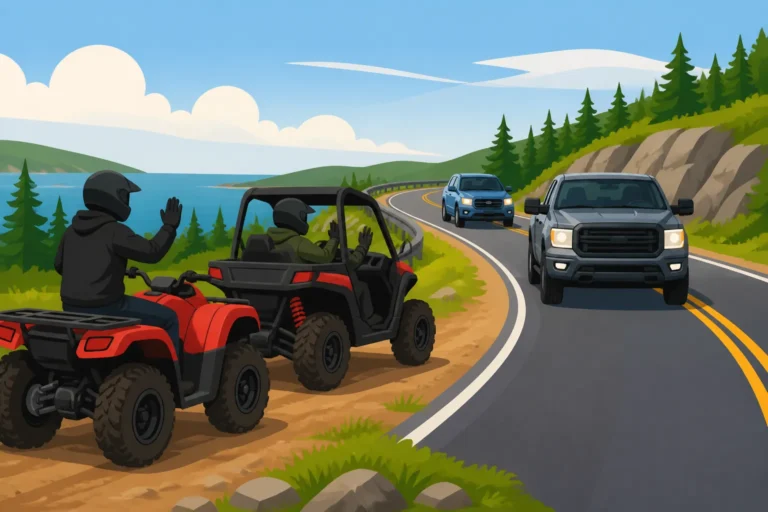
- Shoulder Riding: In very limited circumstances, you might be able to ride on the shoulder of a highway, but only for the purpose of getting to or from a trail, and only for a maximum of [Shoulder Riding Is for Reaching a Trail Only] or one kilometre. The speed limit while on the shoulder is also restricted to [20 km/h on a Shoulder]. This is strictly for accessing trails, not for travel.
- Designated Roads: Some municipalities may have bylaws that allow ORVs on certain local roads or streets, but these are exceptions, not the rule. You must check with the local municipality directly. Generally, ORVs are not permitted on provincial roadways.
The temptation to take the quickest route can be strong, but the penalties for violating these rules can include significant fines and even seizure of your machine. It's far better to consult a map, understand your designated access points, and plan your route carefully.
Beyond the Basics: Preparing for Newfoundland's Unique Riding Environment
Newfoundland's landscape offers some of the most spectacular, rugged, and sometimes challenging riding experiences in Canada. For New Brunswick riders, understanding not just the legalities but also the practicalities of riding here can make all the difference between a good trip and a great one.
Understanding Newfoundland's Trail Network and Terrain
Newfoundland is famous for its vast wilderness, which includes everything from rocky barrens and boggy areas to dense forest and coastal paths. The jewel in the crown for many ORV enthusiasts is the T'Railway Provincial Park, which stretches [The T'Railway's 883 Kilometres in Newfoundland] from St. John's to Port aux Basques. This old railbed offers an incredible opportunity for long-distance touring, but it's important to remember it's a multi-use trail, shared with hikers, cyclists, and snowmobilers in winter. [Newfoundland Trails Shared With Hikers] means riders need to exercise extra caution and courtesy.
Beyond the T'Railway, there are countless unofficial trails, logging roads, and open Crown Land areas. However, not all Crown Land is open to ORVs, and restricted areas exist, especially in sensitive environmental zones or near caribou migration routes. Always consult local maps and respect signage. [Newfoundland Crown Land Riding Rules] are in place to protect the province's natural beauty and wildlife. Damage to sensitive wetlands, for example, can have long-lasting consequences and lead to fines.
The terrain itself can be demanding. Boggy sections are common, especially in central and western Newfoundland, and can easily trap a machine. Rocky sections require good ground clearance and careful navigation. Ensure your machine, perhaps enhanced with durable components from a brand like SuperATV, is up to the task, and consider carrying recovery gear like a winch or tow strap.
Practical Tips for a Smooth Trip
To ensure your Newfoundland riding adventure is as smooth as possible, consider these practical tips:
- Weather Preparedness: Newfoundland weather can be notoriously unpredictable. A sunny morning can quickly turn into a foggy, rainy afternoon, especially along the coast or in higher elevations. Pack layers of clothing, waterproof gear, and be prepared for sudden temperature drops.
- Navigation: While cell service is improving, there are still vast stretches of wilderness where you won't have a signal. Carry a physical map, a GPS device with downloaded maps, or use a satellite communicator. Don't rely solely on your phone.
- Fuel and Supplies: Plan your fuel stops carefully, especially on longer routes like the T'Railway. Many small communities along the trail offer fuel and amenities, but they might be few and far between. Always carry extra water, snacks, and a basic first-aid kit.
- Respect the Environment and Communities: Pack out everything you pack in. Be mindful of noise levels, especially when riding near communities or homes. Show courtesy to other trail users and wildlife. The beauty of Newfoundland depends on everyone doing their part.
| Aspect | New Brunswick Registered Machine (Visitor in NL) | Newfoundland Registered Machine (Resident/Longer Stay) |
|---|---|---|
| Registration | Exempt for 30 consecutive days | Required |
| Insurance | NB policy must meet NL minimum liability | NL minimum liability required |
| Plates | NB plate valid | NL identification plate required |
| Safety Training | Generally not required for adults on short visits; recommend familiarizing with NL rules | Mandatory for first-time registrants, minors, or after suspension |
| Helmet Law | Yes, approved helmet with fastened strap | Yes, approved helmet with fastened strap |
| Road Use | Same strict NL rules apply | Same strict NL rules apply |
| Managed Trails | May require NL Trail Sticker | May require NL Trail Sticker |
| Proof to Carry | NB registration, insurance, driver's license | NL registration, insurance, driver's license |
A trip to Newfoundland and Labrador with your ATV or side-by-side promises an unforgettable experience. By taking the time to understand and respect the provincial rules, a New Brunswick rider can ensure their adventure is filled with good memories, not unexpected complications. Plan ahead, ride safely, and embrace the unique spirit of the island!
Disclaimer
This article is for general informational purposes only and does not constitute professional advice. Laws, prices and regulations vary by location and change over time. Consult a qualified professional for guidance on your specific situation.