Newfoundland Rules for Crossing a Highway
Navigating the world of off-road vehicles (ORVs) in Newfoundland and Labrador often brings up a common, yet often confusing, question: how exactly are you supposed to deal with highways? It’s a real head-scratcher, especially when a main road might be the only thing separating you from one great trail system to another. This guide aims to cut through the confusion and lay out the exact rules for crossing or briefly riding on a highway shoulder with your ATV or side-by-side.
The Strict Reality of Newfoundland's Highways and ORVs
For many new and even seasoned riders, the relationship between off-road vehicles and public highways in Newfoundland and Labrador can feel like a minefield. You see a trail on one side of a road, and another on the other, and it seems like such a small hop. But that small hop is where safety, legality, and common sense often collide. The provincial government has clear regulations, designed primarily for public safety, that dictate when and how your machine can ever touch asphalt meant for cars and trucks.
Why Roads Are Generally Off-Limits
Let's be honest, it feels frustrating when you're on a perfectly good trail and hit a highway, knowing another amazing section awaits just across the pavement. Many riders feel this pinch, wondering why such a direct route is so restricted. The core reason is straightforward: ORVs simply aren't designed for highway speeds or the flow of traffic. They lack many of the safety features and road-specific components of a traditional vehicle, and mixing them with cars and trucks moving at 80-100 km/h is an accident waiting to happen. The very term "off-road" isn't just a suggestion; it defines the intended operating environment for these machines.
This inherent incompatibility is why [Newfoundland's Off-Road Vehicles Act] draws such clear lines. The provincial government recognizes the importance of ORV recreation but prioritizes the safety of all road users. Imagining a quiet gravel road is one thing, but picturing your quad on a busy Trans-Canada Highway interchange really puts the restrictions into perspective. It's about minimizing risk for everyone on the road, including you on your machine.
The Legal Framework Governing Road Use
The foundational document for all things ORV in the province is the [Newfoundland's Off-Road Vehicles Act]. This piece of legislation, along with its associated regulations, is your go-to source for understanding what you can and cannot do. It meticulously defines what constitutes an ORV, where it can be operated, and crucially, its interactions with public highways. The Act doesn't just suggest; it mandates these rules, and ignorance is no defence if you find yourself facing an enforcement officer.
Beyond the provincial Act, it's also important to remember that local communities have a say. Many municipalities have the power to enact their own [Newfoundland Municipal Road Bylaws] that can further restrict or, in very specific cases, allow ORV use on certain local roads. While the provincial Act sets the baseline, always double-check with the local town council if you're planning to ride in or near a specific community. This layered approach means that while provincial rules provide a general framework, hyper-local regulations can add extra conditions you need to be aware of.
Mastering the Art of the Highway Crossing
Okay, so we know that highways are generally off-limits. But what about those unavoidable situations where a trail simply ends on one side of a paved road and picks up directly on the other? This is where the Newfoundland and Labrador government provides a specific, albeit highly regulated, allowance: direct highway crossings. It’s not a free-for-all, but a tightly controlled maneuver designed to get you from one off-road segment to another as safely and quickly as possible.
The 150-Metre Visibility Rule: What It Means
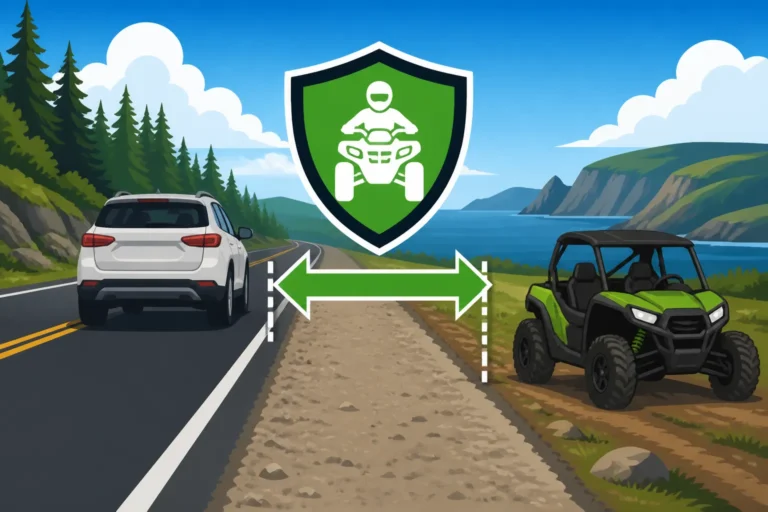
This is perhaps the most critical rule for any ORV operator planning to cross a public highway: you must have an unobstructed view of at least 150 metres in both directions along the highway before you proceed. This isn't just a guideline; it's a hard and fast legal requirement clearly outlined in the [Crossing a Newfoundland Highway Needs 150 Metres of Visibility] regulation. Why 150 metres? Because that distance provides enough reaction time for both you and any approaching highway traffic. At typical highway speeds, a vehicle can cover a lot of ground very quickly, and you need ample warning to ensure your crossing is safe.
Practically speaking, judging 150 metres can be tricky out in the wild. It's roughly the length of 1.5 football fields. Before you even think about putting a tire on the pavement, stop your machine well clear of the highway. Get off if you need to, and visually scan both ways. Look for any bends in the road, hills, or dense foliage that might obscure your view. If you can't clearly see at least 150 metres of open road in both directions, you cannot cross. It’s better to find an alternative route, even if it adds miles, than to risk a collision due to poor visibility.
Safety Protocols Before, During, and After the Crossing
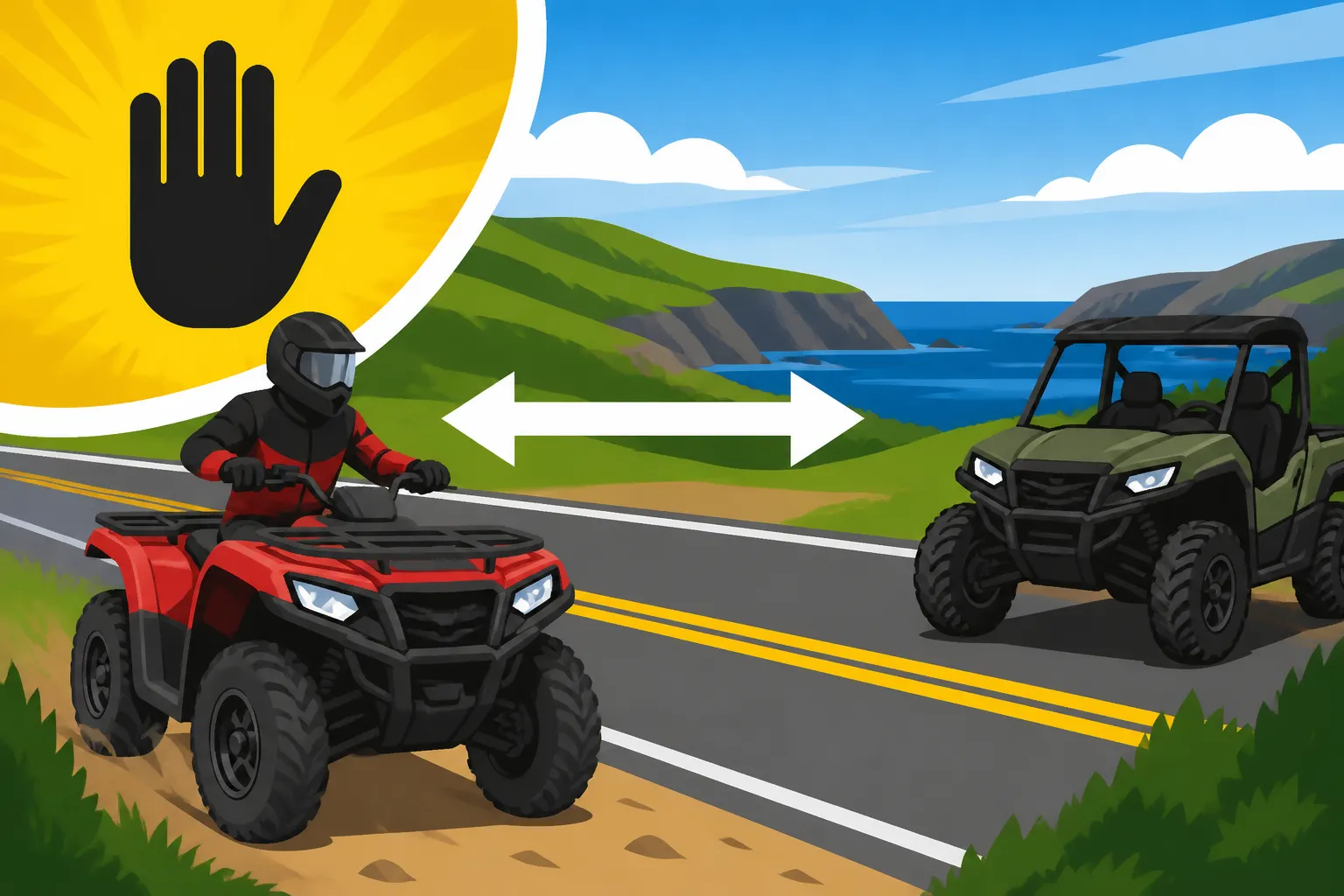
Executing a safe highway crossing requires a deliberate, step-by-step approach. It's not just about meeting the 150-metre visibility rule; it's about being actively cautious and predictable. First and foremost, before you even consider moving onto the highway, bring your machine to a complete stop at the edge of the paved surface, giving way to all traffic. This is a non-negotiable part of the [Newfoundland Riders Yield to Highway Traffic] principle. Make eye contact with any approaching drivers if possible, signaling your intent to cross.
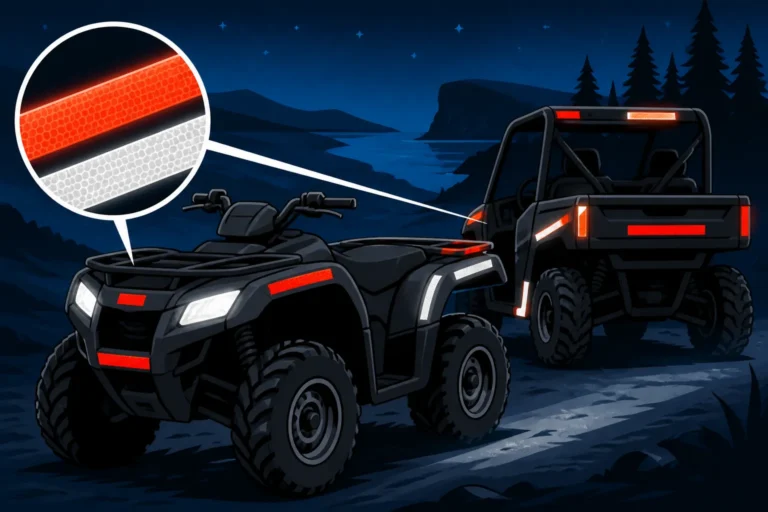
When you do cross, do so directly and perpendicularly to the highway's flow. Your goal is to get off the paved surface as quickly as possible. Do not attempt to ride even a short distance along the highway or cut a diagonal path. Speed is not the objective; a smooth, controlled, and direct movement is. Once you've safely reached the other side, immediately return to an approved off-road area. This short duration on the highway emphasizes that crossings are for connection, not travel. Also, ensure your machine's [Newfoundland Equipment Requirements] are met, especially working head and tail lamps for maximum visibility, even if it's broad daylight. For those who want to boost their visibility, aftermarket lighting solutions can be a great addition. Many riders install extra LEDs or brighter lights, sometimes from brands like SuperATV, to ensure they're seen, though these are supplementary to legal requirements.
Riding on Highway Shoulders: A Very Limited Exception
While direct crossings are sometimes necessary, riding along a highway shoulder with your ORV is an even rarer and more strictly defined exception. It’s crucial to understand that this isn’t an invitation to cruise down the shoulder for miles. This allowance is purely functional, designed to bridge short gaps between designated trail systems when no other off-road alternative exists. Misinterpreting this rule can lead to significant penalties and put you in harm's way.
The 1-Kilometre Shoulder Rule for Access
The rule allowing you to ride on a highway shoulder is incredibly specific: it's permitted only for a distance of up to one kilometre, and only if it's the sole means of accessing or egressing an approved trail system, or to connect two distinct segments of an approved trail. This is the essence of the [Newfoundland's 1-Kilometre Shoulder Rule]. It's not for convenience, it's for necessity. Imagine you're deep in the barrens, and the only way to reach another section of your favourite trail, or to get to a specific point, is by briefly traversing a highway shoulder. This rule facilitates those very particular situations.
The spirit of this rule is to provide limited, essential access, not to make highways part of your regular riding route. If there's an off-road alternative, no matter how much longer or rougher, you're generally expected to take it. Furthermore, while on the shoulder, you are subject to a strict [Newfoundland's 20 km/h Shoulder Limit]. This drastically reduced speed limit ensures that you can react to unexpected situations and that highway traffic has ample time to see and safely pass your machine. It's a crawl, not a cruise, and for good reason.
Mandatory Safety Measures While on the Shoulder
Operating your ORV on a highway shoulder, even for a short distance, demands extreme vigilance and adherence to safety protocols. First and foremost, always stay as far to the right as possible on the shoulder, giving the widest berth to highway traffic. Your presence on the shoulder is unexpected for most drivers, so making yourself as visible as possible is paramount. This means bright clothing, always having your headlights and taillights on, and perhaps even investing in additional reflectors or a high-visibility flag. Some riders enhance their machines with robust accessories, like heavy-duty bumper systems from SuperATV, but these should always complement, not replace, basic visibility requirements.
You must remain acutely aware of the much faster-moving highway traffic. This isn't just a suggestion; it's a legal obligation to [Newfoundland Riders Yield to Highway Traffic] at all times. This means anticipating moves, being ready to stop, and understanding that you are the guest on a road designed for other vehicles. Additionally, if you are operating an ORV on a highway shoulder, even under these limited exceptions, you are required to hold the appropriate [Newfoundland Licence Requirements on a Highway] for the class of vehicle. This is distinct from simply being licensed for off-road use, as you are now interacting directly with the public road system.
Consequences of Non-Compliance and Best Practices
Ignoring the rules for highway crossings and shoulder riding in Newfoundland and Labrador isn't just about bending the rules; it carries serious risks and significant legal repercussions. The provincial government has put these regulations in place to protect riders, other motorists, and the integrity of the ORV experience. Understanding the consequences can be a powerful motivator to always ride by the book.
Penalties for Illegal Highway Use
The provincial authorities take illegal ORV use on highways very seriously. If you're caught operating your ATV or side-by-side on a highway or its shoulder outside of the specific allowances, you could face hefty [Newfoundland Penalties for Riding Illegally]. These penalties often include substantial fines, and in some cases, your machine could even be seized. Imagine the headache and financial burden of having your machine impounded, not to mention the legal fees and time spent dealing with court appearances. It's a far cry from a fun day on the trails.
Law enforcement officers are well-versed in the Off-Road Vehicles Act and are trained to identify improper operation. They patrol rural areas and highway access points specifically looking for infractions. It's not worth the risk of a ticket, the potential for an accident, or losing your machine. Always ensure you're carrying [What an Officer Can Ask You to Produce], such as your registration and proof of insurance, as this will be requested during any stop.
The Spirit of the Law: Responsible Riding
Beyond avoiding penalties, there's a larger responsibility that comes with being an ORV operator in Newfoundland and Labrador. The rules aren't just arbitrary lines drawn on a map; they are there to foster a culture of safety and respect among all users of public spaces. When you operate your machine responsibly, you become an ambassador for the entire ORV community, helping to ensure continued access to trails and maintaining a positive image for the sport.
Always make it a habit to understand not just what the law says, but why it says it. The safety of yourself, your passengers, and every other person on the road should be your paramount concern. Before every ride, especially if you plan to navigate near highways, take a moment to review your route and confirm compliance. Check if there are any specific [Newfoundland Municipal Road Bylaws] that might apply to the area you're riding in, as these can add an extra layer of regulation. By adhering to the spirit of the law—being safe, courteous, and informed—we can all enjoy the incredible riding opportunities Newfoundland and Labrador has to offer for years to come.
| Feature | Highway Crossing | Shoulder Riding (Limited Access) |
|---|---|---|
| Purpose | Directly cross to connect trails/properties | Access/egress approved trails, connect trail segments |
| Visibility Required | 150 metres in both directions | High visibility (driver awareness) |
| Maximum Distance | Shortest possible path across | 1 kilometre maximum |
| Speed Limit | Proceed safely and directly | 20 km/h |
| Position | Straight across, perpendicular to traffic flow | Far right side of the shoulder, facing traffic direction |
| Yielding | Must yield to all highway traffic | Must yield to all highway traffic |
| Licence Required | Generally ORV rules apply; no specific highway licence for mere crossing | [Newfoundland Licence Requirements on a Highway] – required |
| Permitted Equipment | Standard ORV equipment | Standard ORV equipment, plus high visibility recommended |
Disclaimer
This article is for general informational purposes only and does not constitute professional advice. Laws, prices and regulations vary by location and change over time. Consult a qualified professional for guidance on your specific situation.