Frequent Stops Under Twenty
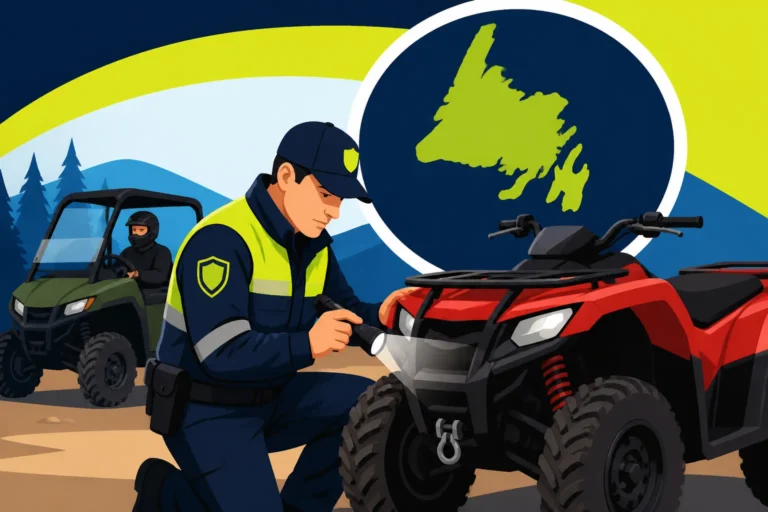
One of the trickiest parts about enjoying your ATV or UTV in Newfoundland and Labrador isn't necessarily mastering a challenging trail, but rather navigating the often-confusing rules about when and how you can actually use your machine on or near public roads. Many riders find themselves scratching their heads over terms like "frequent stops under twenty," wondering what exactly that means for their quick dash across a highway or a short ride down a shoulder to get to a trail. This guide aims to clear up those exact frustrations, delving deep into the specific regulations that govern road use for off-road vehicles (ORVs) in our beautiful province, ensuring you can hit the trails or get home safely and legally.
Deciphering Newfoundland's "Frequent Stops Under Twenty" Rule for ORVs
Let's face it, the wording in legal documents can often feel like it's designed to confuse, and the "frequent stops under twenty" rule is no exception. It's not a direct instruction for you to stop frequently, but rather a descriptor of a specific type of prohibited activity on public roads. It’s all about limiting how ORVs interact with the highway system to ensure safety for everyone.
What "Frequent Stops" Actually Means in the Context of the Law
When the law talks about "frequent stops" in this context, it's really getting at the idea of prolonged or intermittent use of a highway by an ORV, almost as if the highway is the trail. It's not about you pulling over to check a map or help a buddy. Instead, it's about discouraging a pattern of behaviour where an ORV might be riding a highway, stopping, then riding again, possibly at low speeds.
Imagine you're trying to get from one section of a trail to another, and there's a paved road separating them. The temptation might be to just putter along the road, stopping every now and then for a quick chat or to let faster traffic pass. That's precisely the kind of "frequent stops" scenario the legislation aims to curb. The provincial government wants to keep ORVs off the main travel lanes of highways as much as possible, only permitting very specific and limited interactions. This rule, therefore, acts as a guardrail against treating a public highway as an extension of your recreational riding area. It means you can't just cruise down the highway, even slowly, pulling over whenever you feel like it. The intent of the [Newfoundland's Off-Road Vehicles Act] is to ensure that highway use is purely for necessary transit, not for casual travel.
The "Under Twenty" Kilometres Per Hour Limit and Its Significance
This speed limit is crucial, and often misunderstood. When you are permitted to use a highway shoulder or make a highway crossing, you absolutely cannot exceed 20 kilometres per hour. This isn't just a polite suggestion; it's a hard and fast legal requirement. Why such a low speed? Primarily, it's about safety.
Operating an ORV at slow speeds on a roadway where cars and trucks are travelling at 80 km/h or more creates a huge speed differential. Keeping ORVs to 20 km/h or less during permitted highway interactions gives conventional vehicle drivers more time to see you, react, and avoid a collision. It also gives the ORV operator more control and a better chance to navigate safely, especially when crossing multiple lanes of traffic or merging briefly onto a shoulder. For example, if you're crossing the Trans-Canada Highway to reach a trail on the other side, even if it feels clear, going over 20 km/h is a serious violation. It shows the seriousness of these rules that Newfoundland specifies [Newfoundland's 20 km/h Shoulder Limit]. It's a non-negotiable part of the agreement for limited highway access, designed to minimize risk during those vulnerable moments when ORVs share space with much larger, faster vehicles.
The Purpose Behind the Regulation: Safety, Flow, and Reducing Conflict
At its heart, the "frequent stops under twenty" rule, alongside the broader highway use regulations, is all about balancing the needs of ORV enthusiasts with the safety and efficient flow of traffic on public roads. Newfoundland and Labrador offers incredible terrain for ATVs and UTVs, and the province recognizes that riders sometimes need to briefly interact with the road system to access these areas.
However, the primary function of highways is for high-speed, conventional vehicle traffic. Allowing unrestrained ORV use on these roads would create chaos, increase the risk of serious accidents, and frustrate drivers of cars and trucks. The regulations aim to:
- Enhance Safety: By restricting speeds, limiting duration, and specifying crossing points, the risk of collisions between ORVs and conventional vehicles is significantly reduced. This protects ORV operators, passengers, and the general motoring public.
- Maintain Traffic Flow: Keeping ORVs off main travel lanes and limiting their presence on shoulders prevents congestion and ensures that highways can perform their intended function of moving traffic efficiently.
- Prevent Misuse: The rules deter riders from using highways as convenient, albeit illegal, shortcuts or recreational routes, pushing them back onto designated trails and approved areas.
Ultimately, these regulations are a pragmatic attempt to allow ORV use to continue thriving while integrating it safely into the existing transportation network. It means that while you might feel a bit constrained, these rules are for everyone's benefit, ensuring that our beautiful province remains accessible for both trail riding and safe road travel.
Navigating Approved Roadways and Crossings with Your ORV
Understanding the general principles is one thing, but knowing the specific instances where you can and cannot interact with public roads is where the rubber meets the asphalt. Newfoundland has very clear, albeit sometimes restrictive, guidelines for ORV use on roadways, shoulders, and during crossings.
Crossing a Highway: The Strict 150-Metre Rule for Visibility
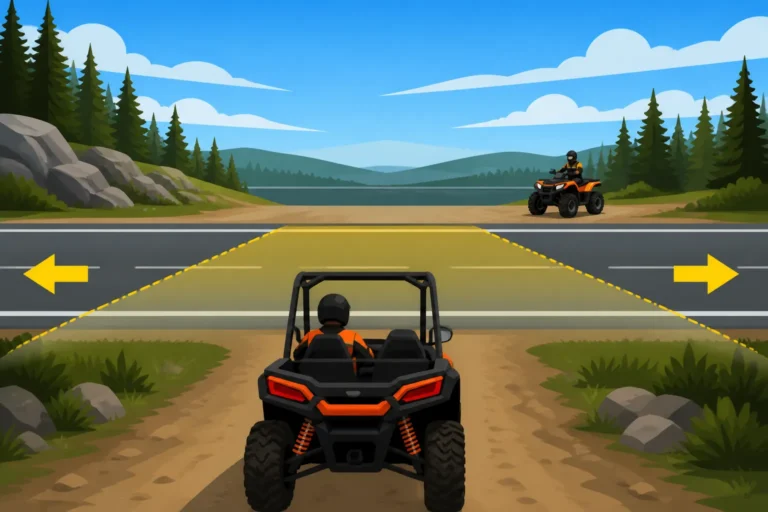
This is arguably one of the most critical safety regulations for ORV operators in Newfoundland: the 150-metre visibility rule when crossing a highway. It states that an ORV operator can only cross a highway where they have an unobstructed view of at least 150 metres in both directions along the highway.
Think about standing on the edge of a highway, ready to cross. Before you even think about moving, you need to be able to see clearly for more than a football field's length down the road in both directions. This isn't a suggestion; it's a hard and fast rule that directly impacts your safety. If there's a bend in the road, a hill, dense trees, or any other obstruction that prevents you from seeing that full 150 metres, you absolutely cannot cross at that point. You need to find an alternative crossing, even if it means riding a bit further down a trail.
This rule is designed to give both you and approaching motorists ample time to react. A car traveling at highway speeds covers a lot of ground very quickly. If you pull out and a car is just around a blind corner, neither of you has enough time to react safely. Riders often get frustrated by this, especially if their usual crossing point now has overgrown brush, but it’s non-negotiable. It's a matter of life and death, and enforcement takes it very seriously. Make sure you understand [Newfoundland Rules for Crossing a Highway] before you attempt any highway crossing.
Riding the Shoulder: The 1-Kilometre Limit to Reach a Destination
While generally prohibited from the main lanes of highways, ORVs are permitted to use the shoulder of a highway in very specific, limited circumstances, and always under strict conditions. The most important of these conditions is the 1-kilometre limit. You can ride the shoulder for a maximum distance of one kilometre solely for the purpose of getting to or from a trail, a gas station, or your own property.
This means you can't just ride the shoulder for convenience or to sightsee. It must be a direct path to an approved destination. For instance, if you're on a trail and the trailhead parking lot is exactly one kilometre down the highway shoulder, that's a permitted use. If your cabin is 500 metres off the shoulder, that's fine too. But you can't ride two kilometres because it's a nicer view, or ride the shoulder for ten minutes just to link up with another group further down the road.
Furthermore, when riding the shoulder, you must always adhere to the 20 km/h speed limit discussed earlier and remain as far to the right as safely possible. You must yield to all highway traffic, and be prepared to stop or pull off the shoulder if necessary. This allowance is a privilege, not a right, and it comes with significant responsibilities. Many riders forget these nuances, and it leads to tickets. For comprehensive details on this, look up [Riding the Shoulder 1 Kilometre to Reach a Trail].
Municipal Road Bylaws and Exceptions to Provincial Rules
Here's where things can get even more nuanced: while the province sets the overarching rules, individual municipalities in Newfoundland and Labrador have the power to enact their own bylaws regarding ORV use on municipal roads. This means that what's legal in one town might be completely illegal in a neighbouring community.
For example, a small rural community might have a bylaw that permits ORVs to use certain local roads for specific purposes, like getting to a fishing spot or a cabin, where the provincial highway rules would otherwise forbid it. Conversely, a larger town or city might have very restrictive bylaws that ban ORVs from almost all municipal roads, even those that seem quiet or out of the way.
It is absolutely crucial to check with the local municipal office or their website for their specific ORV bylaws before riding on any roads within their jurisdiction. Relying on "everyone does it" or assuming that provincial rules always apply can lead to fines and machine impoundment. Many riders get caught out by this, thinking they’re following the province’s rules, only to find a local bylaw is much stricter. Always do your homework! [Newfoundland Municipal Road Bylaws] can vary wildly, so assume nothing. Some accessories from SuperATV, like enhanced lighting or turn signal kits, can certainly help make your machine more visible and compliant with some local road-use requirements, even if it doesn't make it "street legal" everywhere.
Practical Compliance and Avoiding Penalties for Road Use
Nobody wants to get a ticket or, worse, be involved in an accident. Complying with Newfoundland's ORV road rules isn't just about avoiding penalties; it's about ensuring your safety and the safety of others. It requires preparation, awareness, and adherence to specific equipment and operational standards.
Equipment and Visibility for Road Use: Be Seen, Be Safe
When you're operating an ORV on a highway shoulder or making a crossing, you become a very small, often slow-moving target in a world of much larger, faster vehicles. Your visibility is paramount. The law has specific requirements, but smart riders go above and beyond.
- Lighting: Your ORV must have working headlamps and tail lamps if operating between sunset and sunrise, or at any time when visibility is poor. Make sure these are clean and fully functional. A bright, well-maintained headlight isn't just for seeing the trail; it's for being seen by oncoming traffic.
- Reflectors: Additional reflectors can make a huge difference. Consider adding reflective tape to the front, sides, and rear of your machine, especially if it's an older model or one with a dark colour scheme.
- Flags: While not always explicitly required for shoulder use, an orange safety flag mounted on a pole above your machine's highest point significantly increases your visibility to other drivers, particularly in hilly terrain or when emerging from dense bush. Companies like SuperATV offer a range of robust flags and mounting solutions that can be incredibly helpful for increasing your profile.
- Mirrors: Side mirrors, even if not strictly mandated for ORVs (as they are for street-legal vehicles), are invaluable for checking traffic behind you when you're preparing to cross a road or merge onto a shoulder. Being able to see what's coming without having to turn your whole body significantly reduces risk.
The key takeaway is this: Assume no one sees you. Actively work to make your machine as visible as possible from all angles. For a deeper dive into these requirements, check out [Newfoundland Equipment Requirements].
Signalling Intent and Exercising Caution: Your Actions Speak Volumes
Beyond your machine's equipment, your own actions as an operator are critical for safe road interaction. When you're making a highway crossing or riding a shoulder, you need to be predictable and communicate your intentions clearly to other road users.
- Hand Signals: If your ORV doesn't have turn signals (most ATVs don't, though some UTVs might), you must use clear, universally understood hand signals for turning and stopping. Practice these so they become second nature. Don't assume other drivers will know what you're doing.
- Pre-Ride Check: Before approaching any road, take a moment to assess the situation. Is traffic heavy? Is visibility poor? If so, wait. Patience is a virtue when safety is on the line.
- Defensive Riding: On shoulders, always maintain a safe distance from the travel lane. Be alert for debris, potholes, or anything that might force you to swerve. Anticipate that other drivers might not see you, and be prepared to take evasive action if necessary.
- Yielding: The law is clear: ORVs must yield to all highway traffic. This means you wait for a safe gap to cross, and if you're on a shoulder, you are secondary to cars and trucks. Don't challenge a motorist for space. This point is critical and covered in [Newfoundland Riders Yield to Highway Traffic].
Documenting Your Ride: Proof of Compliance is Your Best Friend
Roadside stops, even for ORV operators, can happen. And when they do, having your paperwork in order is essential. Failure to produce required documents can lead to fines, delays, and further investigation.
- Registration: Your ORV must be registered with the provincial government. While your registration technically never expires as long as you own the machine, you need to carry proof of this. [Newfoundland Registration Valid While You Own It] means you don't renew annually, but you do need that original permit.
- Insurance: Newfoundland mandates minimum third-party liability insurance for all ORVs. You must carry proof of this insurance. If you cannot produce it on demand, an officer may give you two business days to do so, but it's much easier to have it with you. Learn more about this under [Newfoundland Insurance Proof Within Two Days].
- Safety Training: If you are a new registrant or under 16, you likely need proof of having completed an approved ORV safety training course. Even if not mandatory for all, it's a smart thing to do.
- Driver's Licence: If you are operating an ORV on a public highway or its shoulder, even for a brief crossing, you must hold a valid driver's licence appropriate for a conventional vehicle. This is another area where riders often get tripped up.
Keep all these documents in a waterproof bag, stored securely on your machine or on your person, so they are readily accessible. Being able to quickly and calmly present your papers can make a roadside stop much smoother.
Common Misconceptions and Risky Behaviours to Avoid
Even with clear rules, it's easy for misconceptions to take root or for riders to develop habits that, while seemingly harmless, can lead to serious trouble. Let's tackle some of these common pitfalls head-on.
The "Quick Dash" Fallacy: Every Foot Counts
It's tempting, isn't it? The trail is right there, just across the highway, or maybe a cabin road is only 100 metres down the shoulder. "It's just a quick dash," you might think. "No one's around, and I'll be off in a second." This line of thinking is a classic trap, and it's one of the quickest ways to earn a ticket or, worse, put yourself in harm's way.
The law doesn't differentiate between a "long dash" and a "quick dash." If you are on a highway travel lane or an unapproved part of the shoulder, you're breaking the law, regardless of how short the distance. That 150-metre visibility rule for crossings applies whether you're crossing a narrow secondary road or the busiest section of the Trans-Canada Highway. The "just for a second" mentality often leads to a lapse in judgment, reduced vigilance, and a failure to properly assess traffic. What looks clear can change in an instant, especially on our winding Newfoundland roads. An officer doesn't need to see you travel for a kilometre to issue a citation; even a few feet of illegal road use is sufficient.
Ignoring the Speed Limit on Shoulders and Crossings: The Need for Speed is a Risk
Another dangerous misconception is that the 20 km/h speed limit for shoulder use and crossings is more of a guideline than a strict rule. Many riders feel that if the road is clear, they can safely go a bit faster – perhaps 40 km/h or even more. This is a critical mistake.
The 20 km/h limit is intentionally low to maximize safety. Even if you feel comfortable at a higher speed, remember that it's about the reaction time of other drivers and the unexpected. A vehicle cresting a hill, pulling out from a hidden driveway, or making an unexpected turn can create a dangerous situation very quickly. Moreover, exceeding the speed limit on a shoulder or during a crossing is a clear violation that enforcement officers actively look for. It's easy for them to clock your speed, and a ticket for this offence is not minor. The fine, combined with the safety implications, makes it simply not worth the risk. Respect the limit: [Newfoundland's 20 km/h Shoulder Limit] is there for a reason.
The "Local Knowledge" Trap: Bylaws Change, and So Does Enforcement
"Oh, everyone rides that road here," or "The cops never bother us on this section." This "local knowledge" is one of the most pervasive and dangerous traps for ORV riders. While it's true that some areas might have historically been more lenient, or that certain roads have always been used by locals, this doesn't make it legal or safe.
Laws and bylaws change. What was acceptable five or ten years ago might be strictly prohibited now. Enforcement priorities can also shift quickly, often in response to accidents, public complaints, or new legislation. Relying on outdated local customs or anecdotal evidence is a recipe for trouble. Always consult official sources – the provincial government's Off-Road Vehicles Act, and specific municipal bylaws. Don't let someone else's casual attitude towards the rules lead you into a situation where you face fines, impoundment, or worse. The rules are published, and it's your responsibility to know them.
Enhancing Safety for Road-Adjacent Riding
Even when following all the rules, riding an ORV that briefly interacts with public roads carries inherent risks. Proactive measures, both in terms of rider behaviour and machine maintenance, are crucial for mitigating these risks and ensuring every trip is as safe as possible.
Rider Awareness and Situational Readiness: Your Best Defence
Your most powerful safety tool is your brain. Being fully present, aware of your surroundings, and ready to react at all times is paramount when operating an ORV, especially when near roads.
- Constant Scanning: Don't just look straight ahead. Constantly scan your surroundings – forward, to the sides, and behind you using mirrors. Be aware of traffic patterns, potential hazards on the shoulder, and where you'll exit the road.
- Anticipate the Unexpected: Assume other drivers might not see you, might not signal, or might make sudden movements. Be prepared to slow down, stop, or adjust your path instantly. This is particularly vital when crossing highways where traffic can appear quickly.
- Maintain Space: Even at low speeds on a shoulder, keep ample space between your ORV and any parked vehicles, pedestrians, or the edge of the travel lane. This buffer zone gives you more time and room to manoeuvre if something goes wrong.
- Avoid Distractions: Put the phone away. Don't get engrossed in conversation with a passenger to the point where your attention wavers. All your focus needs to be on the task of safely navigating the road interface.
Situational readiness is about more than just knowing the rules; it's about being mentally prepared for any eventuality, minimizing surprises, and acting decisively to protect yourself and others.
Machine Maintenance for Road Worthiness: Beyond the Trail Basics
When you're strictly on trails, certain machine issues might be an inconvenience. On a public road, they can become a serious hazard. Regular and thorough maintenance is critical, especially for components that impact road safety.
- Brakes: Ensure your brakes are in perfect working order. Test them before every ride, especially if you'll be on a road. You need maximum stopping power, instantly.
- Tires: Check tire pressure and tread depth. While low-pressure tires are great for off-road traction, ensure they are properly inflated and in good condition if you're hitting any pavement. Any worn or damaged tires could be dangerous on hard surfaces at even low speeds.
- Lights and Signals: We mentioned visibility earlier, but it bears repeating. Check your headlamps, tail lamps, and any turn signals (if applicable) before every ride. Replace burnt-out bulbs immediately.
- Steering and Suspension: Ensure your steering is tight and responsive, and your suspension isn't excessively worn. Worn components can lead to unpredictable handling, which is far more dangerous on a firm, unforgiving road surface than on a soft trail.
- Horn: A working horn can be a critical safety device for alerting inattentive drivers or pedestrians to your presence.
For those who push their machines hard, upgrading components can increase safety and durability. Products from SuperATV, such as heavy-duty axles, robust suspension kits, or upgraded lighting, can enhance your ORV's overall reliability and road-worthiness, providing greater confidence when you need to briefly interact with public roads.
Insurance and Liability Considerations: Protecting Yourself Financially
Operating an ORV, particularly near or on public roads, carries significant liability risks. Understanding your insurance coverage is not just a legal requirement; it's a crucial part of protecting your financial future.
- Minimum Requirements: Newfoundland has a minimum third-party liability insurance requirement for ORVs. This coverage helps protect you if you're found responsible for damage or injury to another person or their property. However, minimum coverage might not be enough to cover the actual costs of a serious accident. For a quick refresher, consult [Newfoundland Minimum Insurance Requirement].
- Adequate Coverage: Many experienced riders opt for higher liability limits than the minimum, often hundreds of thousands or even a million dollars. The cost difference for increased coverage is often minimal compared to the potential financial devastation of an underinsured accident.
- Collision and Comprehensive: Consider adding collision and comprehensive coverage for your own machine. While not legally required, this covers damage to your ORV from accidents or other incidents, regardless of fault.
- Review Your Policy: Don't just assume you're covered. Read your insurance policy carefully, or better yet, speak directly with your insurance broker. Ask specific questions about coverage when operating on highway shoulders, during crossings, or on municipal roads. Are there any exclusions for specific types of use? Clarify these points before you ride.
Being involved in an accident is stressful enough; not having adequate insurance adds a monumental financial burden on top of everything else. Protect yourself and your assets by ensuring your coverage is robust and appropriate for how and where you ride.
Newfoundland ORV Road Use at a Glance
For those quick checks, here’s a summary of the key rules for ORV interaction with Newfoundland’s public roads. Remember, these are provincial rules; always check local municipal bylaws too!
| Scenario | Allowed? | Speed Limit (km/h) | Visibility Required | Notes |
|---|---|---|---|---|
| Crossing a Highway | Yes | 20 | 150 meters each way | Must be perpendicular, shortest distance. No crossing at blind spots or over hills. |
| Riding the Highway Shoulder | Yes | 20 | N/A | Only for 1 km maximum. Must be to access a trail, gas station, or property. Yield to all highway traffic. |
| Riding on the Highway Travel Lane | No | N/A | N/A | Generally prohibited. Exceptions may exist in specific municipalities with local bylaws. |
| Frequent Stops on Highway | No | N/A | N/A | Prohibited. Implies treating the highway as a trail. Road use is for direct transit only, not lingering. |
| Required Documents | Yes | N/A | N/A | Registration, insurance proof, driver's licence (on roads), safety training (if applicable) must be carried. |
| Helmet Use | Yes | N/A | N/A | Required for all operators and passengers, at all times, including on shoulders and during crossings. |
This table provides a concise overview of the rules; however, the details within the main body of this article provide the critical context needed to fully understand and comply. For instance, the helmet law is non-negotiable and applies any time you are riding an ORV, not just on roads. For full details on this, check [Newfoundland Helmet Law for Every Rider].
In conclusion, navigating Newfoundland's rules for ORV use on or near public roads can feel like a minefield, but with a clear understanding of regulations like the "frequent stops under twenty" rule, along with diligent preparation and a commitment to safety, you can confidently and legally enjoy all the incredible riding opportunities our province has to offer. Stay safe out there!
Disclaimer
This article is for general informational purposes only and does not constitute professional advice. Laws, prices and regulations vary by location and change over time. Consult a qualified professional for guidance on your specific situation.