Helmets Are Required for Operators and Passengers Alike
Navigating the rules for riding ATVs and UTVs in Newfoundland can feel like trying to find your way through a thick fog on the barrens—confusing, frustrating, and sometimes, a little overwhelming. Many riders just want to enjoy the incredible trails and scenery our province offers, but they're constantly worried about whether they're following every single regulation, especially when it comes to safety gear and those tricky moments when you need to interact with a public road. This comprehensive guide is here to cut through that fog, clearly explaining Newfoundland's specific helmet laws, other essential equipment, and how to safely and legally handle your off-road machine on or near public thoroughfares.
Understanding Newfoundland's Helmet Law for ORV Riders
One of the absolute foundational rules for anyone operating or riding an off-road vehicle in Newfoundland is the helmet law. It’s not just a recommendation; it’s a strict legal requirement designed to keep everyone safe, whether you’re tearing up a trail or just putting along a cabin road. This rule applies across the board, leaving no room for guesswork or exceptions based on age or experience.
Who Needs to Wear a Helmet?
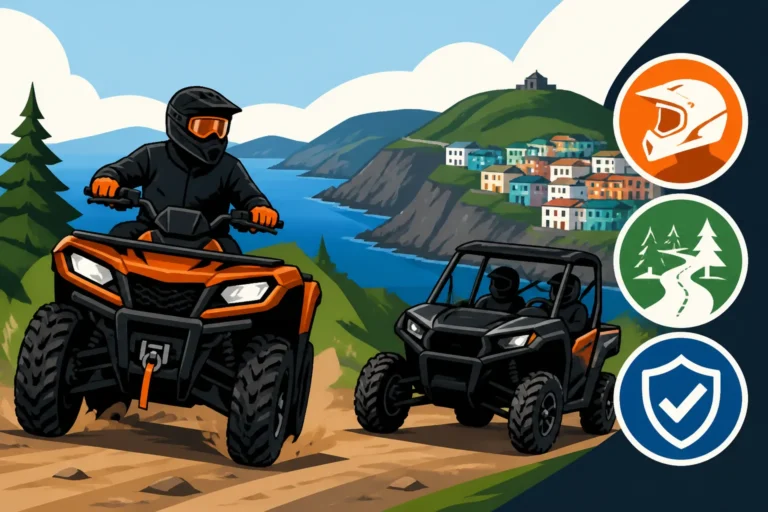
The short answer is everyone. Newfoundland's Off-Road Vehicles Act is crystal clear: helmets are required for operators and passengers alike. This isn't just for the adult behind the handlebars or steering wheel; it includes every single person on that machine, regardless of their age. Whether you're on a single-rider ATV, a two-up quad, or a multi-passenger side-by-side, if you're on a machine covered by the Act, you need to be wearing an approved helmet, securely fastened.
This widespread requirement means that when you’re planning a family ride, every child, every teenager, and every adult must have their own properly fitted helmet. It’s a crucial aspect of responsible riding and a core part of the province's commitment to reducing serious injuries. Peace officers take this rule very seriously because they understand the life-saving difference a helmet can make in an accident, even at low speeds or on seemingly harmless terrain. Ignoring this rule isn't just risking a ticket; it's risking severe, preventable injury.
What Kind of Helmet Is Required?
It's not enough to just wear any helmet; it has to be one that meets specific safety standards. The good news is that Newfoundland accepts helmets approved by several recognized safety bodies, which gives riders a good range of options. Generally, you’re looking for helmets that carry the Canadian Standards Association (CSA) approval marking, which is often visible as a sticker or molded into the helmet itself. This is our national standard and widely recognized for its rigorous testing.
Beyond Canadian standards, the province also accepts helmets approved by the U.S. Department of Transportation (DOT). Many helmets sold internationally, especially in North America, will have this certification, signifying they meet American safety benchmarks. Additionally, European ECE (Economic Commission for Europe) approved helmets are also permissible. These certifications ensure the helmet has been tested for impact absorption, penetration resistance, and retention system strength. Critically, regardless of the approval, your helmet's chin strap must be fastened whenever you are riding. An unfastened helmet is essentially useless in a crash and is treated as a violation just like not wearing one at all. For more details on accepted standards, check out [Newfoundland Helmet Standards Accepted].
Beyond Helmets: Essential Safety Gear and Equipment
While helmets are paramount, they are just one piece of the safety puzzle when you're out on the trails or navigating the edge of a road in Newfoundland. Other equipment requirements are in place to ensure you and your passengers are protected from the elements, flying debris, and other hazards that come with off-road riding, especially during specific times like dusk or dawn. Being prepared with the right gear isn't just about compliance; it's about comfort and safety for a better riding experience.
Eye Protection Rules
Your eyes are incredibly vulnerable when you’re riding an off-road machine, whether it's from dust, branches, insects, or even just the wind. That's why Newfoundland's regulations mandate proper eye protection. If your machine doesn't have a windshield that offers adequate protection for all occupants, then goggles or a face shield on your helmet are absolutely necessary. This isn't something to take lightly. Imagine a small stone kicked up by another machine, or a low-hanging branch on a tight trail – these can cause serious injury or momentary blindness, leading to a dangerous situation for everyone involved.
For those riding side-by-sides with an enclosed cab, the rules are slightly different. If the cab truly encloses the occupants and provides a barrier against flying debris and wind, that can sometimes fulfill the eye protection requirement. However, it's always wise to err on the side of caution. Even in an enclosed cab, a sudden impact or quick stop could still cause issues. Always assess the conditions: a dusty trail might still warrant goggles even with a windshield, as fine particles can still get through. Clear vision is non-negotiable for safe operation.
Seat Belts and Passenger Seating
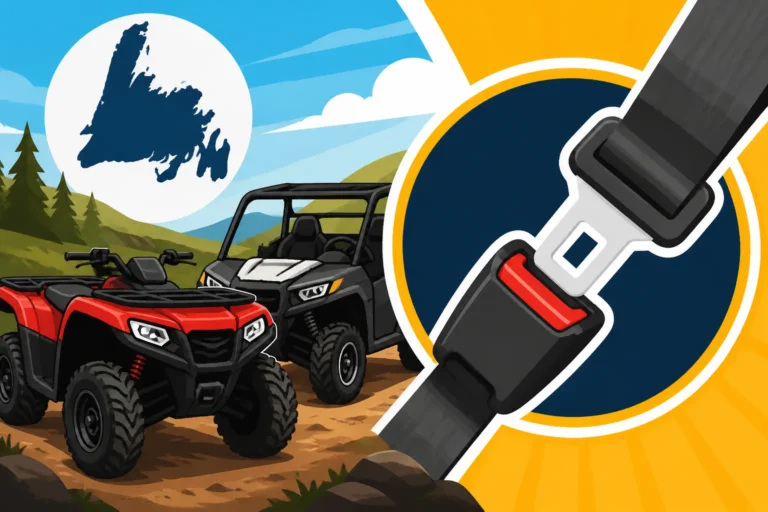
Side-by-sides, with their automotive-style seating, come with their own set of safety requirements, particularly regarding seat belts. If your side-by-side was manufactured with seat belts, then those belts must be worn by all occupants whenever the machine is in operation. This is a critical safety feature that helps keep riders securely in their seats during bumps, sudden turns, or rollovers. The law is explicit about using the safety equipment that the manufacturer installed. Ignoring seat belts dramatically increases the risk of ejection or serious injury in an incident.
Furthermore, passengers on any off-road vehicle must only ride on seats specifically designed and installed by the manufacturer for passenger use. You can’t have someone perched on the cargo rack, or sitting on your lap, or riding on a makeshift seat. This rule is about ensuring that every passenger has a safe, stable, and designated spot on the machine, with proper handholds if applicable. For specific guidance, you can refer to [Newfoundland Seat Belt Requirements] and [Newfoundland Passenger Seat Requirements]. This is especially important when considering young children. While the Act doesn't specifically detail car seat requirements, if a child is small enough to need one in a regular vehicle, it’s a strong indicator that a side-by-side might not be suitable for them, or that specialized restraints would be needed. Safety should always come before convenience.
Lighting and Visibility for All Conditions
Visibility is paramount, not just for you to see the trail, but for others to see you. Newfoundland’s Off-Road Vehicles Act has clear stipulations regarding lighting, particularly when riding after sunset or before sunrise, or in conditions of reduced visibility like heavy fog or snowfall. Your machine must be equipped with both a headlamp and a tail lamp, and these must be illuminated during these times. The headlamp ensures you can clearly see what’s ahead, while the tail lamp ensures that anyone approaching from behind can spot you easily, preventing potential collisions.
Beyond just having the lights, there are colour requirements: a headlamp must emit an amber or white light, and a tail lamp must emit a red light. These colours are universally recognized signals for vehicle presence and direction. Additionally, your machine should have reflectors, particularly if it’s an older model or one without comprehensive lighting. Reflectors act as a passive safety measure, bouncing back light from other sources. Ensuring your lights are clean, in working order, and properly aligned is crucial. Even during the day, in heavily wooded areas or under overcast skies, turning on your lights can significantly improve your visibility to other trail users or crossing vehicles. Maintaining your lighting system is as important as maintaining your engine. You can find more details under [Newfoundland Head and Tail Lamp Rules].
Navigating Roads: Newfoundland's Strict Rules
One of the biggest areas of confusion and potential fines for off-road vehicle riders in Newfoundland is interacting with public roads. Unlike some other jurisdictions where ORVs might have more freedom on roadways, Newfoundland has very specific and strict rules designed to separate fast-moving highway traffic from slower, less protected off-road machines. It's vital to understand these limitations, as improper road use is a common reason riders find themselves in trouble.
Crossing Highways: The 150-Metre Rule
There are times when you absolutely need to cross a public highway to get from one trail section to another, or perhaps to access fuel or a convenience store. While this is permitted, it comes with a critical safety regulation: you must ensure you have at least 150 metres of clear, unobstructed visibility in both directions along the highway before you attempt to cross. This isn't just a suggestion; it's a hard and fast rule. Imagine standing on the side of a highway, looking left and right. You need to be able to see clearly for more than a football field's length in each direction, without any blind corners, hills, or dense vegetation blocking your view or the view of oncoming traffic.
This rule exists for a very good reason: to prevent collisions with vehicles travelling at much higher speeds. Off-road vehicles are slower to accelerate and less agile than cars or trucks, making them vulnerable. Taking the time to properly assess the road is not just about avoiding a ticket; it's about saving lives. If you can't guarantee that 150 metres of clear sightline, you simply cannot cross at that point. You'll need to find an alternative, safer crossing, even if it means taking a longer route. For more insight on this, refer to [Crossing a Newfoundland Highway Needs 150 Metres of Visibility]. Always yield to highway traffic and make your crossing as perpendicular and quick as possible.
Riding the Shoulder: The 1-Kilometre, 20 km/h Limit
Another common scenario where ORVs interact with public roads is when riders need to use the shoulder of a highway. Newfoundland allows this, but again, under very stringent conditions. The primary purpose for using a shoulder is to access a trail or to get around an obstruction on an off-road route, not for general transportation. And there are two critical limitations to remember: you can only ride the shoulder for a maximum distance of one kilometre, and your speed cannot exceed 20 kilometres per hour. This is an absolute hard limit, not a guideline.
Think of it this way: 1 kilometre is roughly 10 football fields. It's a short hop, designed to bridge a gap, not for extended travel. And 20 km/h is a slow crawl, ensuring you have maximum control and can react quickly to any unexpected hazards, while also giving highway traffic plenty of time to see and react to you. You must always ride in the same direction as highway traffic and keep as far to the right on the shoulder as safely possible. Just like crossing a highway, you must always yield to highway traffic. This rule is about minimizing the time your less-protected machine is in proximity to high-speed vehicles. For more details on these specific regulations, you can read [Riding the Shoulder 1 Kilometre to Reach a Trail] and [20 km/h on a Shoulder].
Licence and Insurance on Public Roads
When you bring your off-road machine onto any part of a public roadway—even if it's just for a quick crossing or a short stint on the shoulder—the requirements shift. You are no longer just an off-road rider; you are a vehicle operator interacting with highway traffic. This means that you, as the operator, must possess a valid driver’s licence. The type of licence required will typically be the same one you'd use to operate a car or light truck, as you're now engaging with the rules of the road. This is not the time for an unlicensed teen or someone without a valid permit to be operating the machine, even for these brief interactions. [Newfoundland Licence Requirements on a Highway] provides further clarification on this.
Furthermore, your off-road vehicle must be insured, meeting the province's minimum liability requirements, which typically involves a floor of $200,000. This insurance is crucial because, in the unfortunate event of an accident involving a public road, the damages and liabilities can be substantial. You need to be able to produce proof of this insurance if requested by a peace officer. While you might not carry your physical insurance card on every trail ride, you must be able to show it within two business days if asked. Make sure you understand [Newfoundland Minimum Insurance Requirement] to avoid any costly surprises. Just like driving your car, operating an ORV on public roads demands responsibility and proper documentation.
Maintenance and Machine-Specific Regulations
Beyond the general safety gear and road interaction rules, the Newfoundland Off-Road Vehicles Act also includes regulations regarding the mechanical condition and specific features of your machine. These rules are in place to ensure environmental responsibility, minimize nuisance, and promote safe operation in all conditions. Keeping your machine well-maintained and compliant isn't just good practice; it's a legal obligation.
Tire and Exhaust Regulations
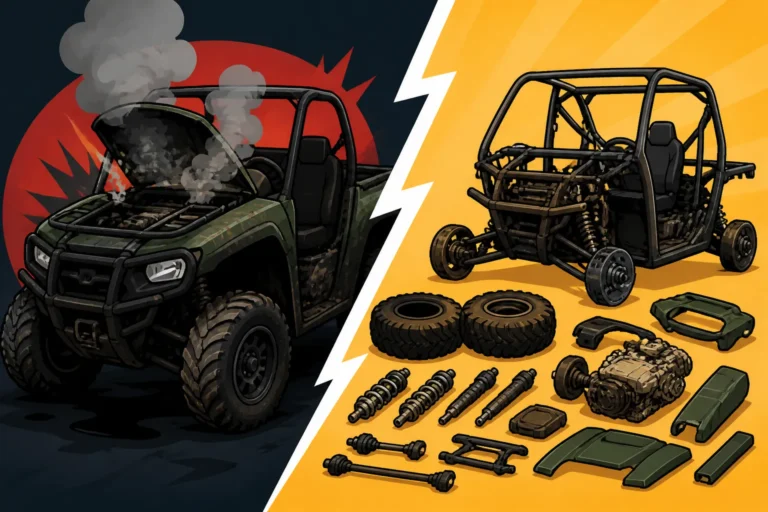
The type of tires you run on your wheeled off-road machine is also subject to regulation, primarily to ensure they are appropriate for the terrain and don't cause undue damage to trails. Specifically, for wheeled machines, you generally need to be running low-pressure tires. These tires are designed to spread the machine's weight over a larger surface area, reducing compaction and wear on natural surfaces like soil and vegetation. Using inappropriate tires can lead to increased environmental impact and might not provide the necessary traction for safe off-road operation. For example, if you're exploring aftermarket options, ensuring your selection, perhaps from a reputable brand like SuperATV, still falls within the spirit of low-pressure requirements is important. Always consider the impact your tires have on the delicate Newfoundland environment.
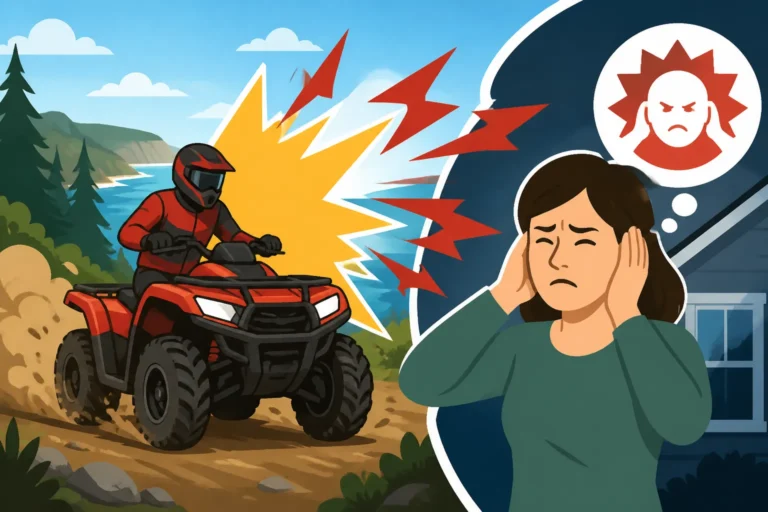
Similarly, exhaust systems are under scrutiny. The Act stipulates that machines must have a muffler that effectively reduces engine noise to a reasonable level. "Cut-out" exhausts, which allow you to bypass the muffler for a louder sound, are strictly prohibited. The aim here is to minimize noise pollution, which can disturb wildlife, other trail users, and residents living near riding areas. Excessive noise can quickly lead to complaints and could result in fines. Maintaining your muffler in good working order, free of leaks or modifications that amplify sound, is a key part of responsible riding. You can find more information about these specifics in [Newfoundland Low Pressure Tire Rules] and [Newfoundland Exhaust and Muffler Rules].
Age and Supervision for Young Riders
Newfoundland takes the safety of young riders very seriously, and the Act includes specific provisions regarding age limits and supervision. There isn't a blanket "no kids allowed" rule, but rather a structured approach to ensure children and youth are operating machines appropriate for their age, size, and skill level, and always under proper guidance. For example, children under a certain age are typically restricted to machines with smaller engine displacements, or are entirely prohibited from operating any ORV.
For those young riders who are permitted to operate a machine, direct supervision by an adult is usually a non-negotiable requirement. This supervisor must generally be at least 18 years old and hold a valid driver's licence. Their role isn't just to watch; it's to provide immediate guidance and intervention if needed, ensuring the youth rider is making safe decisions. Furthermore, the engine size of the machine must match the child's age and weight, preventing them from operating powerful machines that are beyond their physical capabilities or experience. This staggered approach emphasizes training and experience as a young rider grows. Understanding [Newfoundland Supervision Rules for Young Riders] is vital for any family planning to ride together, ensuring compliance and, most importantly, the safety of the youngest members.
Penalties, Enforcement, and Avoiding Trouble
Breaking the rules, even inadvertently, can lead to serious consequences for off-road vehicle riders in Newfoundland. The provincial government and enforcement agencies are committed to ensuring safety and responsible use of these machines, and they have clear powers to issue fines, seize machines, and impose other penalties. Understanding these potential repercussions is a strong motivator for adhering to the regulations and helps riders make informed choices to avoid costly and frustrating encounters with the law.
Common Offences and Fine Ranges
Many of the penalties issued to ORV riders stem from common infractions related to the rules we’ve discussed. Failing to wear an approved helmet, or wearing one improperly (e.g., with an unfastened chin strap), is a frequent and easily avoidable offence. Operating an unregistered machine, riding an uninsured ORV, or illegally using public roads (crossing without due care, exceeding the speed or distance limits on shoulders) are also high on the list. These aren't minor infractions; they reflect a disregard for public safety and the law.
Fines for these offences can vary widely, depending on the specific violation and whether it's a first or repeat offence. While specific amounts can change, riders should expect fines ranging from hundreds to potentially thousands of dollars. These aren't mere slaps on the wrist; they are designed to be a significant deterrent. Beyond the direct financial penalty, there might be additional court costs and administrative fees if the matter goes before a judge. You can delve deeper into the types of penalties under [Newfoundland Penalties for Riding Illegally]. The best way to avoid these fines, of course, is to know the rules inside and out, and follow them every time you ride.
Machine Seizure and Early Release Fees
One of the most impactful penalties an ORV rider can face is the seizure of their machine. Peace officers have the authority to impound an off-road vehicle if it's being operated in violation of certain provisions of the Act, such as impaired driving, repeated unregistered operation, or other serious offences. This isn't just an inconvenience; it means your machine is taken away, and you won't be getting it back quickly or cheaply.
Once seized, the machine is typically transported to an impound lot, incurring towing and storage fees daily. To get your machine back, you'll first have to resolve the underlying legal issues, which might mean paying fines or appearing in court. Then, you'll be responsible for all associated impoundment costs. There's often an "early release fee," which can be a significant additional charge on top of all other expenses, for example, [The $100 Application to Get a Seized Machine Back] is one such fee. The total cost to retrieve a seized machine can quickly escalate into the thousands of dollars, making it a far more severe consequence than a simple ticket. This strong measure underscores the province's commitment to enforcing responsible ORV use. More on this topic can be found under [Newfoundland Machine Seizure Rules].
What an Officer Can Ask For
When you're out on the trails or navigating a road interaction, a peace officer has the authority to stop you and request certain documents and information. Knowing what they can ask for and having it readily available can make the encounter smooth and quick. Typically, they will ask for proof of your off-road vehicle's registration, your personal identification (such as a driver's licence), and proof of insurance for your machine. If you're a youth rider, they might also ask for proof of your safety training certificate.
It's crucial to carry these documents or easily accessible copies with you. For instance, using a waterproof storage compartment or a secure bag, perhaps a saddle bag from a vendor like SuperATV, is a great way to keep your papers protected. While you might not always have physical copies on hand, you must be able to produce them within a specified timeframe, often two business days. Failing to produce these documents, or producing documents that are expired or invalid, can lead to further fines or charges. Being prepared and cooperative goes a long long way in these situations.
Newfoundland ORV Road Rules & Equipment Requirements
| Requirement | Applies to | Details | Penalty for Non-Compliance |
|---|---|---|---|
| Helmet | All operators and passengers | Approved Canadian (CSA), US (DOT), or European (ECE) standard helmet. Must be securely fastened. | Fines, potential machine seizure |
| Eye Protection | Operators/passengers without windshield | Goggles or face shield unless the machine has an adequate windshield or enclosed cab. | Fines |
| Seat Belts | Side-by-sides with factory belts | Must be worn by all occupants if installed by manufacturer. | Fines |
| Passenger Seating | All passengers | Must ride only on manufacturer-designated seats. | Fines |
| Head/Tail Lamps | All machines (dusk/dark/low visibility) | White/amber headlamp, red tail lamp. Must be illuminated when required. | Fines |
| Reflectors | All machines | Required on the rear. | Fines |
| Muffler | All machines | Must effectively reduce engine noise. Cut-out exhausts prohibited. | Fines |
| Tires | Wheeled machines | Low-pressure tires generally required for off-road use. | Fines |
| Road Crossing | All machines crossing highways | Must have 150 metres clear visibility in both directions. Yield to highway traffic. | Fines, potential machine seizure |
| Shoulder Use | All machines on highway shoulders | Limited to 1 km, maximum 20 km/h. Must ride in direction of traffic. Yield to highway traffic. | Fines, potential machine seizure |
| Driver's Licence | Operator on public roads/shoulders | Valid driver's licence required. | Fines, potential machine seizure |
| Insurance | All machines on public roads/shoulders | Minimum $200,000 liability insurance. Proof must be produced within 2 business days if requested. | Fines, potential machine seizure |
| Registration | All machines (with limited exceptions) | Machine must be registered with Motor Registration. | Fines, potential machine seizure |
| Youth Supervision | Young operators (age/machine dependent) | Supervisor must be 18+, hold valid licence, and directly supervise. Machine engine size must be appropriate. | Fines, potential machine seizure |
Riding an ATV or UTV in Newfoundland offers unparalleled access to some of the most stunning landscapes imaginable, but that privilege comes with the responsibility of understanding and adhering to the provincial regulations. From ensuring every rider has an approved, securely fastened helmet to knowing the strict rules for crossing or riding on highway shoulders, safety and compliance are paramount. By equipping yourself with the right gear, maintaining your machine, and always riding with respect for the law and the environment, you can enjoy years of fantastic off-road adventures across our beautiful province. Stay safe out there, and happy trails!
Disclaimer
This article is for general informational purposes only and does not constitute professional advice. Laws, prices and regulations vary by location and change over time. Consult a qualified professional for guidance on your specific situation.