Newfoundland Car Seat Rules for Children
Many families in Newfoundland share a deep love for the outdoors, and the thought of bringing their children along for an ATV or side-by-side adventure is a natural one. However, when it comes to ensuring the safety of our youngest passengers, particularly concerning car seats, the guidelines aren't always as clear-cut as they are for road vehicles. This often leaves parents feeling a mix of excitement for the ride and genuine anxiety about doing things properly and safely. This comprehensive guide will navigate the ins and outs of Newfoundland's off-road vehicle regulations, delve into practical safety considerations, and explore the best ways to secure your children, ensuring your family outings are as safe as they are memorable.
Understanding the Legal Landscape for Children in Off-Road Vehicles
The Off-Road Vehicles Act in Newfoundland and Labrador is designed to govern the operation of ATVs, snowmobiles, and other off-road machines, aiming to keep everyone on the trails safe. While it provides clear directives on many aspects of riding, such as registration, helmet use, and speed limits, it sometimes leaves a bit of a grey area when it comes to very specific situations, especially concerning young children and the use of car seats. This isn't uncommon across different jurisdictions, and it can be a real source of frustration for parents who are accustomed to highly detailed regulations for child restraints in their family cars.
The Core Regulations: What the Act Says (or Doesn't Say)
When you look closely at Newfoundland's Off-Road Vehicles Act, you'll find general provisions about carrying passengers safely, but you won't typically see explicit mandates or detailed specifications for car seats in off-road vehicles. The Act generally focuses on ensuring that any passenger is carried on a machine designed for more than one person and that they can sit securely and safely. This usually implies that the machine has a manufacturer-approved passenger seat, which is typically designed for individuals who can sit upright unassisted, reach the footrests, and hold on securely. For infants and toddlers, this standard passenger seat isn't always suitable.
The challenge here is that while the Act doesn't outright prohibit the use of a car seat, it also doesn't require it or provide guidance on how to properly install one in an off-road context. This places a significant responsibility on the operator to exercise good judgment and apply general safety principles. What constitutes "safe" in a vehicle designed for paved roads, with its sophisticated safety features, is fundamentally different from what's safe on a bumpy, unpredictable trail. The absence of a specific car seat rule for off-road vehicles doesn't equate to a green light for unsafe practices; instead, it means that operators must think critically and prioritize safety by other means, or that the legislature simply hasn't addressed this niche in the same granular detail as road vehicles. For more specific details on who can ride as a passenger, you might want to review [Newfoundland Rules for a Child Passenger].
Distinguishing ATVs from Side-by-Sides: Why It Matters for Kids
When we talk about off-road vehicles, it's really important to distinguish between traditional ATVs and side-by-sides (UTVs), as this distinction significantly impacts child safety, especially when considering car seats. A typical ATV, or quad, is often designed for a single rider, or perhaps an operator and one passenger sitting directly behind them. These machines are usually open, with exposed seating and limited, if any, built-in roll-over protection. The seating on an ATV is rarely conducive to securely installing a rigid car seat, as there are generally no appropriate anchor points or a stable, flat surface to ensure a tight fit. Attempting to strap a car seat to an ATV's rack or a small, often flexible passenger pad is highly discouraged and could be extremely dangerous due to the lack of structural integrity for secure attachment.
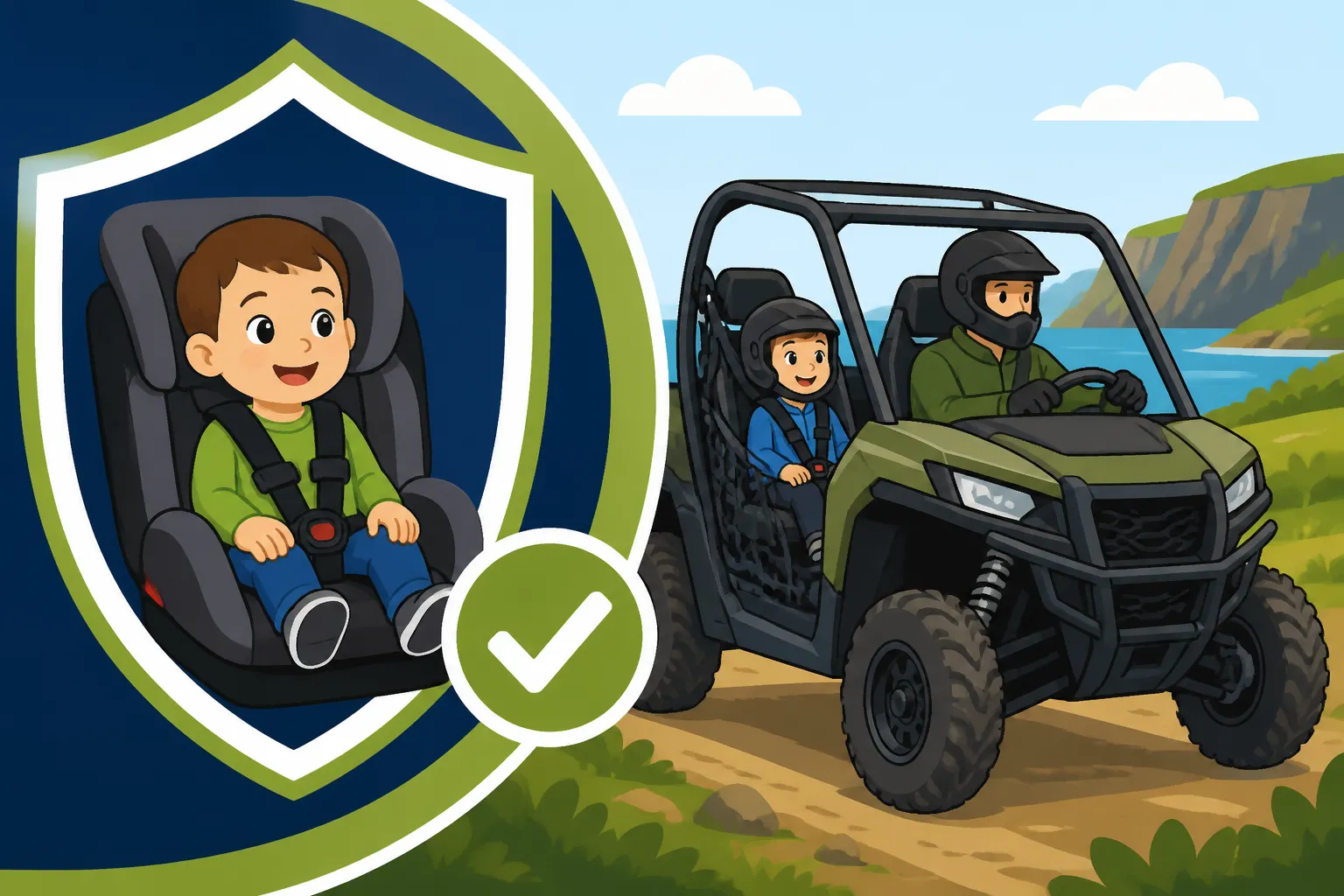
Side-by-sides, on the other hand, are a different class of machine altogether and offer a much better starting point for safely carrying young children. UTVs often feature multi-passenger bench or bucket seating, full three-point seatbelt systems (and sometimes even four- or five-point harnesses), and a robust roll-over protection structure (ROPS) that provides a much more protective environment. This design inherently makes them more compatible with integrating child safety restraints. Many modern UTVs have factory seats and seatbelt systems that can, in some cases, accommodate certain car seat models more effectively than a traditional ATV. The presence of these built-in safety features in a side-by-side significantly enhances the potential for a secure car seat installation, beginning to bridge the gap between off-road design and established child passenger safety principles. If you're looking to understand more about side-by-sides, check out [Newfoundland Rules for a Side-by-Side Driver].
Safety Considerations Beyond the Law: Why Car Seats are a Good Idea
While the Off-Road Vehicles Act in Newfoundland might not explicitly mandate a car seat for your child in an off-road vehicle, operating with a "safety first" mindset means looking beyond just what's legally required. Off-road environments present a unique set of challenges and hazards that are vastly different from what your family car encounters on a paved highway. The forces at play – the bumps, the jolts, sudden stops, and the potential for rollovers – are often more extreme and less predictable on a trail, especially on Newfoundland's diverse and sometimes rugged terrain.
The Physics of Off-Road Riding with Young Passengers
Imagine hitting an unexpected pothole in your car versus hitting a similar-sized rut or rock on an off-road trail in a UTV. The suspension system and enclosed cabin of your car absorb much of the shock, and you're contained within a relatively stable, protected space. In an off-road vehicle, especially one with an open cab, your child is exposed to far greater vibrations, lateral forces during sharp turns, and vertical forces from sudden drops or climbs. A standard car seat, while excellent for road vehicles, might not be designed to cope with these intense, multi-directional forces. A young child, with their still-developing neck and core muscles, is particularly vulnerable to aggressive jostling or even whiplash if not adequately secured for these specific dynamics. Even a seemingly minor jolt can potentially dislodge a child or cause them to be thrown against the interior of the vehicle if they're not properly restrained.
Furthermore, while you hope to never experience one, rollovers are a distinct risk in off-road environments. In such a scenario, a child properly secured in a car seat within the UTV's roll-over protection structure (ROPS) has a significantly higher chance of remaining contained within the vehicle's safest zone. This provides a crucial layer of protection compared to a child who is simply belted into the UTV's standard seat, or worse, just being held. The car seat itself acts as an additional restraint and energy absorption device, working to minimize the impact forces on your child's delicate body. This isn't just about avoiding a ticket; it's about proactively mitigating the potential for severe injury in an environment where the margin for error is often much smaller than on a highway.
Choosing the Right Car Seat for a UTV Environment
Selecting a car seat for use in a UTV requires a different set of priorities than picking one for your car. While road vehicle car seats prioritize crash performance on pavement, for a UTV, you'll focus on robust construction, maximum rigidity when installed, and compatibility with the UTV's specific seating and restraint system. Convertible car seats, which can be installed forward-facing using the vehicle's seatbelt, are often good candidates because they tend to have sturdy bases and can accommodate a wider range of weights and heights. Rear-facing infant seats can be much trickier to install securely in a UTV due to their recline angle and typical installation methods, which often rely on specific vehicle geometries that UTVs lack.
The method of attachment is paramount. Most UTVs do not have dedicated LATCH (Lower Anchors and Tethers for Children) systems like modern cars do. This means you'll almost certainly be relying on the UTV's factory seatbelts to secure the car seat. It's imperative that the car seat can be installed tightly and securely using a lap-and-shoulder belt if your UTV offers one, or a lap-belt only if that's your only option. Always refer to your chosen car seat's manufacturer instructions to confirm approved installation methods and ensure that the UTV's seatbelt system can achieve a truly tight fit. The golden rule for car seat installation, regardless of the vehicle, is that the seat should move no more than one inch side-to-side or front-to-back at the belt path. If you can't achieve this, the seat isn't secure enough for your child.
Proper Installation and Securing a Child in an ORV
Achieving proper car seat installation in an off-road vehicle is arguably even more critical than in a road car, precisely because the environment is so much more dynamic and unforgiving. Start by positioning the car seat on the flattest, most stable part of the UTV's passenger seat. UTV seats can sometimes be heavily cushioned or contoured, which might prevent a snug installation. If necessary, and only if permitted by the car seat manufacturer, you might need to use tightly rolled towels or even pool noodles to help level the car seat base and achieve a more secure fit. This technique, commonly used in cars to improve recline or stability, can be invaluable in a UTV where seating designs vary widely.
Once the car seat is positioned, thread the UTV's seatbelt through the designated belt path on the car seat, following the car seat's manufacturer instructions to the letter. Pull the belt as tightly as humanly possible, applying significant downward pressure on the car seat as you tighten to compress the UTV's seat cushion. Be aware that many UTV seatbelts are not designed with the same type of locking mechanisms found in automotive seatbelts, which can make achieving a truly tight installation challenging. If your UTV has a three-point harness, utilize both the lap and shoulder portions. If only a lap belt is present, ensure the car seat is explicitly approved for lap-belt-only installation. After installation, perform the "inch test": grasp the car seat firmly at the belt path and attempt to move it side-to-side and front-to-back. If it moves more than an inch in any direction, it's not installed securely enough, and you must re-install it or seek expert guidance. Your child's delicate head, neck, and spine depend on this meticulous attention to detail.
Manufacturer Guidelines and Aftermarket Solutions
When it comes to child safety in off-road vehicles, you're looking at a landscape that's shaped by both what your vehicle manufacturer advises and what specialized aftermarket companies offer. Mainstream child car seat manufacturers design their products primarily for conventional automobiles, which means they might not explicitly approve their use in UTVs or ATVs. This doesn't automatically deem it unsafe, but it does mean that the responsibility falls squarely on the UTV owner to ensure the car seat's safe installation and appropriate use in an off-road setting.
What Your UTV Manufacturer Recommends (or Warns Against)
If you delve into your UTV's owner's manual, you'll typically find detailed sections covering passenger capacity, seatbelt usage, and general safety warnings. However, explicit instructions or recommendations specifically for child car seats are quite rare. Most UTV manufacturers will advise that their vehicles are intended for passengers who are large enough to sit upright unassisted, reach the footrests, and hold onto a grab handle. They may also include warnings against modifying the seating or restraint systems, which could be interpreted to include the addition of a car seat. This cautious approach by manufacturers is entirely understandable; their priority is liability limitation and ensuring their vehicles are used as designed, for typical recreational or utility purposes.
The absence of specific car seat guidance from UTV manufacturers often leaves owners needing to interpret general safety advice. While some manufacturers might offer accessories like youth seats or specialized harnesses, these are generally aimed at older children who have outgrown traditional car seats and can use the UTV's standard seatbelt system. For infants and toddlers, the responsibility is largely on the UTV owner to devise a safe and secure solution. It is absolutely crucial to read your specific UTV model's manual thoroughly, paying close attention to any warnings about passenger ages, sizes, and any prohibitions against altering the factory seating or restraint systems. Disregarding these warnings could not only invalidate your warranty but, more importantly, severely compromise the vehicle's built-in safety features.
Exploring Aftermarket Child Safety Systems
Recognizing the void in UTV-specific child safety solutions from original equipment manufacturers, the aftermarket industry has stepped up to provide dedicated products for off-road enthusiasts. These companies specialize in engineering solutions specifically designed for the rigorous demands of off-road riding. You'll find a variety of options, from specialized child seat bases that can be securely bolted directly to the UTV's frame, to complete child seats with integrated multi-point harnesses that are built to withstand the bumps and jolts of rough terrain. These purpose-built systems often feature stronger materials, more robust mounting hardware, and harness designs that are much better suited to the dynamic and open environment of off-road trails.
For instance, a well-known name in the off-road aftermarket, SuperATV, is one of several brands that offer products designed to integrate child seating into side-by-sides. These might include bolt-in seats with four or five-point harnesses, or heavy-duty bases that provide a stable, secure platform for a standard car seat. The significant advantage of these aftermarket systems is that they are conceived and engineered specifically for the unique forces and conditions encountered off-road, rather than being an adaptation of a product originally designed for road vehicles. When you're considering such an option, always look for products that explicitly state their intended use for off-road vehicles, come with clear, detailed installation instructions, and have positive reviews from other UTV-owning parents. Prioritizing a robust, purpose-built solution is paramount when your child's safety is on the line. Additionally, remember that any modification or accessory, even a safety one, might have its own [Newfoundland Equipment Requirements] to consider, so always be informed.
Practical Steps for Families Riding with Children in Newfoundland
Once you've wrapped your head around the legal landscape and the unique physics of off-road riding with children, it's time to get down to the practicalities. Taking children along for an off-road adventure demands meticulous planning and an unwavering commitment to safety, extending far beyond merely securing them in a seat. For families exploring Newfoundland's vast and varied terrain, where trails can range from smooth former railbeds to incredibly rugged and rocky paths, these practical steps are even more crucial for a safe and enjoyable experience.
Assessing Your Specific Machine and Passenger Setup
Before you even think about putting tires to trail with a child on board, you need to conduct a thorough and honest assessment of your specific off-road vehicle and its passenger setup. Is it a traditional ATV or a multi-passenger side-by-side? As we discussed, UTVs are generally much better suited for child restraints due to their design. Carefully inspect the condition of your UTV's seatbelts, any existing passenger seating, and the vehicle's overall structural integrity. Are the seatbelts in excellent working order? Do they anchor securely to the frame? If you're using an aftermarket child seat or a standard car seat, can it be installed without any compromises, and does it pass that critical "no more than one inch of movement" test? Don't just give it a cursory glance; put your weight into it and truly try to move the installed seat to ensure it's rock solid.
Consider the ergonomics of your entire setup. Will your child be genuinely comfortable for the duration of the ride, or will they be jostled awkwardly? Is their head adequately supported, particularly during inevitable bumps and jolts? Are their limbs protected from potential impacts with the interior of the UTV or from external debris that might fly up? Ensure there are no exposed areas where small fingers or feet could get caught in moving parts or open gaps. If you're operating an open-cab UTV, seriously consider adding side nets or solid doors, if available, to enhance containment and prevent accidental limb protrusion. And never forget that even with the perfect car seat setup, a properly fitted and approved helmet is absolutely non-negotiable for all riders, including children. [Newfoundland Helmet Law for Every Rider] is a fundamental safety requirement for a reason – head injuries are a leading concern in off-road incidents.
Training and Supervision: Beyond the Seat
While a physical restraint like a car seat is vital for securing a child, it's merely one component of a holistic safety strategy. Comprehensive training and constant, vigilant supervision are equally, if not more, paramount, particularly when riding with young children. Even a perfectly secured child is still dependent on the operator's judgment and attention. The provincial government mandates safety training for all ORV operators, and while it might not specifically cover carrying children, the core principles of safe operation, hazard awareness, and responsible riding taught in these courses are directly applicable and crucial for protecting young passengers. [Newfoundland Safety Training Is Mandatory] for good reason – it equips you to be a safer, more responsible rider.
When riding with young passengers, diligent supervision involves several key practices:
- Constant Vigilance: Never take your eyes off your child, even for a moment. They rely entirely on your awareness and quick reactions.
- Appropriate Speed: Always ride significantly slower than you would if you were alone. Terrain that's exhilarating for an adult can be jarring, frightening, or even harmful for a child.
- Clear Communication: If your child is old enough to understand, explain what's happening, point out upcoming obstacles, and prepare them for bumps. For very young children, this might simply mean a soothing voice and constant reassurance.
- Regular Breaks: Children have shorter attention spans, can get fatigued or overstimulated easily, and need to stretch their legs. Stop frequently for snacks, drinks, and a chance to move around.
- Modelling Safe Behaviour: Always wear your own helmet, buckle up, and strictly adhere to all safety rules. Children are incredibly observant and learn primarily by example.
It's also worth remembering that if a young rider is operating a machine themselves (a different scenario from being a passenger), there are strict age and supervision rules in place. For any minor, a supervisor must be at least 18 years old and hold a valid driver's licence. These [Newfoundland Supervision Rules for Young Riders] are in place to ensure that inexperienced riders are always guided by a responsible and capable adult.
Planning Your Ride: Routes, Speed, and Conditions
The old adage "Fail to plan, plan to fail" rings especially true when you're embarking on an off-road adventure with children. The types of trails you select, the speed you maintain, and your awareness of current weather and trail conditions will significantly impact both your child's safety and their overall enjoyment of the experience. Avoid highly technical, deeply rutted, or extremely rocky trails. Instead, prioritize smoother, wider paths, such as sections of the Trans-Canada Trail (T'Railway), where you can consistently maintain lower speeds and minimize unexpected jolts. A well-maintained woods road or open barren area might be an ideal starting point, allowing your child to gradually acclimate to the movement and sounds of the machine without being overwhelmed.
Always check the most current weather forecast before you head out. In Newfoundland, weather can change dramatically and without much warning; sudden fog, heavy rain, or a significant drop in temperature can quickly turn a pleasant family outing into a miserable, and potentially dangerous, ordeal for a child. Pack plenty of extra layers of clothing, blankets, a generous supply of snacks, sufficient water, and a comprehensive first-aid kit. Consider the time of day: avoid riding during the hottest parts of summer days or when temperatures are dropping sharply in the spring or fall. Riding near dusk also introduces additional risks from increased wildlife activity and reduced visibility, which is a heightened concern when you have a young, vulnerable passenger aboard. Remember that [Newfoundland Equipment Requirements] include stipulations for proper lighting and reflectors, which become even more critical when operating in variable light or weather conditions.
| Aspect of Planning | Key Consideration with Children |
|---|---|
| Trail Choice | Select smooth, wide, and well-maintained paths. Absolutely avoid steep inclines, deep ruts, or highly technical sections. |
| Speed Management | Always maintain a consistently slow, cautious speed. It's always better to be too slow than too fast, especially with kids. |
| Thorough Weather Check | Prioritize reviewing accurate forecasts. Pack comprehensive gear for all possibilities: rain, fog, unexpected temperature drops. |
| Optimal Ride Timing | Avoid extreme temperatures (very hot or very cold). Consider shorter trips. Steer clear of dusk/dawn due to visibility issues and increased wildlife activity. |
| Essential Supplies | Pack ample water, a variety of snacks, multiple extra layers of clothing, emergency blankets, and a fully stocked first-aid kit. |
| Ongoing Communication | Engage with your child; explain the ride, prepare them for upcoming bumps or turns, and constantly check on their comfort levels. |
| Frequent Breaks | Incorporate regular stops for stretching, snacks, and rest. This prevents fatigue, boredom, and helps manage discomfort. |
By meticulously planning and considering these crucial factors, you can significantly enhance the safety and enjoyment of your off-road adventures, ensuring that your family creates positive, anxiety-free memories on Newfoundland's beautiful trails.
The Broader Context of Child Safety Laws in Newfoundland
While our primary discussion has revolved around off-road vehicles, gaining a perspective on how child safety is legislated in other contexts within Newfoundland can be incredibly insightful. It underscores the consistent societal expectation for child protection and helps to explain why specific regulations exist for different types of vehicles and environments, even when off-road laws appear less detailed.
Comparison to Road Vehicle Car Seat Laws
Newfoundland's highway traffic laws are remarkably explicit, extensive, and strictly enforced when it comes to child restraints in passenger vehicles. These regulations are meticulously crafted based on exhaustive research and rigorous crash test data, categorizing child seats by age, weight, and height, and mandating their use until a child meets specific size or age criteria. For instance, infants are legally required to ride in rear-facing car seats, then transition to forward-facing seats, and finally to booster seats, all with precise installation guidelines. This highly detailed framework exists because road vehicles operate at much higher speeds, on public roadways, and are subject to distinctly different types of collision forces compared to off-road scenarios.
The striking contrast with off-road vehicle (ORV) laws isn't necessarily an oversight but rather a reflection of differing regulatory environments and their historical evolution. Historically, off-road vehicles were often viewed more as specialized recreational equipment for adults, with less initial emphasis on their role as universal family transport. However, as modern side-by-sides have evolved to be more versatile and increasingly popular for family outings, the need for clearer, more comprehensive guidance on child safety in these vehicles has become more apparent. The absence of highly specific ORV car seat laws doesn't negate the fundamental spirit of child safety that underpins all road vehicle regulations. It implies that while the exact type of safety device or restraint might vary, the overarching goal – to secure a child safely – remains paramount, requiring the operator to apply principles of prudence, diligence, and common sense. This is precisely where innovative products from brands like SuperATV become incredibly relevant, offering specialized solutions tailored for the unique UTV environment, thereby helping to bridge the gap between general safety principles and the specific demands of off-road conditions.
Understanding Liability and Insurance When Riding with Kids
Bringing a child along in an off-road vehicle carries significant legal and financial responsibilities, especially concerning liability and insurance coverage. In the unfortunate event of an accident, even if you meticulously followed all explicit rules, if your child sustains an injury, you could potentially face legal repercussions. This could arise if it's determined that you did not take "reasonable steps" to ensure their safety. This "reasonable steps" clause is where the lack of explicit car seat laws for ORVs can become particularly challenging. A court might very well consider whether you used a car seat, how effectively it was installed, and whether it was appropriate for the child's age and the specific riding conditions, even if a specific law didn't mandate it.
Your insurance coverage is another absolutely critical component. While [Newfoundland Insurance Requirements for Riders] typically mandates a minimum liability coverage (often around $200,000), it's important to understand that this coverage is primarily designed to protect you against claims for damage or injury to others. It might not automatically cover your own child's injuries, depending on the precise wording of your policy and the specific circumstances of the accident. Many standard off-road vehicle insurance policies might contain exclusions related to children being carried unsafely or on machines not explicitly designed for their age group. Therefore, it is absolutely vital to thoroughly review your off-road vehicle insurance policy with your provider to understand exactly what is covered when carrying passengers, especially minors, and to discuss whether any additional coverage or endorsements might be advisable to provide peace of mind. Never assume that your existing automobile insurance extends to your ATV or UTV; dedicated off-road insurance is almost always required.
Enforcement and Potential Consequences
While the absence of specific "car seat" rules in off-road vehicle legislation might give the impression of greater freedom, enforcement officers still possess a broad mandate to ensure the safe and responsible operation of all off-road vehicles. If an officer observes a child being carried in a manner that they deem unsafe, regardless of whether a precise car seat law exists, they are empowered to issue citations. These could be for general unsafe operation, endangering a passenger, or operating a machine in a negligent manner. The penalties for such infractions can range from significant fines to, in more severe cases, the temporary or even permanent seizure of your machine. [Newfoundland Machine Confiscation on Conviction] and [Newfoundland Penalties for Riding Illegally] are serious consequences that underscore the critical importance of adhering to the spirit of the law, which is always focused on safety, not just its literal interpretation.
Furthermore, if you are found to be operating unsafely and this leads to an accident, you could face charges far more severe than a simple fine, particularly if a child is injured. This could potentially include criminal negligence in instances where there is extreme disregard for safety. The overarching intent of all safety legislation is to protect individuals, and children are consistently regarded as a vulnerable population. Consequently, an enforcement officer's interpretation of "safe operation" when a child is involved will invariably lean towards upholding the highest possible standard of care. Always operate your off-road machine with the utmost caution and ensure that every reasonable precaution has been taken to protect your young passengers. Even if you are a visitor from out-of-province, [Newfoundland Rules for an Out-of-Province Machine] clearly state that you must still abide by all of Newfoundland's local safety regulations, reinforcing that these considerations apply to everyone on the trails.
Disclaimer
This article is for general informational purposes only and does not constitute professional advice. Laws, prices and regulations vary by location and change over time. Consult a qualified professional for guidance on your specific situation.