What an Officer Can Ask You to Produce
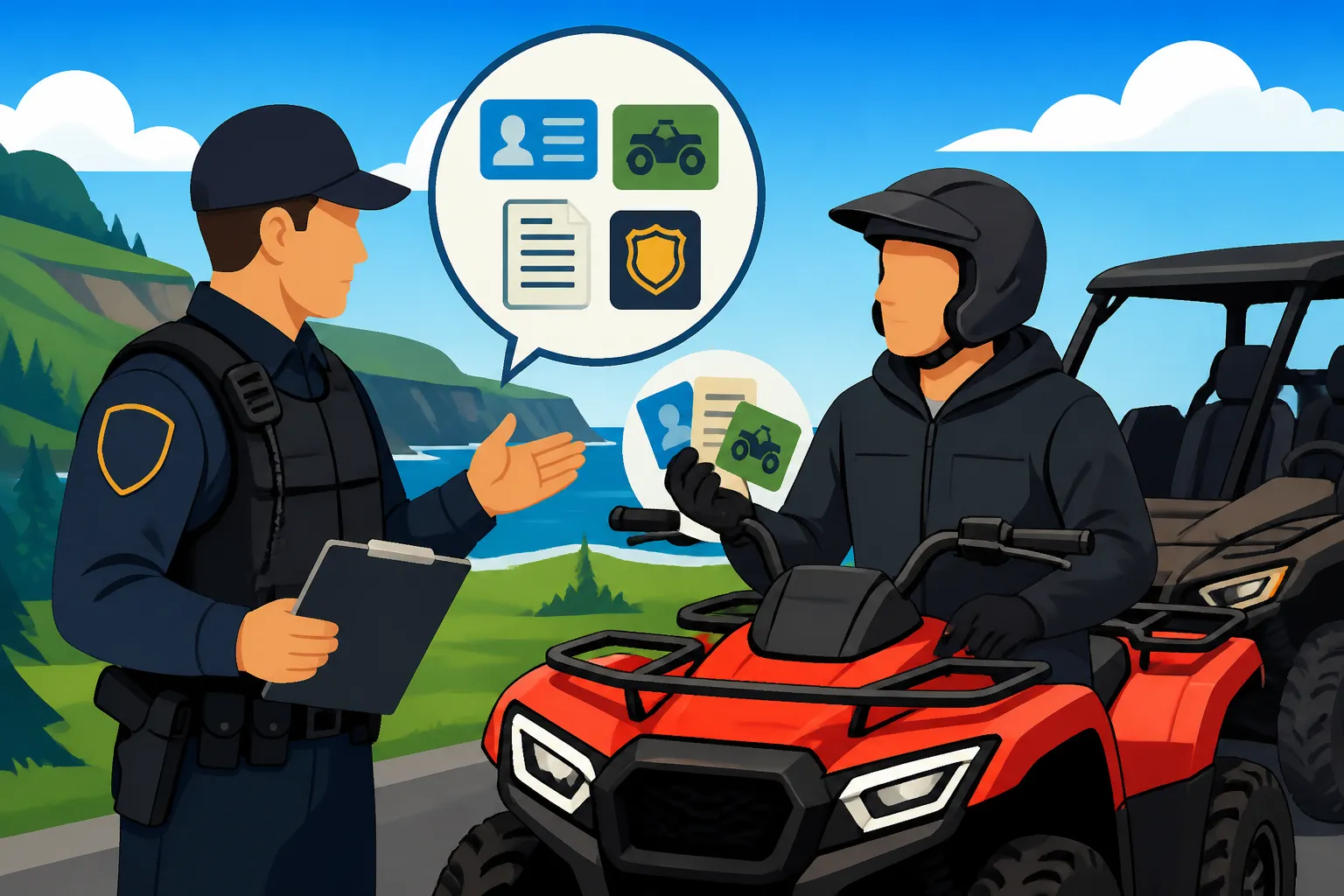
Picture this: you're out on a beautiful Newfoundland trail, enjoying the freedom of your ATV or UTV, when you see those flashing lights behind you. Your heart might do a little jump, and suddenly you're wondering, "Did I forget something? What are they going to ask me for?" It's a common worry for many riders, and the uncertainty can really take the fun out of a day on the barrens. This guide is here to clear up exactly what documents and compliance checks an officer can ask you to produce, so you can ride with confidence and peace of mind.
The Essentials: Documents Every Rider Needs
Being prepared means having your core documents ready and accessible. It’s not just about avoiding a ticket; it's about proving you're a responsible rider who understands and respects the rules designed for everyone's safety.
Proof of Registration
In Newfoundland, registering your off-road vehicle (ORV) is a one-time affair that lasts as long as you own the machine. This is fantastic because it means you're not constantly thinking about renewals, but it also means you need to keep that original registration document safe and sound. When an officer stops you, they'll want to see proof that your ATV, UTV, or other ORV is properly registered with the provincial Motor Registration Division. They're looking for the official permit that has your name on it and the details of your machine, including its unique Vehicle Identification Number (VIN). This document confirms legal ownership and that your machine is recognized as permitted for off-road use. Losing it means you'll need to go through the process of getting a [Newfoundland Duplicate Registrations at $25], which is an extra step no one wants to deal with.
It’s crucial to understand that while the registration doesn't expire, the responsibility to have proof of it with you does not. Whether you print a copy or carry the original, make sure it's protected from the elements. A Ziploc bag or a waterproof pouch in your glove box or saddlebag can be a real lifesaver against rain or bog water. This document is your primary evidence that you've completed the initial, but permanent, step of [Newfoundland ORV Registration You Pay Once] and that your [Newfoundland Registration Valid While You Own It].
Proof of Insurance
Just like driving a car, operating an ORV in Newfoundland requires minimum liability insurance. The province mandates that you carry at least a certain amount of third-party liability coverage, typically set to cover damages or injuries you might cause to others. This isn't just a suggestion; it's a legal requirement. An officer will absolutely ask for proof of this insurance. Usually, this means an insurance card or a digital copy on your phone. However, if you're unable to produce it on the spot, you generally have a couple of business days to present it to a designated authority, often a local RCMP detachment.
This grace period, outlined in regulations, exists because we all know that paper can get lost or phones can die on the trail. But don't mistake this for a free pass to ride uninsured; it's a window to prove you do have insurance, not to go get it after the fact. Make sure your policy meets the provincial minimums, as this is one of the [Newfoundland Insurance Requirements for Riders] that an officer will be checking. Being able to quickly show your proof, whether it's a physical card or a clear digital image, can save you a lot of hassle and ensure you comply with [Newfoundland Insurance Proof Within Two Days].
Driver's Licence
"Do I need a driver's licence to ride an ATV?" This is a question we hear a lot, and the answer isn't always a simple yes or no. For the most part, you don't need a specific ORV licence to operate an ATV or UTV on designated trails, private land (with permission), or forest roads where ORV use is permitted. However, the game changes entirely when you venture onto public highways, whether it's crossing a highway, riding along a highway shoulder, or using a municipal road where ORV use is sanctioned by a local bylaw.
In these specific scenarios, an officer will definitely ask to see your valid driver's licence. This is because when you're interacting with public road traffic, you're expected to operate under the same licensing standards as other motor vehicle operators. So, while you might not need a licence for a remote trail, if your ride involves any interaction with public roads, ensure your driver's licence is with you. It's an important distinction that many riders overlook, and it's a key component of [Newfoundland Licence Requirements on a Highway] to understand to avoid being caught off guard. Knowing [Do You Need a Licence for an ATV in Newfoundland?] really depends on where you're riding.
Machine and Rider Compliance: What They'll Inspect
Beyond your paperwork, officers are also tasked with ensuring your machine is safe and that you, as the operator, are meeting basic safety standards. This often involves a visual inspection and a quick chat about your equipment.
Helmet and Eye Protection
This one is non-negotiable for almost every rider in Newfoundland. The helmet law is clear: if you're operating or riding as a passenger on an ORV, you must wear an approved helmet that is properly fastened. Officers are specifically looking for helmets that meet recognized safety standards, such as those approved by the Canadian Standards Association (CSA), the U.S. Department of Transportation (DOT), or the European Economic Commission (ECE). These certifications are usually found on a sticker inside or on the back of the helmet. But it's not enough to just wear it; that chin strap has to be fastened securely.
Eye protection is equally important. Whether it's goggles or a face shield on your helmet, your eyes need to be shielded from dust, debris, and the elements. The only real exception to this is if your ORV has an enclosed cab with a windshield, like some side-by-sides. If you're riding an open-air machine, ensure you have appropriate eyewear. This is all part of keeping you safe and compliant with [Newfoundland Helmet Law for Every Rider] and [Newfoundland Eye Protection Requirements]. It's about preventing serious injury, not just avoiding a fine.
Machine Equipment
An officer might conduct a quick visual check of your machine's basic equipment. They're not looking for fancy upgrades, but rather the functional safety items required by law. This includes ensuring your ORV has working headlamps and tail lamps, especially if you're riding during twilight hours or after dark. Reflectors, typically amber in front and red at the rear, are also important for visibility. Your muffler system will be checked to ensure it hasn't been modified to be excessively loud and that you're not operating with a "cut-out" exhaust, which is illegal.
Tire types can also be a point of inspection; for wheeled machines, they should generally be low-pressure tires suitable for off-road use. If your machine is designed to carry passengers, like many side-by-sides, officers will check that there are factory-installed seats and, for certain machines, seat belts for those passengers. These equipment checks are fundamental to [Newfoundland Equipment Requirements] and include specifics like [Newfoundland Head and Tail Lamp Rules] and proper muffler function. It's about ensuring your machine is safe for the trail and for others sharing it.
Age and Supervision Requirements
The rules regarding rider age and supervision are in place to protect young, inexperienced riders, and officers are well aware of them. If you're a young rider, or if you have a young rider with you, an officer may ask about your age or their age, and verify that the appropriate supervision is in place. For instance, there are regulations about the maximum engine size a minor can operate, and those under a certain age (often 16) require direct supervision by a licensed adult who is at least 18 years old.
This supervisor isn't just a passenger; they must be actively overseeing the young rider. These rules also extend to child passengers, specifying that they must be able to reach the footrests and, in some cases, might even require a car seat in a side-by-side. Officers are trained to observe these details, and they’ll ask questions to confirm compliance. Understanding these regulations is key to ensuring everyone's safety and abiding by [Newfoundland ATV Age Requirements] and [Newfoundland Supervision Rules for Young Riders]. It keeps our youngest riders safe and allows them to learn responsible riding habits.
Situational Documents: When You Need More
While the basic documents cover most situations, there are specific circumstances where an officer might require additional proof or information. Being aware of these can save you a headache.
Proof of Training
Newfoundland places a strong emphasis on rider safety, and for certain individuals, proof of safety training is a mandatory requirement. This usually applies to first-time registrants of an ORV, riders under the age of 16, and sometimes individuals whose registration was previously suspended. The training typically involves an approved safety course or an online test covering safe operating practices and the rules of the road (or trail).
If these requirements apply to you, an officer can ask to see your proof of completion. This could be a printable certificate from an online course or a completion card from an in-person training provider. Make sure you carry this proof, just like your registration and insurance, as it's a vital part of demonstrating your understanding of safe ORV operation. It’s important to know that [Newfoundland Safety Training Is Mandatory] for specific groups, and having your [Newfoundland Printable Certificates] readily available is part of being a responsible rider.
Managed Trail Sticker/Permit
Newfoundland has a fantastic network of managed trails, often maintained by dedicated volunteer organizations and federations. To access these trails, particularly the Trans Canada Trail (T'Railway) or other officially "managed" systems, you'll often need to purchase and display a trail sticker or permit. This fee goes directly back into maintaining these trails, ensuring they remain safe and enjoyable for everyone.
An officer, or even a trail warden, on a managed trail system can ask to see this sticker or permit. The regulations usually specify whether the sticker needs to be affixed to your machine in a visible spot (like on the fender or windshield) or if it's permissible to simply carry proof of purchase, such as a receipt. It's crucial to check with the specific trail operator or the provincial regulations. If you're planning to ride on these trails, make sure you know the rules and have your [Newfoundland Managed Trail Stickers] in order. These stickers are typically issued directly by the trail operators, as outlined in [Managed Trail Stickers Come From the Trail Operator].
Proof of Ownership or Permission
While your registration document generally serves as proof of ownership, there are situations where an officer might dig a little deeper, especially if the machine's ownership history seems unclear or if you're riding on private land. If you're riding a machine that isn't registered in your name (perhaps you're borrowing it from a friend or family member), it's always a good idea to carry a letter of permission from the registered owner. This simple document can clear up any doubts quickly.
Similarly, if you're riding on private property that isn't your own, an officer has every right to inquire if you have permission from the landowner. Trespassing laws apply to ORV riders just as they do to anyone else. Carrying a written [Newfoundland Landowner Permission Forms], even a simple note, can prevent a lot of unnecessary complications. Tools like LawDepot can be helpful for creating clear, legally sound permission forms or even bills of sale if you've recently acquired a machine from a private seller, ensuring all parties are protected and the transfer of ownership is clear. This level of preparedness shows respect for property rights and the law, which officers appreciate.
| Document Type | What the Officer Looks For | When It's Needed | How to Carry It |
|---|---|---|---|
| Registration Permit | Your name, VIN, machine details, official seal | Always | Physical copy (waterproof bag), clear digital copy |
| Insurance Proof | Policy number, coverage limits, expiry date | Always | Physical card (waterproof bag), clear digital photo |
| Driver's Licence | Photo ID, expiry date, class | On highways, shoulders, or approved municipal roads | Physical licence, clear digital photo |
| Helmet Approval | CSA, DOT, or ECE certification sticker, fastened chin strap | Always (operator and passenger) | Visually inspectable on helmet |
| Equipment Function | Head/tail lights, reflectors, quiet muffler, proper tires | Always | Visually inspectable on machine |
| Age/Supervision | Rider's age, supervisor's presence & licence | For minor riders or child passengers | Verbal confirmation, supervisor's licence |
| Training Certificate | Certificate of completion, your name, date | If you're a new registrant, under 16, or after suspension | Physical copy (waterproof bag), clear digital copy |
| Trail Sticker/Permit | Visible sticker, proof of purchase | When riding on managed trail systems | Affixed to machine, or proof carried (check regulations) |
| Ownership/Permission | Letter from owner, landowner's permission | If machine is borrowed or on private land | Physical letter, digital copy |
Handling an Encounter: Your Rights and Responsibilities
When an officer stops you, it's natural to feel a bit nervous. But understanding how to handle the situation can make a big difference in the outcome.
Stay Calm and Cooperative
The most important thing you can do during an ORV stop is to remain calm and be cooperative. Pull over safely to the side of the trail or road when signaled, turn off your engine, and keep your hands visible. Officers appreciate a respectful and compliant attitude. They are simply doing their job to enforce the [Newfoundland's Off-Road Vehicles Act] and ensure everyone's safety. When asked for documents, retrieve them carefully and present them without argument. This smooth interaction is not only polite but can also often lead to a quicker resolution of the stop.
Resisting or being argumentative can quickly escalate a routine stop into a more serious situation, potentially leading to additional charges or even machine seizure. Your responsibility is to provide the requested information and allow the officer to conduct their checks. Remember, they have a job to do, and a calm, cooperative approach benefits everyone involved.
Understanding the Officer's Role
Officers enforce the various sections of the Off-Road Vehicles Act and its associated regulations. This can include checking your registration and insurance, verifying your compliance with helmet and equipment laws, and ensuring you are operating your machine legally within approved areas. They are also responsible for enforcing rules around impaired operation, speed limits, and other safety measures. Understanding [How the Off-Road Vehicles Act Rewrote Newfoundland's Rules] helps you appreciate the comprehensive framework they operate within.
Their questions are usually direct and aimed at establishing compliance. They might ask where you've been riding, where you're headed, and if you understand the rules for that area. Be honest and straightforward in your answers. They're not just looking for violations; they're often educating riders and ensuring the trails remain safe for all users. They might even be looking for proof of consent forms for minors from a resource like LawDepot.
Consequences of Non-Compliance
Failing to produce the required documents or being found in violation of ORV regulations can lead to a range of penalties. These can vary from warnings or small fines for minor infractions, like a misplaced registration document (if you can prove it later), to significant fines, machine seizure, or even court appearances for more serious offenses such as impaired operation, lack of insurance, or unsafe riding practices. For instance, if you're riding without the mandatory insurance, the fines can be substantial.
Machine seizure is a serious consequence, especially for repeat offenders or severe violations. The process to get your machine back can be costly, involving impoundment fees, towing charges, and administrative penalties. Knowing [Newfoundland Penalties for Riding Illegally] and [Newfoundland Machine Seizure Rules] should be a strong motivator to ensure you're always fully compliant. Being prepared and following the rules isn't just about avoiding a fine; it's about protecting your privilege to ride and ensuring the safety of yourself and others on the trails.
Disclaimer
This article is for general informational purposes only and does not constitute professional advice. Laws, prices and regulations vary by location and change over time. Consult a qualified professional for guidance on your specific situation.