Newfoundland Registration Questions After a Move
Moving to a new province is exciting, isn't it? New vistas, new adventures, and for many of us, the chance to explore Newfoundland's incredible landscapes on an ATV or side-by-side. But bringing your beloved machine with you, or buying one once you've settled in, can quickly turn that excitement into a pile of paperwork and a head full of questions. This guide is here to untangle the specific rules and processes for registering your off-road vehicle (ORV) in Newfoundland after a move, making sure you can hit the trails without a hitch.
Understanding the Initial Residency Period for ORV Registration
When you pack up your life and move to Newfoundland, you're usually thinking about getting your driver's license updated, finding a new doctor, and maybe setting up internet service. What often slips under the radar are the specific rules for your recreational vehicles. The province has a system designed to give you a bit of breathing room, but it also has clear expectations for when your machine needs to officially become a "Newfoundland ORV."
The 90-Day Grace Period for New Residents
The province understands that you don't just snap your fingers and have all your affairs in order the moment you arrive. That's why there's a generous 90-day grace period for new residents. This means that if you've brought your ORV from another Canadian province or territory, your existing registration and plate (if applicable) from your previous home remain valid for ninety days from your official move date. It’s a bit of a relief, knowing you have some time to get acquainted with your new surroundings before diving into provincial bureaucracy.
During these ninety days, you can technically still ride your machine as long as it was legally registered and plated in your previous jurisdiction. However, it's crucial to remember that this isn't a free pass to ignore Newfoundland's riding rules. You're still expected to follow all the local regulations regarding helmets, age restrictions, and where you can ride. This grace period is really there to give you time to settle in and gather the necessary documents, not to delay the inevitable. Think of it as your onboarding phase, where you can still enjoy your machine while preparing for its new permanent home.
What Happens After 90 Days? The Requirement to Register
Once those ninety days are up, the grace period expires, and your ORV must be registered in Newfoundland and Labrador. It's not a suggestion; it's a requirement under the province's Off-Road Vehicles Act. If you're caught riding an unregistered out-of-province machine after this period, you could face fines and other penalties. Law enforcement officers often do checks, especially on popular trails and access points, and they are well aware of the residency rules.
The important thing to remember is that while a [Newfoundland Registration Valid While You Own It] – meaning it never expires once you get it – you first have to get that Newfoundland registration. That initial registration establishes your machine in the provincial system. Neglecting to register can lead to unnecessary stress, a hit to your wallet, and potentially having your riding privileges suspended. It's far better to mark that 90-day deadline on your calendar and proactively schedule your registration appointment. Don't let the thought of paperwork deter you from getting it done; the peace of mind knowing you're compliant is well worth the effort.
Proving Your New Newfoundland Residency
To register your ORV as a new resident, you'll need to demonstrate to Motor Registration that you are, indeed, a new resident of Newfoundland and Labrador. This isn't just a verbal declaration; you'll need to provide official documentation. Typically, this involves presenting a valid Newfoundland and Labrador driver's license that reflects your new address. If you haven't managed to get your driver's license updated yet, you might need to show other forms of proof, like utility bills (electricity, internet, or phone) in your name at your new address, a rental agreement, or property tax statements.
The goal is to clearly establish your bona fide residency in the province. Without sufficient proof, the registrar's office won't be able to process your ORV registration under the "new resident" category. It's a standard procedure designed to ensure that the system is used correctly and that machines are registered to their proper owners and locations. Having a clear set of documents ready will help streamline your appointment. Think about what official mail you've received at your new address; those often make the best proofs. For more details on what counts, you can refer to general guidelines like [Newfoundland Registration and Proof of Address].
Essential Paperwork for Out-of-Province ORV Registration
The thought of gathering paperwork can make anyone groan, but it's a critical step to ensure a smooth ORV registration process when you're a new resident. Different situations call for different documents, and being prepared means fewer trips back and forth to the Motor Registration office.
Gathering Your Existing Registration and Ownership Documents
When you move, the first set of documents you'll need for your ORV are those that prove you actually own it and that it was properly registered in your previous province. This typically includes:
- Your previous registration certificate: This is vital as it links your machine to you, the owner, and provides details like the VIN (Vehicle Identification Number) and previous plate number.
- The original bill of sale (or bills of sale): This document proves the financial transaction that transferred ownership to you. If you bought it new, you'd have one. If you bought it used, you'd ideally have a clear chain of bills of sale going back to the original purchaser.
Why is this so important? The provincial Motor Registration office needs to see a clear and unbroken chain of ownership. They need to verify that you are the rightful owner of the machine. If there's any ambiguity, it can significantly delay your registration. Imagine trying to sell a machine years down the road without these records; it would be a headache for the next owner too. For a detailed breakdown of all the potential documents, it's worth checking out resources like [Newfoundland Registration Paperwork Explained]. Having everything neatly organized in a folder will make your registration appointment much less stressful.
The New Vehicle Information Statement (NVIS) for Newer Machines
If your ORV is relatively new – specifically, if it's a brand-new machine and you were the very first retail purchaser – you might have a document called a New Vehicle Information Statement, or NVIS. This statement is issued by the manufacturer and is essentially the birth certificate of your vehicle. It confirms that the machine is new and has never been registered before.
Even if you're moving from another province where you were the first owner, the NVIS is still a valuable piece of paper. It helps the Newfoundland Motor Registration confirm the machine's origin and specifications, which is particularly useful for vehicles recently added to the provincial classification system, such as side-by-sides. If you no longer have your NVIS because you registered it in another province, don't panic. The previous registration and bill of sale should still suffice, but having the NVIS can sometimes expedite the process by providing clearer details on the machine's initial entry into the market. It's always a good idea to know if your machine requires this or if your previous province's registration effectively replaced it. More information can be found in articles like [Newfoundland Requires an NVIS for a New Machine].
What if You Don't Have a Bill of Sale or Clear Ownership?
This is a common dilemma, especially for seasoned riders who might have acquired an older machine years ago, perhaps from a family member or a private seller who wasn't meticulous with paperwork. It's incredibly frustrating to be told you can't register your ORV because of missing documentation you had no control over. The good news is, Newfoundland's Motor Registration has a process for this.
If you genuinely cannot produce a bill of sale or if the chain of ownership is broken, you will likely be asked to complete a sworn affidavit and an indemnity form. A sworn affidavit is a legal document where you solemnly declare that you are the rightful owner of the machine, detailing how and when you acquired it, and why you don't have the standard proof. This document must be signed in front of a Commissioner of Oaths. The indemnity form, on the other hand, is a promise to the province that if any previous owner comes forward with a legitimate claim to the machine, you will indemnify the province against any liability. This protects the government from getting entangled in potential ownership disputes.
Navigating these forms can feel intimidating, but they are a legitimate pathway to registration. Websites like LawDepot can be a really helpful resource here, offering templates and guidance on how to generate legally sound affidavits and bills of sale if you're now needing one for your own records or for a future sale. While the Motor Registration office won't accept a new bill of sale for your acquisition if you don't have the original, LawDepot can help you understand the format and content of these critical documents. It’s essential to be honest and thorough in these declarations, as providing false information can lead to serious legal consequences. Getting this step right is key to [Newfoundland Registration Without a Bill of Sale]. You might even need a notary or lawyer to officially witness and stamp your affidavit, adding an extra step but ensuring everything is above board.
The Registration Process for a New Newfoundland Resident
Once you've gathered all your documents and understood the timelines, it's time to tackle the actual registration. This part of the journey requires a bit of planning, especially if you want to avoid unnecessary delays and multiple trips to the Motor Registration office.
Booking Your Appointment at Motor Registration
Gone are the days when you could just walk into a government office and hope for the best. To register your ORV as a new resident, you absolutely must book an appointment with Motor Registration. This system ensures that staff are available to assist you, reducing wait times and allowing them to prepare for your specific needs. Trying to walk in without an appointment will likely result in you being turned away, which is frustrating for everyone involved.
The booking process is usually straightforward, often available online or by phone. When you book, be clear that you are a new resident registering an out-of-province ORV. This helps them allocate the correct amount of time and ensures you're scheduled with the right person if specialized assistance is needed. Appointments can sometimes be booked a few weeks in advance, so it’s wise to schedule yours well before your 90-day grace period is up. Being proactive here is key to avoiding last-minute stress. Remember, it's all about making the process as smooth as possible for you. [Newfoundland Registration by Appointment] is a standard requirement, so plan ahead!
What to Bring to Your Appointment
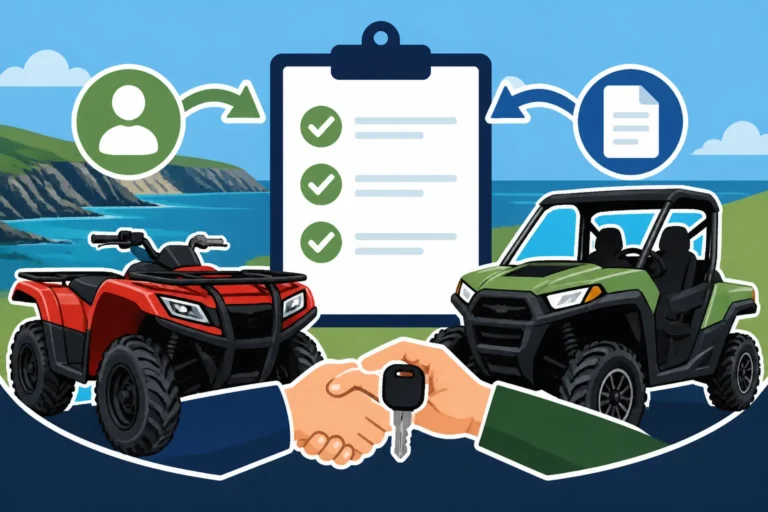
Preparation is your best friend when it comes to any government paperwork. For your ORV registration appointment as a new resident, you'll want to have a comprehensive checklist. This will save you from that sinking feeling of realizing you forgot something crucial after you've already driven to the office. Here's a breakdown of what you should typically bring:
| Document Type | Specific Items (as applicable) | Purpose |
|---|---|---|
| Proof of Identity | Valid Newfoundland Driver's License or other photo ID | To confirm who you are. |
| Proof of Residency | Current utility bill, lease agreement, property tax statement | To establish your new Newfoundland address. |
| Proof of Ownership | Previous provincial registration, original Bill of Sale | To confirm you legally own the ORV. |
| ORV Details | New Vehicle Information Statement (NVIS), if applicable | Manufacturer's certificate for new machines. |
| If Ownership is Unclear | Sworn Affidavit, Indemnity Form | Legal documents if standard ownership proofs are missing. |
| Payment Method | Debit card, credit card, or certified cheque | To pay the applicable registration fee. |
Double-check every item before you leave your home. Having physical copies of all documents is usually preferred, even if you’ve sent some electronically beforehand. It’s also a good idea to bring any specific correspondence you’ve had with Motor Registration staff, just in case.
Understanding the Costs and What to Expect
Let's talk about the money side of things. Registering an ORV in Newfoundland involves a one-time fee. Unlike some other provinces or even other vehicle types, you won't be paying this every year. It’s a single payment that covers the registration for as long as you own the machine, making it quite cost-effective in the long run. The exact amount can vary slightly depending on the class of machine you're registering, so it's best to check with Motor Registration directly for the current figures. For example, [Newfoundland Charges $95 for an ATV], while other machine types might have different fees.
During your appointment, a clerk will review all your submitted documents. They might ask some clarifying questions, especially if there are any discrepancies or if you've provided affidavits instead of standard bills of sale. Once everything is verified, you'll pay the registration fee. After payment, you'll be issued your Newfoundland and Labrador ORV registration permit and an identification plate or decal, depending on your machine type. This plate or decal must be displayed clearly on your machine as proof of registration. It's a fairly straightforward process once all your ducks are in a row. This fee is a significant part of [Newfoundland ORV Registration Cost] but remember, it’s a one-and-done deal. This unique aspect is why [The Newfoundland Fee You Pay Once and Never Again] is often highlighted by riders.
Special Considerations and What Comes Next
Getting your ORV registered after a move is a huge step, but the journey isn't quite over. There are a few other important aspects that new residents need to be aware of to ensure they're fully compliant and ready to enjoy the beautiful trails of Newfoundland and Labrador.
Insurance Requirements for Your Newly Registered ORV
Just like with road vehicles, having insurance for your ORV is not optional in Newfoundland and Labrador. It's a mandatory legal requirement that all ORVs operating in the province must carry at least a minimum amount of liability insurance. This protects you and others in the event of an accident. While the provincial minimum usually starts at a certain amount, many riders choose to carry more extensive coverage for their own peace of mind, especially given the remote areas where ORVs are often ridden.
You'll need to secure this insurance before you head out on any trails, even if your machine is now officially registered. Insurance companies in the province are familiar with ORV policies, so reach out to your chosen provider to get a quote and ensure you have proper coverage. Always carry proof of insurance with you when you're riding, as law enforcement can ask to see it. It's not uncommon for officers to perform random checks, so being prepared is essential. Don't let your excitement to ride override this critical safety and legal step. For more details on what's required, review [Newfoundland Insurance Requirements for Riders].
The Importance of the Trail Sticker and Safety Training
Beyond registration and insurance, there are two other critical items for many riders in Newfoundland: a managed trail sticker and safety training. While your provincial registration proves ownership and compliance with the ORV Act, a trail sticker is often required to access and ride on designated, managed trail networks (like the T'Railway Provincial Park). These stickers usually come from specific trail operating groups and the funds often go directly back into trail maintenance and development. You'll want to check with local trail organizations or the provincial government for details on where these stickers are required and how to obtain them. [Newfoundland Managed Trail Stickers] provides insight into this system.
Furthermore, specific safety training is mandatory for certain age groups and for first-time registrants. This training covers safe operating procedures, environmental awareness, and specific provincial regulations. Even if you're an experienced rider from another province, you might still need to complete Newfoundland's recognized safety course, especially if you're a first-time registrant in the province. This ensures everyone on the trails has a baseline understanding of safe operation. This is outlined in [Newfoundland Safety Training Is Mandatory], and it’s a smart investment in your safety and the safety of others.
Updating Your Address if You Move Again Within Newfoundland
Life happens, and sometimes a new resident moves again within the province. Perhaps you moved to St. John's and then found a dream property near Grand Falls-Windsor a year later. If your residential address changes after you've registered your ORV in Newfoundland, it's your responsibility to notify Motor Registration within a specific timeframe – typically within 10 days of your move.
This isn't just bureaucratic red tape; it ensures that your records are up-to-date and that you can receive important communications from the province regarding your ORV. It also helps with law enforcement inquiries if, for any reason, your machine's registration needs to be verified. Updating your address is usually a simple process, often done online or by phone, but it's a step that riders sometimes forget. Keeping your information current is part of being a responsible ORV owner. For more information, you can typically find guidance under topics like [Newfoundland Registration Address Change] or even a more general instruction like [Ten Days to Tell the Registry].
Disclaimer
This article is for general informational purposes only and does not constitute professional advice. Laws, prices and regulations vary by location and change over time. Consult a qualified professional for guidance on your specific situation.