Bringing the New Vehicle Information Statement to the Counter
One of the most common hurdles new ATV and UTV owners face in Newfoundland when they're bursting to hit the trails is navigating the registration process, especially when it comes to understanding all the paperwork. You've just shelled out for a shiny new machine, and now you're confronted with unfamiliar terms like "New Vehicle Information Statement" at Motor Registration. This guide is designed to demystify the NVIS, explain why it's so critical, and help you prepare to get your new off-road vehicle officially registered without a hitch.
What Exactly is a New Vehicle Information Statement (NVIS)?
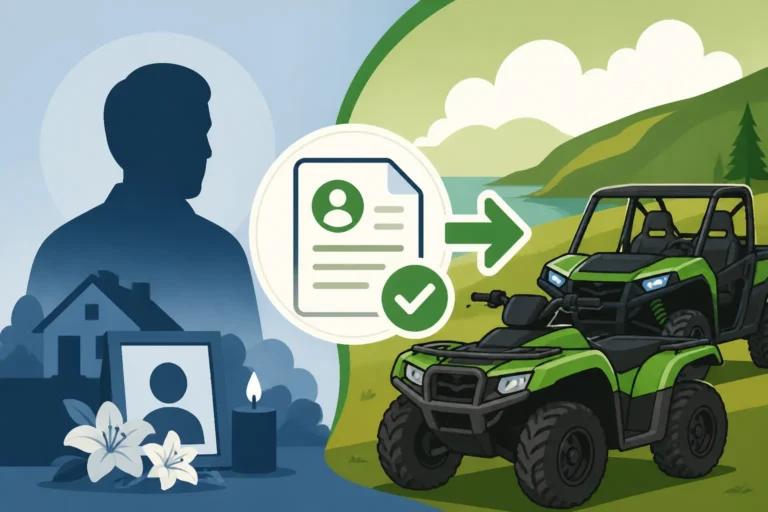
When you buy a brand-new ATV or UTV, you're not just getting a bill of sale; there's another crucial document called the New Vehicle Information Statement, or NVIS. Think of it as the birth certificate for your off-road machine. It's proof that your vehicle is truly new, has never been registered before, and details its journey from the manufacturer to its first owner – which is hopefully you!
Understanding its Purpose
The NVIS is a standardized document issued by the vehicle's manufacturer or sometimes the importer. It contains vital information like the Vehicle Identification Number (VIN), make, model, year, engine size, and the date it was issued. Crucially, it also confirms that all applicable taxes have been paid by the manufacturer or importer, indicating it's ready for its first sale and registration. Without this statement, the provincial Motor Registration Division has no official record or confirmation that your machine is indeed new and eligible for its initial registration. It’s their way of tracking the very first time a vehicle enters the province's registry system.
Unlike a bill of sale, which confirms a transaction between a buyer and seller, the NVIS is about the vehicle itself and its origins. It establishes a clear chain of custody from the factory floor, preventing issues with previously unregistered or questionable vehicles being slipped into the system as new. It's a foundational piece of the puzzle, essentially declaring your machine's identity and virgin status to the authorities.
When and How You Receive It
Typically, when you purchase a new ATV or UTV from a licensed dealer in Newfoundland, the NVIS will be part of the comprehensive package of documents you receive at the point of sale or delivery. Dealers are well-versed in the registration requirements and understand that this document is absolutely essential for you to register your machine. They usually provide it along with your bill of sale and any financing paperwork.
It's a good practice, and one we always recommend, to ask your dealer specifically about the NVIS during the purchase process. Confirm that it will be included with your paperwork. Sometimes, in the excitement of a new purchase, it might inadvertently be overlooked in the stack of documents. Having this conversation upfront ensures you won't be caught off guard when you head to Motor Registration. This seamless provision of paperwork is part of what makes purchasing from an authorized dealer so convenient, ensuring you have everything you need for [Newfoundland Dealer Paperwork at Delivery].
Why the NVIS is Non-Negotiable for New Machine Registration
You might think a simple bill of sale would be enough to prove ownership of a new machine, but when it comes to brand-new ATVs and UTVs, the New Vehicle Information Statement (NVIS) plays a uniquely critical role. It’s not just another piece of paper; it's the bedrock of a new machine's registration in Newfoundland. Understanding its importance can save you a frustrating trip to the registry.
Proving First Ownership and Origin
The NVIS serves as the definitive proof that your ATV or UTV is entering the provincial registration system for the very first time. It officially links your machine's unique Vehicle Identification Number (VIN) directly back to the manufacturer, confirming its legitimate origin and model specifications. Without this document, the Motor Registration Division can't verify that the vehicle is truly new or that it hasn't been brought into the province through unofficial channels. It ensures a clean slate, confirming that the machine hasn't been previously registered elsewhere or has no hidden history that could complicate its legal use on Newfoundland's trails.
Essentially, the NVIS establishes the very first owner in the official record, which is a crucial step in maintaining accurate vehicle registration data. It’s why [Newfoundland Requires an NVIS for a New Machine] – it’s about authenticity and a clear, verifiable start to your machine’s legal life in the province. This clear paper trail protects both you and the integrity of the provincial registry, preventing any ambiguities about the machine’s status right from day one.
Avoiding Pitfalls at the Registry
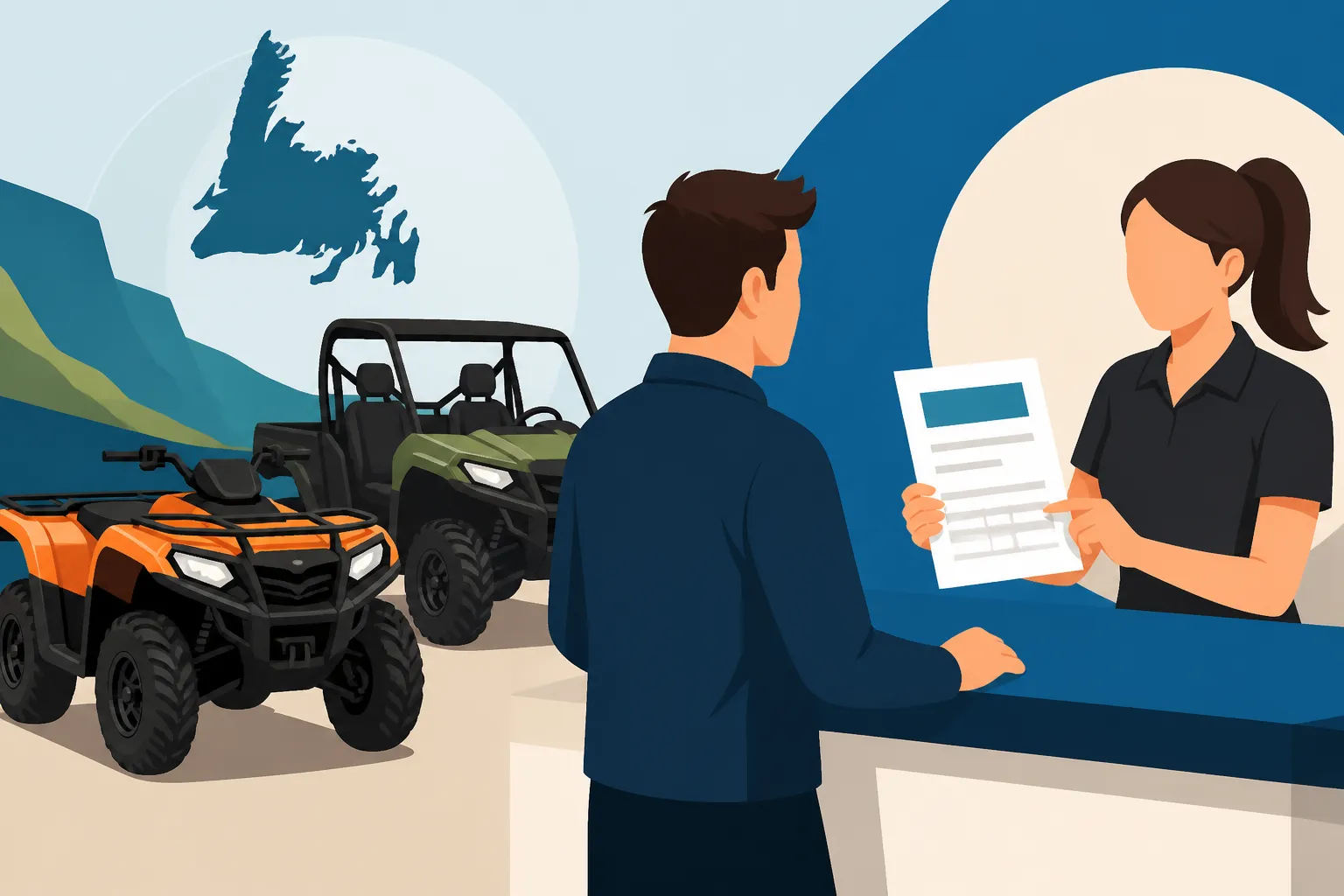
Imagine the excitement: you’ve got your new quad loaded up, you've taken care of your insurance, and you're ready to march into Motor Registration to get that plate. You walk up to the counter, present your bill of sale, and the agent asks for the NVIS. If you don't have it, your registration process comes to an immediate halt. You'll be turned away, forced to go back to the dealer to retrieve the missing document. This isn't just an inconvenience; it can significantly delay your plans to ride, extending the [Newfoundland Registration Processing Time] beyond what you anticipated.
Motor Registration staff are trained to look for this specific document for all new vehicle registrations, including ATVs and UTVs. They can't process the registration of a new machine without it, as it's a mandatory step in their protocol. We've all heard stories from riders who made this mistake, and it always ends with a wasted trip and a frustrated wait. It underscores the importance of thoroughly reviewing all your paperwork before you even leave the dealership and certainly before you head to your registration appointment. Ensuring you have your NVIS in hand means a smoother, faster registration experience and getting out on the trails much sooner.
What to Do If Your NVIS is Missing or Delayed
It's a common scenario: you've bought your new ATV or UTV, and in the rush and excitement, you get home only to realize that crucial NVIS isn't among your stack of paperwork. Don't panic, but don't delay either. Rectifying a missing or delayed NVIS for a new machine is usually straightforward, but it requires immediate action.
Dealer Responsibilities and Follow-Up
Your first, and almost always only, course of action is to contact the dealership where you purchased the machine right away. Dealers are legally obligated to provide you with the NVIS for any new vehicle sale. It's a standard part of their administrative process and vehicle handover. Sometimes, it might have been an honest oversight, a simple stapling error, or perhaps it’s still in their accounting department waiting for final processing. Be polite but firm about your need for the document. They should be able to locate it or, if truly missing, work with the manufacturer or their provincial distributor to obtain a duplicate.
It’s good practice to get a clear timeline from the dealer on when you can expect the NVIS. Ask for a specific contact person and follow up diligently. While delays can happen, especially if there's a backlog or an administrative error, the dealer is your primary point of contact and has the responsibility to resolve this for you. Remember that without it, you simply cannot complete your new machine's registration, so make this a top priority conversation with them.
Alternatives and Exceptions
For a new ATV or UTV, there are generally no direct alternatives or exceptions to providing an NVIS for its initial registration in Newfoundland. The NVIS is specifically designed to prove the vehicle's "newness" and first point of origin. This isn't like registering a used machine where you might be dealing with scenarios like [Newfoundland Registration Without a Bill of Sale], which has its own complex affidavit processes. For a brand new off-road vehicle, the NVIS is indispensable.
However, it's worth noting that if you've imported a new machine from outside the province or country, the equivalent documentation confirming its origin and that it's truly new would be required. This might involve different forms, but the principle is the same: the Motor Registration Division needs official proof of the vehicle's virgin status. This is a common requirement discussed in detail for situations like [Newfoundland Registration for an Imported Machine]. While you'll still have a bill of sale for your new purchase, even from a dealer, it's the NVIS that provides the critical verification for a "new" registration. A bill of sale, which you might use a reliable service like LawDepot to generate for other private sales, only details the financial transaction, not the vehicle's initial manufacturing and compliance details.
Preparing Your NVIS and Other Documents for the Registry
Getting ready for your registration appointment means more than just having the NVIS in hand; it's about organizing all your required documents so your visit to Motor Registration is as smooth and quick as possible. Being prepared not only saves you time but also prevents any frustrating delays or repeat visits.
Organizing Your Paperwork
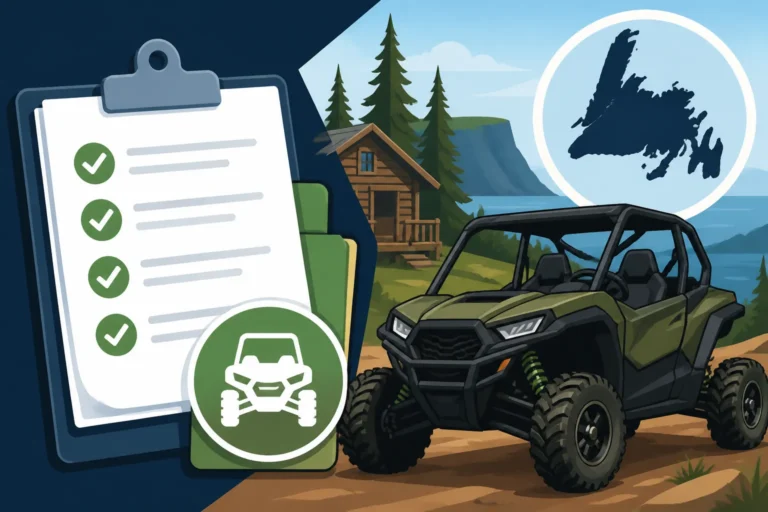
Once you have your NVIS, gather all the other necessary documents. This usually includes your bill of sale from the dealership, proof of identification (like your driver's license), proof of address (a utility bill or other official mail), and the means to pay the registration fee. It can feel like a lot to juggle, but having everything neatly organized in a folder will make the process much less stressful. Think of it as creating a complete historical record for your machine, something that will also be valuable if you ever need to process a [Newfoundland Transfer of Ownership Explained] down the line.
You might even want to create a simple checklist before you leave the house. This meticulousness can prevent a common mishap where one small piece of paper is forgotten. For those looking to ensure they have all their ducks in a row for various legal documents, from a solid bill of sale (which could be created using a service like LawDepot for private sales, even if your dealer provides one for a new machine) to other declarations, understanding what each document serves is key. While the NVIS is specific to new vehicles, a clear and comprehensive bill of sale is always a good asset to have, whether from your dealer or if you're ever selling the machine yourself. This holistic approach ensures you meet all the requirements outlined in [Newfoundland Registration Paperwork Explained].
Booking Your Appointment
In Newfoundland, it’s almost always necessary to book an appointment with the Motor Registration Division before you go. Simply showing up without one can lead to long waits or being turned away, especially during busy periods. You can usually do this online or by phone. Booking ahead ensures that staff are available to assist you and that your time at the counter is efficient. It’s a small step that makes a huge difference in your overall experience.
When you book, make sure you specify the type of transaction you need to complete – in this case, a new off-road vehicle registration. This allows the registry staff to allocate the appropriate time and ensure the right personnel are available. The staff are there to help, but they also appreciate when riders arrive prepared and on schedule. Many of the [Newfoundland Registration Questions Staff Hear] often revolve around incomplete paperwork, so by arriving with your NVIS, bill of sale, and other details organized, you’re already ahead of the game. Getting your new machine registered correctly the first time means you can look forward to enjoying [Newfoundland Registration Valid While You Own It] without future hassles.
| Document Type | Source/Purpose | Key Information It Provides |
|---|---|---|
| New Vehicle Information Statement | Manufacturer/Dealer – Proof of Newness, First Ownership | VIN, Make, Model, Year, Engine Size, Manufacturer Origin |
| Bill of Sale | Dealer – Proof of Purchase and Price | Purchase Date, Price, Buyer/Seller Details, VIN |
| Proof of Identification | Your Driver's License or Other Government ID | Your Name, Photo, Signature, Date of Birth |
| Proof of Address | Utility Bill, Bank Statement (Recent) | Your Name, Current Residential Address |
| Payment Method | Debit, Credit Card, or Cash for Registration Fees | Means to Cover the One-Time Registration Cost |
Disclaimer
This article is for general informational purposes only and does not constitute professional advice. Laws, prices and regulations vary by location and change over time. Consult a qualified professional for guidance on your specific situation.