Do You Get a Plate or a Decal?
It's a common point of confusion when you're getting ready to hit the trails in Newfoundland and Labrador: what kind of identification does your ATV or UTV need? Many riders come from other provinces or have experience with different types of vehicles, leading them to wonder if they'll be issued a small decal or a full-blown metal plate for their off-road machine. This guide will clarify exactly what the province requires and why, so you're never left guessing.
Understanding Newfoundland's ORV Identification System
When you register an off-road vehicle (ORV) in Newfoundland and Labrador, the province's Motor Registration Division issues you a physical identification marker. Unlike some jurisdictions or types of vehicles where a simple sticker or decal might suffice, here, your ATV, UTV, snowmobile, or dirt bike receives a distinctive identification plate. This plate is your machine's official, permanent identifier, signifying that it has been properly registered according to the [Newfoundland's Off-Road Vehicles Act]. It's more than just a piece of metal; it's tangible proof that your machine is recognized by the provincial authorities and legal to operate where permitted.
The Primary Identifier: The Identification Plate
Think of your ORV identification plate as being similar in function to the license plate on your car or truck, although its design and placement are tailored for off-road use. This plate is mandated by provincial legislation as the primary means of identifying a registered off-road vehicle. It bears a unique combination of letters and numbers assigned specifically to your machine upon successful registration. This unique identifier is crucial for enforcement, ensuring accountability, and tracking ownership, much like a vehicle identification number (VIN) does for the machine itself, but in a visible, easily verifiable format. It's designed to withstand the rugged conditions often encountered on Newfoundland's trails, from muddy bogs to snowy barrens, though its durability relies somewhat on proper care and placement.
Why Some Riders Might Expect Decals
It's completely understandable why some riders might anticipate receiving a decal instead of a plate. Many other provinces utilize decals for various types of recreational vehicles, or even for ORVs themselves. For example, some jurisdictions use annual renewal stickers to be affixed to a plate, or small, adhesive decals for things like kayaks, canoes, or even dirt bikes that don't travel on public roads. Even within Newfoundland, you might encounter other types of stickers related to ORV use, such as managed trail permits or safety training proofs. However, it's important to differentiate these from the official provincial registration identifier. These additional decals serve different purposes and do not replace the mandatory identification plate. The province has specifically opted for a plate system to ensure consistent visibility and traceability across all registered ORV types.
The Identification Plate: What It Is and Why It Matters
The identification plate issued for your off-road vehicle in Newfoundland and Labrador is a specific and essential piece of equipment. It's not just a suggestion; it's a legal requirement that carries significant weight in how you operate and identify your machine throughout its life with you. Understanding its characteristics and purpose helps clarify why it's a plate, not a decal, and why proper handling is paramount.
Physical Description and Materials
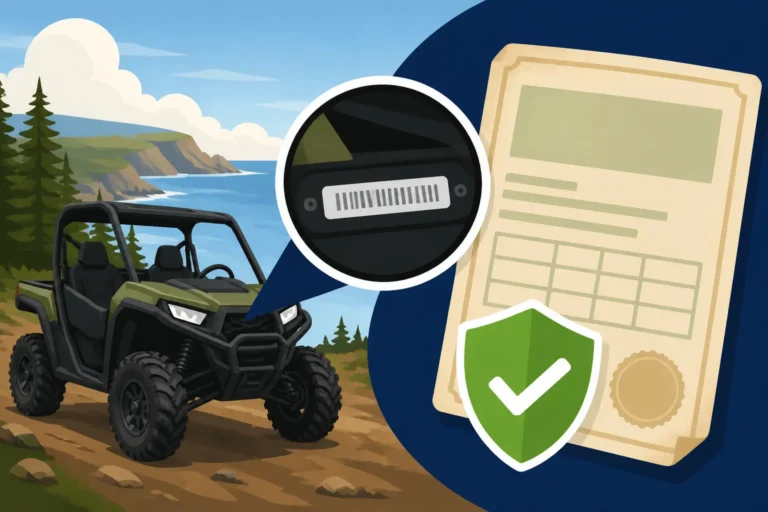
When you complete your registration, you'll receive a durable, usually metal or heavy-duty plastic, plate with a distinct serial number. These plates are typically smaller than standard highway vehicle license plates but are robust enough to withstand the elements and the rigors of off-road riding. They feature a specific provincial design and colour scheme, making them easily recognizable by law enforcement and other riders. The numbers and letters are often embossed or printed with durable, fade-resistant ink, ensuring they remain legible despite exposure to sun, rain, snow, and mud. Unlike a simple sticker that might peel or wear off over time, a plate offers a more permanent and resilient form of identification that is securely mounted to your machine.
Legal Significance for Riders and Enforcement
The identification plate is your machine's visible proof of registration. Without it, your ORV is considered unregistered for practical purposes when operating on public lands or trails, regardless of whether you have the paper registration permit in your pocket. This plate allows peace officers to quickly verify that your machine is compliant with the [Newfoundland's Off-Road Vehicles Act] without having to stop every rider for paperwork checks. It's a critical tool for enforcing regulations, investigating incidents, and identifying machines involved in accidents or illegal activities. Moreover, a properly displayed plate contributes to rider accountability; it makes it clear who the machine belongs to, which can be a deterrent to irresponsible riding behavior and aid in recovery if a machine is stolen.
Differences from a Standard Road Vehicle Plate
While both are provincial identification markers, an ORV plate differs from a standard road vehicle license plate in several key ways. Firstly, ORV plates are generally issued by a specific section of Motor Registration dedicated to off-road vehicles, distinct from the regular vehicle licensing department. Secondly, their design often reflects their off-road purpose, sometimes with different colour schemes or dimensions than highway plates. Most importantly, the legal framework governing their use is different. A road vehicle plate allows you to operate on public roads and highways, subject to strict traffic laws. An ORV plate, on the other hand, permits you to operate on designated off-road trails, crown land (where permitted), and specific allowances for road crossings or shoulder riding, all under the specific rules of the Off-Road Vehicles Act. Your ORV plate does not grant you the same road privileges as a regular vehicle plate, though in some very specific instances, you might need a driver's license to utilize certain highway access provisions with your ORV.
Placement Rules for Your Newfoundland ORV Plate
Once you have your shiny new identification plate, the job isn't quite done. Where and how you attach it to your machine is just as important as having it in the first place. The provincial regulations are clear on plate placement, aiming to ensure maximum visibility for safety and enforcement purposes. Getting this wrong can lead to unnecessary fines or hassle, so it's worth taking the time to understand and properly implement the rules.
Visibility Requirements and Rear Placement
The law specifies that your ORV identification plate must be securely fastened to the rear of your machine, in a position where it is clearly visible and legible at all times. This means no hidden spots, no tucking it away, and no placing it where it might be obscured by typical riding conditions. The "rear" designation is universal for all ORVs, whether you're on a single-rider ATV, a multi-passenger side-by-side, or a snowmobile. The goal is for anyone, particularly a peace officer, to be able to easily read the plate number from a reasonable distance, without having to get too close or struggle to find it. This ensures efficient identification and helps maintain order on the trails.
Common Mistakes and How to Avoid Them
Riders often, unintentionally, make mistakes that lead to their plates being obscured or damaged. One of the most common issues is allowing mud, dirt, or snow to completely cover the plate. It's easy for this to happen, especially after a thrilling ride through challenging terrain. However, even if it's "just mud," an illegible plate is still a non-compliant plate. Regularly checking and cleaning your plate, particularly after a messy ride, is crucial. Another frequent culprit is cargo. Many riders use racks or cargo boxes to carry gear, coolers, or hunting equipment. If these items hang over or sit directly in front of your plate, it renders it effectively invisible. Always plan your cargo placement with your plate in mind, ensuring a clear line of sight to it from the rear. You might need to adjust bungee cords, nets, or even rethink the size or placement of your cargo box to accommodate the plate. [Newfoundland Plates Unobstructed by Cargo] clearly outlines these requirements.
Specific Examples for Different Machine Types
The "rear and visible" rule applies universally, but its application can look slightly different depending on your specific ORV. For most ATVs, there's usually a dedicated space on the rear rack or fender for the plate. You'll want to use sturdy bolts or zip ties to ensure it stays put, even over rough terrain. For side-by-sides, the plate is typically mounted on the rear bumper or roll cage, often near the taillights. Again, ensure it's not blocked by a spare tire, cooler, or any rear-mounted accessories. Snowmobiles also require a rear plate, often mounted on the tunnel or behind the seat, ensuring it's not hidden by snow flaps or trailing equipment. For dirt bikes, which might have less "real estate," the plate is usually fastened to the rear fender. In all cases, consider the angles from which the plate might be viewed and whether common riding activities will quickly obscure it.
Decals and Stickers: Where They Fit (or Don't)
While the provincial identification plate is the non-negotiable marker for your registered ORV, there are other types of decals and stickers you might encounter or even be required to display in Newfoundland and Labrador. It's important not to confuse these with your main registration plate. Each serves a distinct purpose, and understanding their roles helps ensure you're fully compliant with all aspects of ORV operation.
Managed Trail Stickers
For many of the fantastic trails found throughout Newfoundland, especially those maintained by local clubs or federations, a specific "managed trail sticker" is required. These stickers aren't issued by Motor Registration; instead, they come directly from the trail operator or a related organization, such as the Newfoundland and Labrador Snowmobile Federation (which often manages ATV trails as well). The funds collected from these stickers typically go directly towards trail maintenance, grooming, signage, and insurance for the managed trail system. Think of it as a user fee that supports the very trails you enjoy. You'll typically affix this sticker to a visible part of your machine, often near the handlebars or on a fender, as specified by the issuing body. However, some operators might allow you to carry proof of purchase instead. [Managed Trail Stickers Come From the Trail Operator] is a good resource to learn more. This sticker is essential for accessing these specific, well-maintained trail networks but does not replace your provincial registration plate.
Safety Training Stickers
Another type of sticker you might come across relates to safety training. In Newfoundland, specific safety training is mandatory for certain age groups and first-time registrants. While there isn't usually a physical sticker that you affix to your machine as proof of this training, you will receive a certificate upon completion of an approved course, or upon passing the online safety test through MyGovNL. It's crucial to carry proof of this training with you when you ride, especially if you are under 16 or have recently registered your first ORV. An officer may ask to see this proof, alongside your registration papers. While not a "decal" for your machine in the traditional sense, the requirement for training and the ability to produce its proof is an important part of responsible ORV operation. [Newfoundland Safety Training Is Mandatory] for certain riders.
Distinguishing These from Registration Plates
The key takeaway here is differentiation. Your provincial identification plate is mandatory for any registered ORV operating anywhere outside of entirely private, owned land (and even then, rules can vary). It's issued by the province and verifies your machine's legal standing. Managed trail stickers, on the other hand, are optional in the sense that you only need them if you choose to ride on a managed trail system. They are issued by private organizations and fund specific trail networks. Safety training proofs are personal documents demonstrating your competence as a rider, required by law for certain demographics, but they don't serve as a machine's primary identifier. Each has its place in the overall framework of ORV regulations, but none can substitute for the official identification plate.
| Feature | Provincial Identification Plate | Managed Trail Sticker | Safety Training Proof |
|---|---|---|---|
| Issuer | Motor Registration Division (Provincial) | Trail Operator / Federation (Private) | Training Provider / MyGovNL (Provincial) |
| Purpose | Official machine registration, legal ID | Trail access, maintenance funding | Rider competency, legal requirement |
| Format | Durable metal/plastic plate, unique serial | Adhesive sticker, club logo | Printable certificate, digital record |
| Placement | Rear of machine, clearly visible, unobstructed | Visible on machine (e.g., fender, bars) | Carried by rider |
| Mandatory? | Yes (for registered ORVs on public land) | Yes (for managed trails) | Yes (for certain riders/ages) |
| Cost | Initial registration fee (e.g., [$95 for an ATV]) | Varies by operator, often annual | Free (online test) or course fee |
| Renewal? | No, [Newfoundland Registrations Never Expire] | Yes, typically annually | One-time, unless suspended |
Maintaining Your Identification Plate
Your ORV identification plate is built to last, but the challenging environments off-road vehicles operate in mean it needs a bit of care to remain compliant and legible. Neglecting your plate can lead to fines, inconvenience, and even legal complications. Regular maintenance, coupled with knowing what to do if it gets damaged or lost, is an essential part of responsible ORV ownership in Newfoundland and Labrador.
Keeping It Clean and Legible
After a day splashing through bogs, tearing down dusty paths, or carving through fresh snow, it's highly likely your identification plate will be covered in debris. While the excitement of the ride might make you want to put the machine away and call it a day, taking a moment to clean your plate should become a habit. Mud, dirt, dust, and even ice can completely obscure the numbers and letters, rendering your plate effectively invisible to an officer or anyone else trying to identify your machine. A quick wipe-down with a damp cloth is usually all it takes. If the mud has dried and caked on, a gentle scrub with a brush and some water will restore its legibility. This simple act takes minimal effort but prevents potential headaches down the line, ensuring you remain compliant with the requirement for a visible plate.
What to Do If It's Damaged or Lost
Accidents happen, and sometimes, despite your best efforts, your plate can become damaged or even fall off on a particularly rough section of trail. If your plate becomes bent, cracked, or otherwise illegible, or if you discover it's completely missing, you need to address it promptly. Operating an ORV with a damaged or missing plate is the same as operating an unregistered machine in the eyes of the law. You'll need to contact the Motor Registration Division to request a replacement. There is a fee associated with this service, typically a nominal charge to cover the cost of manufacturing and issuing a new plate. For example, [Newfoundland Replacement Plates at $30] is the standard cost. When contacting them, be prepared to provide your registration details, including your existing registration permit number and the VIN of your machine. It's often a good idea to book an appointment with Motor Registration before heading in, as mentioned in [Newfoundland Registration by Appointment], to ensure efficient service.
Costs for Replacement and Paperwork
The process for replacing a lost or damaged plate involves a small fee and some basic paperwork. As noted, the cost for a replacement plate is usually set at a fixed provincial rate. You'll likely need to fill out a short application form, declaring the loss or damage and requesting a new plate. While the specifics can sometimes vary, the goal is always to ensure the provincial registry accurately updates its records and issues you a new, unique identifier. Having your original registration permit, or at least a copy, readily available will expedite this process. Remember, replacing your plate is not just about avoiding a fine; it's about maintaining the legal identification of your valuable asset and contributing to a safer, more accountable riding community.
Transfer of Ownership and Plate Management
The identification plate issued to your ORV isn't just tied to the machine; it's intricately linked to the owner at the time of registration. This connection becomes particularly important when a machine changes hands, whether through a private sale, a gift, or inheritance. Understanding how the plate is handled during a transfer of ownership is crucial for both sellers and buyers in Newfoundland and Labrador.
What Happens to the Plate When You Sell or Buy
This is a critical distinction that often catches people off guard. In Newfoundland and Labrador, when you sell your registered off-road vehicle, you keep the identification plate. The plate is assigned to the original owner, not permanently affixed to the machine itself in a way that transfers with it. This is different from how some other provinces handle vehicle plates, where they might stay with the machine or be returned to the registry. When you sell, you remove your plate from the ORV. The new owner will then need to register the machine in their name and will be issued a brand new identification plate from the Motor Registration Division. This ensures a clean break in ownership records and proper identification for the new owner. It also ties into the fact that [Newfoundland Registrations Never Expire] for the owner, but a transfer means a new registration under a new owner.
The Process for Obtaining a New Plate Upon Transfer
For the buyer of a used ORV, the process involves a new registration. Once you've acquired the machine, you'll need to visit the Motor Registration Division with the necessary paperwork to transfer ownership into your name and register it. This typically includes a [Newfoundland Bills of Sale From Each Owner], proof of identity, and any other forms required. If there are gaps in ownership history or if the bill of sale isn't straightforward, you might even need to use an affidavit of ownership. Services like LawDepot can provide templates for a robust bill of sale or an affidavit, ensuring you have the proper legal documentation for your purchase. Once the transfer is complete and the registration fee (for example, [$95 for an ATV] for non-seniors) is paid, Motor Registration will issue you a brand-new identification plate with a unique number, specifically for your newly acquired ORV.
Managing Your Old Plate and Related Documents
After you've sold your ORV and kept the plate, you don't just throw it away. You should securely store it, as it remains a piece of official identification tied to your past ownership. While you won't reuse that specific plate on a new ORV, it's good practice to retain it or properly dispose of it in a way that prevents fraudulent use. It's also vital to notify Motor Registration within ten days of selling your machine. This officially updates their records, removing your name as the registered owner. This small step protects you from any liability associated with the machine once it's no longer yours. If you're looking for help drafting official documents like a bill of sale or an indemnity agreement for complex transfers, LawDepot offers user-friendly forms that can guide you through creating these legal records correctly, which can be invaluable for ensuring a smooth transfer and proper record-keeping. The entire [Newfoundland Transfer of Ownership Explained] process underscores the importance of correctly managing plates and documentation to ensure clarity for all parties involved and to maintain compliance with provincial regulations.
Disclaimer
This article is for general informational purposes only and does not constitute professional advice. Laws, prices and regulations vary by location and change over time. Consult a qualified professional for guidance on your specific situation.