What the Registrar’s Permit Says About Your Machine
Getting your ATV or UTV registered in Newfoundland is a significant step toward enjoying our province's vast wilderness, but many riders receive their Registrar's Permit without fully understanding its depth and importance. This official document isn't just a receipt; it's the legal backbone of your machine's identity and ownership. This guide will meticulously break down every crucial detail found on your Newfoundland Registrar's Permit, helping you grasp its purpose, what it reveals about your off-road vehicle, and why safeguarding it is paramount for every rider.
What Exactly Is a Registrar's Permit?
When you go through the process of registering your off-road vehicle (ORV) in Newfoundland and Labrador, whether it's an ATV, a snowmobile, or a side-by-side, the document you receive isn't just a simple piece of paper to file away. It's officially known as a Registrar's Permit, and it holds significant legal weight. Many new owners, and even some seasoned riders, might view it as nothing more than proof they've paid their fee, but it's far more profound than that. This permit serves as the primary legal declaration of your machine's registration under Newfoundland and Labrador's Off-Road Vehicles Act. It’s the province's way of officially recognizing your ORV and associating it with you, the owner. Without it, or proper documentation that it exists, proving legitimate ownership and registration can become a real headache, potentially leading to fines or complications if you're stopped by enforcement.
More Than Just a Receipt
While it definitely confirms that you've paid the required registration fee, referring to the Registrar's Permit as merely a receipt drastically undervalues its role. A receipt is transient, often discarded once a transaction is completed. The permit, however, is a permanent record of your machine's legal status. It signifies that your ORV meets the provincial requirements for operation and that you, as the registered owner, are recognized by the provincial government. This distinction is critical because it moves beyond a simple financial transaction to an official declaration of compliance with provincial law. Imagine trying to prove you own your home with just a receipt from the lawyer's office; it wouldn't stand up. Similarly, the permit is the definitive proof of your ORV's legitimate place within the provincial system. It’s what you’ll be asked to produce if a peace officer needs to verify your machine's registration on the trail or road shoulder.
Your Machine's Official Identity Card
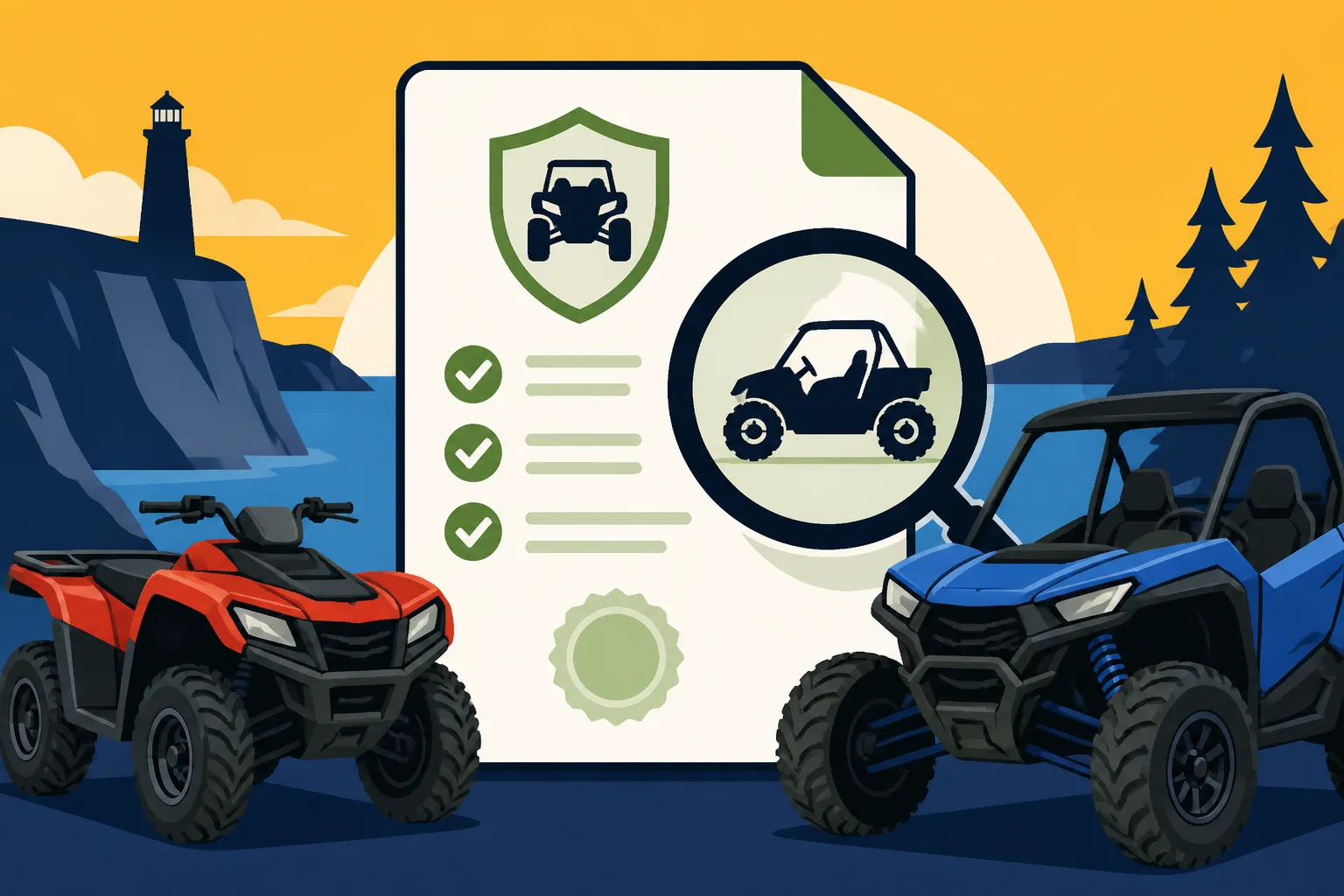
Think of your Registrar's Permit as the official identity card for your off-road vehicle. Just as your driver's license identifies you, this permit identifies your ATV or UTV in the eyes of the law. It contains a unique combination of numbers and descriptions that links your specific machine—and only your machine—to its registered owner. This critical association is fundamental for everything from preventing theft and aiding in recovery to facilitating legal sales and ensuring accountability. Without this 'identity card,' your machine is essentially an anonymous piece of equipment, making it incredibly difficult to track, transfer, or even insure properly. It acts as a clear, concise record, stating who owns what, and under what conditions it is permitted to be operated. This singular document consolidates all the essential details that define your ORV's legal existence in the province.
The Legal Backbone of Your Ownership
The Registrar's Permit is intrinsically tied to the provincial statutes governing off-road vehicles, particularly [Newfoundland's Off-Road Vehicles Act]. This means it’s not just an administrative document; it’s a direct reflection of the legal framework that dictates ORV use across Newfoundland and Labrador. When you possess this permit, you are acknowledging your commitment to abide by the Act's provisions, and in turn, the province is acknowledging your right to operate your registered machine. This legal backbone provides clarity on who is accountable for the machine's operation and any incidents that may occur. For instance, if an unregistered machine is involved in an accident or found trespassing, tracing ownership and assigning liability becomes significantly more complicated. The permit streamlines this process by establishing a clear legal link between the machine and its owner, underpinning all aspects of responsible ORV operation within the province.
Key Information on Your Permit
When you finally receive that Registrar's Permit after successfully registering your ATV or UTV in Newfoundland and Labrador, it might seem like a lot of text and numbers. But every single piece of information on that document serves a purpose, offering a comprehensive snapshot of your machine and its legal status. Understanding these details is crucial, not just for compliance, but for ensuring smooth sailing through any future transactions or interactions involving your ORV. Let's break down the core components you'll find there.
Identifying Your Machine's Core Details
The most fundamental purpose of the Registrar's Permit is to accurately identify your specific off-road vehicle. This starts with the Vehicle Identification Number (VIN), which is arguably the single most important piece of information on the entire document. The VIN is a unique, 17-character code stamped directly onto your machine by the manufacturer, typically found on the frame. It acts as a fingerprint for your ORV, distinguishing it from every other machine ever made. This number is vital for everything from tracking manufacturing recalls to deterring theft and aiding law enforcement in recovering stolen machines. Always double-check that the VIN on your permit precisely matches the VIN on your ATV or UTV to avoid any discrepancies that could lead to issues down the road.
Beyond the VIN, the permit will meticulously list your machine's make, model, year, and colour. These details ensure that the document accurately reflects the physical characteristics of your off-road vehicle. Imagine trying to explain to an officer why your permit says you own a red 2020 Polaris Sportsman when you’re actually riding a blue 2023 Can-Am Outlander. Such mismatches can raise flags and lead to unnecessary delays or investigations. Additionally, information regarding the engine size (often in cubic centimetres or cc) and type will be present. This is particularly important because certain regulations, especially for youth riders, can be tied to engine displacement. Ensuring all these descriptive elements are correct on your permit confirms that the province recognizes the exact machine you own and operate.
Owner Information and Registration Specifics
Your Registrar's Permit also clearly states your full legal name and address as the registered owner. This information is paramount for establishing legal ownership and for any official communications from Motor Registration or other provincial bodies. It’s your proof that the machine is legally yours. If you ever move, it’s critical to update your address with the registry to ensure your records are current. The permit will also display the date of registration and a unique permit number assigned to your specific registration. These administrative details help the province keep organized records and allow you to easily reference your registration in any future dealings.
One of the most remarkable aspects of ORV registration in Newfoundland and Labrador is that once you register your machine, the registration itself doesn't expire as long as you own it. The permit reflects this by not having an expiry date. This is a significant relief for riders, meaning you won't receive annual renewal notices in the mail. This benefit is directly outlined in articles like [Newfoundland Registrations Never Expire] and [Newfoundland Registration Valid While You Own It]. The permit, therefore, isn't just a snapshot of a moment in time; it's a continuing declaration of your machine's compliant status under your ownership.
The All-Important Fee Paid
Another key detail on your Registrar's Permit is the specific fee recorded for your registration. This might seem straightforward, but it's an important piece of information that ties back to the initial cost of getting your machine on the provincial registry. For example, if you own an ATV, your permit will likely show the standard fee, which is often referenced in articles like [Newfoundland Charges $95 for an ATV]. However, if you're registering a different type of ORV, such as a trail bike, the fee noted on your permit would be significantly lower, as detailed in [Newfoundland Charges $5 for a Trail Bike].
This recorded fee isn't just for accounting purposes; it validates that the correct registration type was processed for your specific machine. It confirms that you've fulfilled the financial obligation required to make your ORV legal on provincial trails and approved areas. The permit serves as an enduring record of this one-time payment, reinforcing the principle that this is a fee you pay once and never again, for as long as you own the machine. This concept is central to [Newfoundland ORV Registration You Pay Once], and seeing the fee noted on your permit solidifies this understanding. It underscores the value of the permit as proof of a completed, perpetual registration, eliminating the need for recurring payments or annual renewals.
Understanding Your Machine Classification
Beyond the standard identifying marks and owner details, your Registrar's Permit holds another critical piece of information: the classification of your off-road vehicle. This isn't just a descriptive label; it's a legal category that profoundly impacts where and how you can operate your machine, as well as the specific rules you must follow. In Newfoundland and Labrador, the Off-Road Vehicles Act doesn't treat all ORVs identically, and your permit is the first place to look to understand how your ride is legally defined. Getting this right from the start is paramount, as discrepancies can lead to confusion, fines, or even dangerous situations on the trail.
How the Act Defines Your Ride
The Registrar's Permit will clearly state the class of off-road vehicle your machine falls under according to provincial regulations. This classification is vital because it determines which specific sections of the Off-Road Vehicles Act apply to you. Common classifications include All-Terrain Vehicle (ATV), Side-by-Side (SxS or UTV), Snowmobile, Dirt Bike, or even more specialized categories like amphibious machines. For example, a "Side-by-Side" is recognized as a distinct class, which was formally added to the Act, reflecting their growing popularity and unique operational characteristics. This means that rules regarding passengers, seat belts, and even engine size can differ significantly between an ATV and a side-by-side.
It's crucial to check that the classification on your permit accurately matches the type of machine you actually own. This isn't just bureaucratic red tape; it's about ensuring you're aware of and compliant with the correct set of rules for your particular ORV. If your permit incorrectly lists your new side-by-side as an ATV, you might inadvertently misinterpret the rules, potentially leading to fines or safety issues. A comprehensive overview of these classifications can be found in resources like [Newfoundland Classes the Act Covers], which explains the nuances of each category. Your permit is the personalized confirmation of your machine's place within this regulatory framework.
Implications for Rules and Regulations
The classification listed on your Registrar's Permit directly dictates a multitude of operational rules and regulations. For instance, an ATV typically has specific requirements for helmets and may limit passenger capacity to one, if the machine is designed for it. A side-by-side, on the other hand, often requires passengers to wear seatbelts in addition to helmets, and can legally carry more occupants based on its design. The permit's classification informs you whether your machine is subject to the rules for single-rider ATVs, multi-passenger UTVs, or perhaps the unique regulations governing snowmobiles regarding trail access and season of use.
Understanding these implications is not just about avoiding penalties; it's about safety. Operating a machine without understanding its specific regulatory requirements can put yourself and others at risk. For example, knowing that your permit classifies your machine as a Side-by-Side means you must adhere to its specific seatbelt rules, which might not apply to a traditional ATV. Every rider should take the time to compare their permit's classification with the detailed regulations outlined in the Off-Road Vehicles Act and related guidance, ensuring that their riding habits align with their machine's legal standing.
What If the Classification Is Wrong?
While rare, it is possible for a Registrar's Permit to contain an error in the machine's classification. Perhaps a clerical error was made during the initial registration process, or the machine type was misinterpreted. Discovering that your permit misclassifies your ORV can be unsettling, but it's a situation that absolutely needs to be rectified. Riding a machine whose permit doesn't accurately reflect its true classification can lead to a host of problems. You might inadvertently violate regulations, such as carrying an unauthorized number of passengers or using the machine in areas restricted to its actual class, simply because your documentation is misleading.
If you suspect or confirm an incorrect classification on your permit, your immediate step should be to contact Motor Registration Newfoundland and Labrador. You will likely need to provide additional documentation, such as the New Vehicle Information Statement (NVIS) for new machines, or detailed photos and specifications for used machines, to prove the correct classification. Rectifying this issue promptly is crucial. It ensures that your permit truly serves as a valid legal document for your ORV and that you are operating within the correct regulatory framework. Ignoring a misclassification could lead to legal complications, particularly if you are involved in an incident or attempting to sell the machine in the future.
Beyond the Permit: Why It Matters
Your Registrar's Permit is more than just a piece of paper you receive after registering your off-road vehicle; it's a foundational document that underpins several critical aspects of ORV ownership and use in Newfoundland and Labrador. While it might live in your wallet or glove box, its implications extend into legal, financial, and practical realms, making it an indispensable part of being a responsible rider. Understanding these broader contexts ensures that you can navigate situations like proving ownership, selling your machine, or dealing with insurance with confidence and clarity.
Proof of Ownership and Compliance
At its core, the Registrar's Permit is the definitive primary evidence of your legal ownership of the off-road vehicle in Newfoundland and Labrador. When you're out on the trails, and a peace officer requests proof of registration, this permit is the document you'll produce. It demonstrates that your machine has been properly registered under the provincial Act and that you are the recognized legal owner. Without this proof, or an inability to produce it, you could face questions, delays, or even fines, as operating an unregistered ORV is against the law. It’s a testament to your compliance with the provincial regulations, confirming that you've done your due diligence as an owner.
The permit is also crucial in less common but equally important scenarios, such as reporting an accident. If your ORV is involved in a collision or incident, the permit provides the essential identifying details of your machine and your ownership, which are vital for police reports and insurance claims. It connects all the dots from the physical machine to the legal owner, streamlining the process of accountability and resolution. While other documents, like your bill of sale, are important for understanding the chain of ownership, the permit is the official government-issued document that verifies the current legal registration and ownership status. It effectively encapsulates much of the information detailed in [Newfoundland Registration Paperwork Explained].
Selling Your Machine and Transferring Ownership
The Registrar's Permit takes on an especially significant role when it comes time to sell your off-road vehicle. When you decide to part ways with your ATV or UTV, the permit doesn't just get passed along; it plays a critical role in the transfer of ownership process. Without the original permit from the current registered owner, the new buyer will face significant hurdles, if not outright roadblocks, in registering the machine in their name. The permit acts as the bridge between you, the seller, and the next owner, ensuring a legal and traceable transfer.
When you sell your machine, you'll typically endorse the permit (sign it over) to the new owner, indicating the sale date and price. This endorsed permit, along with a bill of sale, forms the core of the paperwork the buyer will need to present to Motor Registration. This process is fully explained in articles like [Newfoundland Transfer of Ownership Explained] and [Selling a Registered Machine in Newfoundland]. A robust bill of sale, often available through legal document providers like LawDepot, can make this transaction smoother, clearly outlining terms and ensuring both parties have a signed record. Without a clear paper trail facilitated by the Registrar's Permit, the buyer might struggle to prove they are the legitimate new owner, potentially leading to issues with registration or future resale.
Dealing with Insurance and Liens
While the Registrar's Permit itself isn't an insurance policy, it is a foundational document for obtaining and maintaining insurance coverage for your off-road vehicle. Insurance providers will require the VIN and other identifying details from your permit to accurately quote and issue a policy. The permit officially identifies the machine you are seeking to insure, ensuring that the coverage you obtain is for the correct vehicle. This linkage is essential for processing any claims and confirming that your policy aligns with the legally registered machine.
Furthermore, the VIN on your Registrar's Permit can be checked against lien records. If your ATV or UTV was financed, a financial institution might hold a lien against it until the loan is fully repaid. The VIN on your permit allows prospective buyers or lenders to perform a lien check, revealing any outstanding financial claims against the machine. This is a critical step in both buying and selling, providing transparency and protecting all parties involved. A clear permit, free of discrepancies, facilitates these checks and reassures buyers and financial institutions alike. Reputable legal document platforms like LawDepot often provide templates and guidance for creating legal documents, which can include forms related to property transfers and lien declarations, reinforcing the need for accurate documentation at all stages of ownership.
What to Do If Your Permit Is Lost or Damaged
Life happens. Maybe your Registrar's Permit slipped out of your pocket on a bumpy trail, got wet in an unexpected downpour, or simply vanished into the abyss of your filing cabinet. Whatever the reason, discovering your permit is lost or damaged can be a moment of minor panic. While it's definitely an inconvenience, it's not the end of the world. Newfoundland and Labrador's Motor Registration has a process in place to help you obtain a duplicate, ensuring you can continue to ride and manage your ORV legally. Acting swiftly and knowing the steps involved will save you a lot of potential headaches.
Applying for a Duplicate Document
If your Registrar's Permit is lost, stolen, or damaged beyond recognition, your first step is to apply for a duplicate document. You'll need to contact Motor Registration Newfoundland and Labrador, either by visiting a service centre in person or by following their official procedures, which might include mailing in forms. Generally, you will be required to complete a specific application form for a duplicate permit. This form will ask for details about your machine (like its VIN, make, and model) and your personal information to verify you are the registered owner. It’s always a good idea to bring personal identification (like a driver's license) and any other supporting documentation you have, such as a copy of your original permit if you were smart enough to make one, or even your bill of sale.
It's important to be aware that there is a fee associated with obtaining a duplicate Registrar's Permit. This fee covers the administrative costs of processing your request and issuing a new official document. Details on this cost can be found in resources like [Newfoundland Duplicate Registrations at $25], which specifies the current fee. While it’s an extra expense, it's a small price to pay for having your official documentation in order. Be prepared for a short processing time, though often, if you apply in person, you might receive your duplicate on the same day. However, it’s always best to confirm current processing times with the registry office.
Why Timeliness Matters
When it comes to a lost or damaged Registrar's Permit, timeliness is paramount. Riding your off-road vehicle without a valid permit, or at least proof that you've applied for a replacement, could lead to complications if you're stopped by law enforcement. While an officer might exercise discretion if you can demonstrate you've initiated the replacement process, you are technically required to produce valid registration upon request. Delaying the application for a duplicate could put you in a vulnerable position, potentially leading to warnings, fines, or even temporary impoundment of your machine if you cannot prove legal registration.
Beyond enforcement, having a valid permit is crucial for any planned transactions involving your ORV. If you're looking to sell your machine, you simply cannot complete a legal transfer of ownership without the permit. A buyer won't be able to register it in their name without the original document. Similarly, if you need to make changes to your insurance policy or deal with any lienholders, having your up-to-date permit readily available will streamline these processes. Don't wait until you're in a bind; address the issue of a missing permit as soon as you discover it. LawDepot can assist in generating affidavits or other supporting documents if required for replacement, particularly if there are complexities in proving your original ownership.
Safeguarding Your Replacement Permit
Once you've gone through the process of getting a duplicate Registrar's Permit, you'll want to take extra precautions to safeguard it to avoid having to repeat the process. While many riders prefer to keep the physical permit with their machine for convenience, consider whether that's the safest place. A laminated copy or a clear, waterproof pouch can protect it from the elements while riding. For the original, perhaps keeping it in a secure, fireproof location at home, and carrying only a certified copy or high-quality digital image on your phone (backed up, of course) might be a better strategy.
Many responsible owners also scan their important documents, including their Registrar's Permit, and store them digitally in a secure cloud service. This provides an immediate backup and proof of documentation should the physical copy ever go missing again. Always ensure your digital copies are password-protected and not easily accessible to unauthorized individuals. This approach of organized record-keeping, whether physical or digital, is strongly encouraged by legal document services like LawDepot, which emphasize the importance of having easily retrievable and secure copies of all your vital records. By being proactive in protecting your permit, you ensure continuous, worry-free enjoyment of your off-road adventures.
Permit Details at a Glance
To give you a quick summary of what to look for and why it matters, here's a helpful table outlining the key elements you'll find on your Registrar's Permit:
| Permit Detail | Description | Why It Matters |
|---|---|---|
| VIN | 17-character Vehicle Identification Number. | Unique identifier; crucial for theft, recalls, and all official records. |
| Make, Model, Year | Manufacturer, specific model name, and production year of your ORV. | Verifies the machine matches the permit; important for parts and maintenance. |
| Colour | The primary colour of your off-road vehicle. | Visual confirmation of machine identity. |
| Engine Size/Type | Cubic centimetres (cc) or other engine specifications (e.g., electric). | Affects regulations (especially for youth) and operational characteristics. |
| Machine Class | Legal classification (e.g., ATV, Side-by-Side, Snowmobile, Dirt Bike). | Dictates specific riding rules, passenger limits, and permissible areas. |
| Owner Name & Address | Your full legal name and current residential address. | Proof of legal ownership; used for official communications. |
| Date of Registration | The date your machine was initially registered with Motor Registration. | Establishes the start of continuous registration under your ownership. |
| Permit Number | Unique identifier assigned to this specific registration document. | For administrative tracking and referencing your registration. |
| Fee Paid | The one-time registration fee charged (e.g., $95 for ATV, $5 for trail bike). | Confirms payment for the perpetual registration; no renewal fees required. |
Disclaimer
This article is for general informational purposes only and does not constitute professional advice. Laws, prices and regulations vary by location and change over time. Consult a qualified professional for guidance on your specific situation.