Do You Still Need a Spark Arrestor in Newfoundland?
A spark arrestor can look like a legal must-have, especially if you ride in dry woods or carry equipment across provincial lines. In Newfoundland, the general answer is no: there is no provincial ATV spark-arrestor requirement. That does not mean any exhaust setup is acceptable, or that fire restrictions and trail rules can be ignored.
The short answer: Newfoundland does not generally require one
Newfoundland’s off-road vehicle rules do not generally require an ATV or side-by-side to have a spark arrestor. If your machine’s exhaust does not have one, that fact alone is not a reason to assume it cannot be registered or ridden in the province.
That answer is narrower than it may sound. It addresses a specific piece of exhaust equipment, not every rule that applies to your machine or every place you might ride. A machine can be free of a provincial spark-arrestor requirement and still need to meet exhaust, registration, insurance, trail-access and land-use rules.
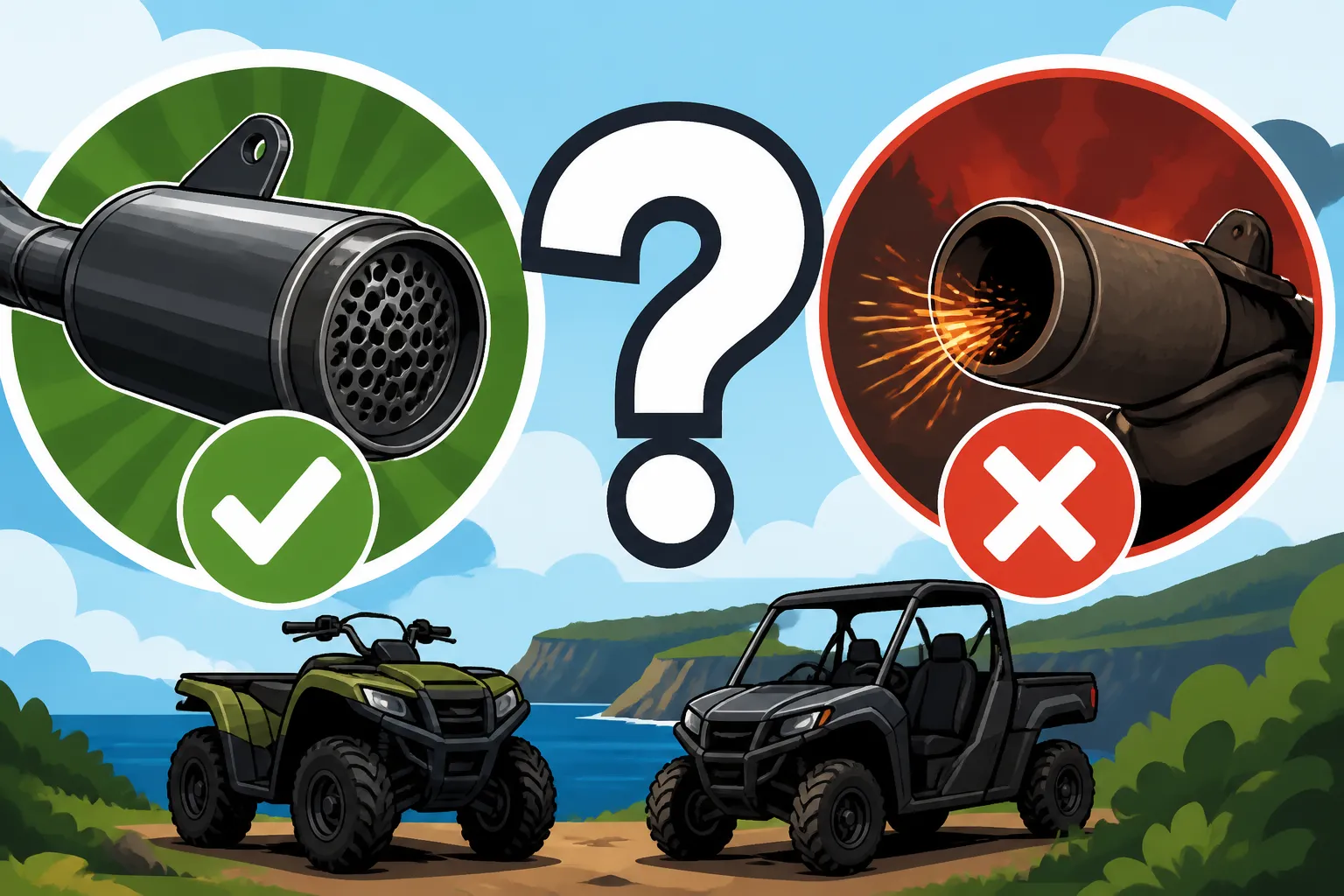
For a useful distinction, a spark arrestor is designed to trap or cool hot particles that might escape from the exhaust. A muffler reduces exhaust noise. They are not interchangeable: a muffler does not automatically count as a spark arrestor, and a spark arrestor does not automatically make a noisy or modified exhaust acceptable.
The province’s equipment rules focus on the exhaust and muffler requirements rather than imposing a general spark-arrestor rule. For details on the exhaust side of the question, see Newfoundland Muffler and Noise Rules and Newfoundland Equipment Requirements. The broader rules are covered in Newfoundland’s Off-Road Vehicles Act.
| Question | Practical answer |
|---|---|
| Is a spark arrestor generally required by Newfoundland’s provincial ATV rules? | No general requirement applies. |
| Does that mean a loud or altered exhaust is automatically allowed? | No. Muffler and noise rules still matter. |
| Can a trail operator or landowner set an additional condition? | It may depend on the specific trail or property. Check before riding. |
| Do fire-season restrictions still apply? | Yes. A missing spark-arrestor requirement is not an exemption from fire restrictions. |
| Should you remove an arrestor already fitted to your machine? | No. It may be part of the machine’s intended setup, and removing it can create other problems. |
If a particular trail sign, event rule or landowner instruction calls for a spark arrestor, treat that as a separate access condition. The provincial answer does not override rules set for a specific property or organized ride. When the wording is unclear, ask the operator or landowner before unloading.
No spark-arrestor rule does not mean no exhaust rules
The most common mistake is to hear “not required” and assume Newfoundland has no rules about an ATV exhaust. The distinction is important. An exhaust still needs to meet the applicable equipment requirements, and a machine that has been altered, is excessively loud or has a defective muffler may attract attention even if it has no spark arrestor.
Do not treat the provincial spark-arrestor answer as permission to remove exhaust parts, run a cut-out, or ride with a damaged muffler. Changes can affect noise, emissions, performance, heat and the machine’s reliability. They can also create practical problems in a shared riding area where noise can carry a long distance.
If your machine came with a spark arrestor, keeping it in place is usually the simplest course. It may be part of the original exhaust assembly or an accessory installed for a particular reason. Removing it can change how the exhaust behaves, and a modified setup may be harder to assess if an officer, trail operator or landowner asks about your equipment. Check the owner’s manual or ask a qualified shop before changing the exhaust.
If you are buying or replacing one
If you need a replacement because the original part is damaged or missing, identify the exact make, model, year and exhaust configuration before ordering. Parts that look similar may not fit or function the same way. A manufacturer or reputable powersports shop can help confirm compatibility. If you use Amazon to search, treat the listing as a starting point, not proof that a part is correct for your machine; verify the fit and product details before buying.
That is different from buying one solely because you believe Newfoundland law requires it. There is no general provincial requirement to add one just to meet the ATV spark-arrestor rule. You may still decide it is worthwhile for your riding conditions or required for access somewhere you plan to go.
Also check whether a machine’s exhaust has been modified before buying it used. Ask what parts were changed and whether the original components are included. A seller’s claim that a machine is “legal everywhere” is not a substitute for checking the current rules where you will ride. If exhaust condition is uncertain, have the machine inspected before relying on it for a long trip.
Fire restrictions and trail access are separate questions
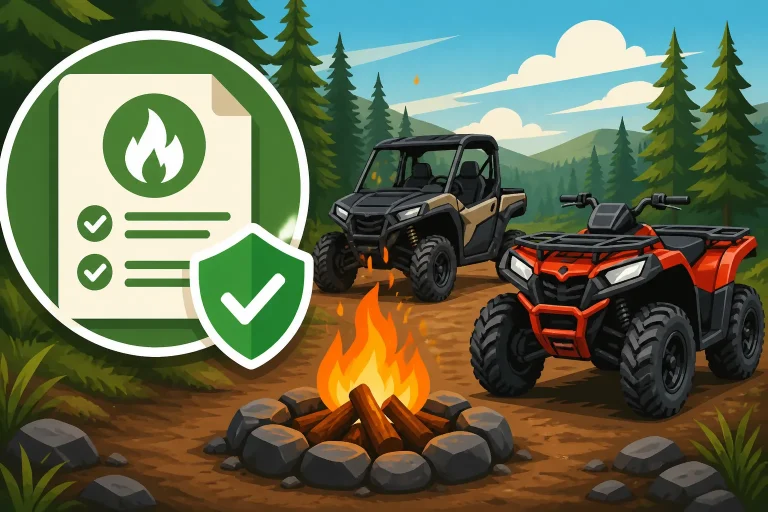
A spark arrestor is sometimes associated with wildfire prevention, so it is reasonable to wonder whether a no-arrestor rule means there are no related fire restrictions. It does not. Fire-season rules can limit activities or access independently of whether the ATV itself must carry a spark arrestor. Restrictions may change with conditions, and they can apply to specific areas, dates or activities.
Before a ride, check the current provincial notices and any local restrictions that apply to your route. The overview at Newfoundland Fire Season Dates can help explain the seasonal framework, while Newfoundland Fire Season Riding Restrictions focuses on riding access. Confirm current information before setting out, particularly during dry weather or when a fire restriction has been announced.
Fire precautions also make sense even when a specific spark arrestor is not legally required. Avoid parking a hot machine in dry grass or brush, watch where the exhaust points, and do not leave a running machine unattended. Carrying appropriate fire-safety equipment and following posted instructions can reduce risk, but neither replaces a legal restriction or a trail operator’s condition.
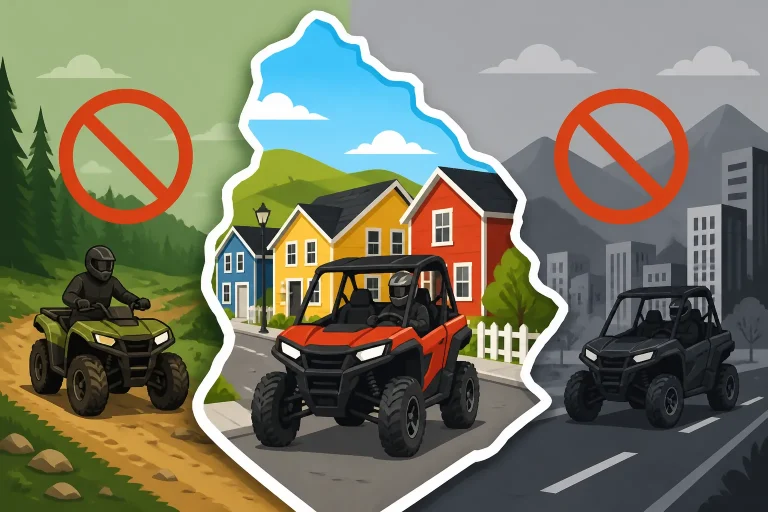
Access rules are another separate layer. A provincial rule about equipment does not automatically give you permission to ride on a trail, private property or a restricted area. Check whether your route is open to your machine and whether it requires a trail sticker, permit or other proof. Newfoundland Managed Trail Rules explains the managed-trail side, and Newfoundland Crown Land Riding Rules is relevant when your route crosses Crown land.
This matters particularly when a ride combines different types of land. A route might pass through a managed trail, a municipal area, private property and Crown land. Each can have its own access conditions. Ask the relevant trail operator, municipality or landowner about any extra equipment requirements instead of assuming the provincial rule settles every question.
A simple pre-ride check helps keep the issues separate:
- Confirm the provincial equipment requirements for your machine.
- Check that the muffler and exhaust are in good condition and not excessively loud.
- Verify whether the route is open and whether it has a sticker, permit or local equipment condition.
- Check current fire restrictions and any notices for the area.
- Ask the operator or landowner if you cannot tell whether a spark-arrestor condition applies.
What to do if someone says you need one
If a seller, riding companion or trail contact says a spark arrestor is mandatory, ask what rule they mean. They may be referring to a condition for one specific property, a club ride, an event, a different jurisdiction or a manufacturer recommendation. Those are not the same as a general Newfoundland provincial requirement.
Ask for the exact trail or event condition and confirm it with the organization responsible for access. If you are riding on private land, the landowner can set conditions for permission to use that land. If you are joining an organized ride, ask the organizer whether its equipment checklist includes a spark arrestor. A general answer about provincial law cannot settle an access rule that applies only to that outing.
If you are visiting from another province, do not assume that rules where the machine is registered are the only ones that matter. You need to follow the rules that apply where you ride, along with any conditions imposed by the trail or property. Confirm the rules for the intended route before traveling, especially if the trip includes managed trails or a guided event.
If you are stopped or asked about your exhaust, explain the setup plainly and avoid presenting the absence of a spark arrestor as proof that every other requirement has been met. Keep your registration and other required documents available, and make sure the machine’s exhaust is in sound condition. For general riding preparation, see Newfoundland Registration Before Your First Ride.
The practical bottom line is straightforward: Newfoundland does not generally require an ATV spark arrestor under its provincial rules. Keep the muffler and exhaust compliant and in good repair, follow current fire restrictions, and check for extra conditions wherever you plan to ride. That approach avoids both unnecessary parts purchases and the more serious mistake of treating “not required by provincial law” as “no rules apply.”
Disclaimer
This article is for general informational purposes only and does not constitute professional advice. Laws, prices and regulations vary by location and change over time. Consult a qualified professional for guidance on your specific situation.