Trailering a Machine Along the Trans-Canada Highway
Trailering an ATV or UTV along Newfoundland’s Trans-Canada Highway can turn a great riding plan into a stressful haul if the machine, trailer, and route are not prepared together. This guide covers secure loading, trip planning, ferry and fuel considerations, and how to choose a practical place to unload before heading toward a trail.
Plan the route before you hitch up
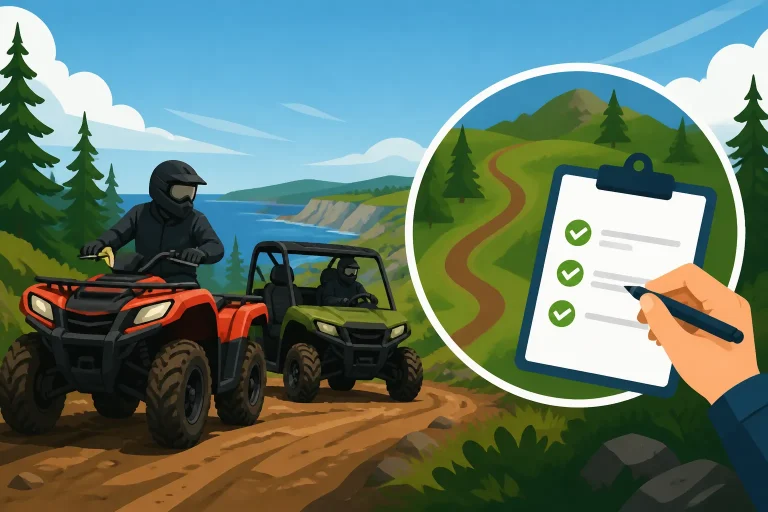
Match your destination to a suitable trailhead
Newfoundland is large, and a route that looks straightforward on a map can involve long stretches between services, changing weather, and access roads that are less comfortable for a trailer than the Trans-Canada Highway itself. Decide where you want to ride before you leave home, then identify a trailhead or staging area that can accommodate your towing vehicle and trailer.
The T’Railway is a major riding corridor, but reaching it does not automatically mean every nearby road or parking area is suitable for unloading. Check the intended access point, approach road, parking arrangements, and any local restrictions before you set out. A plan for riding near Corner Brook, Gander, or Clarenville may need different staging choices than a trip farther along the island.
Do not rely on an informal roadside pull-off as your main unloading plan. It may be too narrow to maneuver safely, leave the trailer exposed to passing traffic, or interfere with other people using the road. For a group, a designated parking area with enough room to turn around is especially important. See Where a Ten-Machine Group Can Unload Safely when coordinating a larger outing.
Build in time for the tow, not just the ride
A navigation app may estimate the drive as if you were travelling in an ordinary passenger vehicle. Towing changes the rhythm of a trip: you will likely drive more cautiously, need additional space for turns and stops, and may want to take breaks to check the trailer and tie-downs.
Plan your daily distance around that slower pace. If you are travelling from the ferry terminal at Port aux Basques toward a riding area, allow time to get through the arrival process, inspect your load, and reach your overnight stop without rushing. If your route continues toward central Newfoundland or the Avalon, think through where you can safely stop for fuel, food, and rest along the way.
Check local road conditions, weather, and planned closures before departure. Wind and rain can make a towing day more tiring, while fog can reduce visibility on exposed stretches. A short buffer in the schedule is more useful than a tightly timed arrival that leaves no room to stop when something feels off.
Use maps as a planning aid, not the final word
Digital mapping tools can help compare routes, locate trail systems, and keep a trip organized. Some riders use onX Offroad to review off-road route information and mark places they want to investigate. Before relying on any app, confirm that its maps cover the area you are travelling through and that you know how to use the information when cell service is unavailable.
A map showing a route or trail line does not, by itself, establish that the route is open, legal for your machine, or appropriate for a loaded tow vehicle. Verify access with the relevant land manager, trail operator, municipality, or other responsible authority. Pay particular attention to the difference between a highway route for the truck and trailer and an off-road route for the ATV or UTV.
It is also wise to save key locations before you leave a reliable connection. Mark your lodging, fuel stops, trailer parking, and intended trailhead. A paper map or written route notes can provide a useful backup in areas where a phone loses signal. Cell Dead Zones Along the Railbed and Carrying a Paper Map Where There Is No Signal offer practical reminders for the riding portion of the trip.
Prepare the ATV or UTV and trailer
Inspect the trailer before loading
A trailer that has been sitting since the previous season can have problems that are easy to miss in the driveway and unpleasant to discover on the highway. Check the tires for visible damage and suitable inflation, confirm that the lights work, and look over the hitch, safety chains, coupler, and wiring. Make sure the trailer is appropriate for the combined weight and dimensions of the machine or machines you plan to carry.
Check that the ramp is secure and designed for the loading method you will use. If you have a removable ramp, test how it attaches before the machine is in motion. Keep the trailer on firm, level ground when loading, set the towing vehicle securely, and avoid loading where a machine could roll toward traffic or another person.
A quick inspection is worthwhile every time you stop during the trip, not only before the first departure. Look for a shifted machine, loose straps, a light that has stopped working, or anything rubbing against a tire. If the trailer begins to sway or the load feels different, find a safe place to stop rather than trying to correct the problem while driving.
Secure the machine against movement
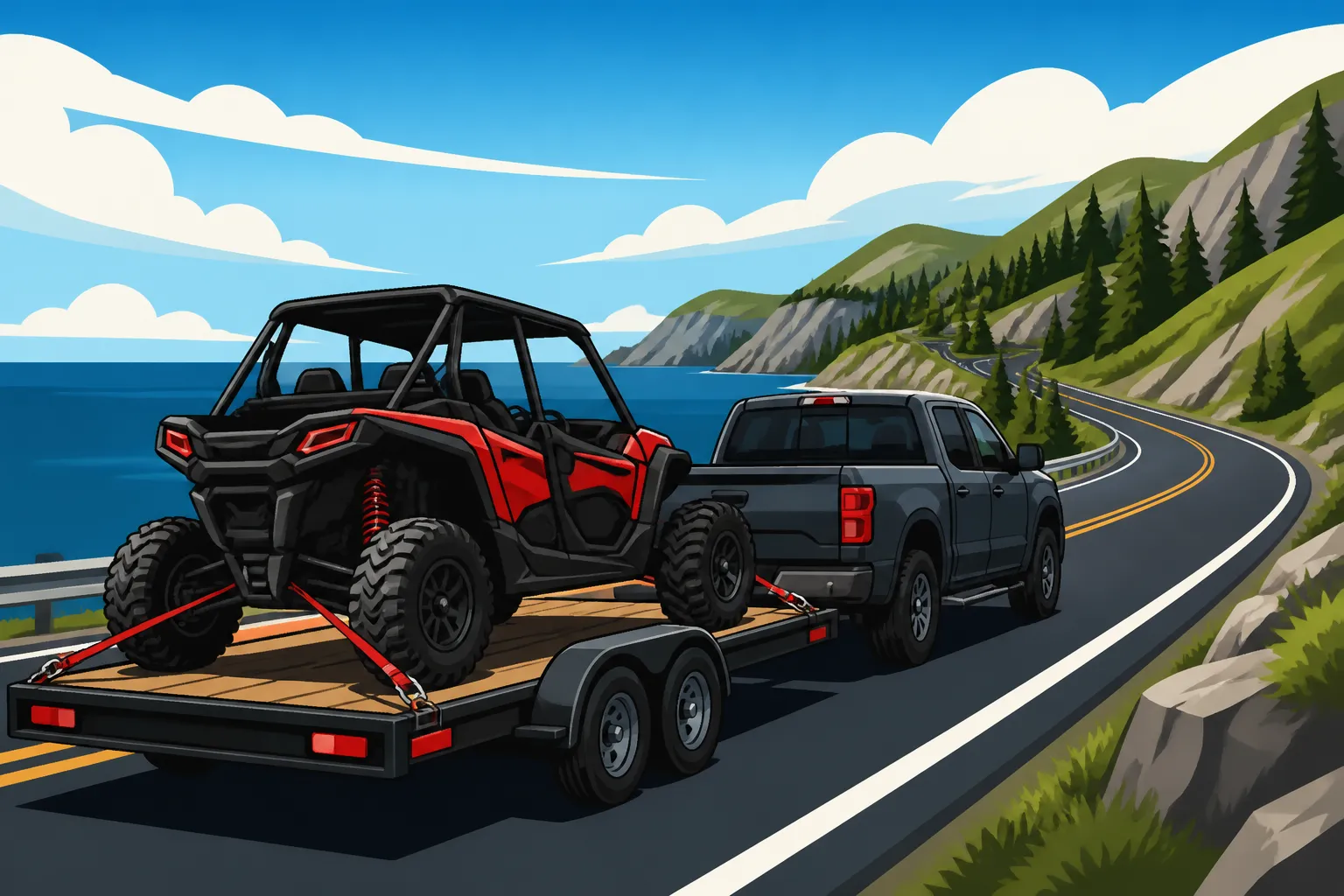
Use tie-down points intended for the trailer and suitable attachment points on the machine. The machine should not be able to roll, bounce, or shift under braking, on uneven pavement, or during a sudden change in direction. Avoid attaching a strap where it may crush a fragile component, interfere with steering, or slide off as the suspension moves.
The exact setup depends on the trailer, the machine, and the tie-down equipment. Follow the equipment and vehicle manufacturers’ instructions, and replace straps that are cut, frayed, damaged, or difficult to tighten. After fastening the ATV or UTV, apply pressure to check whether it moves in a way that suggests the load is not secure. Recheck the straps after the first short drive and at later stops.
If you are carrying more than one machine, make a loading plan before using the ramp. Consider weight distribution, access to tie-down points, and whether one machine will block another from being secured properly. The goal is not simply to fit everything on the deck; it is to keep the load stable and make unloading orderly when you arrive.
Balance the load and manage loose gear
Position the machine and cargo according to the trailer and vehicle manufacturers’ guidance. A load that is too far forward or too far back can affect towing stability. Do not guess at balance based on appearance alone if the trailer feels unsettled; stop and reassess the layout.
Secure helmets, fuel containers, tools, coolers, ramps, and other loose items so they cannot slide, bounce out, or strike the machine. Keep gear from obstructing lights or a visible plate on the trailer. If cargo is carried on the ATV or UTV itself, make sure it cannot fall off or interfere with the operator’s controls once you unload.
Think about what you will need first at the trailhead. Keep essential items accessible without having to unload several machines or unpack the entire trailer. A small, organized kit with gloves, rain gear, water, basic tools, and paperwork can save time when you arrive in damp or windy conditions.
Choose a safe place to stop and unload
Avoid unloading beside fast-moving traffic
A highway shoulder is not a substitute for a staging area. Unloading beside the Trans-Canada Highway can expose you and other road users to passing traffic, reduce the room needed to handle a ramp, and make it difficult to secure the machine after it comes off the trailer. If you need to stop unexpectedly, prioritize a safe, legal place away from moving traffic rather than attempting to unload.
Choose a parking area where your entire combination can fit without blocking access or forcing a risky reverse. Before departure, confirm whether trailers are allowed and whether the space is intended for longer stops. Look for a clear route in and out, adequate room to maneuver, and a surface suitable for safely loading or unloading.
For local access details, check Trailheads With Trailer Parking and Newfoundland Riding Areas With Group Space. These topics can help you think through the practical needs of a trailhead, but confirm the conditions at your specific destination before you travel. Parking availability can vary by location and season.
Make unloading a deliberate process
Once parked, take a moment to assess the surface and surroundings. Avoid unloading on a steep slope, soft shoulder, uneven gravel, or a spot where the ramp could shift. Keep bystanders out of the loading path, and make sure there is room to move the machine away from the trailer without entering an active traffic lane.
Unload one machine at a time, following the ramp and machine manufacturers’ instructions. Keep the operator in control, use a spotter if visibility is limited, and agree on simple signals before anyone starts moving. Do not stand behind a machine that could roll backward, and do not let people gather beside the ramp where a tire or ramp could slip.
After unloading, secure the trailer and any ramps before leaving the parking area. Check that the truck and trailer are parked without blocking other users. If you are meeting a group, agree on a meeting point that does not depend on every vehicle arriving at the same moment.
Confirm that the route beyond the trailhead is appropriate
Once the machines are off the trailer, the rules for riding are different from the rules for towing on the highway. Do not assume that a nearby road is open to ATV or UTV use just because it leads toward a trail. Check the route, local bylaws, land access, and trail requirements before riding.
The T’Railway is shared by different users and runs through varied terrain. Review Riding Etiquette on a Shared Railbed and Sharing the Railbed With Walkers and Cyclists before heading out, especially if you are new to the area. Slow down around other users, follow posted signs, and do not treat the railbed as an unrestricted high-speed route.
If you are unsure whether a road or trail is open, ask the trail operator or local authority before setting off. Emailing a Trail Operator Before You Ride is a useful step when the access point, parking, or trail status is unclear. A quick confirmation can prevent a long tow to a location where you cannot legally or safely ride.
Manage ferry, fuel, and on-the-road logistics
Treat the ferry crossing as part of the towing plan
If your trip begins off the island, the ferry crossing affects the whole towing plan. Check the carrier’s requirements for your vehicle, trailer, and load before travelling to the terminal. Vehicle dimensions and the way a trailer is measured can matter, so have accurate information ready when you arrange the crossing. Review Booking the Newfoundland Ferry With a Quad Aboard and How a Trailer Is Measured for the Fare as part of your preparation.
Secure the machine and loose cargo before arriving at the terminal. Keep any items you may need during the crossing accessible without disturbing the load. Follow staff instructions during check-in, boarding, and disembarking, and avoid making last-minute adjustments in a crowded vehicle area unless staff direct you to do so.
After arriving, give yourself room to inspect the trailer before continuing the drive. Check that the straps remain tight and that nothing shifted during the crossing. If you plan to ride near Port aux Basques, confirm your onward route and intended staging area before leaving the terminal vicinity. Landing at Port aux Basques With Your ATV provides a related planning topic.
Plan fuel and breaks around the whole combination
A tow vehicle may use fuel differently when it is pulling a loaded trailer, so plan conservatively. Do not wait until the tank is nearly empty to look for a suitable stop. When choosing a station, consider whether the entrance and exit have enough room for your vehicle and trailer to maneuver without blocking traffic.
Rest stops should also suit the length and shape of your combination. A small lot may be fine for a car but awkward for a truck and trailer. If you cannot tell whether a stop has enough space, keep a backup option in mind rather than committing to a tight turn or reverse near other vehicles.
Use stops to inspect the tires, hitch, lights, straps, and load. Pay attention to unusual sounds or changes in handling. A strap that has loosened slightly can become a more serious problem over a long drive, so make the checks routine instead of waiting for something to look obviously wrong.
Keep a realistic backup plan
Weather, fatigue, a delayed crossing, or an equipment issue can change your schedule. Decide in advance where you could stop for the night or change your riding plan. Keep lodging and parking details available offline, and let someone know your expected route if you are travelling into an unfamiliar area.
A backup plan should include more than a second trail. Think about where the trailer can be parked securely, whether the next stop has room for your vehicle, and what you will do if the intended access road is unsuitable. If a trailhead is crowded or muddy, be prepared to delay unloading or choose another confirmed location.
| Trip detail | Check before leaving | Why it matters |
|---|---|---|
| Trailhead access | Confirm the access point and whether it suits a truck and trailer | A nearby road or trail may not provide safe trailer access |
| Parking | Verify trailer space, maneuvering room, and any posted restrictions | A tight lot can make unloading difficult or unsafe |
| Machine and trailer | Inspect tires, lights, hitch, safety chains, straps, and ramp | Small defects can become serious during a long tow |
| Route and weather | Review road conditions, forecast, and planned stops | Towing takes more time and weather can affect visibility |
| Ferry arrangements | Confirm vehicle and trailer details with the carrier | Accurate dimensions and load information help avoid delays |
| Navigation | Save key locations and carry a backup map or route notes | Cell service may be unreliable away from communities |
| Riding access | Check trail status, land permission, and local rules | Highway access does not grant permission to ride nearby |
Getting an ATV or UTV to a Newfoundland trail is easier when the tow route, unloading location, and riding route are treated as separate parts of one plan. Inspect the trailer, secure the machine carefully, choose a suitable staging area, and confirm that the trail itself is open to your type of machine. Those unglamorous checks are what let you spend less time solving problems at the roadside and more time enjoying the ride.
Disclaimer
This article is for general informational purposes only and does not constitute professional advice. Laws, prices and regulations vary by location and change over time. Consult a qualified professional for guidance on your specific situation.