Newfoundland Trail Etiquette Locals Expect
A ride can go sideways quickly when a fast-moving ATV meets a family on foot, a cyclist on the railbed, or a local trying to get home along a shared route. Good Newfoundland trail etiquette is about more than avoiding conflict: it protects access, wildlife, and the trails everyone wants to keep using. This guide covers practical habits for riding considerately.
Share Newfoundland trails with care
Slow down and give other trail users room
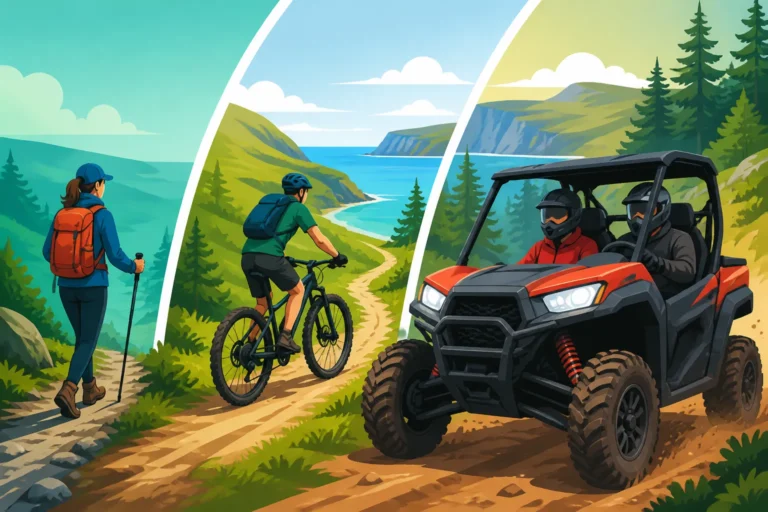
Newfoundland routes can bring riders, hikers, cyclists, and other users together on the same corridor. The T’Railway is a particularly clear example: a long former railway route used by people travelling at very different speeds. On a shared trail, assume you may meet someone around the next bend, even if the section has felt quiet so far. The advice in [Riding Etiquette on a Shared Railbed] and [Sharing the Railbed With Walkers and Cyclists] is useful well beyond the railbed.
Reduce speed before you reach other people, not after you are already close. Give them space, keep your machine under control, and pass only when you can do so without forcing anyone toward a ditch, bog, or trail edge. If visibility is limited by a curve, hill, fog, dust, or vegetation, slow down enough to stop safely within the distance you can see.
A considerate pass is calm and predictable. Let people know you are approaching in a way that is appropriate to the setting, then wait for a clear opportunity. Avoid revving hard, accelerating past someone, or crowding a group into single file at the edge. If people are walking with children or dogs, leave extra room and give them time to gather themselves before you continue.
Yield, communicate, and keep your group together
A narrow trail is not a place to insist on your right of way. Be prepared to slow, stop, or move aside when you meet another user. Make eye contact if possible, use a simple greeting, and agree on who will move through first. That small exchange can prevent the awkward standoff where both sides creep forward and nobody knows what the other is about to do.
When riding with a group, keep enough space between machines for each rider to react to a stop or obstacle. Avoid bunching up near walkers or cyclists, and don’t let the faster riders disappear around a bend while newer riders struggle to keep up. The lead rider can set a pace that suits the least experienced person, while the last rider makes sure nobody is left behind. For more planning ideas, see [Newfoundland Group Ride Planning].
If you are stopping to regroup, move completely out of the travel line wherever the ground allows. A cluster of parked machines can block a narrow trail and create a hazard for people coming from either direction. Choose a safe pull-off, keep the trail clear, and check behind you before pulling back into the route.
| Situation | Considerate response | Why it matters |
|---|---|---|
| You meet walkers on a narrow section | Slow early, stop if needed, and leave them room to pass | They should not have to step into unsafe ground |
| A cyclist approaches on a shared trail | Reduce speed and pass only when there is space | A close or fast pass can startle someone and cause a fall |
| Your group needs to regroup | Pull machines off the route where safe | Parked machines can block sightlines and access |
| Dust limits visibility | Ease off and leave more space between riders | The person ahead may need to brake suddenly |
| You come to a blind bend | Slow enough to stop within the visible trail | Another user, animal, or obstacle may be just beyond it |
Protect the trail and the places around it
Stay on routes that are open to your machine
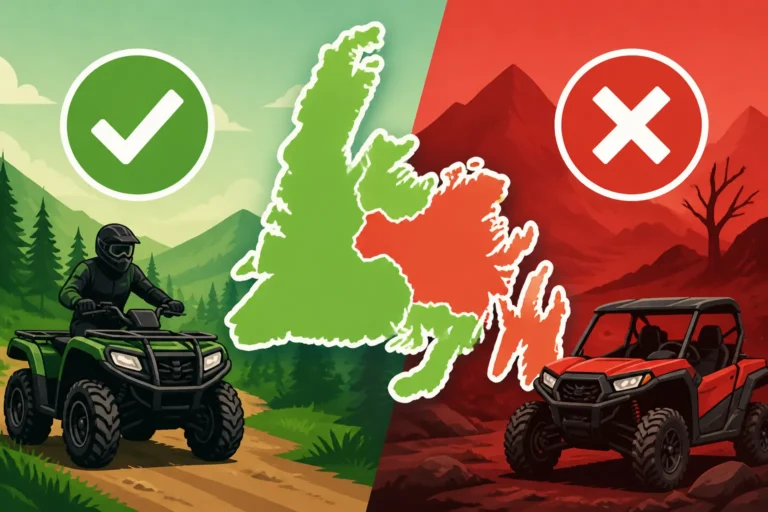
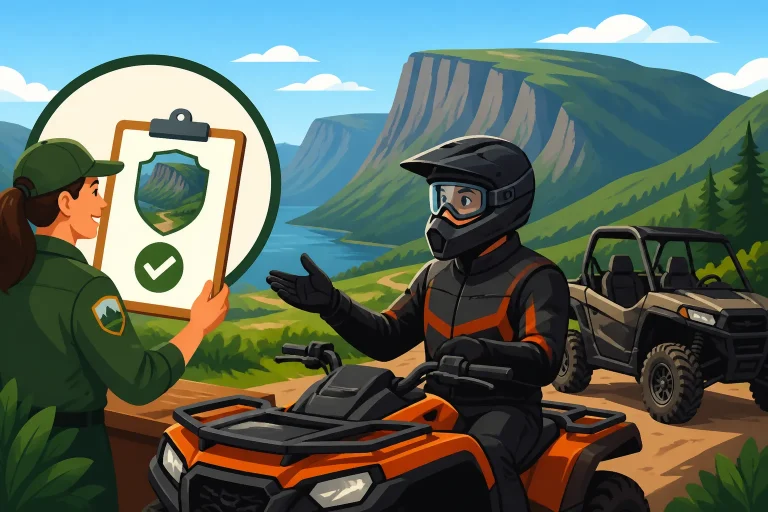
A visible track is not automatically an invitation to ride it. Access can vary by location, land status, season, trail operator, and local restrictions. Before setting out, confirm that the route is open and that your machine is permitted there. The information in [Newfoundland Managed Trail Rules] and [Newfoundland Crown Land Riding Rules] can help you understand why checking the route matters.
Avoid widening a trail by riding around puddles, ruts, or soft patches. That tempting detour often turns one wet spot into a broad strip of damaged ground. If a section looks unsafe or badly deteriorated, stop and assess it rather than cutting a new path through vegetation. When in doubt, turn back or use a route you have confirmed is suitable.
Mapping tools can help you plan, but treat them as aids rather than final permission. A map app such as onX Offroad may help you organize a route and understand where you intend to travel; still confirm access with the relevant trail operator or land manager. If you use onX Offroad to prepare a route, compare it with local signs and current access information before riding. A mapped line does not necessarily tell you whether a trail is closed, restricted, or appropriate for your vehicle.
Leave mud, litter, and trail features where they belong
Mud is part of riding in Newfoundland, but avoid turning a wet trail into a set of deep, avoidable ruts. Choose a line that keeps your machine on the established route and ride at a pace you can manage. Spinning the tires for fun, repeatedly charging through a soft section, or cutting across a wet shoulder can leave damage that affects the next rider and may make the route harder to maintain. These habits are especially important around boggy ground and fragile vegetation.
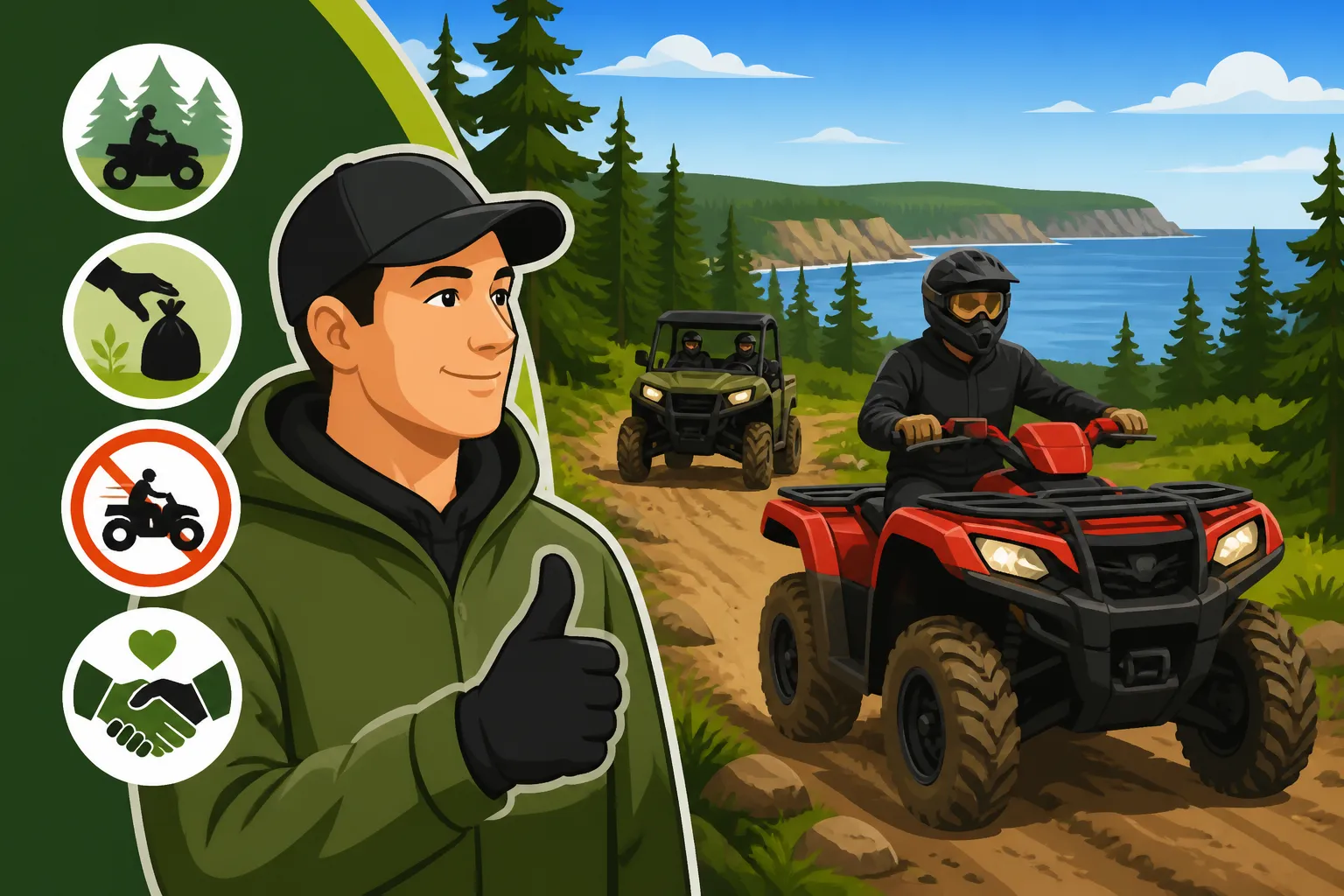
Pack out everything you bring in, including food wrappers, drink containers, broken straps, and repair materials. A small item can become litter far from a road or waste bin, and a group may not notice something has fallen off until the return trip. Before leaving a stopping spot, look around the area where everyone parked and ate. If you see loose litter that can be picked up safely, taking it with you is a simple way to leave the place better than you found it. [Newfoundland Trail Damage and Bog Ruts] offers more context on why careful riding matters.
Don’t alter trail signs, gates, bridges, or barriers. They may mark an access restriction, warn of a hazard, or help protect a trail during sensitive conditions. If a sign is down or a route appears damaged, note the location and report it to the appropriate operator or authority rather than trying to make an unofficial repair that could create a new hazard.
Ride with local conditions in mind
Prepare for weather, visibility, and changing trail conditions
Conditions can change substantially over a ride. Rain, fog, wind, and soft ground can make a familiar section more difficult, while dust can reduce visibility behind another machine. Check the forecast and local trail information before leaving, and be ready to shorten or change your plan. [Newfoundland Trail Conditions Before You Ride] is a useful companion when you are deciding whether a route is suitable for the day.
Keep a wider following distance when dust is hanging over the trail. If you can’t see the machine ahead clearly, you may not see a person, animal, or obstacle in time either. Slow down or stop in a safe place until visibility improves. On exposed areas, don’t assume that a sunny start means the weather will stay comfortable; have layers and rain protection so that discomfort does not pressure the group into rushing.
Navigation planning helps prevent the equally frustrating problem of discovering too late that your group is uncertain about the route. You can use onX Offroad or another mapping tool to sketch out a proposed ride, but check local signs and operator guidance as well. Tell someone who is not riding where you expect to go and when you plan to return, especially if the route includes remote sections. A phone or map app is useful, but it should not be your only plan for navigating.
Respect wildlife, homes, and quiet places
Wildlife encounters call for patience. Slow down when you see an animal, keep a safe distance, and give it room to move away. Don’t chase it, surround it with machines, or stop so close that it has nowhere to go. If animals are near the trail, wait quietly or turn around if necessary. More practical guidance is available in [Newfoundland Wildlife on the Trail].
Also remember that a trail may pass near cabins, homes, work areas, or community spaces. Keep noise reasonable, especially when passing near people or stopping close to a settlement. Avoid unnecessary revving and prolonged idling. A route that feels remote to a visiting rider may be part of someone’s daily travel or work area.
Local rules can differ between communities, so check before riding on streets, local roads, or routes near a town. Do not assume that a road is open to ATVs simply because you see tire tracks or another rider using it. [Newfoundland Municipalities With ORV Bylaws] explains why checking local requirements is part of planning a responsible ride.
Make considerate riding part of the plan
Check before you go and adjust as you ride
A few minutes of preparation can prevent a long and frustrating detour. Confirm that your route is open, that your machine is allowed, and that any required trail access conditions are met. Check with the trail operator when information is unclear. If you are travelling somewhere unfamiliar, ask about closures, conditions, parking, and any local expectations before unloading.
At the trailhead, keep loading and unloading organized. Don’t block access for other users, leave a trailer in a way that restricts the road, or occupy a small pull-off longer than necessary. Make sure your group knows the intended route, the regrouping points, and what to do if someone needs to stop or turns back. Riders who understand the plan are less likely to ride too fast simply to catch up.
During the ride, reassess rather than pressing on because the route was planned in advance. If visibility falls, the trail becomes badly damaged, someone in the group is uncomfortable, or a closure sign appears, change the plan. Using a mapping app such as onX Offroad can help you keep track of your intended route, but local signs and access instructions take priority. Responsible riding includes accepting that the best decision some days is to turn around.
Build a reputation that keeps trails welcoming
Locals notice how visitors behave, and a single careless group can shape how people feel about access. Be courteous at the trailhead, follow posted instructions, and don’t treat residents, workers, or other trail users as obstacles in your way. If someone asks you to slow down or points out a concern, respond calmly and take it seriously.
If you ride with friends, set expectations before the machines start. Agree that everyone will pass slowly, stay on the route, carry out their rubbish, and stop when the group needs to regroup. This is easier than trying to correct risky behaviour in the middle of a ride, when people are spread out and engines are running.
Respectful riding is practical, not performative. It reduces close calls, protects fragile ground, and helps make shared routes pleasant for everyone. When riders are predictable, patient, and attentive to local conditions, they help preserve the kind of access that makes Newfoundland riding so rewarding.
Disclaimer
This article is for general informational purposes only and does not constitute professional advice. Laws, prices and regulations vary by location and change over time. Consult a qualified professional for guidance on your specific situation.