When a Park Superintendent May Issue a Permit
If you’re planning an ATV or UTV ride near Gros Morne, a permit can sound like a simple way around a closed trail. It usually isn’t. This guide explains what a park superintendent’s permit may authorize, why it does not create general recreational access, and what to check before you haul a machine to a park boundary.
What a park superintendent’s permit means
A permit is specific permission, not a general trail pass
A park superintendent’s permit is an authorization for a defined activity under the rules that apply to that particular park. It is not automatically a pass to explore any road, trail, beach, or backcountry area on an ATV or side-by-side. The permission only extends as far as the permit’s wording and the legal authority behind it.
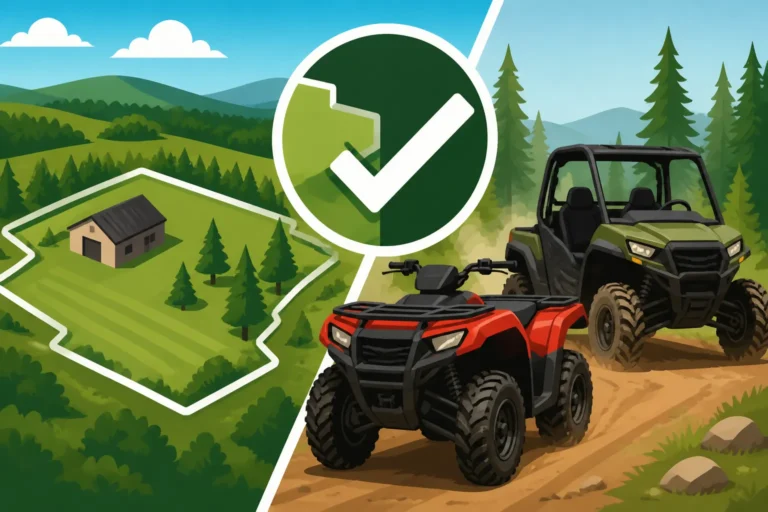
That distinction matters because Newfoundland and Labrador has several different land and trail settings. A route may be in a national park, a provincial park, Crown land, private land, or a managed trail corridor. Rules that allow a machine in one setting do not carry over to another. Before riding, identify who manages the land and what rules apply there.
In a national park such as Gros Morne, recreational motor-vehicle access is generally restricted to roads open to public vehicle use. A superintendent’s authorization should not be treated as an informal exception you can assume will be granted for a recreational ride. Read [Inside a National Park, Only Highways Are Legal] alongside [Newfoundland National Park Machine Rules] to understand the basic restriction before asking about an exception.
The reason for the permit matters
A permit is more likely to relate to a specific need the park can assess than to a visitor’s preference for a different route. For example, a park may need to consider access connected with authorized work, research, an emergency response, or another activity that has a legitimate purpose and fits the park’s rules. The exact grounds and process depend on the park and the governing authority.
That does not mean every request connected to work or research will be approved. Staff may need to consider the location, timing, environmental effects, wildlife disturbance, visitor safety, and whether the activity can be done another way. A request to drive a machine through a sensitive area for convenience is very different from a narrowly defined request tied to an approved park activity.
A good rule of thumb is to describe the purpose first, not just the machine you want to use. If your actual goal is a recreational ride, say so plainly. Asking for a permit under a different description can leave you with an authorization that does not cover what you plan to do.
A permit does not replace other requirements
Even when a permit is available, it does not necessarily replace registration, insurance, training, equipment, or operator requirements. It also does not automatically authorize access across land outside the permit area. A machine permitted to travel for a particular purpose may still need to comply with separate rules about its operator and equipment.
Similarly, a permit from a park authority does not grant permission to cross private land, use a town road, or enter a restricted area managed by someone else. If your proposed route leaves the park or connects with another land manager’s network, confirm each section separately. One approval cannot be assumed to cover the whole trip.
Before making plans, ask the park what the authorization covers and what remains your responsibility. For a broader look at rules that apply to machines on public lands outside the park, see [Newfoundland Crown Land Access Rules]. National park rules are a separate layer, not a substitute for provincial rules.
When a superintendent may consider an authorization
Requests connected with park work or operations
A park may need vehicles for work that supports its operation or upkeep. Depending on the circumstances and applicable rules, that might involve maintenance, construction, inspection, or other authorized tasks in places where ordinary recreational traffic is not allowed. This is not a public invitation to use the same route for personal riding.
If you are a contractor, service provider, or organization working in a park, do not rely on a verbal impression that machine access is acceptable. Confirm the permission with the park before mobilizing workers or equipment. The park may need to specify the approved route, dates, vehicle type, operator qualifications, safety precautions, and any limits on where the machine can go.
A permit for work can also be narrower than it first sounds. It may authorize only the vehicle movement needed to complete a task, not general travel around the park before or after the work. Keep a copy of the authorization available and make sure everyone operating the machine understands its limits.
Research, monitoring, and other defined activities
Research and monitoring projects may involve reaching locations that are difficult to access on foot. If machine use is part of a proposed project, the park can assess the request in the context of the project’s purpose, location, methods, and potential effects. The decision is not simply a matter of whether an ATV would make the work easier.
A researcher or project lead should be prepared to explain why a machine is necessary, what alternatives were considered, how the route will be limited, and how the activity will avoid or reduce disturbance. The park may also need to consider whether the proposed work requires other approvals. Permission to operate a vehicle does not necessarily authorize collecting samples, entering a sensitive site, or carrying out every other part of a project.
The same careful approach applies to organized activities or unusual access requests. Ask what specific authorization exists for the activity rather than assuming that a general event approval includes off-road vehicle use. The details should be confirmed directly with the park authority responsible for the land.
Emergency or exceptional access
Emergencies are different from recreational trips planned in advance. A response may require access that would not be available to ordinary visitors, but that does not mean riders should enter a closed area on their own because they believe their situation is urgent. Contact the appropriate emergency service or park staff and follow their direction.
For a non-emergency request that you consider exceptional, explain the circumstances and ask the park how to proceed. Be ready for the answer to be no, or for staff to recommend a different way to reach the location. A personal need, a short distance, or a machine that is already registered does not itself establish permission to use a restricted route.
| Situation | What to do | What not to assume |
|---|---|---|
| Recreational ride inside a national park | Use only routes open to public vehicle traffic and confirm park rules | That a superintendent will issue a recreational trail permit |
| Work or maintenance activity | Confirm the authorization, route, timing, and machine conditions in advance | That a work-related permit allows unrelated riding |
| Research or monitoring | Submit the purpose, methods, proposed access, and alternatives for review | That research approval automatically includes vehicle access |
| Emergency | Contact emergency services or park staff and follow instructions | That self-directed entry into a closed area is authorized |
| Route crossing park and non-park land | Confirm access with each land manager | That one permit covers the entire route |
How to ask about a park permit
Identify the exact location before contacting the park
“Near Gros Morne” is not specific enough for staff to assess a request. Gather the park name, proposed access point, destination, and any route description you can provide. If you have a map, mark the intended route clearly and identify whether it crosses a road, trail, shoreline, or other sensitive area.
A mapping app such as onX Offroad can help you organize a proposed route and distinguish it from nearby corridors, but it should be treated as a planning aid, not proof that a route is open or that you have permission to use it. Digital maps can show a line without explaining its legal status. Compare your plan with information provided by the land manager and ask staff to confirm the route itself.
This step can prevent a frustrating mistake: arriving with a trailer and discovering that the access point is inside the park, that a route is closed, or that the road you expected to use is not open to your machine. If you are uncertain whether an area is approved or restricted, check [Newfoundland Approved and Restricted Areas] and verify the boundary with the responsible authority.
Explain the activity and the need for machine access
When contacting the park, be direct about why you want to use an ATV or UTV. Include the purpose, proposed date or period, number and type of machines, who will operate them, and the precise route or destination. If the request relates to work or research, explain what the activity involves and why access by foot or by another method would not meet the need.
Avoid vague requests such as “Can I ride through this area?” Staff need enough information to decide whether the request fits an available authorization and whether it raises safety or environmental concerns. You can ask what application materials are required, whether other approvals apply, and how far in advance the request should be submitted.
Keep notes of the response, especially if staff direct you to a particular process or identify a route that is not permitted. Do not treat a casual conversation as a formal permit. If the park approves access, request written confirmation that identifies the authorized activity and any conditions.
Read the conditions before travelling
A permit may include conditions about the route, dates, vehicle type, operator, speed, escort, equipment, wildlife precautions, or reporting. Those conditions are not minor details; they define the scope of the permission. If a condition is unclear, ask before the trip rather than interpreting it in the most convenient way at the trailhead.
Make sure every person in your group knows what has and has not been authorized. A passenger or another rider may assume that the permit holder’s permission applies to everyone and every machine. Do not rely on that assumption. Confirm whether the authorization applies to a named operator, a specific vehicle, a project team, or a limited set of movements.
Carry the required documentation and follow any instructions about checking in or reporting completion. If weather, a closure, or a change in the work plan alters the route, stop and ask whether the authorization still applies. A changed plan can fall outside the original permission even if the destination remains the same.
Planning an ATV trip around park boundaries
Separate national park access from nearby trail access
Newfoundland has extensive riding opportunities, but a trail shown near a park is not necessarily inside the park, outside it, or open to the same vehicles. A route can pass close to a boundary and still be subject to a different manager’s rules. Check the boundary and the actual access status before setting off.
The T’Railway and other managed corridors have their own conditions and should not be confused with national park roads. A ride plan that begins outside Gros Morne might still cross into park land, while a line that appears to skirt the boundary may lead to a closed access point. Verify each segment rather than assuming the entire route follows one rule set.
Use onX Offroad or another mapping tool to make a preliminary plan, then confirm with official park and land-management information. Pay special attention to trail junctions, road closures, and access points where a route changes ownership or management. If you cannot establish that a route is open to your machine, leave it out of the plan until you get a clear answer.
Build a fallback plan that does not depend on an exception
A permit request may take time, require additional information, or be declined. It is much less stressful to have a legal alternative ready than to arrive expecting staff to approve access on the spot. Choose an established riding area outside the park, confirm its current access conditions with the relevant manager, and identify a legal place to unload and park your trailer.
If the alternative is a managed trail, check whether it requires a sticker, training proof, or other conditions. For a park boundary question, use the park’s own contact channels rather than relying solely on a club post or a map pin. [Asking Gros Morne for a Trail Permit] is a useful topic to review before you set off, especially if you are trying to determine whether your intended route is actually within the park.
Also consider the practical side of a Newfoundland ride: changing weather, limited cell coverage, fuel availability, and the possibility that a route is rougher or wetter than expected. A backup route should be realistic for your group and machine, not just a line on a screen. Let someone know your plan and avoid treating a closed or restricted route as a convenient shortcut.
Know which rules still apply to the ride
A park permit, if granted, is only one part of a safe and lawful trip. Depending on where you ride, you may need to consider registration, insurance, safety training, helmets, passenger rules, and road-crossing requirements. These obligations can differ from access permission, so check them separately rather than assuming the permit resolves everything.
The same applies to local roads and communities near a park. A machine may be allowed on one public route but prohibited on a nearby municipal street. Before using a road to connect trail sections, check the local rules and any posted restrictions. [Newfoundland Municipalities With ORV Bylaws] can help you understand why a route that seems public may still have a local restriction.
Finally, treat signs and closures as operational information, not suggestions. Conditions can change because of maintenance, wildlife protection, fire risk, or safety concerns. If a sign conflicts with an old route description or a third-party map, do not proceed on the strength of the map alone. Confirm the current direction with the manager responsible for that location.
Common permit misunderstandings
“The superintendent can permit any ride”
A superintendent’s authority is not a blanket ability to waive every restriction for any purpose. Permits operate within the laws and regulations that govern a park, and the authority may be limited to particular activities or circumstances. A visitor cannot assume that a request must be approved simply because a superintendent is the person who reviews it.
The practical consequence is straightforward: ask whether the specific activity is eligible for authorization, not merely whether a permit exists in theory. If staff explain that recreational riding is not an available use, a different wording or a more convenient date is unlikely to change the underlying rule.
This is also why it helps to state your purpose accurately. If you are planning a recreational ride, do not present it as access for work or research. An authorization is meaningful only when the activity you carry out matches the one that was approved.
“A trail on a map must be open”
Maps are useful, but they do not always show current closures, legal boundaries, machine restrictions, or the conditions attached to a route. An old GPS track may record where someone rode in the past, not what is allowed now. A line that looks connected can also cross a boundary where the rules change.
Use a mapping tool such as onX Offroad to prepare questions and spot possible route conflicts, then verify the result with the park or land manager. Do not use the app’s display as a permit, and do not assume that user-submitted tracks have been checked for legal access. If the route enters a national park, confirm that it is open to public vehicle traffic or covered by a valid authorization.
When you are unsure, stop before entering the area and contact the responsible office. That may mean changing plans, but it is far better than risking a ticket, an impound, damage to a sensitive place, or a difficult recovery from a route you should not have entered.
“One approval covers the whole trip”
A trip can cross more than one jurisdiction. You may need to consider park rules, provincial access rules, trail-operator requirements, private-land permission, and municipal bylaws. Approval from one authority does not necessarily grant access on the next section.
Sketch the full route and break it into segments. For each segment, identify the land manager and the access condition that applies. If you cannot identify the manager, ask before riding. A short crossing can still matter if it takes you through restricted land or onto a road where ORVs are not allowed.
This careful check is especially worthwhile for riders towing in from elsewhere. Confirm where you can unload, whether the intended trail accepts your machine type, and what requirements apply before you commit to a long drive. [How to Reach Gros Morne Before You Tow] is a helpful planning topic when your trip depends on access near the park.
Disclaimer
This article is for general informational purposes only and does not constitute professional advice. Laws, prices and regulations vary by location and change over time. Consult a qualified professional for guidance on your specific situation.