Newfoundland Riding Season and Weather
Newfoundland riding plans can unravel quickly when fog rolls over an exposed stretch, rain softens a trail, or a sunny forecast hides a cold, windy day. This guide explains how the seasons affect ATV and UTV conditions, what to check before setting out, and how to choose a ride that fits the weather, your machine, and your group.
What Newfoundland’s Weather Means for ATV and UTV Riding
Expect conditions to change across a single ride
Newfoundland weather is not just a question of whether it will rain. Wind, fog, temperature changes, damp ground, and exposure can all shape how comfortable and safe a ride feels. A route that begins in sheltered woods may lead onto an open railbed or barren where there is little protection from gusts and poor visibility.
That contrast matters when you’re deciding what to wear and what to pack. A light layer that feels comfortable near the truck may not be enough after an hour in wind and mist. Bring clothing that can handle rain and cooler conditions, even when the sky looks promising at the trailhead.
Conditions also vary by region. A ride near St. John’s may feel different from one near Gander, Corner Brook, or Port aux Basques, and inland weather can differ from a coastal forecast. Labrador is part of the province but has its own geography and riding conditions; don’t assume a Newfoundland island forecast describes what you’ll encounter there.
Before choosing a route, think about the whole day rather than the moment you unload. Ask what the weather may be like at the far end of the ride, whether the route crosses exposed terrain, and how quickly your group could turn around if visibility or comfort deteriorates.
Rain, wind, fog, and temperature each change the ride
Rain can reduce visibility, make surfaces slippery, and leave riders colder than expected. It can also change trail conditions beyond the ride itself: soft ground and standing water may make a route difficult or vulnerable to damage. After a wet spell, check for local closures or notices before heading out rather than treating a trail as automatically rideable.
Wind can be tiring even when the air temperature seems mild. On an open section, it may make it harder to hear your group, communicate clearly, or stay comfortable for a full day. A passenger in a side-by-side may also feel exposed to wind and rain, so consider the needs of everyone riding—not only the person operating the machine.
Fog is a planning issue, not just an inconvenience. It can make landmarks harder to recognize and reduce the usefulness of distant visual cues, particularly on open or unfamiliar ground. If fog is building, slow down, keep the group together, and be willing to pause or turn around. A route that feels straightforward in clear weather may be much harder to follow when visibility falls.
Temperature affects both riders and machines. Cold conditions can make hands stiff and controls less comfortable to use, while a warm start can tempt riders to dress too lightly. Pack layers, gloves, and rain protection so you can adjust as the day changes. For a closer look at local conditions and route planning, see [Newfoundland Trail Conditions Before You Ride].
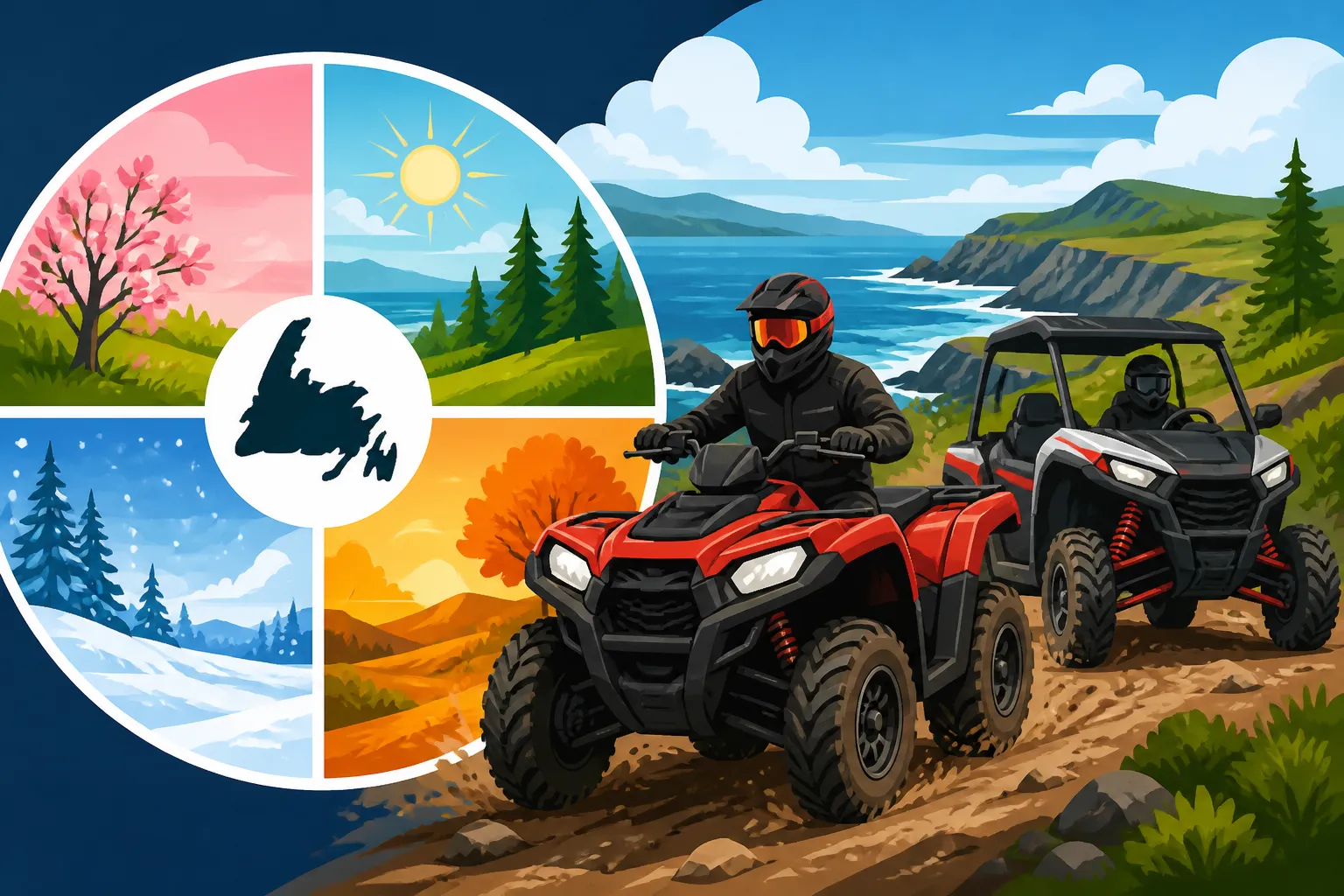
Understanding the Riding Season Month by Month
Spring brings thaw, soft ground, and uncertain access
Spring can be appealing after a long winter, but the first rideable-looking day does not necessarily mean a trail is ready for traffic. Thawing ground may remain saturated beneath a surface that appears firm. Repeated tire passes can deepen ruts, spread mud, and leave damage that lasts well beyond the day’s ride.
Conditions can vary substantially between locations and from one week to the next. A sheltered section may be drying while a low-lying stretch remains wet. Snowmelt, rain, shaded ground, and drainage all affect how a route behaves. Don’t use one dry parking area as proof that the whole trail network is in suitable condition.
Check for operator, club, community, or land-manager notices before travelling. If access is restricted or a route is closed, respect that direction rather than looking for a way around it. For a broader seasonal overview, [Newfoundland Riding in Spring] and [Newfoundland Riding Season Month by Month] can help you think through the changing conditions.
When you do ride, choose a conservative route and be ready to turn back at the first sign that the ground is too soft. Avoid widening a trail to get around a muddy patch, since that can damage nearby vegetation or create a new track. If you’re uncertain whether a section can support your machine without rutting, don’t push through it.
Summer is popular, but not automatically easy
Summer often offers longer daylight and more opportunities to plan a full day outside. It can also bring rain, fog, wind, insects, and sudden changes in comfort. A calendar date or warm morning does not guarantee ideal riding weather, especially on exposed terrain or a route far from your vehicle.
Longer days can make it tempting to stretch a ride. That’s enjoyable when the group has enough food, water, clothing, fuel, and time to return comfortably. It becomes a problem when riders underestimate distance, stop longer than planned, or discover that the weather has changed while they are away from the trailhead.
Plan breaks and turnaround points before you leave. Decide how the group will communicate if someone falls behind, and set a clear point at which you will head back. On unfamiliar routes, keep your first outing shorter than the day’s available daylight might suggest. A manageable ride leaves room for delays, repairs, and weather changes.
Warm conditions still call for practical preparation. Carry water, food, rain layers, and a way to protect essential items from dampness. Check the forecast for the area you’ll actually ride, not only the nearest town, and consider whether the route includes open sections where wind or fog may feel very different from conditions at home.
Fall and winter call for different kinds of preparation
Fall riding can be rewarding, but days are shorter and weather can feel less forgiving. Hunting activity may also mean more people are using the woods and trails for different purposes. Check local notices, respect access restrictions, and make yourself visible to others. Read [Newfoundland Riding in Fall Hunting Season] before planning a route during that period.
Carry enough clothing for a ride that runs later than expected. Cooler air, wet gear, and a slow return can turn a comfortable outing into an uncomfortable one. Check that lights work if your return could approach dusk, and build daylight into your plan rather than assuming the group will be back at the exact time it expects.
Winter riding is not simply summer riding with heavier clothing. Snow, ice, reduced daylight, cold starts, and changing trail surfaces affect both the machine and the people operating it. Conditions may differ greatly between regions and routes, and an open trail in one area does not mean that every route is suitable or permitted for an ATV or UTV.
Before heading out in winter, check local access information and make sure your machine, clothing, and emergency supplies suit the conditions. Tell someone where you’re going and when you expect to return. If a route is unfamiliar, the weather is deteriorating, or your group lacks cold-weather experience, choose a shorter and more conservative option. See [Newfoundland Riding in Winter Snow] for more winter-specific planning considerations.
| Season | Common planning concerns | Useful approach |
|---|---|---|
| Spring | Thaw, soft ground, water, changing access | Check closures and avoid rutting vulnerable trails |
| Summer | Rain, fog, wind, long outings, insects | Plan breaks, carry layers, and set a turnaround time |
| Fall | Shorter daylight, cooler conditions, shared land use | Check local notices and prepare for an early return |
| Winter | Cold, snow, ice, limited daylight, route suitability | Confirm access and match the ride to your group’s experience |
How to Choose a Route for the Day’s Conditions
Match exposure and distance to the forecast
A route should fit the conditions you expect, not just the distance your machine can cover. An exposed section may be unpleasant or difficult when wind and fog increase, while a sheltered route may offer a more comfortable option on the same day. Think about terrain, distance from the trailhead, and how easily your group can turn around.
Look beyond the general forecast and consider the timing of the ride. If rain is expected later, ask whether the return route includes low spots or stretches where water may collect. If fog is possible, consider whether you can follow the route safely without relying on distant landmarks. A shorter loop may be a better choice than a long out-and-back.
For a first trip in an area, leave extra time and keep the route simple. It is easy to underestimate how long a group takes when riders stop to regroup, check a map, deal with a minor issue, or help someone who is uncomfortable. A shorter route gives you more flexibility if the weather or trail surface is worse than expected.
Use mapping tools as planning aids, not as the final authority on whether a route is open or appropriate. Some riders use onX Offroad to review route information and prepare for an outing, but a map cannot replace local access notices, current conditions, or good judgment on the ground. Confirm where riding is permitted before you unload.
Check trail status and recent weather separately
A forecast describes expected weather; it does not tell you whether a particular trail is open, passable, or in good condition. Likewise, a trail status notice may not capture the weather that will develop during your ride. Check both, and look for updates from the people or organizations responsible for the specific area.
Recent rainfall matters even when the day itself is dry. Wet ground may take time to recover, especially in low-lying or poorly drained sections. If there has been substantial rain, ask whether the route has a closure, advisory, or known problem before travelling. Use [Newfoundland Riding After Heavy Rain] as a guide to the extra considerations that follow a wet spell.
Storms can bring washouts, fallen branches, debris, or other changes that are not obvious from an old route description. A route you rode comfortably last month may not be in the same condition today. Check for recent notices, and be prepared to stop if you encounter a hazard that makes continuing unsafe.
If a trail closure or warning is posted, treat it as part of the plan. Don’t assume that a closure applies only to other riders, or that a detour through nearby land is acceptable. For more on checking route status after severe weather, see [Newfoundland Trail Closures After a Storm].
Use maps carefully and plan for limited connectivity
A route map is useful for understanding where you intend to go, but it cannot tell you everything about conditions on the ground. A line on a screen does not prove that a road or trail is open to ORVs, suitable for your vehicle, or in good shape after rain. Confirm access with the relevant local source before relying on a mapped route.
If you use onX Offroad or another navigation app, review the route before leaving and learn how to use its features while you still have a reliable connection. Save or download the information you may need offline if the app offers that option. Keep your phone charged and protected from rain, and carry a backup navigation method suitable for your ride.
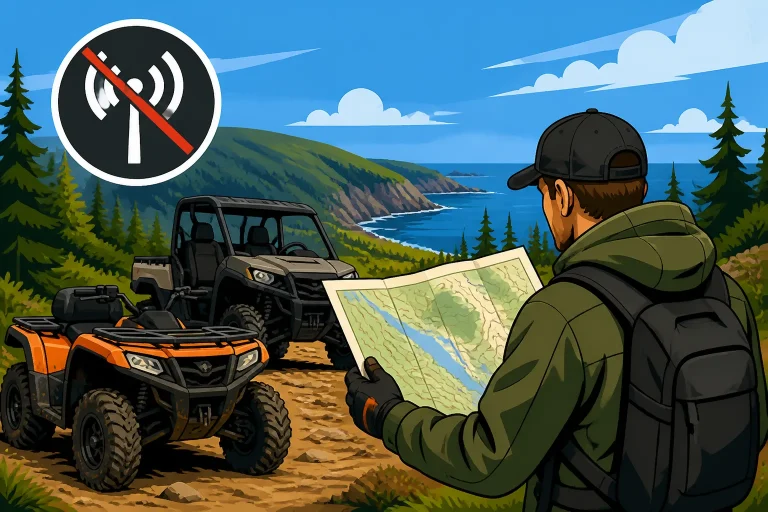
Cell service may be unreliable or unavailable in some riding areas. Don’t make a phone call, live map update, or group chat your only safety plan. Before you leave, tell someone your intended route and expected return time. Agree on what that person should do if you have not checked in when expected.
Navigation works best when the group shares the same plan. Make sure each rider knows the intended route, regrouping points, and what to do if the group becomes separated. For more preparation advice, see [Cell Dead Zones Along the Railbed] and [Carrying a Paper Map Where There Is No Signal].
Preparing Riders and Machines for Wet and Windy Conditions
Dress for hours outdoors, not the temperature at the truck
Riding gear should account for rain, wind, changing temperatures, and the fact that you may be exposed for much longer than a short walk from a parking area. Layering lets you adjust as the day changes. A base layer, insulating layer, and weather-resistant outer layer can be more adaptable than one heavy garment.
Keep dry clothing protected in a waterproof bag or another secure container. Even a small amount of moisture can become miserable during a long ride, especially if the air is cool or windy. Spare gloves and socks can make a meaningful difference if your original pair gets wet, while a warm layer is useful if the group has to stop unexpectedly.
Pay particular attention to hands and feet. Cold, wet hands can make it harder to manage controls, and wet footwear can become uncomfortable over time. Choose gloves and boots suited to the conditions, and make sure they allow you to operate the machine safely. Avoid clothing that interferes with movement, visibility, or equipment.
Bring more than a thin rain shell if the forecast suggests prolonged wet weather. Check that your outer layer fits comfortably over other gear and that it does not snag on the machine. Carry a dry bag for items such as a phone, map, spare clothing, and basic first-aid supplies. The aim is not to pack for every imaginable emergency but to avoid being unprepared for ordinary Newfoundland weather.
Adapt the plan when visibility or comfort worsens
Fog or heavy rain should prompt a fresh decision, not an automatic push to the next destination. Reduce speed, increase spacing where appropriate, and stay in contact with the group. If riders can no longer see or hear one another reliably, stop in a safe place and regroup before deciding whether to continue.
A passenger may have a different comfort level from the driver. Ask how everyone is doing during breaks, especially if someone is getting cold, wet, tired, or nervous. A person who does not want to be the one to call for a turnaround may keep quiet until the situation feels much worse. Make it clear before departure that anyone can raise a concern.
Set a turnaround threshold in advance. For example, the group might agree to head back if fog reaches a certain point, rain becomes persistent, or the trail surface begins to deteriorate. A shared rule reduces the pressure to keep going just because the group has already invested time in reaching the route.
If weather makes the route difficult to follow or the group uncomfortable, stopping or returning is a successful decision. It protects people, reduces the chance of getting stuck in worsening conditions, and leaves the area for another day. No destination is worth continuing into weather or terrain that the group cannot manage safely.
Check the machine before and after a wet ride
A pre-ride inspection is especially useful when weather may expose small problems. Check that tires are in suitable condition, controls operate normally, lights function, and the vehicle has no obvious damage or loose equipment. Make sure storage areas are secure and essential items are protected from water.
Mud and water can hide damage or add unwanted weight. After the ride, clean the machine in a way that follows its manufacturer’s guidance and inspect areas that may have taken a hit, collected debris, or become soaked. If a warning light appears or a control feels different, investigate before the next outing rather than assuming the issue will clear on its own.
Bring basic supplies that make sense for your machine and route. That might include a tire repair kit, tools suited to common adjustments, a tow strap, and spare clothing. The right selection depends on how remote the ride is, how experienced the group is, and what the machine’s manual recommends. Pack items you know how to use.
A long wet ride can reveal problems that are easy to miss on a short dry outing. Check the condition of key components, remove mud from places where it may cause trouble, and give wet gear time to dry before storing it. A little post-ride attention can make the next trip easier and help you spot maintenance issues before they become trail problems.
Riding Responsibly When Trails Are Wet or Vulnerable
Recognize when the ground is too soft
A trail can look rideable and still be too wet to handle repeated vehicle traffic. Watch for deep standing water, soft shoulders, visible rutting, and ground that gives way under the tires. These signs may indicate that continuing could damage the route or make it harder for other users to pass.
If you encounter a soft section, don’t widen the trail to avoid it. Going around a muddy patch can create parallel tracks and damage nearby plants or ground. If the route becomes difficult to travel without leaving a mark, turn around if it is safe to do so and report the condition through the appropriate local channel.
Different machines and tires can affect the ground in different ways, but a larger or more powerful vehicle is not a reason to force a route. A UTV’s weight may make a vulnerable section especially consequential. Consider the ground, weather, and trail condition together rather than assuming your machine can get through without harm.
The right decision may be to postpone the ride. That can feel frustrating when you have already arranged transport, time off, or a group outing, but avoiding damage helps preserve access and keeps the route usable. For more on conditions after rainfall, read [Newfoundland Riding After Heavy Rain].
Share trails and respect other users
Newfoundland riding areas may be used by different people, including hikers, cyclists, residents, hunters, and other riders. Slow down when approaching others, follow posted directions, and leave enough room for everyone to pass safely. Dust, mud, noise, and speed can affect people well beyond the immediate trail.
Give other users clear notice of your presence without startling them. Avoid sudden manoeuvres, and be especially cautious around blind bends, narrow sections, and places where vegetation limits sightlines. If the trail is busy, a slower pace and patient passing can prevent a small encounter from becoming a conflict.
Be considerate around communities and nearby properties. Stay on permitted routes, avoid unnecessary noise where people live or camp, and do not assume that a track crossing private land is open for recreational use. If permission is needed, obtain it before riding rather than treating a visible track as an invitation.
Wildlife is another reason to ride attentively. Slow down when visibility is limited and watch for animals near the trail. Keep your distance and do not pursue or crowd wildlife for a better look. See [Newfoundland Wildlife on the Trail] for additional planning considerations.
Treat closures and local guidance as part of the route
Access can vary between areas and can change because of weather, land management, safety concerns, or local rules. A route that appears on a map may cross land where riding is restricted. Before setting out, check the rules and notices relevant to the specific location you plan to visit.
If a route is closed, don’t look for an unofficial detour across nearby land. A closure can be in place to protect a trail, prevent damage, address a hazard, or manage access. Choose another confirmed route or postpone the outing rather than creating a new track around the restriction.
Local clubs, trail operators, community offices, and land managers may know about conditions that a general forecast cannot show. When information is unclear, ask before you ride. Be specific about the area, machine type, and intended route, since access or trail conditions may differ from one section to another.
When you report a hazard or closure, share clear details without making assumptions. Identify the general location, describe what you observed, and follow the contact method recommended by the responsible organization. Timely, useful information can help other riders make better choices without encouraging unsafe attempts to investigate a problem.
Planning Safer Group Rides in Changing Weather
Agree on the route, pace, and turnaround plan
A group ride works better when everyone knows what the day is meant to look like. Agree on the intended route, likely stops, riding pace, and a realistic return time before leaving. Make sure the plan suits the least experienced rider and the machine that is least suited to difficult conditions.
Decide how the group will handle a split or delay. Identify regrouping points and establish what riders should do if they lose sight of one another. On unfamiliar terrain, stopping at agreed locations is often more reliable than assuming everyone will keep the same pace or recognize every turn.
Set a simple weather decision rule before the ride. The group might decide that a certain loss of visibility, persistent rain, or uncomfortable cold means shortening the route. Discussing this in advance makes it easier to act without blame or debate when the weather changes.
Keep the ride flexible. If the first section is wetter, windier, or more difficult than expected, adjust the plan rather than trying to make the original itinerary work at all costs. A shorter route, a sheltered alternative, or an early return can still make for a worthwhile day out.
Prepare for delays, separation, and low signal
Tell someone who is not riding where you plan to go and when you expect to return. Give them a route description that is useful even if your phone cannot send an update. Agree on when they should check in or take further action if the group is overdue.
Carry basic emergency supplies suited to the route, group size, and expected conditions. Depending on the outing, that may include first aid, food, water, extra layers, a light, a charged phone, and a way to navigate without mobile service. Think about what the group would need if a minor repair or weather delay added several hours.
Make sure riders know who is carrying the essential items. If one person has all the maps, another has the first-aid kit, and a third has the spare clothing, a separation can leave individuals without what they need. Distribute key supplies where practical and make sure the group knows how to use them.
Use a mapping app such as onX Offroad as one part of your preparation if it suits your needs, but do not let a phone become your only backup. Learn how the route is stored, keep the device protected and charged, and carry an alternative navigation method appropriate to the outing. Remember that an app cannot confirm a trail is open simply because it shows a route.
Know when a ride is no longer a good idea
Sometimes the safest decision happens before the group leaves home. If the forecast, recent rainfall, or local trail information suggests that the route will be unsuitable, postpone or choose a less exposed option. A long drive to the trailhead can create pressure to ride anyway, so decide on alternatives before you travel.
During the outing, reconsider the plan whenever conditions change. Riders may become colder or more tired than expected, rain may intensify, visibility may drop, or a route may prove softer than it looked. A group that checks in regularly can make small adjustments before a manageable situation becomes a serious one.
Turn back if the group no longer has a clear, safe way to continue. That might mean a route has become hard to navigate, the trail is deteriorating, a machine is behaving unexpectedly, or a rider is uncomfortable. Don’t let embarrassment or the desire to reach a destination override the warning signs.
After the ride, talk through what worked and what you would change. Note where the weather differed from the forecast, how long the route actually took, and whether the clothing or supplies were adequate. Those observations make future plans more realistic and help the group choose better routes for the conditions.
A Practical Pre-Ride Weather Checklist
The day before you go
Check the forecast for the riding area and the expected travel window, not just the weather where you live. Look for changes in precipitation, wind, temperature, and visibility. If the route crosses varied terrain, remember that sheltered and exposed sections may feel very different.
Check recent trail updates, access notices, and any weather-related closures. If the route is managed by a club, operator, or other organization, look for its current guidance or contact it when important details are unclear. A map can help you understand the route, but it cannot replace current local information.
Confirm the route is appropriate for the group, the machines, and the season. Consider whether everyone has the clothing and experience needed for the likely conditions. If the ride involves long distances or remote sections, decide whether the group has enough time, supplies, and navigation options to manage delays.
Tell someone outside the group where you plan to ride and when you expect to return. Share enough detail that they can understand the intended area and route. Agree on what should happen if you do not check in as planned, especially if cell service is expected to be limited.
Before unloading and setting out
Reassess the weather when you arrive. Conditions at home or along the highway may not match the trailhead. Look for fog, rain, wind, soft ground, or other signs that should change the plan. If the weather is already worse than expected, shorten the route or choose not to ride.
Inspect your machine and make sure required gear is secure. Check that lights and controls work, tires appear ready for the outing, and storage is closed against rain and mud. Put essential items somewhere accessible rather than buried under supplies you hope not to need.
Make sure everyone knows the route, regrouping points, and turnaround plan. Confirm that passengers and less experienced riders are comfortable with the conditions. Ask directly whether anyone needs another layer, a break, or a change in the plan before the group moves away from the trailhead.
Consider the return, not just the first few kilometres. Leave enough daylight and energy for the trip back, and allow for stops or delays. If the route becomes harder to follow or the weather deteriorates, the group should already know that turning around is an acceptable outcome.
After you return
Check in with the person who has your trip plan so they know the group is safely back. Clean and inspect the machine, dry wet clothing, and deal with any maintenance issue before the next outing. If something on the route was hazardous or closed, share the information with the appropriate local contact.
Make a few notes while the details are fresh. Record which sections were soft, where visibility changed, and how the weather compared with the forecast. If you use onX Offroad or another map tool, note any route information that would help you plan next time, while still verifying access and conditions before a future ride.
Think about what your group learned. Perhaps the loop was longer than expected, the exposed section was uncomfortable in wind, or a passenger needed more rain protection. Small adjustments can make the next ride calmer and safer without requiring a complicated plan.
Weather is part of riding in Newfoundland, not a reason to abandon every trip that might include rain or fog. Check conditions, choose a suitable route, prepare for change, and be ready to turn around. That combination gives you a better chance of enjoying the ride while respecting the trail and the people who share it.
Disclaimer
This article is for general informational purposes only and does not constitute professional advice. Laws, prices and regulations vary by location and change over time. Consult a qualified professional for guidance on your specific situation.