Impaired Riding Carries the Heaviest Penalty in the Act
An ATV ride can feel less risky than driving a car, especially on a familiar trail or cabin road. But alcohol, cannabis, and some medications can affect judgment, balance, and reaction time on an off-road vehicle—and impaired riding can bring serious legal consequences in Newfoundland and Labrador. This guide explains the risks, what may happen after a stop, and how to plan a safer way home.
What impaired riding means on a Newfoundland trail
An ATV or side-by-side is still a vehicle
A machine being off-road does not make impairment harmless or automatically put a rider outside the law. Newfoundland and Labrador’s off-road vehicle rules include offences and penalties for impaired operation. The consequences can be severe, so do not treat a trail, woods road, private property, or short trip back to camp as an exception.
The safest practical rule is simple: if you have used alcohol or cannabis, or taken medication that could affect your ability to ride, do not operate an ATV, side-by-side, or other off-road vehicle. A familiar route does not remove hazards such as ruts, loose rock, sudden turns, wildlife, other trail users, or changing visibility. On a side-by-side, passengers may also be put at risk by the driver’s impaired decisions.
This is one reason impaired riding belongs alongside other basic road and trail responsibilities, not in a separate category of “just recreational” behavior. Registration, insurance, helmets, and equipment requirements matter, but they do not make an impaired ride safe or lawful. For related safety rules, see [Newfoundland ATV Insurance Requirements] and [Newfoundland Rules Riders Get Wrong].
Impairment is not limited to alcohol
Alcohol is an obvious concern, but it is not the only substance that can affect a rider. Cannabis can slow reaction time and affect coordination or judgment. Some prescription and over-the-counter medications can also cause drowsiness, dizziness, blurred vision, or slower responses. Combining substances can make those effects less predictable.
People often misjudge their ability after a small amount of alcohol, a long day outdoors, or a medication they have used before. Fatigue, cold, dehydration, and a rough ride can compound the problem. Feeling “mostly fine” is not a reliable way to decide whether it is safe to operate a machine.
A better plan is to choose a sober driver before the group leaves, arrange a ride back to the cabin or trailhead, or stop riding for the day. If you are unsure whether a medication affects driving or operating machinery, read its safety instructions and ask a pharmacist or prescriber before riding. Do not use the machine itself as a way to test whether you feel impaired.
Private land and short trips are not a safety workaround
A common misconception is that the risk disappears if the machine stays on private land or travels only a short distance. That assumption can lead to a dangerous decision. A private property boundary does not make an impaired person more capable of steering, braking, or responding to an unexpected obstacle.
The same goes for “just moving it a little.” Even a brief ride can end in a rollover, collision, or injury if the operator’s judgment or coordination is affected. If a machine needs to be moved, ask a sober, capable person to do it, or leave it in place until it can be handled safely.
If you are planning a ride on public roads or road shoulders as part of a route, there are additional rules to consider. The guide [Can You Ride an ATV on the Road in Newfoundland?] covers the difference between road access and off-road riding. But a legal route is not a safe route for an impaired operator.
Why impaired riding carries serious penalties
The consequences can extend beyond a fine
Impaired riding is treated as a serious matter because an off-road vehicle can cause severe harm to its operator, passengers, other riders, and people using the same area. A conviction can bring substantial legal consequences, and the penalties may include a fine or imprisonment. The details depend on the offence and the circumstances, so it is unwise to assume that a warning or a small fine is the worst possible outcome.
The article [Impaired Operation and Jail] explains why jail is part of the potential consequence. The reference topic [Twelve Months on a Later Offence] also reflects how serious a later offence can be. A repeat incident is not simply the same mistake with a slightly higher cost; it can expose the rider to much more severe consequences.
There may be practical consequences as well. A rider can face disruption to work and family responsibilities, legal expenses, difficulty arranging transportation, and complications after an incident involving injury or property damage. Insurance questions may arise too, and a policy should never be treated as protection from the legal consequences of impaired operation. Review [Newfoundland Insurance Requirements for Riders] for the separate question of insurance obligations.
A roadside interaction can lead to more than a conversation
If an officer suspects an offence, the interaction may involve questions, requests, or enforcement steps. The precise process depends on the situation, but a rider should not assume that being on a trail means there will be no consequences. Do not try to talk your way out of a risky situation by arguing about the location, the distance travelled, or how well you know the route.
Stay calm, follow lawful directions, and avoid making the situation more dangerous. If you are uncertain about what is being asked or what your rights are, you can seek legal advice. An encounter with an officer is not the right moment to make a quick guess about the law or to refuse a direction based on something a friend once said.
For a broader sense of what may come up during an enforcement stop, see [What an Officer Can Ask You to Produce]. That topic is separate from impairment itself, but it helps riders understand that compliance responsibilities do not disappear when a machine is away from a paved road.
A machine may also be seized
In some circumstances, an impaired riding incident can involve a machine being seized or impounded. That can turn one bad decision into a major logistical problem: the rider may have to arrange transportation, retrieve the machine through the appropriate process, and deal with related costs or paperwork.
Seizure is not something to treat as automatic in every case, nor should a rider assume it cannot happen. The circumstances and legal process matter. The related guides [When a Peace Officer Can Seize a Machine] and [Newfoundland Machine Seizure Rules] explain that issue in more detail. If a machine is impounded, follow the official instructions rather than trying to remove it or resolve the matter informally.
| Situation | Safer choice | Why it matters |
|---|---|---|
| You have been drinking | Do not ride; arrange a sober ride or stay put | Familiarity with the trail does not restore judgment or reaction time |
| You have used cannabis | Leave the machine parked | Impairment can affect coordination, attention, and decision-making |
| Medication may cause drowsiness | Check the instructions and ask a health professional before riding | Effects can vary and may combine with fatigue or other substances |
| A friend seems impaired | Do not let them operate; help arrange another way back | A short ride can still cause a crash or expose the rider to serious penalties |
| An officer stops you | Stay calm and follow lawful directions | Arguments or unsafe movements can make a difficult situation worse |
What to do after an impaired riding stop or incident
Put immediate safety first
If someone may be impaired, prevent them from getting back on the machine if you can do so safely. Keep passengers and bystanders away from moving vehicles, and do not put yourself in danger by grabbing controls or physically confronting an upset person. If there is an injury or immediate danger, contact emergency services.
After a crash, focus first on people, not the machine or the trip plan. Get help for anyone who may be injured and follow emergency responders’ directions. Do not assume that a person who can stand or talk has avoided injury; a fall or collision can have effects that are not obvious at first.
If a group is out on a remote route, it helps to identify a sober person who can make decisions and coordinate help. Cell coverage may be limited in some areas, so tell someone where you are riding and agree on a check-in plan before leaving. For long or unfamiliar rides, consider carrying a paper map and sharing a planned route with someone who is not on the trip.
Do not try to fix the problem by moving the machine
After a stop or incident, a rider may feel pressure to move the vehicle out of the way or get it back to a cabin. Do not operate it if you may be impaired, and do not ask another person who is also impaired to drive it. If the vehicle is creating an immediate hazard, get help from a sober person or follow an officer’s instructions.
Do not hide, alter, or dispose of documents or equipment in an attempt to make the situation go away. Keep relevant paperwork available and make a note of what happened while your memory is clear. If you receive a ticket, notice, or other legal document, read it carefully and get qualified legal advice promptly if you need help understanding it.
If the machine is seized or impounded, use the official process to find out what steps are required. [Paying to Release a Machine From Impound] is relevant to that separate process. Do not assume that paying a release fee, if one applies, resolves the underlying offence.
Understand that a crash and an offence are separate concerns
A crash can create immediate medical, reporting, property, and insurance issues in addition to any question about impaired operation. Getting medical help and following reporting requirements should not be delayed because someone is worried about legal consequences. At the same time, do not guess about what must be reported or what statements to make; seek qualified advice if you are unsure.
If another person is involved, be respectful and exchange information as required. Do not pressure anyone to leave or agree to a version of events. Preserve relevant details, including the location, time, route conditions, and names of witnesses, without interfering with an investigation.
The broader lesson is that there is no useful shortcut after an impaired ride. Trying to move a machine, minimize an injury, or avoid a conversation can make matters worse. Make the scene safe, get help where needed, cooperate with lawful directions, and address legal questions through appropriate channels.
How to prevent an impaired ride before it starts
Make the return plan before the first drink or ride
The most reliable prevention plan is made before anyone is tired, cold, or ready to head back. Decide who will stay sober if the group expects alcohol, and make sure that person is comfortable taking responsibility for getting people back safely. If nobody can serve as a sober driver, plan to leave the machines parked and arrange another option.
For a cabin weekend, think beyond the ride to the trailhead. A group may finish riding far from where it is staying, and the temptation to “just take the quad back” can be strongest at the end of a long day. Set a clear rule: once alcohol or cannabis is involved, the machine stays parked until everyone is safely done riding.
It also helps to agree on this plan as a group, not only with the person expected to drive. A passenger who sees a friend preparing to ride can offer a lift, ask another sober person to step in, or help secure the keys. A calm intervention before the machine starts is far easier than responding after a crash or roadside stop.
Treat fatigue and medication as part of the same decision
Impairment is not always obvious. Someone who has not consumed alcohol or cannabis may still be unsafe to ride because they are exhausted, unwell, or affected by medication. Long days, poor sleep, cold weather, and dehydration can make a rider slower to notice hazards and less able to respond.
Before heading out, consider how everyone is feeling and whether any medication carries a warning about operating machinery. If a rider is drowsy, dizzy, confused, or struggling to concentrate, do not ask them to operate a machine. A ride can be postponed; an injury or legal case can have consequences that last much longer.
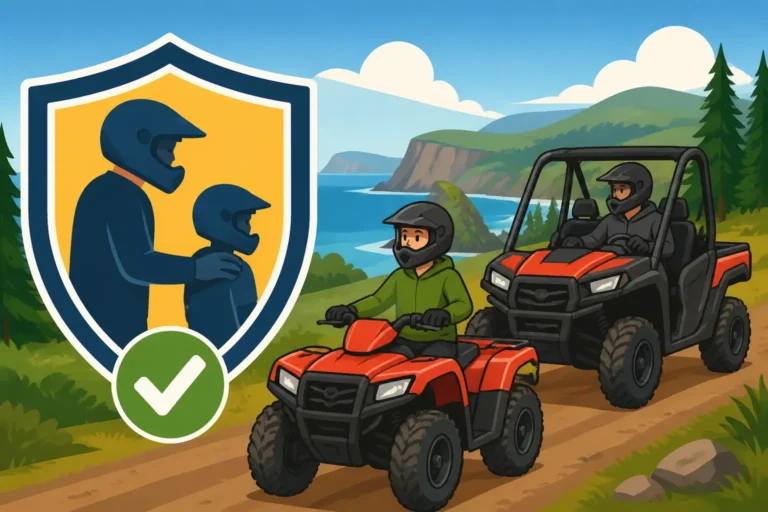
For young riders and passengers, supervision and age-related requirements are another part of safe planning. Those rules do not replace the need for a sober operator. Make sure the responsible adult is alert, capable, and not affected by alcohol, cannabis, or medication.
Build a group culture where “no ride” is easy to say
People are more likely to make a safe choice when the group agrees that nobody will be mocked or pressured for refusing to ride. Say plainly that anyone who feels impaired can call it a day without having to justify themselves. Offer practical help rather than turning the decision into an argument.
A useful group plan can include a designated sober operator, a pickup contact, a place to leave machines securely, and a check-in time. If the ride is part of a larger weekend, decide in advance how the group will handle a change of plans. That removes the pressure to make a rushed decision at the end of the day.
Impaired riding is preventable, and the strongest plan is also the simplest: do not operate an ATV or UTV when alcohol, cannabis, medication, fatigue, or another factor may affect your ability to ride. Keep the machine parked, get everyone home safely, and address any legal question through a qualified professional.
Disclaimer
This article is for general informational purposes only and does not constitute professional advice. Laws, prices and regulations vary by location and change over time. Consult a qualified professional for guidance on your specific situation.