Sharing a Woods Road With Loaded Logging Trucks
Oh, the Newfoundland woods road! They call to us, don't they? That promise of untouched wilderness, the scent of pine and bog, the thrill of the open trail. But here in Newfoundland, those same rugged paths aren't just for pleasure; they’re often working arteries for industrial operations, especially logging. And let me tell you, sharing a dusty, narrow stretch of gravel with a fully loaded logging truck is a whole different ballgame than cruising a railbed. This guide is all about giving you the real talk on how to stay safe when your ATV or side-by-side encounters these giants of the forest.
The Reality of Woods Roads in Newfoundland
Woods roads in Newfoundland are a lifeline for industries like logging, forestry, and mining. They're not manicured trails designed with recreational riders in mind; they're built for heavy-duty vehicles, often in remote and challenging terrain. As ATV and UTV enthusiasts, we often seek out these remote areas for the very solitude and challenge they offer, but that means being acutely aware of the shared space.
More Than Just a Trail
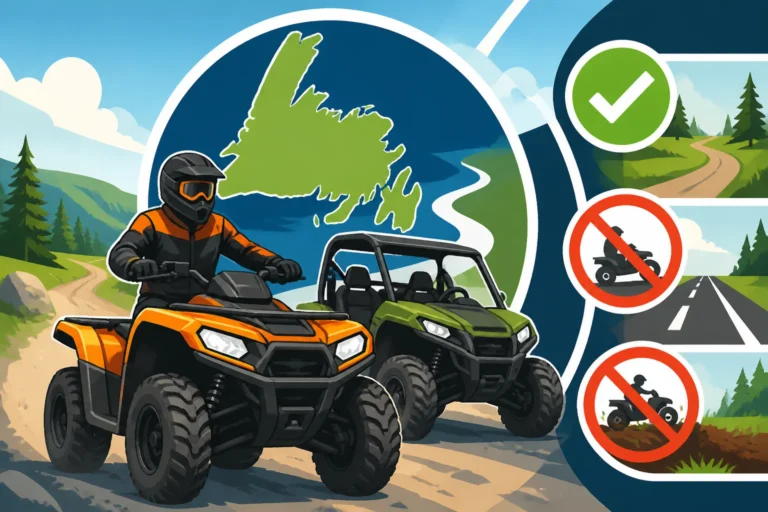
When you turn off a main highway onto a woods road, you're entering a dynamic, often unpredictable environment. These aren't designated recreational trails like sections of the [T'Railway's 883 Kilometres in Newfoundland] where you expect other quads, dirt bikes, or hikers. Woods roads are purpose-built to get resources out of the forest. That means they're designed for speed and efficiency for heavy machinery, not necessarily for gentle coexistence with smaller, slower vehicles. They might be maintained by private companies, not the province, meaning signs, grading, and general upkeep might vary wildly. Think of it less like a public park path and more like a private driveway that's open to certain users.
Who Else Uses These Roads?
While you might be hoping to see a moose or a caribou, the most common "wildlife" you'll encounter on many of these roads are industrial vehicles. Logging trucks, often hauling enormous loads of timber, are probably the most imposing. But you'll also see pulp trucks, heavy equipment transporters, excavators, bulldozers, graders, and pickup trucks belonging to forestry workers, survey crews, and even other recreational users heading to cabins or hunting grounds. Each of these vehicles operates with different objectives and often on tight schedules, adding to the potential for conflict.
Conditions You Can Expect
Woods roads are rarely smooth sailing. You should anticipate a wide range of conditions that can change without warning. Think about deep ruts from heavy truck tires, loose gravel that can challenge your traction, sharp turns with blind corners, and sometimes even significant potholes or washouts, especially after heavy rain. Dust can be a huge issue in dry conditions, creating thick clouds that reduce visibility to near zero for everyone. In wet weather, these roads can turn into muddy, greasy tracks, making control difficult and braking distances longer. Being prepared for these varying conditions is crucial, and it means your machine, perhaps outfitted with robust SuperATV skid plates, needs to be up to the task.
Understanding the Logging Truck Perspective
To ride safely on woods roads, you absolutely must understand things from the logging truck driver's point of view. Their job is to move massive loads efficiently and safely, and their vehicles have very different capabilities than your ATV or side-by-side. What seems like a minor inconvenience to you could be a major hazard for them.
Size, Weight, and Momentum
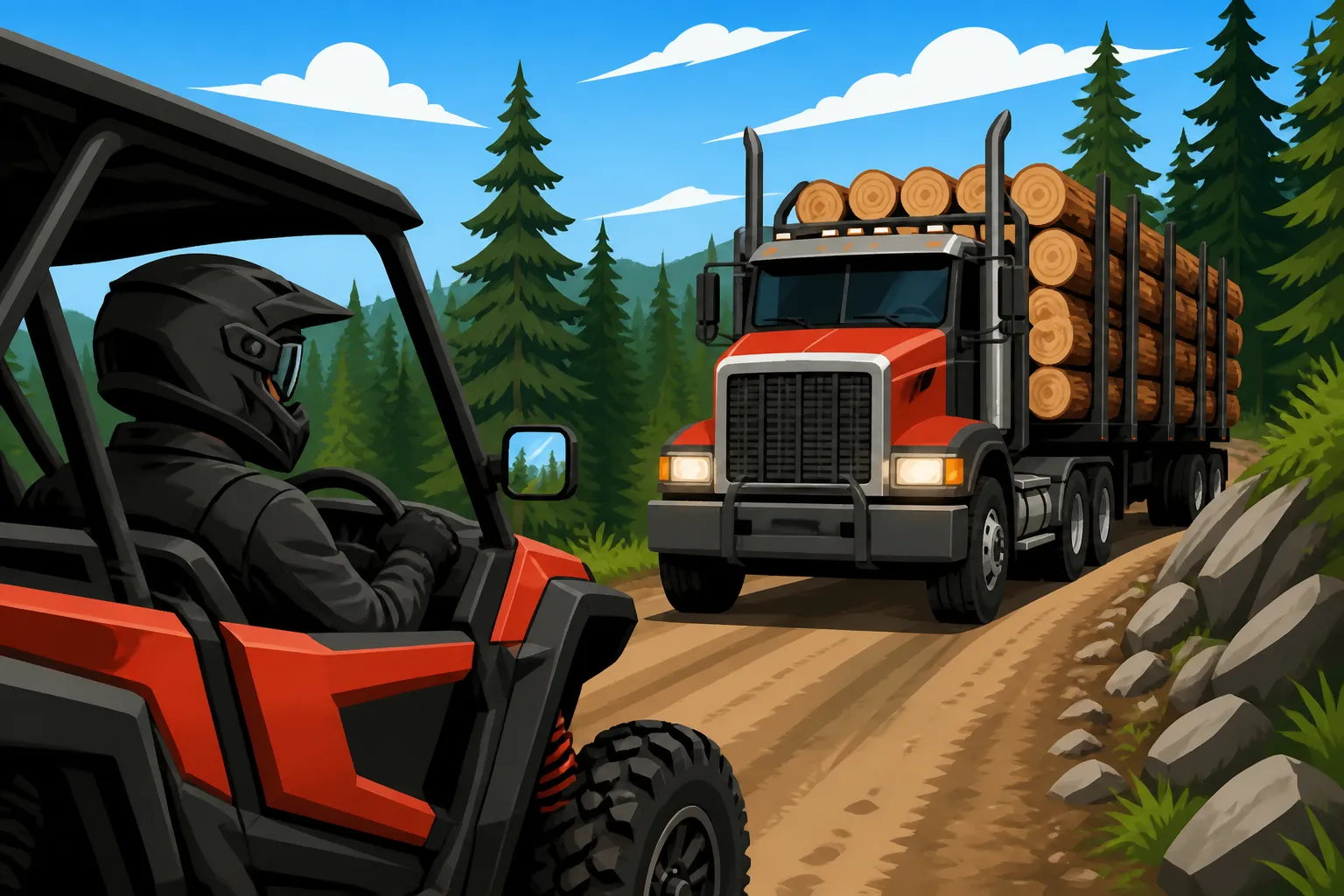
Let’s be blunt: a fully loaded logging truck is a behemoth. We're talking tens of thousands of pounds of truck and timber, often stretching 70 feet or more in length. Compare that to your ATV or side-by-side, which is relatively tiny and nimble. This massive difference in weight and size has huge implications for stopping distances and maneuverability. A logging truck traveling at even a moderate speed takes a considerable distance to slow down and stop, especially on loose gravel or a downgrade. They can't swerve quickly to avoid obstacles, and they certainly can't stop on a dime. That cargo, often stacked high, can also shift unexpectedly, especially on uneven terrain or during sudden braking.
Blind Spots and Limited Visibility
Logging trucks have massive blind spots. Period. Forget what you see in your rearview mirror; these trucks have huge areas around them where the driver simply cannot see a smaller vehicle like an ATV. This is especially true directly in front of the cab, along the entire length of the trailer, and directly behind the trailer. On a tight, winding woods road, a driver might not even register your presence until it's far too late, even if they're actively scanning. You might see them, but they might not see you. Never assume a truck driver knows you're there just because you see their headlights. Think about fitting your machine with a high-visibility flag, something SuperATV offers, to extend your profile above the brush line.
Tight Schedules and Heavy Loads
Logging operations run on tight schedules. Time is money, and drivers are often working long shifts to get their loads to the mill. This isn't an excuse for reckless driving, but it explains why they might be moving at a speed that feels fast for a recreational rider. They're also dealing with the immense challenge of controlling a heavy, often unstable load on difficult terrain. They're focused on the road, their mirrors, and the stability of their cargo. Your sudden appearance, especially if you're not easily visible, can create an immediate, high-stress situation that they have very little time to react to.
Essential Safety Strategies for ATV/UTV Riders
Staying safe on woods roads with industrial traffic comes down to a proactive, defensive mindset. You have to ride as if a logging truck is just around the next bend, because very often, it is.
Visibility is Your Lifeline
Making yourself as visible as possible is non-negotiable.
- Lights On: Always have your headlights and taillights on, even in broad daylight. This makes a huge difference, especially in dusty conditions or under heavy tree cover.
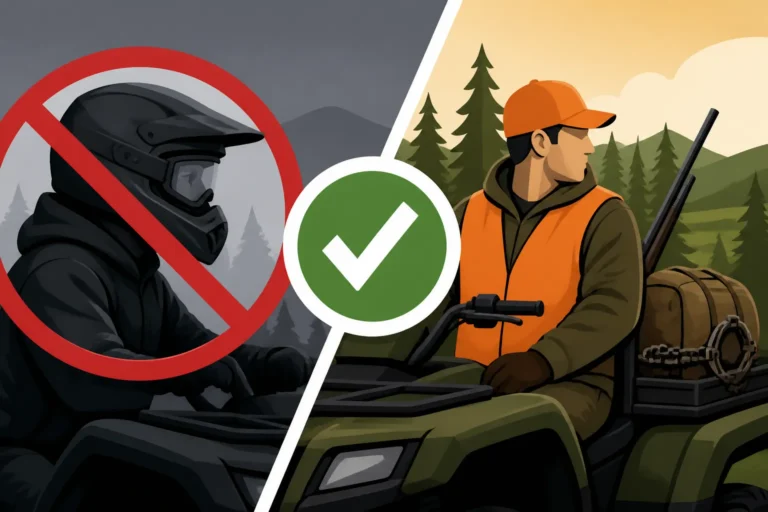
- High-Visibility Clothing: Wear bright, reflective clothing – neon green, orange, or yellow are excellent choices. Ditch the camouflage when riding these roads.
- Safety Flags: Attach a tall, brightly colored safety flag to your machine. This can often be seen over rises or around corners long before your machine itself is visible, especially if you're dipping into a ditch to yield. Many aftermarket parts suppliers, including SuperATV, offer various flag options.
- Avoid the Dust: If you see a dust cloud ahead, or behind, it’s a big machine. Pull over, turn on your lights, and wait for the dust to settle completely before proceeding. Trying to ride through another vehicle's dust cloud is incredibly dangerous.
Defensive Riding and Anticipation
This is where your riding skills and mindset really come into play.
- Slow Down: Reduce your speed significantly, especially on blind corners, hills, and narrow sections. You need time to react.
- Listen Actively: Turn down the music and listen for the distinct roar of a large diesel engine, air brakes, or the crunch of gravel under heavy tires. Sound often travels further and faster than sight.
- Assume the Worst: Always assume there's a logging truck around the next bend or crest of a hill. Position yourself on your side of the road, ready to pull over.
- Stay Right, Stay Safe: On a blind curve, hug the right side of the road as much as possible. If a truck is coming, it will likely be taking up the majority of the road, especially if it's hauling a long trailer.
- Scan Ahead: Look for signs of industrial activity – fresh tire tracks, logging debris, or warning signs posted by forestry companies. These are all indicators that you're in an active work zone. [Newfoundland Woods Roads Explained] provides further context on what to expect.
Communication and Yielding
Knowing how to react when you encounter a truck is just as important as prevention.
- Yield Right Away: The moment you spot a logging truck, or even hear one approaching, immediately pull over to the furthest right side of the road, or even completely off the road if safe to do so. Stop. Give them as much room as possible.
- Signal Your Presence: Flash your headlights, wave an arm (safely), or honk your horn to confirm they see you once you've pulled over.
- Make Eye Contact (if possible): If the driver passes close enough, try to make eye contact to confirm they've acknowledged you.
- Wait for Them to Pass: Let the entire truck and trailer pass before you pull back onto the road. Sometimes there might be a second truck right behind the first.
- Give Them a Nod: A simple nod or wave as they pass is a good gesture of respect and acknowledges their cautious driving.
Equipment Checks and Preparedness
Your machine needs to be in tip-top shape for these demanding conditions.
- Brakes and Tires: Ensure your brakes are in perfect working order and your tires have adequate tread for varied terrain.
- Lights and Horn: Double-check all your lights are functioning and your horn is working loudly.
- Fuel and Spares: Always carry extra fuel, a basic tool kit, and essential spare parts. You don't want to break down on an active logging road, especially in a remote area where cell service is spotty or nonexistent. Consider the importance of [Newfoundland Equipment Requirements] for overall safety.
- First Aid Kit: A well-stocked first aid kit is essential for any off-road adventure, but even more so when sharing roads with heavy industrial traffic.
Navigating the Legal and Ethical Landscape
While there might not be specific "ATV vs. Logging Truck" laws, understanding the general rules and, crucially, the unwritten code of the woods will keep you out of trouble and safe.
Provincial Regulations and Unwritten Rules
The [Newfoundland's Off-Road Vehicles Act] sets out general rules for ORV use, including where you can ride and the equipment you need. While it might not specifically address logging truck encounters, it emphasizes responsible operation. Beyond the written law, there’s an unwritten code in the woods: industrial traffic always has the right-of-way. These are their working roads. Showing respect for their operations goes a long way. Some companies might even post signs advising against recreational use during certain hours or days. Pay attention to these. Disregarding them not only puts you at risk but can also jeopardize future access for all recreational riders.
Respecting Industrial Operations
Active logging sites are dangerous places. Never enter an area where logging is actively underway. Look for signs, listen for chainsaws and heavy machinery, and if you see active work, find another route. Interfering with or delaying logging operations is not only dangerous but can also lead to legal issues. These companies are often operating on permits, and they have responsibilities to ensure safety within their work zones. Your presence can complicate that.
When to Avoid Woods Roads Altogether
Sometimes, the smartest thing to do is simply avoid these roads.
- Poor Visibility: If it's heavily foggy, extremely dusty, or snowing heavily, conditions are too dangerous to share with logging trucks. Your visibility, and more importantly, theirs, will be severely compromised.
- Active Logging: If you know an area is undergoing active logging, choose a different destination for your ride. There are plenty of other trails and areas in Newfoundland to explore where industrial traffic isn't a concern. [Newfoundland Crown Land Riding Rules] can help you find alternatives.
- Weekdays vs. Weekends: Logging operations are generally busiest on weekdays. If possible, plan your woods road rides for weekends when industrial traffic is likely to be much lighter, if present at all. However, never assume a road is entirely clear of industrial traffic, even on a weekend.
- Night Riding: Riding woods roads after dark, especially those with potential industrial traffic, drastically increases the risk. Headlights on both machines might be visible, but depth perception and the ability to react quickly are severely diminished.
Remember, the goal is to enjoy the incredible wilderness Newfoundland offers, and that means making smart, safe choices, especially when sharing the road with those big, hard-working trucks. Ride safe out there, my friends!
Disclaimer
This article is for general informational purposes only and does not constitute professional advice. Laws, prices and regulations vary by location and change over time. Consult a qualified professional for guidance on your specific situation.