Asking a Landowner for Written Permission to Ride
Riding your ATV or UTV across Newfoundland's rugged terrain offers some of the most exhilarating experiences imaginable. But let's be real, figuring out exactly where you're allowed to go can feel like navigating a bog in a whiteout. Many riders find themselves accidentally straying onto private land, which can lead to uncomfortable confrontations, fines, or even having your beloved machine impounded. This comprehensive guide is here to cut through the confusion, offering a step-by-step approach to respectfully and successfully secure written permission to ride on private property, making your adventures legal, stress-free, and enjoyable for everyone involved.
The Critical Importance of Seeking Permission
It might seem like a minor detail, but getting explicit permission from a landowner before you ride on their property is absolutely non-negotiable. Many riders, especially newcomers or those used to more lenient rules elsewhere, underestimate just how seriously trespass is taken here in Newfoundland. It’s not just about avoiding an awkward chat; it’s about protecting your rights, respecting others, and ensuring the longevity of access for all riders.
Avoiding Legal Repercussions and Fines
Picture this: you're out for a peaceful ride, enjoying the solitude, and suddenly, blue lights flash behind you. An officer pulls you over, and it turns out you've been riding on private land without permission. This isn't just a slap on the wrist. Newfoundland's laws are clear, and riding where you shouldn't can lead to significant penalties. Fines for trespassing can quickly add up, and in some serious cases, your machine could even be seized. Imagine the hassle and expense of trying to get your ATV or UTV back, not to mention the court costs and potential for a criminal record. It's a nightmare scenario that's entirely avoidable.
We've all heard stories, or maybe even experienced firsthand, how quickly a fun day can turn sour. Getting caught unawares is a real frustration, especially when you're just trying to enjoy the outdoors. Knowing the rules, like [Newfoundland Trespass Law for Riders], is your first line of defense. Remember, ignorance of the law is rarely an excuse that holds up. Officers often look for documents like your registration, proof of insurance, and, crucially, any permits or permissions. Being able to calmly produce a written permission form can be the difference between a pleasant interaction and a very costly one.
Fostering Positive Community Relations
Beyond the legal aspect, there's the broader community impact. When riders respect private property, it builds goodwill. When they don't, it creates tension. Think about it from the landowner's perspective: they've invested time, money, and effort into their land, whether it’s for farming, forestry, or simply as a private retreat. Uninvited vehicles can damage crops, disrupt livestock, create noise, and pose safety risks. These negative experiences fuel anti-ORV sentiment, leading to more restrictive bylaws and less access for everyone.
Every time a rider disrespects private property, it makes it harder for the next rider to get permission. It paints all ORV enthusiasts with the same brush, which isn't fair to the majority who are responsible. By taking the time to ask for permission, you're not just securing your own ride; you're acting as an ambassador for the entire riding community. This kind of thoughtful interaction can even open up new riding opportunities, as landowners who trust responsible riders might be more willing to grant access in the future or even recommend you to their neighbors. Building these positive relationships is crucial for the long-term health of our sport in Newfoundland.
Ensuring Your Safety and Access
Private land isn't just private because someone owns it; it often has specific uses and potential hazards that aren't apparent from a distance. There could be active logging operations, hidden fences, livestock, hunting in progress, or even dangerous equipment. Riding on unknown private land puts you at risk, not just from the hazards, but from potential conflicts with the landowner or their employees who might not know you have permission.
A written agreement doesn't just grant access; it can also outline safe riding areas, clarify routes, and even highlight potential dangers you should be aware of. This mutual understanding enhances your safety dramatically. Furthermore, by being a responsible rider who seeks permission, you're helping to preserve the privilege of access. If landowners feel their property is constantly being misused, they'll inevitably put up more "no trespassing" signs, reducing the available riding areas for everyone. Protecting these informal trails and access points requires collective responsibility, and that starts with asking. Remember, some of the most cherished cabin roads and back trails are often on private property, and keeping them open relies on trust and respect.
How to Respectfully Approach Landowners for Access
So, you've identified a promising trail or a stretch of land that would connect two great riding spots, and you suspect it's private. The thought of knocking on a stranger's door or making a cold call can be daunting, but with the right preparation and a respectful attitude, it's often much easier than you think. The key is to demonstrate that you are a responsible, considerate individual who values their property.
Researching Land Ownership and Contact Information
Before you even think about approaching someone, you need to know who owns the land. Guessing or assuming can lead to wasted time and awkward situations. Start with readily available resources. Municipal assessment offices, land registries, or even local town halls often have public records detailing property ownership. Sometimes, a quick search online with the civic address or legal description can yield results. For larger tracts of land, like those often used for forestry or agriculture, you might even find company names.
If direct contact information isn't immediately obvious from public records, sometimes local businesses or community members can point you in the right direction. A friendly chat with folks at the local general store or gas station might reveal who owns the property you're interested in, or at least how to reach them. Remember, discretion and politeness are key during this informal research phase. You don't want to come across as pushy or invasive. Once you have a name and a potential way to contact them, you're ready for the next step.
Preparing for Your Conversation
First impressions are everything. When you approach a landowner, you want to convey responsibility and respect. This isn't the time to roll up on your dusty machine, full throttle.
- Appearance Matters: If you're going in person, dress neatly and professionally. This isn't a job interview, but you want to look trustworthy.
- Know Your Intentions: Clearly articulate why you want to ride on their land. Are you just trying to connect two trails? Do you need access to your cabin? Are you exploring a specific area? Be honest and specific.
- Be Prepared to Provide Information: Bring your identification, and be ready to share your contact information. You might even consider having your ORV registration and insurance details handy, just to show you're a legitimate, insured rider.
- Demonstrate Responsibility: Explain how you plan to minimize your impact. This might include:
- Sticking to designated routes.
- Riding at a reasonable speed.
- Not littering – perhaps even offering to pick up any existing trash.
- Being mindful of noise, especially near homes or livestock.
- Avoiding wet areas or sensitive habitats.
- Offer Flexibility: Be open to their conditions. They might have specific times of year they prefer you not ride (e.g., during planting/harvesting, hunting season, or when livestock are out). They might specify certain trails or areas that are off-limits. Your willingness to adapt shows you respect their property rights.
- Consider a Small Gesture: While not always necessary, some riders offer a small gesture of goodwill, such as a gift basket, offering to help with a small chore, or even simply bringing a fresh-baked treat. This isn't about buying access, but about demonstrating neighbourliness.
Making the Initial Contact
Once you've done your homework and prepared your pitch, it's time to make contact. The best approach often depends on the landowner and your personal comfort level.
- In Person (if practical): This is often the most effective method, as it allows for a direct, personal conversation. Choose a time that isn't intrusive – avoid meal times, early mornings, or late evenings. Be polite, introduce yourself, and explain your reason for visiting. Start by asking if it's a good time to chat for a few minutes. If they're busy, respect that and offer to come back another time.
- Phone Call: If an in-person visit isn't feasible, a polite phone call is the next best option. Again, introduce yourself clearly and state your purpose. Be prepared for them to be busy, and offer to call back at a more convenient time.
- Letter or Email: For some landowners, especially if they are difficult to reach directly, a well-written letter or email can serve as an introduction. Clearly state who you are, what you're asking for, and why. Include your contact information and suggest a follow-up call or meeting.
No matter the method, always be prepared for a "no." If a landowner declines your request, respect their decision without argument or badgering. Thank them for their time and move on. Pushing the issue will only create animosity and reinforce negative stereotypes about riders. Sometimes, a "no" isn't personal; it might be due to existing issues, liability concerns, or simply a desire for privacy. Just remember, a respectful "no" is always better than an unauthorized "yes" that leads to trouble.
What to Include in a Written Permission Agreement
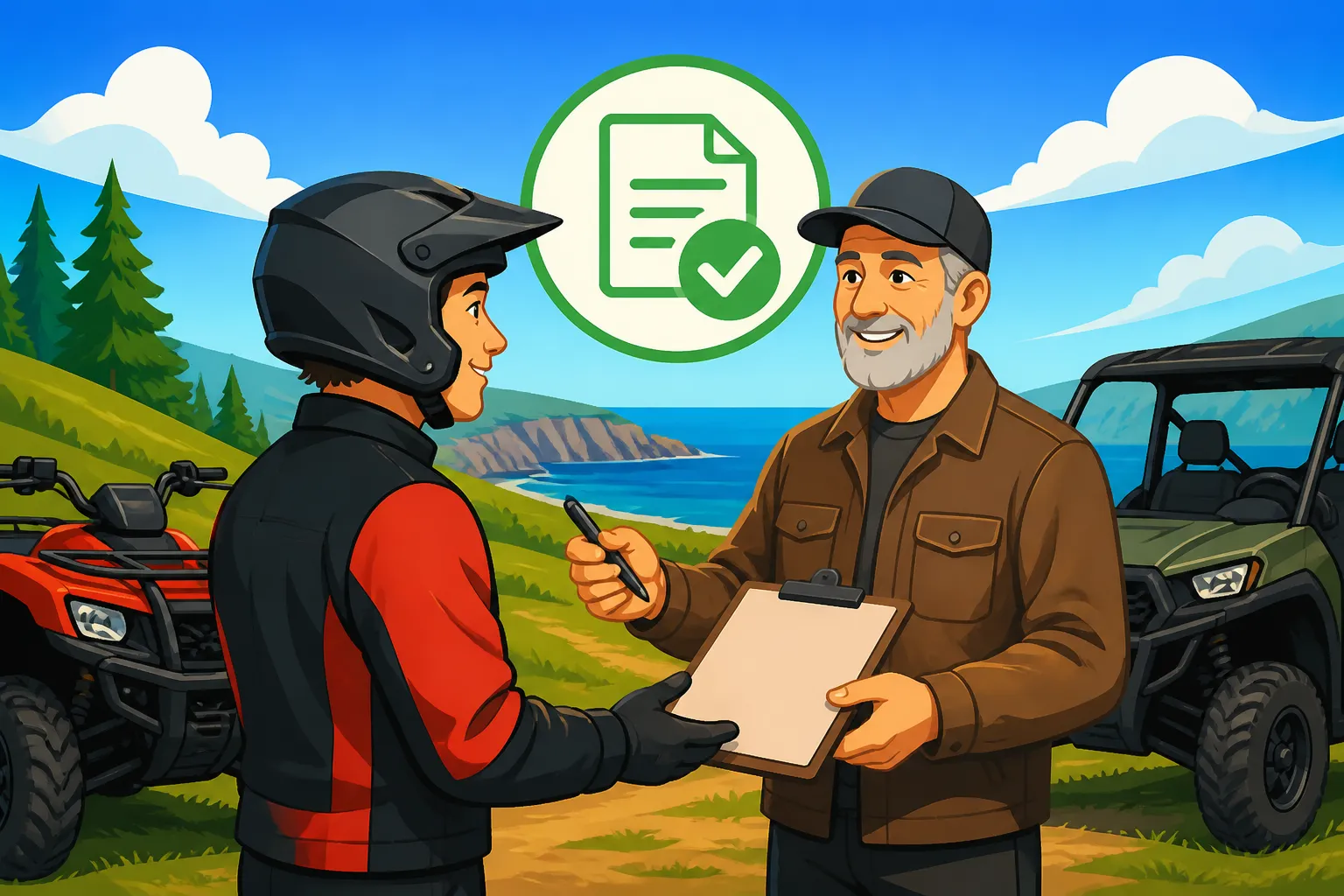
A handshake and a verbal "go ahead" might feel old-school and neighbourly, but when it comes to riding on private land, verbal permission isn't enough. Memories fade, circumstances change, and if an incident occurs, you'll be glad you have something solid to back you up. A written agreement protects both you and the landowner, clearly outlining the terms of access. Think of it as your passport to responsible riding.
Key Details for a Clear Agreement
The clearer and more detailed your written permission, the less room there is for misunderstanding. It doesn't have to be a legal novel, but it should cover the essential bases. Here's what you'll want to include:
- Identification of Parties: Clearly state who is granting permission (the landowner's full name, address, and contact information) and who is receiving it (your full name, address, and contact information, and possibly the names of other regular riders if it's a group).
- Property Description: Be specific about the land you have permission to ride on. Include the civic address, legal description (if known), or even a clear map outlining the approved area. Phrases like "my land" are too vague. You need to know exactly where you can go.
- Date and Duration: Specify when the permission starts and, if applicable, when it ends. Is it for a single day? A season? An entire year? Open-ended permission is rare, so having a clear expiry date often makes landowners more comfortable. For instance, [Newfoundland Registration Valid While You Own It] refers to your machine, but private land access is usually time-bound.
- Vehicle Description: While not always necessary, you might include a description of the ORV you'll be riding (e.g., make, model, VIN, plate number). This assures the landowner that only your specific machine, or type of machine, is covered, not any random vehicle.
Setting Boundaries and Conditions
This is where the agreement really gets down to brass tacks. The landowner will likely have specific rules, and it’s important these are captured in writing.
- Permitted Routes/Areas: Explicitly state where you are allowed to ride. Is it just a specific trail, an access road, or a broader section of the property? Conversely, list any areas that are strictly off-limits (e.g., near residential areas, fields, sensitive ecosystems, or during specific operations like logging). Having a map attached to the agreement with marked routes and no-go zones is incredibly helpful.
- Operating Hours: Are there specific times of day you can ride? Some landowners might restrict access during early mornings, evenings, or Sundays to minimize noise disturbance.
- Speed Limits and Conduct: Agree on reasonable speed limits, especially near residences or livestock. Include clauses about respectful conduct, such as not creating excessive noise, avoiding mud-bogging that damages the terrain, and generally acting responsibly.
- Guest Riders: Clarify whether you are allowed to bring guests, and if so, how many, and if they also need to be identified or adhere to the same conditions. Sometimes landowners prefer to grant permission only to the primary individual.
- Environmental Considerations: Include any specific requests regarding environmental protection, such as staying out of wetlands, avoiding stream crossings during certain seasons, or respecting wildlife habitats. For instance, a landowner might have a caribou migration route crossing their property that requires extra care.
- No Hunting/Trapping/Camping: Clearly state that the permission is for ORV access only, and does not extend to other activities unless explicitly agreed upon. This prevents misunderstandings.
- Hold Harmless/Liability Clause: This is a crucial element for the landowner's peace of mind. You, as the rider, should agree to hold the landowner harmless for any injuries or damages you might sustain while on their property. This doesn't completely absolve them of all responsibility in every scenario, but it's a standard practice that shows you understand and accept the inherent risks of off-road riding. Many landowners are rightly concerned about liability, so addressing this directly can be a deal-maker.
- Damage Clause: What happens if you accidentally cause damage to their property (e.g., break a fence, damage a gate)? Agreeing to report and be responsible for repairing any damage you cause shows integrity.
- Revocation Clause: The landowner should always retain the right to revoke permission at any time, for any reason. This protects their ultimate control over their property.
Here's a simple table outlining key elements for a written permission form, which you can use as a template for [Newfoundland Landowner Permission Forms]:
| Section | Key Details to Include |
|---|---|
| Parties Involved | Full legal names, addresses, and contact info for both Landowner(s) and Rider(s). |
| Property Description | Civic address, legal description, parcel number, or clear map of the specific land. |
| Permission Details | Start date, end date (if applicable), specific ORV(s) permitted (make, model, VIN). |
| Approved Areas | Clearly marked routes/trails on a map, specific zones of access. List restricted areas. |
| Conditions of Use | Permitted hours, speed limits, noise restrictions, environmental precautions, rules regarding guests. |
| Liability Waiver | Rider agrees to hold landowner harmless for injury/damage; rider responsible for their own safety and insurance. |
| Damage Responsibility | Rider agrees to report and be responsible for any damage caused to the property. |
| Revocation Clause | Landowner retains right to revoke permission at any time. |
| Signatures & Date | Signatures of all parties involved, dated. |
Considering Duration and Renewal
When you're discussing the terms, think about how long you'll need access. A short-term permission for a specific event or a single trip might be easier to get than an open-ended one. If you're looking for ongoing access, a one-year agreement with the option for annual renewal is a common and reasonable request. This allows both parties to revisit the agreement, ensure it's still working, and make any necessary adjustments.
A clear duration avoids situations where permission is assumed indefinitely, which can lead to friction down the road. If the landowner sees you've respected their terms throughout the year, renewing will likely be a simple process. It's a testament to your trustworthiness.
Maintaining a Good Relationship After Permission is Granted
Getting written permission is a huge win, but it's just the beginning. The ongoing relationship with the landowner is paramount. Think of it as a privilege, not a right. Your actions (and the actions of anyone you bring along) will determine if that privilege continues or if those gates get locked for good. Responsible behavior ensures you, and potentially other riders, can enjoy that land for years to come.
Respecting the Land and Its Uses
This might sound obvious, but it bears repeating: treat their land as if it were your own, or even better.
- Stick to the Plan: Always, always stay on the agreed-upon routes and within the designated areas. Wandering off-trail, even a little bit, can destroy crops, disturb wildlife, or damage sensitive ecosystems. Remember that map you included with your permission? Follow it rigorously.
- Leave No Trace: Pack out everything you pack in. This means all trash, broken parts, and anything else that wasn't there when you arrived. If you spot any existing litter, consider picking it up – it's a small gesture that goes a long way. Having a decent storage solution on your UTV, perhaps from a brand like SuperATV, can make carrying trash easier.
- Minimize Impact: Avoid excessive mud-bogging or creating deep ruts, especially in wet conditions. Be mindful of noise levels, particularly near residences or livestock. If you're going to cross sensitive areas, do so quickly and carefully.
- Observe Posted Signs: Even with written permission, landowners might put up temporary signs for specific reasons (e.g., "Logging Ahead," "Wet Conditions – No Entry," "Cattle Grazing"). Respect these signs without question.
- Wildlife and Livestock: Be aware of your surroundings. Slow down and give a wide berth to any wildlife or livestock you encounter. Do not harass or chase animals. If you're riding through areas with farm animals, ensure all gates are closed behind you.
Remember, land use can change seasonally. A pasture in summer might be a field of winter wheat in the fall. A quiet woods road in spring could be an active logging road in the fall. Be adaptable and aware.
Communicating and Following Up
Good communication is the bedrock of any solid relationship.
- Notify Before You Ride (if requested): Some landowners appreciate a quick call or text before you head out, especially if they have livestock, hunters, or other activities planned on their property. This simple courtesy can prevent misunderstandings.
- Report Issues: If you notice anything unusual on their property – a downed fence, a fallen tree blocking a trail, suspicious activity, or even a small fire hazard – report it to the landowner immediately. This shows you're not just using their land but also looking out for it.
- Express Gratitude: A simple "thank you" goes a long way. A card, a small gift, or even offering to help with a small task can reinforce your appreciation for their generosity. This could be as simple as clearing some brush on a trail, helping mend a small fence, or even just stopping by to chat for a moment.
- Annual Check-in: If your permission is annual, make sure to follow up before it expires to discuss renewal. This proactive approach shows respect and planning. You could also discuss any changes in the land's condition or your riding habits.
Addressing Concerns and Potential Issues
No matter how careful you are, sometimes things happen. Be prepared to address concerns maturely and transparently.
- If There's a Problem: If you accidentally cause damage, get stuck, or encounter an issue (e.g., [Newfoundland Accident Reporting Rules]), report it to the landowner immediately. Don't try to hide it or fix it yourself without their knowledge. Honesty is crucial. For example, if you get bogged down in a tough spot and need some serious recovery gear like a SuperATV winch to get out, make sure you're careful not to damage the land further in the process, and report any unavoidable impact.
- Listener and Learner: If the landowner expresses a concern, listen attentively and without getting defensive. Understand their perspective and be willing to adjust your riding habits. Perhaps they've noticed a new sensitive area, or a change in livestock patterns.
- Be Accountable for Guests: If you bring guests, you are ultimately responsible for their actions. Ensure they understand and adhere to all terms of the agreement. If a guest violates the terms, address it directly with them, and inform the landowner of the steps you're taking.
By consistently demonstrating respect, responsibility, and good communication, you build trust. This trust is the most valuable currency in securing and maintaining private land access. It ensures that both you and the landowner benefit from a positive, cooperative relationship, allowing you to enjoy Newfoundland's incredible landscapes for many rides to come.
Disclaimer
This article is for general informational purposes only and does not constitute professional advice. Laws, prices and regulations vary by location and change over time. Consult a qualified professional for guidance on your specific situation.