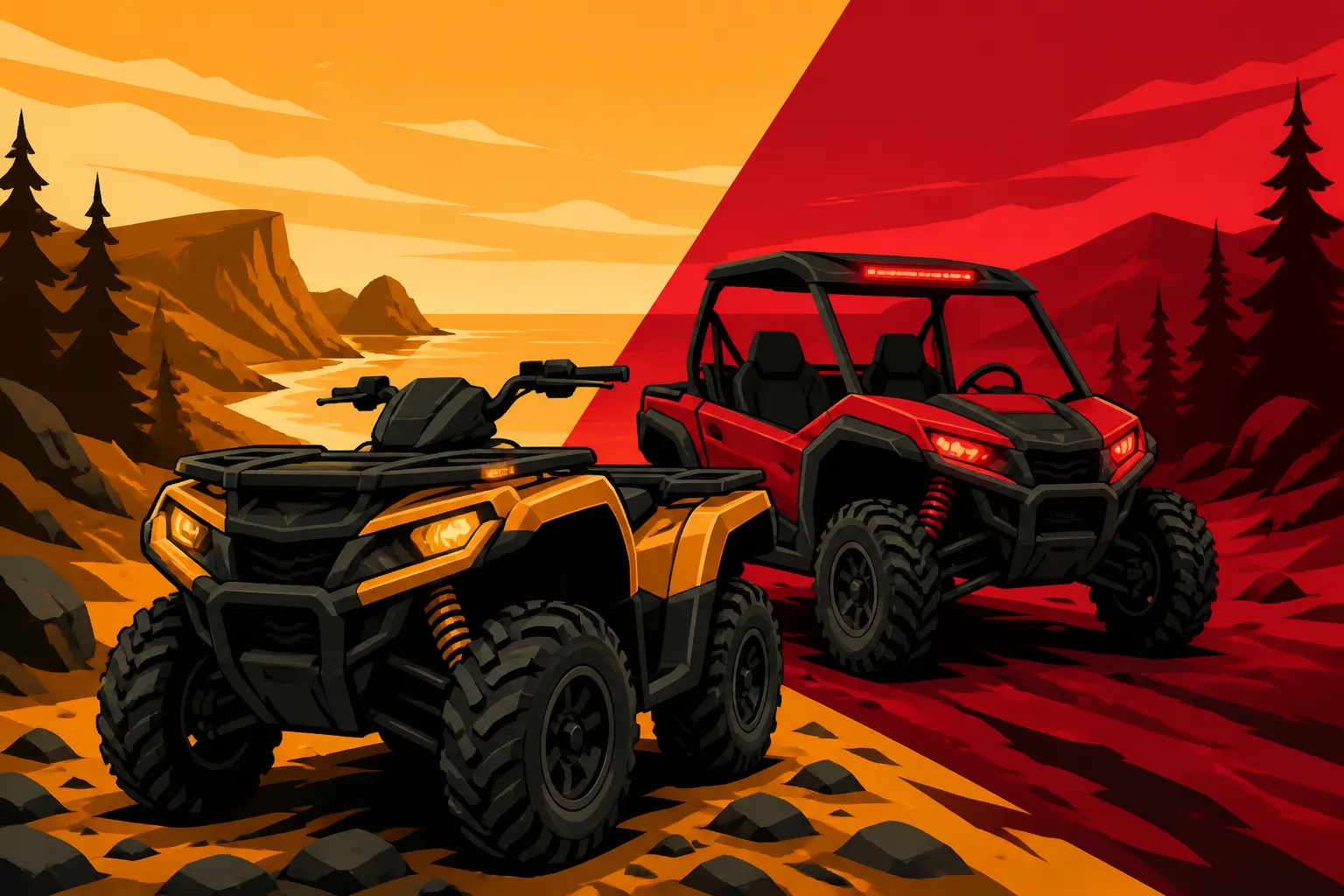
Amber in Front and Red Behind
Navigating the rules for your off-road vehicle (ORV) in Newfoundland can sometimes feel like trying to find your way through a thick fog on the barrens, especially when it comes to something as seemingly simple as lighting. Many riders get confused about what lights they need and, more importantly, what colour those lights should be when they're anywhere near a public road or riding after dusk. This guide will shine a clear light on the specific requirements, ensuring your machine is always properly illuminated and compliant with Newfoundland's regulations, particularly the crucial "amber in front and red behind" standard.
Understanding Newfoundland's ORV Lighting Basics
It’s easy to think that if your ATV or side-by-side has lights, that’s good enough. But in Newfoundland, especially with the [Newfoundland's Off-Road Vehicles Act] coming into play, there are very specific regulations about the colour and placement of your ORV’s lighting system, particularly when you’re venturing beyond private land or during certain times of day. This isn't just about avoiding a ticket; it's about making sure you and other trail users, or even motorists if you're briefly on a road, can see each other clearly.
The Importance of Visibility for Off-Road Vehicles
Visibility isn't just a nice-to-have; it's a non-negotiable safety feature, especially in Newfoundland's often unpredictable weather and diverse terrain. From the low light of a cloudy day in the woods to the stark contrast of a snow-covered trail at dusk, being seen is paramount. An ORV, while often powerful, can be surprisingly difficult to spot in certain conditions, especially against a varied backdrop of trees, rocks, or even the vast, open barrens. Proper lighting helps other riders, hikers, and even wildlife become aware of your presence long before you're close enough for a dangerous encounter. It also dramatically reduces the risk of collisions with other vehicles if you have to cross a highway or ride a shoulder.
When Lighting Becomes a Legal Requirement
You might primarily ride during daylight hours, but the moment the sun begins to dip below the horizon, or if visibility is impaired by fog, rain, or snow, your lights become a legal necessity. Even in bright daylight, if you're operating on a highway shoulder or crossing a public road, proper illumination can be required. The rules are designed to cover all scenarios where your machine interacts with public spaces or reduced light conditions. It's not just about what time you start your ride; it's about what conditions you might encounter. [Newfoundland Head and Tail Lamp Rules] are very clear about requiring these lights from sunset to sunrise, and at any other time when there isn't enough light to see clearly for 150 metres.
Distinguishing Between Trail and Roadside Lighting
While many modern ORVs come equipped with decent lighting from the factory, these systems are often designed with trails in mind, not necessarily the stricter standards required for road use or interaction with conventional traffic. When you're deep on a trail system, your powerful white headlights might be perfect for cutting through the darkness. However, when you approach a paved road, or even a public gravel road, the rules shift. This is where the specific colour requirements become absolutely critical. The distinction exists because conventional road users are accustomed to certain colour cues: white for forward movement, red for stopping or rear visibility, and amber for signaling or hazard. Disrupting these cues, or not providing them at all, creates confusion and danger. For instance, [Newfoundland Rules for Crossing a Highway] stipulate that specific precautions must be taken, and proper lighting is a key part of that.
The Specifics of Front-Facing Lighting: Amber
Let's talk about what needs to be visible to anyone you're approaching head-on, especially if you're on a public road or shoulder. The key here is amber in front. This isn't just about having bright lights; it's about having the right colour of light.
Why Amber for the Front?
Amber light is universally recognized as a warning or caution signal on roads. Think of traffic signals, turn signals, or hazard lights on cars and trucks. This colour stands out and signals "attention" without implying imminent danger (like flashing blue or red emergency lights). For an ORV, especially when crossing a highway or riding a shoulder, having amber lights visible from the front helps to clearly differentiate your machine from a standard road vehicle's headlights, indicating that it might be moving slower, or in a less predictable manner than typical traffic. It's a visual cue that tells other drivers, "Hey, there's an ORV here, be aware." This is part of the broader [Newfoundland Equipment Requirements] to ensure safety for all road users.
Headlamps and Auxiliary Lighting
Your ORV's main headlamps are typically white. While these are essential for seeing where you're going, the law requires amber lamps to be visible from the front. This often means having amber marker lights, or, if your machine doesn't have them integrated, adding auxiliary amber lights. These aren't necessarily meant to illuminate the trail, but rather to ensure your presence is clearly marked to others. Many riders choose to install dedicated amber LED pods or light bars that can be activated when riding on shoulders or making a highway crossing. Products from companies like SuperATV offer a range of auxiliary lighting options, including amber-specific lights, that can help you meet these requirements without compromising your main illumination. Just make sure any auxiliary lights are mounted in a way that doesn't obstruct your main headlamps and are positioned to be clearly visible from the front.
Ensuring Your Front Lights Meet the Standard
Simply having a light that looks amber might not be enough. The intensity and visibility need to meet regulatory standards. Check your machine's manual and the provincial regulations to understand the specific requirements for brightness and visibility distance. When installing aftermarket lights, ensure they are designed for vehicle use and produce a consistent amber hue. Some cheaper lights might fade or change colour over time, which could lead to a fine or, worse, an accident. Regularly check that your amber lights are clean and fully functional. A quick visual inspection before each ride, especially if you plan to be near roads or out after dark, can save you a lot of hassle. Remember, police officers conducting [Newfoundland Equipment Checks by Officers] will be looking for proper and functioning lighting.
The Mandate for Rear-Facing Lighting: Red
Just as amber signals caution from the front, red in the rear is equally critical for indicating your presence and direction of travel to anyone approaching from behind. This is a standard safety protocol across all vehicle types and is non-negotiable for ORVs operating in Newfoundland's regulated spaces.
The Critical Role of Red in the Rear
Red lights at the rear of any vehicle serve as a universal signal: "This is the back of a machine; proceed with caution." For an ORV, which might stop unexpectedly, or be moving slower than typical traffic, red tail lights and brake lights are vital. They give following vehicles a clear indication of your presence and any changes in your speed. Imagine a dusty trail or a foggy morning on a shared path – without bright red lights, your ORV could become virtually invisible until it's too late. The law requires these lights to be red and visible from at least 150 metres from the rear, ensuring ample warning for anyone behind you.
Tail Lamps and Brake Lights
Your ORV must have at least one red tail lamp visible from the rear during periods of low light or when specified by regulation. This lamp provides continuous illumination, indicating your presence. In addition to a tail lamp, a red brake light (or lights) that illuminates when the brakes are applied is also mandatory. This is especially important for safety on shared trails and when interacting with road traffic, as it clearly communicates your intention to slow down or stop. Many manufacturers integrate these, but it's crucial to regularly test both your tail and brake lights. [Newfoundland Reflector Requirements] also play a role here, often supplementing lighting, especially on older machines or trailers. For machines used at night or on roads, bright, clear red lights are essential. SuperATV, for instance, offers LED tail light assemblies that can often be brighter and more durable than factory halogen units, improving your overall visibility significantly.
Checking Your Rear Lights for Compliance
Just like your front lights, your rear lights need to be in good working order. This means ensuring they are clean, free of mud or snow, and fully functional. Ask a friend to stand behind your machine while you operate the lights and apply the brakes. Check for any dimming, flickering, or outright failure. If your brake lights aren't working, it could indicate a fuse issue, a wiring problem, or a faulty brake switch. These are simple checks that can prevent serious accidents or costly fines. A broken or non-functioning tail light can be just as dangerous as not having one at all, especially if you're riding [Newfoundland Rules for Riding After Dark]. Remember to carry any necessary documentation, as officers can ask for proof of registration and compliance.
| Lighting Type | Required Colour | Location | Purpose | Visibility Minimum (Metres) |
|---|---|---|---|---|
| Headlamps | White | Front | Illuminate path, indicate presence | 150 (from front) |
| Auxiliary Front | Amber | Front (visible) | Caution, differentiate ORV from road traffic | 150 (from front) |
| Tail Lamp | Red | Rear | Indicate presence, rear marking | 150 (from rear) |
| Brake Lamp | Red | Rear | Signal deceleration/stop | 150 (from rear) |
| Reflectors | Amber/Red | Sides/Rear | Passive visibility when lights are off | Varies by regulation |
Consequences of Non-Compliance and Safety Tips
Ignoring lighting regulations isn't just a minor oversight; it carries significant legal and safety implications. Newfoundland's authorities take ORV safety seriously, and that includes ensuring machines are properly equipped for visibility.
Fines and Penalties for Incorrect Lighting
If you're caught operating an ORV with improper or non-functioning lighting where it's required, you could face fines. These penalties are designed to deter riders from putting themselves and others at risk. A defective lighting system falls under general equipment non-compliance, and while specific figures vary, fines can be substantial. For example, [Newfoundland Fines for a Defective Muffler] shows that equipment issues can lead to tickets, and lighting is no different. Repeat offences can lead to even higher fines, and in some cases, authorities might even order your machine to be removed from operation until the issue is fixed. It's far better to invest a little time and money into ensuring compliance than to pay a hefty fine or, worse, be involved in an accident. [Newfoundland Penalties for Riding Illegally] can range widely, and equipment violations are certainly on that list.
Enhancing Visibility Beyond Minimum Requirements
While meeting the legal minimums is essential, smart riders often go above and beyond to enhance their visibility. Consider adding extra reflectors, reflective tape on your helmet or clothing, or even a brightly coloured flag or pennant, especially if you're riding in tall grass or hilly terrain where your machine might be obscured. For group rides, it's a good idea for everyone to have their lights on, even in daylight, to ensure cohesion and visibility within the group. Investing in high-quality LED lighting, such as those offered by SuperATV, can provide brighter, more reliable illumination than standard factory lights, making you even more visible to others. Don't forget about [Newfoundland Rules for Riding a Shoulder] where you are expected to be highly visible and aware of traffic.
Regular Maintenance of Your Lighting System
The best lighting system in the world is useless if it's not maintained. ORVs operate in harsh environments, meaning wiring can fray, bulbs can burn out, and connections can corrode. Make a habit of checking all your lights (headlights, tail lights, brake lights, and any auxiliary amber lights) before every ride, or at least before any ride where you anticipate being near roads or out after dark. Keep lenses clean from mud, dust, and ice, which can drastically reduce light output. Carry spare fuses and, if applicable, spare bulbs, especially on longer trips. A small maintenance kit can be a real lifesaver on the trail. By being diligent with your lighting maintenance, you ensure your ORV is not only legal but also as safe as possible for every adventure Newfoundland has to offer.
Disclaimer
This article is for general informational purposes only and does not constitute professional advice. Laws, prices and regulations vary by location and change over time. Consult a qualified professional for guidance on your specific situation.