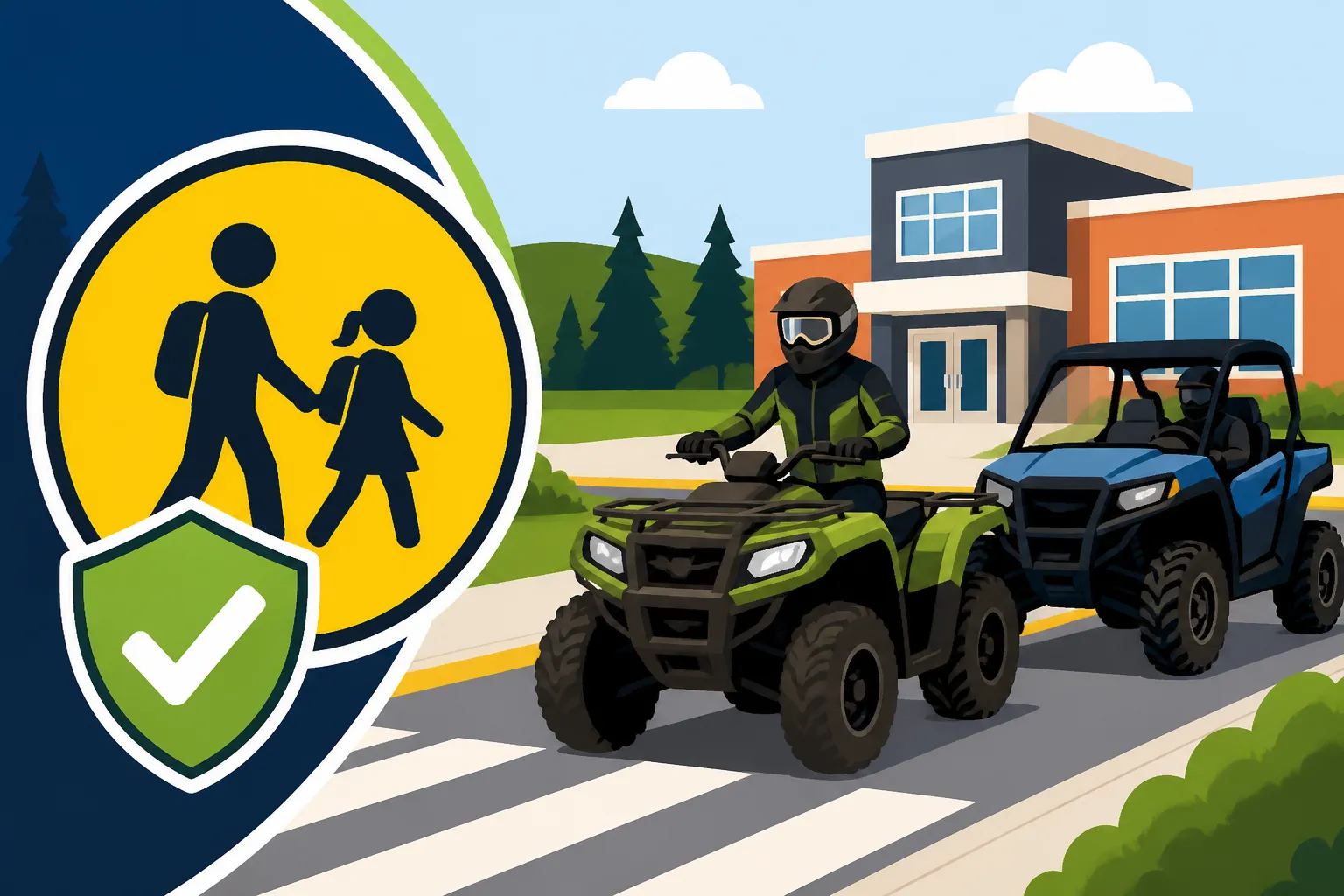
Newfoundland Rules for Riding Near a School
It's easy to get caught up in the thrill of hitting the trails and enjoying the incredible freedom an ATV or UTV offers here in Newfoundland. But as much as we love our machines, it's absolutely crucial that we understand and respect the rules, especially when our paths take us anywhere near schools. This guide will walk you through the specific regulations and common-sense approaches needed to keep everyone safe and avoid unnecessary trouble when riding in the vicinity of educational institutions.
The General Framework: Off-Road Vehicles Act and Its Scope
Navigating the rules for riding ATVs and UTVs in Newfoundland can sometimes feel like trying to find your way through a thick fog on the barrens. You know there are paths, but seeing the clear route requires a bit of local knowledge and a good understanding of the laws. The foundation for all off-road vehicle use in our province is the Off-Road Vehicles Act. It's the big book of rules that dictates where, when, and how you can operate your machine, and it’s especially important when you’re venturing anywhere near public roads or populated areas.
What the Act Covers and Doesn't
The Off-Road Vehicles Act is quite comprehensive, designed to bring some order to the exhilarating world of off-road riding. It specifically covers a broad range of machines, including your trusty ATVs, the family-friendly side-by-sides (UTVs), dirt bikes, and even snowmobiles when they're not on snow. It lays out the groundwork for everything from registration requirements to equipment standards and, crucially for our topic today, how these machines interact with public infrastructure like roads and sidewalks. While the name implies "off-road" activity, the Act absolutely dictates how you behave when those off-road adventures inevitably intersect with paved roads, community pathways, or, as we'll explore, areas around schools. It’s important to remember that this statute has been [A Statute in Force Since May 2022], and it brought some significant updates to how we ride.
What the Act doesn't explicitly cover, however, are the unwritten rules of community respect and common sense. It might not have a specific line that says "don't ride like a wild child next to a school," but its principles are meant to guide us toward safe and considerate operation. It's about understanding that even if a technicality allows you to be somewhere, the spirit of the law, and good neighbourly conduct, might suggest otherwise, especially around vulnerable populations like schoolchildren. You might have the most rugged suspension or durable axles from SuperATV on your machine, but that doesn't give you a pass on basic road etiquette.
Why Schools Are a Special Case
Schools, by their very nature, are hubs of activity, particularly during drop-off, pick-up, and recess times. This makes them inherently sensitive areas that demand extra caution from all vehicle operators, not just those on two or four wheels designed for the dirt. The primary concern is, of course, the safety of children. Kids are unpredictable; they might dart out from behind a parked car, run to catch a ball, or simply be less aware of their surroundings than an adult. Our machines, with their sometimes larger size, higher noise levels, and often faster acceleration, pose a unique set of risks in such an environment.
Beyond the immediate physical safety, there's also the element of disturbance. Imagine the sound of a roaring exhaust pipe when classes are in session, or during a quiet reading time. The noise can be a significant distraction, both for students inside and for those playing outdoors. Dust kicked up from riding on unpaved areas near schools can also be an environmental concern, impacting air quality for children and staff. Operating an ORV near a school requires an elevated level of awareness and a commitment to responsible riding that goes beyond just following the letter of the law; it's about respecting the purpose of the space and the people within it.
Specific Rules Governing ORV Proximity to Schools
So, what are the concrete rules we need to be mindful of when our routes bring us close to a school? It's not always a simple "yes" or "no" answer, as provincial regulations often combine with local bylaws to create a patchwork of rules. The key is understanding these layers and always erring on the side of caution.
Roadway Riding Restrictions Near Schools
The provincial Off-Road Vehicles Act has specific rules about operating your machine on or near public roads. For instance, you might be familiar with [Newfoundland's 1-Kilometre Shoulder Rule], which permits you to ride on the shoulder of a highway for up to a kilometre to get from one trail to another, or to access a service. You also know about [Newfoundland's 20 km/h Shoulder Limit] when you're doing so. These rules are in place to allow riders necessary passage while maintaining safety for regular highway traffic.
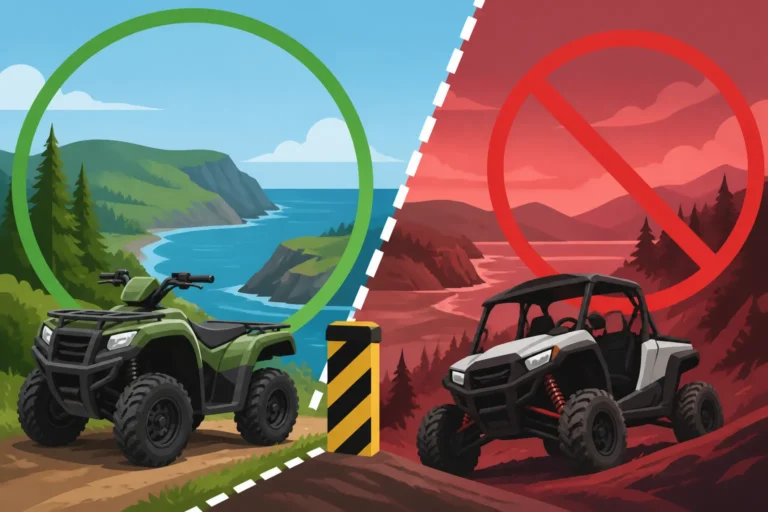
However, these general roadway rules become much more stringent, and sometimes outright prohibitive, when you enter a school zone. Most communities have designated school zones, marked by specific signage and often accompanied by reduced speed limits. While the Act might permit shoulder riding in some areas, the presence of a school zone often means that ORV operation on or alongside these roads is either severely restricted or completely forbidden during school hours, or even at all times. The rationale is clear: the increased pedestrian traffic (children walking, parents dropping off), parked vehicles, and school buses create a complex, high-risk environment where ORVs simply don't belong on the road network. Even if you're just passing through on what seems like a legitimate route, the potential for an accident or disturbance is too high.
Designated Trails vs. School Areas
Many of us ride on what we believe are "approved" or "designated" trails. These are areas where the province or a local trail association has explicitly sanctioned ORV use, often marked and maintained for that purpose. And while Newfoundland boasts an incredible network of trails, like sections of the T'Railway, it’s vital to understand that a designated trail's proximity to a school does not grant permission to ride on or near school property itself.
School grounds, including playgrounds, sports fields, and parking lots, are considered private property (owned by the school board or municipality) and are absolutely not approved areas for ORV use. Even if a public trail runs right alongside a school's fence line, you must remain on the designated trail and adhere to all speed limits and noise restrictions, especially near the school. The rules governing [Newfoundland Crown Land Riding Rules], for example, do not supersede the specific restrictions or prohibitions around school property. Think of it this way: while you might be permitted to ride on a specific trail system, the moment you deviate or cross onto school property, you are trespassing and violating safety rules. Modifications like robust skid plates or reinforced bumpers from SuperATV are great for protecting your machine on the trail, but they won't protect you from a trespass charge near a school.
Municipal Bylaws: The Local Layer of Regulation
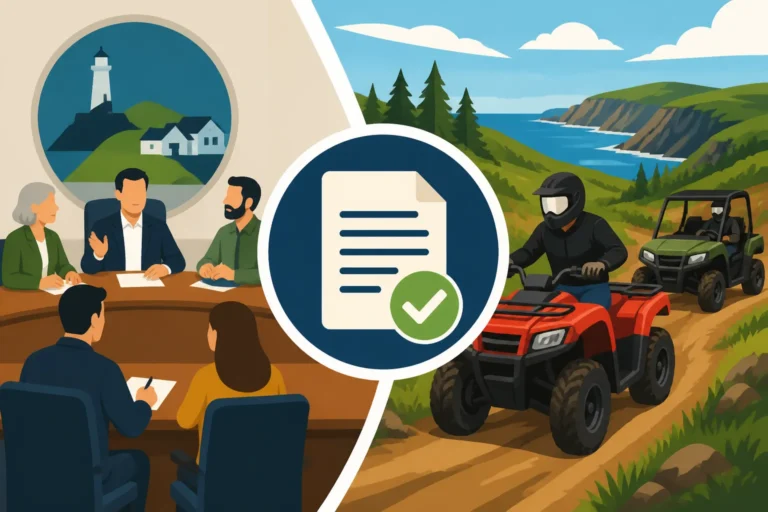
This is where things can get even more specific and, at times, a bit confusing. While the provincial Off-Road Vehicles Act provides the overarching framework, individual municipalities in Newfoundland have the power to enact their own bylaws that can be more restrictive than provincial law. This means that a town or city, particularly one with schools, can put additional rules in place regarding ORV operation.
These [Newfoundland Municipal Road Bylaws] are crucial to check, as they might completely prohibit ORVs from certain streets, establish specific hours of operation, or even ban them outright from areas within a certain radius of a school. For example, a town might have a bylaw stating that no ORV can operate within 200 metres of a school during school hours, or that specific routes near schools are entirely off-limits. This is why it's so important to not only know the provincial rules but also to consult the local council for [Newfoundland Municipalities With ORV Bylaws] before you ride in an unfamiliar area. What's legal in one community, even if it's provincially approved, might be illegal under a local bylaw in another, especially if there's a school nearby. A quick call to the municipal office or a check of their website can save you a lot of grief.
| Proximity Type | Provincial General Rule | School Zone Impact | Key Action for Rider |
|---|---|---|---|
| Highway Shoulder | Allowed for 1 km at 20 km/h | Often prohibited or highly restricted | Check local bylaws, avoid if possible |
| Designated Trail | Approved for ORV use | Stay strictly on trail, be extra vigilant | Maintain low speed, be ready to stop |
| School Property | Not covered, implied trespass | Strictly Prohibited | Absolutely avoid riding on or entering |
| Adjacent Roads | Varies by road classification | Often restricted, speed limits enforced | Slow down, watch for children, check bylaws |
| Quiet Residential | May have local restrictions | Be extra mindful of noise and safety | Ride respectfully, avoid peak school times |
Consequences of Non-Compliance and Responsible Riding
Ignorance of the law is never an excuse, and nowhere is this more true than when children's safety is at stake. Violating ORV regulations, especially near schools, can lead to serious consequences that go far beyond a slap on the wrist. It’s about more than just legal penalties; it's about our collective responsibility to the community and maintaining the privilege of enjoying our machines.
Penalties for Violating ORV Laws Near Schools
The provincial Off-Road Vehicles Act outlines a range of penalties for non-compliance, and these can be steep. If you're caught riding where you shouldn't be, or in a manner that's unsafe, particularly near a school, you could be facing significant [Newfoundland Ticket Costs for Riders]. These fines can range from a few hundred dollars for minor infractions to much higher amounts for more serious offenses, especially if reckless operation or a hazard to pedestrians is involved.
Beyond monetary penalties, your machine could also be subject to [Newfoundland Machine Seizure Rules]. This means your pride and joy could be impounded, and getting it back often involves paying substantial impound fees in addition to any fines. Furthermore, repeated offenses or very serious violations could impact your driver's licence, even if you weren't operating a highway-registered vehicle at the time. The legal system takes offenses that put children at risk very seriously, and the consequences reflect that. It’s simply not worth the risk.
The Importance of Community Respect
Beyond the legal ramifications, there's a broader impact that comes from irresponsible riding. Every time an ORV operator rides too fast, makes excessive noise, or trespasses near a school, it tarnishes the image of the entire riding community. It fuels negative perceptions and can lead to calls for even stricter regulations, potentially limiting access for all riders. We've all heard the complaints about "those noisy ATVs" or "people tearing up areas." When that happens near a school, the public outrage is understandably amplified.
Maintaining a positive image for ATV and UTV enthusiasts means being a good neighbour and demonstrating respect for shared spaces. This includes being mindful of noise levels, especially during school hours, avoiding kicking up excessive dust, and simply being visible and courteous to pedestrians. It's about embodying [Newfoundland Trail Etiquette Locals Expect] even when you're technically off the trail but near a populated area. When we ride responsibly, we not only ensure safety but also help preserve access to the fantastic riding opportunities Newfoundland has to offer. Whether your machine is stock or customized with performance parts from SuperATV, respectful operation is always paramount.
Ensuring Child Safety and Your Own Legal Protection
Ultimately, the goal of all these rules and warnings is the safety of children. When you're near a school, your primary concern must be the unpredictable movements of kids. Even if you believe the area is clear, always assume a child could suddenly appear. Slow down to a crawl, be prepared to stop instantly, and make eye contact with any parents or children nearby. It's not just about avoiding a ticket; it's about preventing a tragedy.
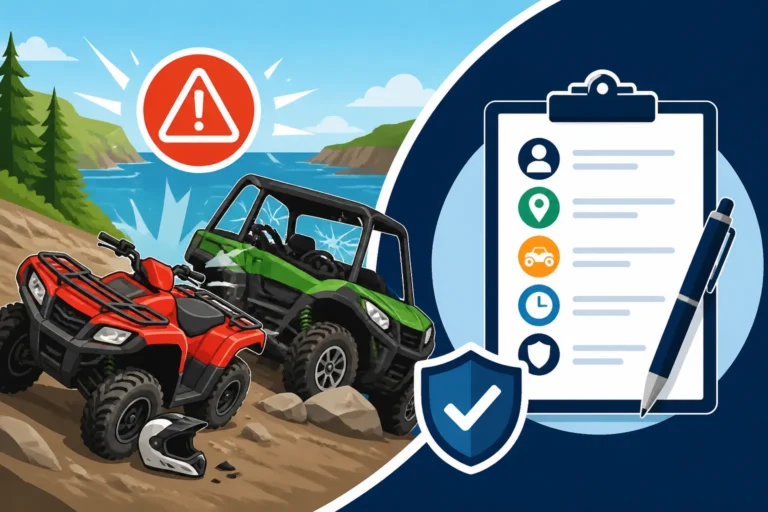
For your own legal protection, and peace of mind, ensure you always have valid [Newfoundland Insurance Requirements for Riders] in place. While many incidents near schools might involve local bylaws or trespass laws, any accident, even a minor one, can quickly escalate. Having appropriate liability insurance provides a crucial safety net. It's also a good practice to always carry proof of your registration and any other necessary documents. Knowing the rules, riding defensively, and being prepared not only keeps the children in our communities safe but also protects you from unnecessary legal and financial burdens.
Disclaimer
This article is for general informational purposes only and does not constitute professional advice. Laws, prices and regulations vary by location and change over time. Consult a qualified professional for guidance on your specific situation.