Newfoundland Equipment Checks by Officers
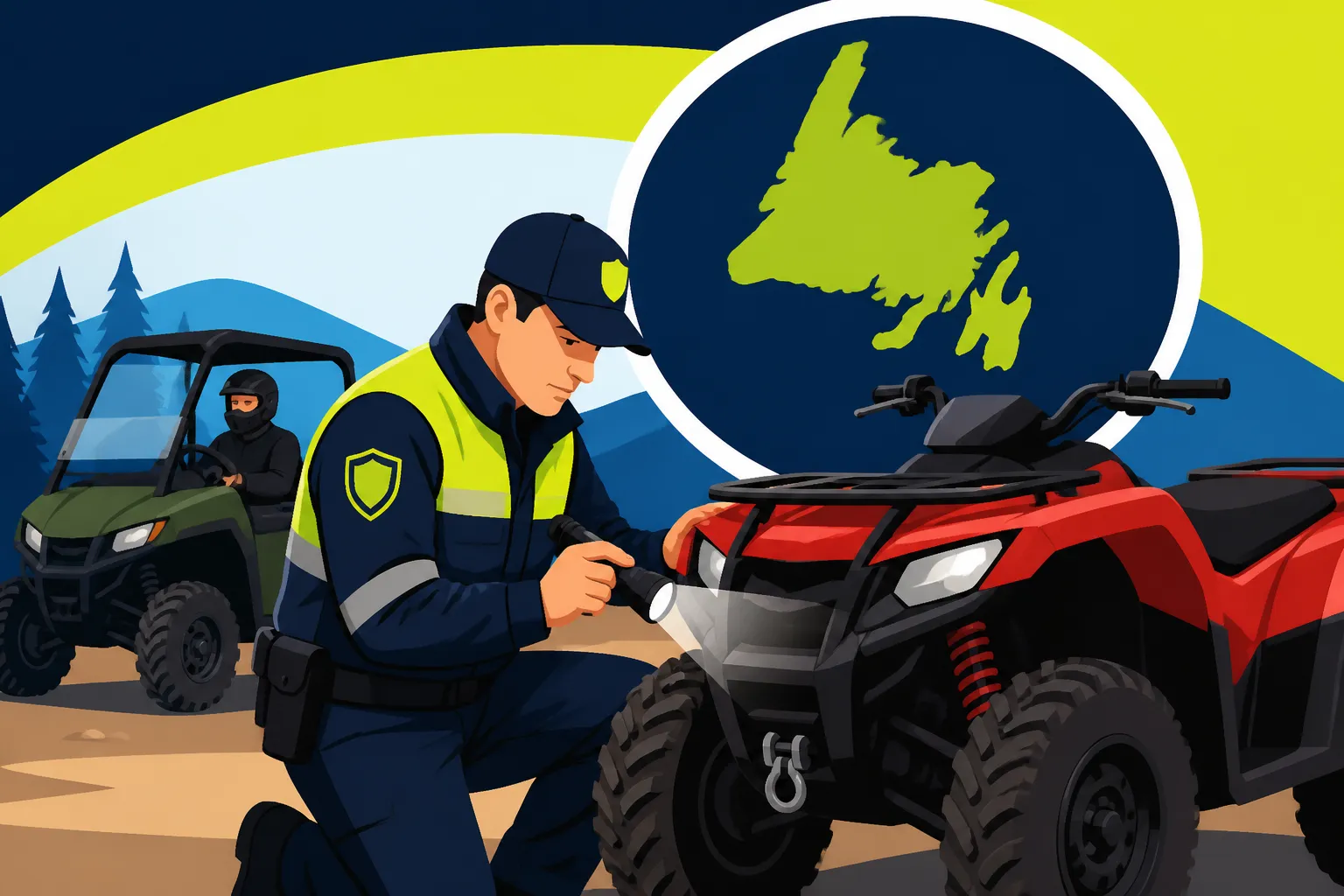
You're out enjoying a ride on your ATV or UTV in Newfoundland, the sun is shining, the trails are calling… and then you see flashing lights. It’s a moment that can make any rider’s heart sink a little, even if you know you're doing everything right. No one wants to be pulled over, but understanding what an officer is looking for can turn a stressful encounter into a brief, straightforward check. This guide aims to pull back the curtain on equipment checks, helping you understand what peace officers are authorized to inspect and why, so you can ride with confidence and keep those wheels turning safely and legally.
Understanding the Authority of an Officer on Newfoundland Trails
It’s easy to think of "the law" as just the police, but on the trails and roads of Newfoundland, several types of officers have the authority to stop you and inspect your off-road vehicle (ORV). Knowing who they are and what their role entails can help you navigate any interaction calmly and effectively. This isn’t about being suspicious; it’s about understanding the system designed to keep everyone safe and preserve our beautiful natural spaces.
Who Can Stop You and Why
When you're out on your quad or side-by-side, you might encounter a variety of peace officers. The most commonly recognized are, of course, the Royal Newfoundland Constabulary (RNC) in their jurisdiction or the Royal Canadian Mounted Police (RCMP) across the province. However, their authority is often supplemented by other enforcement bodies. You could also be stopped by provincial park wardens, who enforce regulations within provincial parks, or by conservation officers, who are focused on wildlife, forestry, and environmental protection. Even some municipal bylaw enforcement officers may have specific authority over ORV use within town limits.
These officers conduct checks for a range of reasons. Sometimes, it’s a proactive measure, like a targeted "check stop" to ensure all riders in a popular area are compliant with registration, insurance, and safety gear requirements. Other times, it might be due to an observed infraction, such as unsafe operation, excessive speed, or riding in a restricted area. And occasionally, an officer might just be conducting a routine patrol and decide to say hello and perform a quick check, just to ensure you're squared away. Their overarching goal is public safety, ensuring that all riders are operating their machines responsibly, have the correct [Newfoundland Permits, Plates and Decals], and are not causing harm to themselves, others, or the environment. It’s not usually about trying to "get" someone, but about maintaining order and preventing accidents or environmental damage.
Your Responsibilities When Stopped
If an officer signals you to stop, the first and most crucial thing to do is comply safely and promptly. Pull your machine over to the side of the trail or road in a safe location, turn off the engine, and keep your hands visible, perhaps on the handlebars or steering wheel. This immediately signals your cooperation and helps the officer feel secure. There’s no need to make sudden movements or argue. Just be calm and polite.
Once stopped, the officer will likely ask for your documentation. You are expected to produce several key pieces of paperwork. This includes [Newfoundland Proof of Ownership on the Trail], which means your ORV registration permit. You’ll also need to show [Newfoundland Insurance Proof on the Trail], demonstrating that you carry the minimum liability coverage required by law. If you're under 16, or if this is your first registered machine, you’ll need to show proof that [Newfoundland Safety Training Is Mandatory] has been completed, or at least that you are carrying a valid safety training certificate. If you happen to be operating your ORV on a highway shoulder or crossing a roadway, you will also be required to produce a valid driver's licence. Remember, being prepared with these documents can significantly shorten the interaction and get you back to riding quickly. Keep them in a waterproof pouch on your person or securely attached to your machine.
Key Equipment Officers Will Scrutinize
When an officer stops you, they aren't just looking at your paperwork. They'll also be taking a good look at your machine and your personal safety gear. These checks are designed to ensure your ORV is in safe operating condition and that you, as the operator, are properly protected. It’s all about minimizing risks on the trails and roads.
Mandatory Safety Gear for Riders
Your personal safety equipment is paramount and often the first thing an officer will confirm. The [Newfoundland Helmet Law for Every Rider] is strict for both operators and passengers on an ORV. This means wearing an approved helmet that meets recognized safety standards like Canadian Standards Association (CSA), Department of Transportation (DOT) in the US, or Economic Commission for Europe (ECE). It's not enough just to have the helmet on your head; the officer will be looking to ensure that [Newfoundland Helmet Straps Must Be Fastened] securely under your chin. An unfastened helmet is about as useful as no helmet at all in a collision.
Beyond head protection, [Newfoundland Eye Protection Requirements] dictate that you must wear goggles or a face shield, unless your machine has an enclosed cab or a windshield that effectively protects your eyes. Dust, debris, branches, and even insects can cause serious injury and impair your vision, so proper eye protection is non-negotiable. For those riding side-by-sides, [Newfoundland Seat Belt Requirements] come into play: if your machine was manufactured with seat belts, you and your passengers must wear them. These aren't optional accessories; they're vital safety features.
Machine-Specific Equipment Checks
Now let’s talk about the machine itself. The officer will meticulously check various components to ensure your ORV meets provincial standards.
-
Identification: Your ORV must display a valid identification plate or decal. [Newfoundland Permits, Plates and Decals] are issued upon registration, and it’s your responsibility to ensure the plate is securely attached and clearly visible. This means taking care to prevent [Newfoundland Plates Kept Free of Mud] and ensuring it's not [Newfoundland Plates Unobstructed by Cargo], like gear bags or coolers. A hidden or illegible plate is a sure way to draw unwanted attention.
-
Lighting: If you're riding between sunset and sunrise, or during periods of reduced visibility, your machine needs to be properly lit. [Newfoundland Head and Tail Lamp Rules] require a white or amber headlamp at the front and a red tail lamp at the rear, both clearly visible. Additionally, [Newfoundland Reflector Requirements] specify that your ORV must have amber reflectors on the front sides and red reflectors on the rear sides to enhance visibility from all angles.
-
Tires: Your ORV is designed to operate with [Newfoundland Low Pressure Tire Rules], and officers will check for appropriate tires. These are crucial for proper traction and minimizing impact on the terrain. While aftermarket parts from companies like SuperATV can enhance performance, it's crucial to ensure any modifications, especially to your tires, are suitable for the conditions you're riding in and don't compromise safety or compliance.
-
Exhaust and Muffler: The sound your machine makes is also regulated. [Newfoundland Exhaust and Muffler Rules] are in place to control noise pollution, especially in residential areas or near wildlife. An officer will listen for excessive noise and inspect your exhaust system for modifications like "cut-outs" or removed mufflers, which are illegal and can result in significant fines. Keeping your machine operating quietly and within acceptable decibel limits is a matter of courtesy and compliance.
-
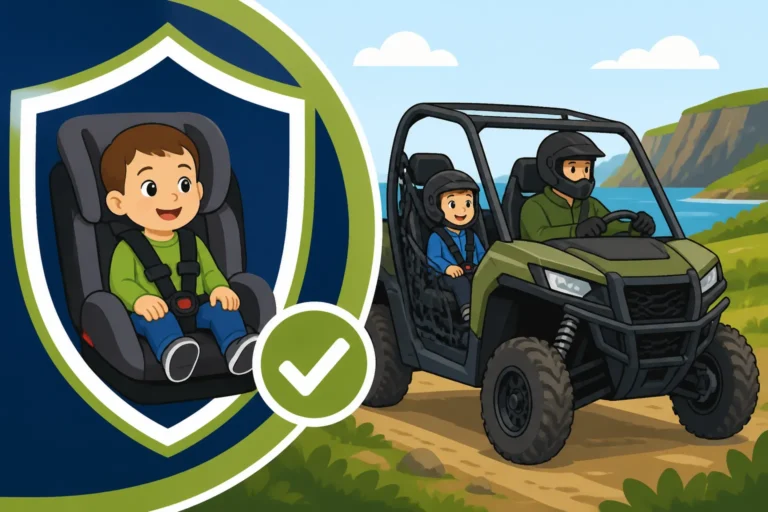
Passengers and Seating: If you carry passengers, your machine must be designed to do so safely. [Newfoundland Passenger Seat Requirements] specify that passengers must sit on a seat specifically designed and installed by the manufacturer for that purpose. No riding on fenders or cargo racks! For side-by-sides, there are even [Newfoundland Car Seat Rules for Children], requiring age and weight-appropriate restraints, similar to a regular vehicle, if the machine has factory-installed seat belts.
-
Brakes and Steering: While less frequently an immediate visual check, an officer can also ask you to demonstrate that your brakes are working effectively and that your steering is responsive and free of excessive play. These are fundamental to safe operation, and any defects could deem your machine unsafe to ride.
It's also worth noting that while [Newfoundland Has No Spark Arrestor Rule], many other jurisdictions do. If you're riding here from another province or planning a trip elsewhere, it's good practice to be aware of spark arrestor requirements, as they prevent wildfires.
| Equipment Item | Compliance Requirement | What an Officer Looks For |
|---|---|---|
| Operator/Passenger | ||
| Helmet | Approved standard (CSA, DOT, ECE) | Proper fit, visible approval mark, [Newfoundland Helmet Straps Must Be Fastened] |
| Eye Protection | Goggles or face shield (unless enclosed cab/windshield) | Present and worn correctly |
| Seat Belts | Worn if factory-installed (primarily side-by-sides) | Fastened by all occupants |
| Machine | ||
| Identification Plate | Valid, visible, securely attached | Clean, legible, not obstructed by cargo or mud |
| Headlamp | White/Amber, visible from front (sunset to sunrise) | Working, proper colour, sufficient illumination |
| Tail Lamp | Red, visible from rear (sunset to sunrise) | Working, proper colour, sufficient illumination |
| Reflectors | Amber front sides, Red rear sides | Present, intact, clean |
| Tires | Low pressure, appropriate for ORV use | Condition, visible damage, type |
| Exhaust/Muffler | Compliant with noise regulations, no modifications | Excessive noise, evidence of cut-outs or removed mufflers |
| Passenger Seating | Factory-installed, designated seat | Passengers on proper seats, not cargo areas |
| Brakes | Functional and effective | Ability to stop safely, fluid leaks, worn pads |
| Steering | Responsive, no excessive play | Smooth operation, no grinding or loose components |
Beyond Equipment: Operational Compliance and Common Infractions
An officer's check doesn't stop at your paperwork and machine condition. They'll also be observing how you operate your ORV and where you're riding it. Adhering to operational rules is just as critical as having the right gear, both for safety and for ensuring continued access to our beautiful riding areas. Newfoundland has specific rules designed to balance recreation with public safety and environmental protection.
Rules of the Trail and Road Crossings
Understanding the specific rules for operating your ORV, especially concerning highways and private property, is essential. When it comes to road crossings, [Newfoundland's 150-Metre Crossing Visibility Rule] is crucial: you must have at least 150 metres of clear visibility in both directions before you can cross a highway. You also need to perform a complete stop before entering the roadway. For riding along a highway, [Newfoundland's 1-Kilometre Shoulder Rule] allows you to use the shoulder for up to one kilometre, but only to get to or from an ORV trail, and strictly at [Newfoundland's 20 km/h Shoulder Limit]. It's not a shortcut, and it's not for cruising. Remember, [Newfoundland Riders Yield to Highway Traffic] at all times, as highway traffic has the right of way.
Beyond the road, officers are also vigilant about where you're riding. Trespassing on private land without explicit permission is a common infraction that can lead to fines and strained relationships with landowners. Respecting posted signs and boundaries is non-negotiable. Environmental protection is also a major concern, particularly concerning [Newfoundland Wetland Protection Rules] and [Newfoundland Caribou Migration Protection]. Riding through sensitive ecosystems or protected areas can have devastating impacts and comes with severe penalties. Brands like SuperATV offer robust underbody protection like skid plates that can help minimize environmental impact if you accidentally stray from a hardened path, but it's always best to stick to approved trails.
Consequences of Non-Compliance
Falling short of these regulations, whether it's through equipment failure or operational misconduct, can lead to serious consequences. [Newfoundland Penalties for Riding Illegally] can range from monetary fines to having your machine seized. The [Newfoundland Machine Seizure Rules] are clear: an officer has the authority to impound your ORV for various offenses, including impaired operation, no registration, or repeated violations. Getting your machine back involves significant fees and can be a lengthy process.
The [Newfoundland Fine Ranges by Offence] vary widely depending on the severity and nature of the infraction. A minor equipment deficiency might result in a warning or a smaller fine, while offenses like impaired riding or extensive environmental damage carry much heavier penalties, including court appearances and higher fines. Repeat offenders often face escalating consequences. It's not just about the immediate financial hit; it's also about potential court costs, the inconvenience of dealing with legal processes, and the long-term impact on your riding privileges. Ultimately, the goal of these checks and penalties isn't just to punish, but to encourage responsible riding, preserve access to our beautiful trails, and ensure the safety of every person who enjoys Newfoundland's outdoors. It's about being a good steward of the land and a considerate member of the riding community.
Disclaimer
This article is for general informational purposes only and does not constitute professional advice. Laws, prices and regulations vary by location and change over time. Consult a qualified professional for guidance on your specific situation.