Riding the Shoulder 1 Kilometre to Reach a Trail
It's a familiar scenario for many off-road vehicle enthusiasts in Newfoundland: you're itching to hit the trail, but the closest access point is just a short hop down the highway. That little stretch of pavement, often overlooked in the excitement of a ride, can be a major source of confusion and even frustration for ATV and UTV owners. This guide is all about clarifying the specific rules that govern riding on the shoulder for that crucial one-kilometre stretch, helping you understand exactly what's allowed and, more importantly, what isn't, so you can connect to your adventure safely and legally.
Understanding the Newfoundland Shoulder Rule: A Necessary Connection
Riding your ATV or UTV on a highway shoulder isn't about convenience for errands or cruising down the main road. The province's Off-Road Vehicles Act is quite clear that it's a very specific, limited privilege designed to address a common problem: how do you get your machine from private property, or one trail section, to another when a public road is the only link? That's where the "one kilometre" rule comes into play. It's not a free pass to use the shoulder as a general thoroughfare; it's a tightly controlled concession for connecting legitimate off-road travel.
What the 1-Kilometre Limit Actually Means
When the regulations talk about a "1-kilometre limit," they mean precisely that: you cannot continuously ride on the shoulder for more than 1,000 metres. Imagine you're leaving your cabin driveway or a parking area, and the designated trail is exactly 800 metres down the highway. The law permits you to use the shoulder for that distance to reach the trail. However, if the trail access is 1,200 metres away, you're out of luck and must find an alternative, like trailering your machine. It’s a hard limit, not a guideline. The intent is to bridge short gaps, not to create extended routes along public roads. This small allowance acknowledges the practical realities of our landscape, where trails often don't directly abut every property line or easily link up without intersecting a roadway.
Why This Rule Is in Place: Bridging Gaps, Not General Use
The primary purpose of allowing ORVs on highway shoulders is purely utilitarian: to connect approved trails or access points. Newfoundland's trail network, while extensive, isn't always seamless. There are often public roads that bisect or run parallel to these networks. Without this specific shoulder-riding provision, many fantastic riding areas would be inaccessible, or riders would be forced to trailer their machines for even the shortest of distances between trail sections. It's a pragmatic solution to a logistical challenge, but it comes with strict parameters because public roads are inherently dangerous environments for off-road vehicles. The intent is to facilitate responsible off-road recreation, not to blur the lines between highway driving and trail riding.
The Difference Between Riding the Shoulder and Riding on the Highway
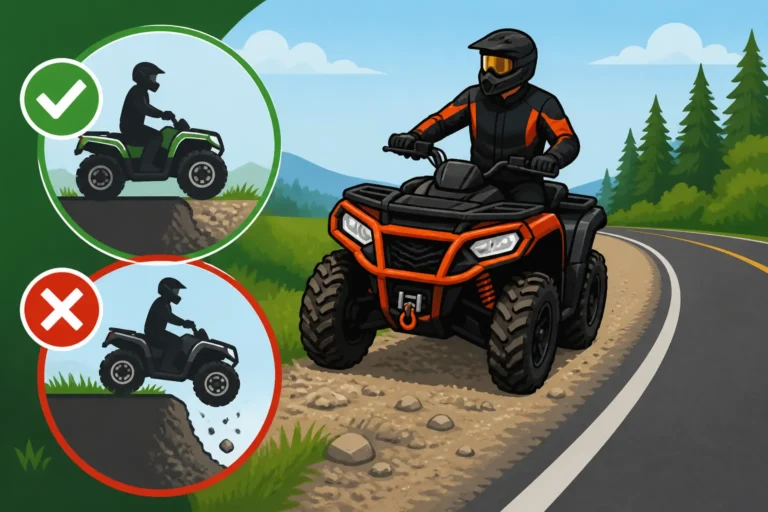
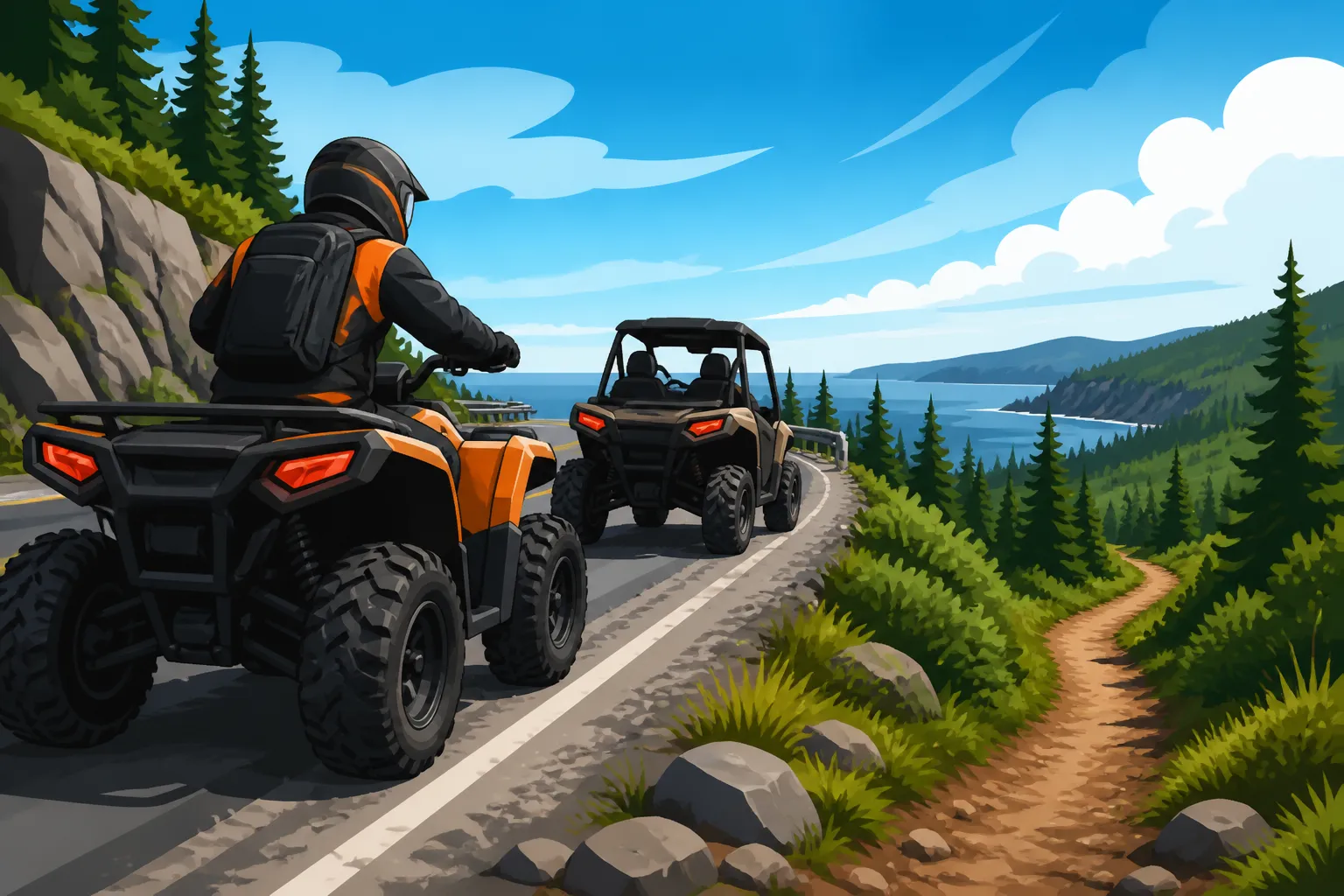
It's crucial to distinguish between riding on the shoulder and riding on the actual paved (or gravel) surface of the highway. The highway is for registered, street-legal vehicles only. Your ATV or UTV, even with all its [Newfoundland Permits, Plates and Decals], is generally not permitted to travel in the main traffic lanes. The shoulder is the area to the side of the travelled portion of the road, often distinguishable by a painted line or a change in surface. Staying on the shoulder, and adhering to the [20 km/h on a Shoulder] speed limit, is paramount. Drifting into the traffic lane, even momentarily, can be considered an infraction and, more importantly, puts you and other motorists at significant risk. The regulations are designed to keep ORVs as separate as possible from highway traffic, and deviating from the shoulder defeats that purpose entirely.
Specific Conditions for Shoulder Riding: Safety First
When you're riding that precious kilometre on the shoulder, you're not just adhering to a distance limit; you're also agreeing to a set of safety conditions that are non-negotiable. These conditions are in place to minimize the risk to yourself, your passengers, and every other road user. Ignorance of these rules isn't an excuse, and enforcement can be swift and severe.
The Speed Limit: 20 km/h and No Faster
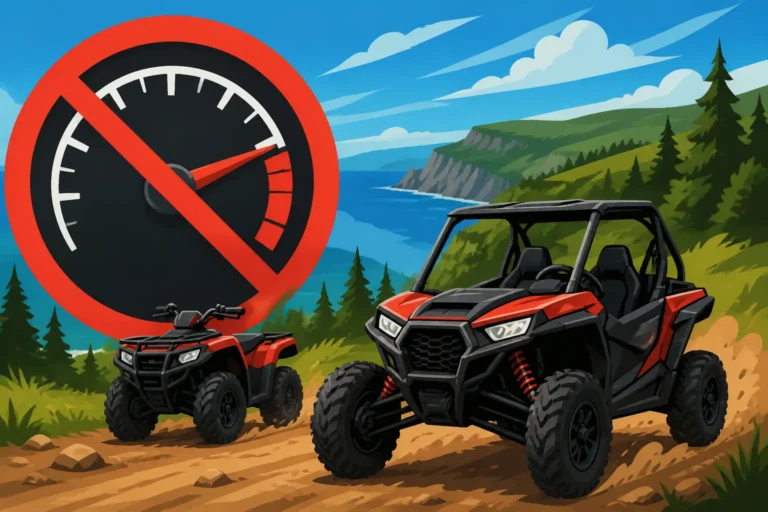
This isn't a suggestion; it's a hard rule. When you're on the shoulder, your maximum speed is 20 kilometres per hour. This speed is deliberately slow, much slower than highway traffic, allowing you ample time to react to unexpected hazards, maintain control, and be highly visible to other drivers. Exceeding this limit is not only a violation of the [Newfoundland's Off-Road Vehicles Act] but also a clear sign of impatience and disregard for safety. A lower speed also reduces the force of any potential impact, should an incident occur. Think of it as a walking pace, but with your machine – slow, deliberate, and entirely focused on getting to your trail access safely.
Visibility Requirements: Crossing a Newfoundland Highway Needs 150 Metres of Visibility
While the 1-kilometre rule applies to riding along the shoulder, the concept of visibility is critical when you need to cross a highway to get to a trail. Before you even think about entering the travel lanes to cross, you must ensure that you have at least [Crossing a Newfoundland Highway Needs 150 Metres of Visibility] in both directions. This means you need to be able to see any oncoming vehicle for at least 150 metres, and they need to be able to see you for the same distance. This applies equally to a cross-over from one side of the road to the other, or when you're merging onto the shoulder from a side road. If there's a blind curve, a hill crest, or heavy fog, you cannot proceed. Patience is key here; waiting for clear visibility can prevent a devastating accident. No trail is worth the risk of a head-on collision or being T-boned by traffic you couldn't see.
Yielding Every Single Time to Highway Traffic
This rule cannot be stressed enough: [Yielding Every Single Time] to highway traffic is not just good manners, it's the law. When you are on the shoulder, you are the secondary user of that space. Vehicles already on the highway have the right-of-way, always. This means if you are joining the shoulder, crossing a highway, or even if a vehicle needs to momentarily use the shoulder (for emergency, breakdown, or passing a stalled vehicle), you must yield to them. Expect that highway traffic will not stop or slow down for you. It is your responsibility to ensure your movements do not impede or endanger their passage. This might mean pulling over completely, stopping, or waiting for a significant gap in traffic before proceeding. Never assume a driver has seen you or will adjust their speed.
Equipment Requirements: Lighting, Reflectors, and Helmets
Operating an ORV on any public thoroughfare, even the shoulder, brings with it a host of equipment requirements designed for your safety and visibility. You're no longer just out on a private logging road; you're in a shared space.
- Lighting: Your machine must have working headlamps and taillamps. These must be on from sunset to sunrise, and during any period of reduced visibility. Ensure your lights are clean and functioning properly. Even during daylight hours, having your lights on significantly increases your visibility to other motorists.
- Reflectors: Additional reflectors can be a huge bonus. While the law specifies certain placements, adding reflective tape to the sides, front, and rear of your machine can make you stand out even more. Think about where a driver might be looking and try to catch their eye. Aftermarket accessories from brands like SuperATV can often include enhanced lighting or reflective options designed for improved visibility.
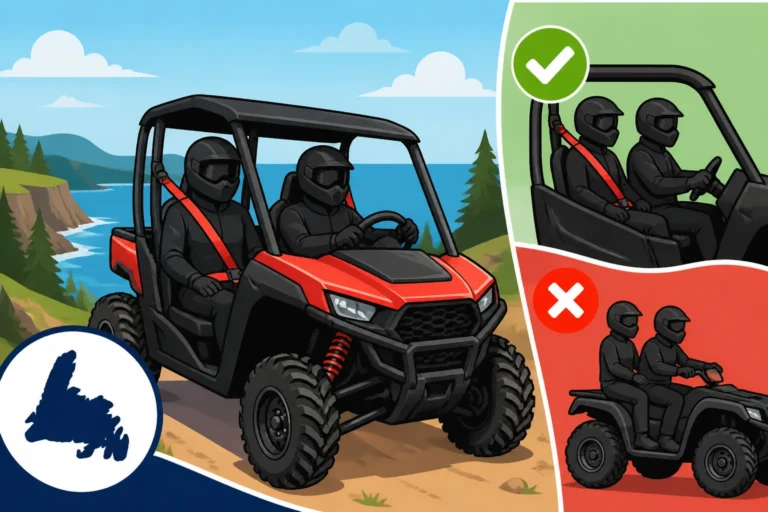
- Helmets: This is non-negotiable. [Newfoundland Helmet Law for Every Rider] means that not only the operator but also any passenger must wear an approved helmet, properly fastened. This is your primary defence against head injury in the event of an accident. Whether you're travelling 5 km/h or 20 km/h, a fall or collision can have serious consequences. Always wear your helmet.
Navigating Intersections and Crossings: Critical Junctions
While riding the shoulder for a kilometre might seem straightforward, navigating intersections and full highway crossings adds another layer of complexity and risk. These are the points where ORVs come closest to high-speed highway traffic, and where misjudgments can lead to severe outcomes. Careful planning and strict adherence to rules are essential.
How to Safely Cross a Highway from the Shoulder
Let's imagine you've ridden your permitted 1 kilometre on the shoulder and now need to cross the highway to reach the trail on the opposite side. This isn't a casual manoeuvre.
- Stop Completely: First, bring your machine to a complete stop at the edge of the travel lane. Do not creep forward.
- Assess Visibility: Re-evaluate your visibility in both directions. Remember the [Crossing a Newfoundland Highway Needs 150 Metres of Visibility] rule. If there's any doubt due to fog, curves, or hills, do not attempt to cross.
- Look, Listen, and Wait: Look far down the road in both directions. Listen for approaching vehicles. Wait for a significant gap in traffic, large enough that you can cross safely without forcing any highway vehicle to slow down or alter its course. Don't be rushed.
- Cross Directly and Swiftly: Once clear, cross the highway directly at a right angle, without weaving or hesitation. Keep your speed steady but controlled. Your goal is to minimize the time spent in the active traffic lanes.
- Rejoin the Shoulder/Trail: Once across, immediately move off the highway into the opposing shoulder or directly onto the trail if permitted. Do not linger in the traffic lane.
Distinguishing Between Highway Crossings and Shoulder Riding
It's easy to confuse these two actions, but they are distinct under the law and in terms of risk.
- Shoulder Riding: This involves travelling parallel to the highway traffic, staying entirely on the designated shoulder area for up to 1 kilometre, usually to connect to a trail. You are essentially using an adjacent path.
- Highway Crossing: This involves moving perpendicular to highway traffic, momentarily entering the active travel lanes to get from one side of the road to the other. This is a higher-risk manoeuvre and requires even greater caution and strict adherence to the visibility and yielding rules.
One is a brief transit alongside traffic; the other is a brief transit through traffic. Both demand vigilance, but a crossing requires even more precise timing and assessment of oncoming vehicles. The 1-kilometre limit applies to riding along the shoulder; there's no set distance limit for a direct crossing, other than making it as quick and direct as possible.
When the Shoulder Rule Doesn't Apply: Know the Limitations
The 1-kilometre shoulder rule is for trail access, full stop. It does not apply if you're trying to:
- Go to the store: You cannot ride your ORV on the shoulder to run errands to a local shop.
- Visit a friend's house: If your friend lives 500 metres down the highway, the shoulder rule doesn't grant you permission to ride there for a social call.
- Commute to work: Your ORV is not a commuter vehicle for highway use, even on the shoulder.
- Just "go for a spin" on the road: The rule is strictly for connecting trails. If your destination is not a trail or a legitimate off-road access point, then the shoulder is off-limits.
Any use of the shoulder outside of connecting a trail or gaining legitimate off-road access is considered an illegal operation of an ORV on a highway, and can result in significant fines and penalties. Officers are keen to enforce these limitations to maintain highway safety.
Permitted Machines and Rider Requirements: Who Can Ride and What They Need
Just having an ATV or UTV doesn't automatically grant you the right to use the highway shoulder, even for that quick kilometre. There are specific requirements for both your machine and for you, the operator, ensuring that all off-road vehicles operating even briefly near highway traffic meet a baseline standard of safety and accountability.
Which ORVs Are Allowed on the Shoulder
The [Newfoundland's Off-Road Vehicles Act] defines what constitutes an "off-road vehicle," and this covers ATVs, snowmobiles, dirt bikes, and side-by-sides. If your machine falls under one of these classifications and is properly registered, it is generally permitted to use the shoulder for the specified 1-kilometre connection to a trail. However, not all ORVs are created equal in terms of road-worthiness. A heavily modified mud machine might have tires unsuitable for pavement, for example. While the law permits the class of vehicle, common sense and a focus on safety should guide your decision. Ensure your tires are in good condition and your machine is generally road-worthy for that short distance.
Newfoundland Insurance Requirements for Riders
Before you even think about putting a wheel on the shoulder of a public road, you must have valid insurance for your off-road vehicle. [Newfoundland Insurance Requirements for Riders] mandate a minimum liability coverage for all ORVs. This isn't just a suggestion; it's a legal necessity. In the unfortunate event of an accident, even a minor one, involving your ORV and another vehicle or property while you're on the shoulder, that insurance is what protects you from potentially ruinous financial liability. Keep proof of your insurance with you whenever you ride. An officer can ask you to produce it, and failing to do so, or not having valid insurance at all, carries its own set of penalties. Some riders choose to go above the minimum, especially if they know they'll be near public roads or crossing them.
Newfoundland Licence Requirements on a Highway
While you don't necessarily need a full driver's licence to operate an ATV or UTV off-road, the moment you touch the shoulder of a public highway, or especially when you cross one, the rules shift. If you are operating an ORV on a public road or highway shoulder, you must possess a valid driver's licence. This is explicitly covered in the regulations under [Newfoundland Licence Requirements on a Highway]. This means a valid Class 5 (or equivalent) licence is required. This ensures that anyone operating a vehicle in proximity to public highway traffic has demonstrated a basic understanding of road rules and responsibilities. Even if you're only on the shoulder for a short distance, you are interacting with the highway system.
Newfoundland Helmet Law for Every Rider
As mentioned before, the [Newfoundland Helmet Law for Every Rider] is universal and absolute. It applies whether you're deep in the woods or just briefly on the shoulder. This isn't just for operators; any passenger you carry must also wear an approved helmet, properly secured. Helmets save lives and prevent severe injuries. There are no exceptions for short distances, low speeds, or perceived lack of danger on the shoulder. Make it a habit: if you're on the machine, your helmet is on your head and securely fastened. It's the simplest and most effective safety measure you can take.
Risks, Penalties, and Enforcement: What's at Stake
Ignoring the rules for riding on the shoulder isn't just about bending a minor guideline; it comes with serious consequences. The risks are not just legal, but physical, and the penalties reflect the government's commitment to ensuring safety on and around public roads. Peace officers take these violations seriously because of the inherent danger ORVs pose when mixing with highway traffic.
Newfoundland Fine Ranges by Offence for Violations
The [Newfoundland Fine Ranges by Offence] for ORV violations can be substantial. For offences related to improper use of the highway or shoulder, expect fines that can easily run into the hundreds of dollars for a first offense. These fines can escalate significantly for repeat offenders or for more egregious violations, such as impaired operation. For instance, being caught riding on the highway itself, rather than the shoulder, or exceeding the 1-kilometre limit, will draw a penalty. Failing to yield, lacking proper insurance, or not wearing a helmet will each add to the financial burden. These aren't small tickets; they're designed to be a significant deterrent.
Newfoundland Machine Seizure Rules for Serious Infractions
Beyond just fines, serious violations can lead to your machine being seized. [Newfoundland Machine Seizure Rules] are in place for certain offenses, particularly those involving impaired driving, operating an unregistered machine, or repeated dangerous operation. If your machine is seized, you'll be responsible for towing and impoundment fees, which can quickly add up. Getting your machine back often involves a legal process, proving compliance, and paying all outstanding fines and charges. This means not only a significant financial hit but also the loss of your machine for a period, potentially ruining your riding season. The message is clear: operate responsibly, or face the prospect of losing your ride.
Why Officers Enforce This Strictly: Safety Above All
Peace officers, including the RCMP and RNC, as well as provincial enforcement officers, take a zero-tolerance approach to unsafe ORV operation on or near highways. The reason is simple: safety. Off-road vehicles are not designed for highway speeds or traffic conditions. They handle differently, are less visible, and offer less protection than conventional road vehicles. A collision between an ORV and a car or truck on a highway can be catastrophic, almost always resulting in serious injury or fatality for the ORV operator. Enforcement isn't about being punitive; it's about preventing these tragedies. Officers are highly trained to recognize violations and are often on patrol specifically looking for ORV infractions that endanger the public. They understand the intent of the 1-kilometre rule is connection, not convenience, and they enforce it with that understanding.
Alternatives and Best Practices: Riding Smart
While the 1-kilometre shoulder rule offers a crucial link for trail riders, it's not always the best, or even safest, option. Smart riders know when to use the rule and when to seek alternatives that prioritize safety and minimize risk. Planning your ride carefully can save you headaches, fines, and potentially more serious consequences.
When to Use a Trailer Instead of the Shoulder
Sometimes, the most responsible choice is simply to trailer your machine. If the distance to the trail is slightly over the 1-kilometre limit, or if the highway conditions are particularly hazardous (heavy traffic, poor visibility, high speeds, narrow shoulder), then loading your machine onto a trailer is the safest bet. It might add a few minutes to your journey, but it completely removes the risks associated with mixing your ORV with highway traffic. Many rural roads and cabin roads also have designated parking areas for trailers near trailheads. Investing in a reliable trailer and learning how to safely load and secure your machine is a skill every ORV owner should cultivate.
Planning Your Route to Minimize Road Use
Before you head out, consult a [Newfoundland ATV Trail Map Downloads] or a physical map of your area. Look for routes that minimize or completely eliminate the need to use highway shoulders. Sometimes, an extra five minutes on a slower, less-trafficked woods road can bypass a dicey highway section. Many communities have dedicated off-road trails that run parallel to highways, specifically designed to keep ORVs off the road system. Always plan your entry and exit points carefully, noting any necessary shoulder riding or highway crossings, and assess the conditions of those sections before you commit. Awareness of your route beforehand allows you to make informed decisions about where and how you'll ride.
Consulting Local Bylaws and Trail Operators
While the provincial Off-Road Vehicles Act sets the overarching rules, individual municipalities may have their own bylaws regarding ORV use within their boundaries. Some towns might prohibit ORVs on any municipal road, regardless of the provincial shoulder rule, while others might have designated connecting routes. Before riding in a new area, it's always a good idea to check with the local town council or search for municipal bylaws online. Additionally, consult local ATV clubs or trail operators. They often have the most current information on trail access points, road connections, and any local advisories. These groups are a wealth of knowledge and can help you navigate the nuances of local riding regulations and ensure you're aware of designated riding areas. Information from these sources can significantly enhance your riding experience and keep you on the right side of the law.
| Shoulder Riding Condition | Legal Requirement | Reasoning for Safety | Potential Penalty for Violation |
|---|---|---|---|
| Distance Limit | Max 1 Kilometre | Minimizes exposure to highway traffic | Fine, possible machine seizure |
| Speed Limit | 20 km/h and No Faster | Allows reaction time, increases visibility | Fine, possible machine seizure |
| Visibility (Crossing) | 150 Metres Each Way | Prevents collisions with oncoming traffic | Fine, accident risk, injury |
| Yielding | Yield Every Single Time | Highway traffic has right-of-way | Fine, accident risk, injury |
| Insurance | Mandatory Liability | Financial protection in case of incident | Fine, machine seizure |
| Driver's Licence | Required (Class 5/Eq.) | Ensures basic road rules knowledge | Fine, machine seizure |
| Helmet | Required for All | Prevents head injuries | Fine, injury risk |
| Lights & Reflectors | Functioning, Visible | Increases visibility to other drivers | Fine, accident risk |
Disclaimer
This article is for general informational purposes only and does not constitute professional advice. Laws, prices and regulations vary by location and change over time. Consult a qualified professional for guidance on your specific situation.