Crossing a Newfoundland Highway Needs 150 Metres of Visibility
Alright, let's talk about something every rider in Newfoundland eventually faces: needing to use public roads, even if it's just for a moment. It's frustrating when a perfect trail suddenly ends, or you need to cross a highway to get to the next section, but the rules can feel like a minefield. This guide will meticulously break down the regulations surrounding highway crossings, shoulder riding, and general road use for ATVs and UTVs in our beautiful province, helping you avoid fines, stay safe, and navigate those tricky transitions between the wilderness and the pavement.
Understanding the Necessity of Road Use for ORVs
There's nothing quite like the freedom of tearing across the barrens or winding through a deep woods trail on your ATV or side-by-side. But let's be real – our trails aren't always continuous ribbons of adventure. Sometimes, that amazing ride hits a wall, literally, and you find yourself needing to interact with the broader road network. It’s not ideal, and it’s certainly not what we got into this for, but it’s a reality of riding in Newfoundland.
Bridging the Gaps Between Trails
Picture this: you've been riding for hours, enjoying some fantastic backcountry, and your GPS shows a perfectly good trail continuing just on the other side of a provincial highway. Or maybe you're exploring the network around a cabin and need to get from one section of Crown land to another. These aren't just minor inconveniences; they're genuine hurdles in enjoying our extensive trail systems. The truth is, very few trail networks are entirely self-contained, especially once you venture beyond the heavily maintained T'Railway. Our geography, with roads often cutting through prime riding areas, means that brief forays onto or across pavement are often unavoidable to link up those amazing routes. It can be a real buzzkill to have to turn back simply because of a short road section.
Accessing Services and Amenities
Beyond just connecting trails, sometimes you need to use a road to get to vital services. Maybe you're running low on fuel, or you need to grab a bite to eat in a small community. Perhaps you've had a minor mechanical issue and need to reach a local garage or a parts store. While many riders prefer to trailer their machines for these tasks, it's not always practical or possible. Imagine being deep into an extended trip and needing to restock supplies. Hauling a truck and trailer everywhere can be a huge hassle. The ability to legally and safely navigate short stretches of road, even just to pull into a gas station or a corner store, can make a huge difference in the enjoyment and feasibility of longer rides. You see folks sometimes with utility trailers hitched behind their ATVs, heading into town for supplies, and for them, these road rules are essential.
Navigating Private Land and Unapproved Areas
Another common scenario involves private land or areas that simply aren't designated as official trails. Many of us have cabins, or friends and family with property, that might only be accessible via a small road or by crossing a short stretch of municipal pavement. The [Newfoundland's Off-Road Vehicles Act] aims to provide a framework for these situations, acknowledging that machines aren't just for recreation on official trails. You might have permission to ride on a specific parcel of private land, but getting to that land might necessitate a quick trip along a public way. Understanding the specific limits and conditions for such travel is crucial, preventing accidental trespass or running afoul of the law when you're just trying to get to where you're allowed to be.
The Critical 150-Metre Visibility Rule for Highway Crossings
This is one of those rules that often gets overlooked or misunderstood, and it's absolutely critical for safety. You can't just dart across a highway whenever you feel like it. The law is very clear: you need significant visibility in both directions before you even consider crossing.
What "150 Metres of Unobstructed Visibility" Truly Means
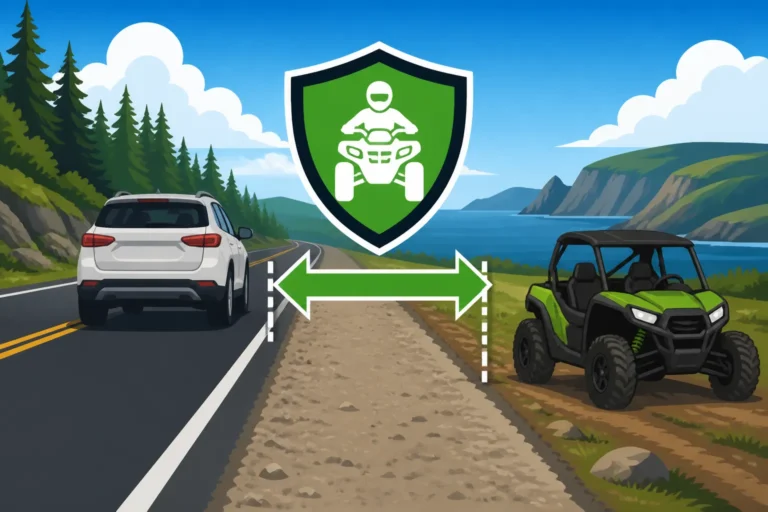
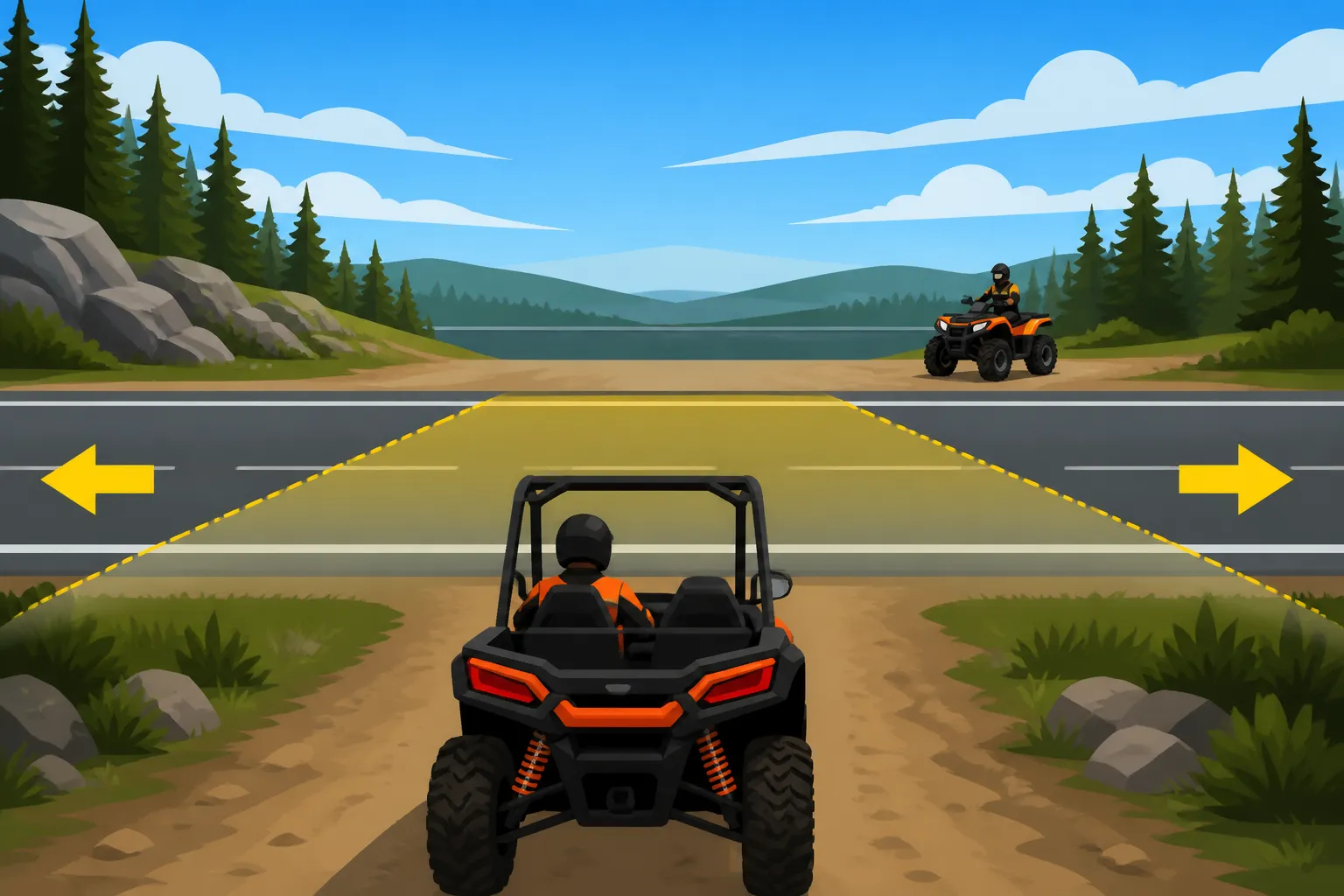
Let's break down that "150 metres of unobstructed visibility." It means that when you're preparing to cross a highway, you must be able to see at least 150 metres in each direction along that highway without anything blocking your view. That includes hills, sharp bends, dense trees, buildings, or even large parked vehicles. Crucially, it also means that any oncoming traffic must also have an unobstructed view of you for at least 150 metres. It’s a two-way street, literally. If there's a blind curve, a crest in the road, or a thick stand of trees right at your crossing point, you're out of luck. You need to find a different spot, even if it means riding a little further on the shoulder (within legal limits, of course) to get to a safer intersection. This isn't just about what you can see; it's about what drivers can see. Think of it like this: 150 metres is roughly the length of 15 school buses end-to-end, or a football field and a half. That's a lot of clear sightline, and it's there for a very good reason. Many new riders, or even experienced ones new to the provincial regulations, can underestimate this distance or the impact of even minor obstructions. It's often safer to assume you need more visibility than less. This rule is explicitly detailed in [Newfoundland Rules for Crossing a Highway].
Safety Implications and Accident Prevention
This 150-metre rule isn't some arbitrary number; it's a fundamental safety measure designed to prevent serious accidents. ATVs and UTVs are not built for highway speeds, and they react differently to pavement than cars do. Drivers on highways are typically travelling much faster, and they need ample time to react if an ORV suddenly appears in their path. If you attempt a crossing with insufficient visibility, you're putting yourself, your passengers, and anyone on the highway at extreme risk. A fast-moving vehicle needs a significant distance to brake, and if they come over a hill or around a bend to find an ATV crossing, there might not be enough time to avoid a collision. Always choose the safest possible crossing point, even if it adds a few extra minutes to your journey. Rushing a crossing is simply not worth the risk, and the consequences can be devastating. Remember, [Newfoundland Riders Yield to Highway Traffic] at all times.
Planning Your Crossings: Scouting and Caution
Good planning can make all the difference here. If you know your route involves highway crossings, try to scout them out beforehand, perhaps even in your truck. Look for the widest, straightest sections of highway where visibility is clearly beyond the 150-metre mark in both directions. When you're actually on your machine, approach these crossings with extreme caution. Stop completely at the edge of the pavement, look thoroughly in both directions – multiple times – and only proceed when you are absolutely certain the way is clear. If in doubt, don't go. Sometimes, the safest option is to find an alternative route, even if it's longer. Better safe than sorry, every single time. It's also wise to wear brightly coloured gear, especially when you know you'll be near or on roads, to make yourself as visible as possible to motorists. This is especially true for any aftermarket accessories, like additional lighting or flags you might have installed, perhaps even from brands like SuperATV, which makes a range of visibility products.
Shoulder Riding: The 1-Kilometre Limit and 20 km/h Rule
Sometimes, a full highway crossing isn't needed, but you still need to use the shoulder of a road for a short distance to connect trails or access a legal crossing point. Newfoundland's regulations allow for this, but with very strict limitations on distance and speed.
When Shoulder Riding is Permitted and Why It's Restricted
You are permitted to ride on the shoulder of a public road, but only for the explicit purpose of gaining access to a trail, a place where you can legally cross the highway, or to reach your own property. It's not a free pass to cruise the shoulders for extended periods. This allowance is a pragmatic one, recognizing that our trail networks aren't always perfect and continuous. However, it's heavily restricted to ensure rider safety and minimize interaction with fast-moving highway traffic. The shoulder is still part of the road environment, and you're sharing it with everything from passenger vehicles pulling over to large transport trucks. The difference in speed and mass is immense, making ORVs on shoulders inherently vulnerable. The restrictions are designed to keep these interactions brief and at the lowest possible risk. You'll find specific details on this in [Newfoundland Rules for Riding a Shoulder].
Adhering to the 1 Kilometre Distance
This is another hard limit that riders often push or misunderstand: you can only ride on the shoulder for a maximum distance of one (1) kilometre. That's it. No more. One kilometre is about half a mile, or ten football fields. It's a short stretch, intended only to bridge immediate gaps. If your desired trail connection or crossing point is further than one kilometre away, you cannot legally use the shoulder to get there. You'll need to find an alternative, which likely means trailering your machine to a closer access point or a completely different trail system. Exceeding this limit can result in fines and charges under the [Newfoundland's Off-Road Vehicles Act]. Enforcement officers are well aware of these common infractions, and they take them seriously, as it directly relates to public safety. It’s far too easy for a short ride on the shoulder to turn into a longer, illegal journey, so always keep a close eye on your odometer if you find yourself in this situation.
Maintaining the 20 km/h Speed Limit for Safety
Even when riding on the shoulder within the 1-kilometre limit, you absolutely must not exceed 20 kilometres per hour (km/h). This is a very slow speed, roughly equivalent to a brisk jog. The reason for this low limit is, again, safety. It gives you maximum time to react to unexpected hazards, like debris on the shoulder, a sudden dip, or a vehicle pulling over. It also makes you less of a sudden hazard to drivers who might be looking to pull off the road. An ORV moving at 20 km/h is much more predictable and less likely to cause a startled reaction from a driver than one zipping along at 50 km/h. While your machine, especially a powerful UTV you might equip with rugged SuperATV components, is certainly capable of much higher speeds, restraint is paramount here. This isn't the time to test your top speed; it's the time to be as cautious and unobtrusive as possible. Keep your head on a swivel, watch for traffic, and be ready to stop at a moment's notice.
| Rule Category | Highway Crossing (150m Visibility) | Shoulder Riding (1km Limit) |
|---|---|---|
| Purpose | Safely cross from one side of a highway to the other. | Gain access to a trail, crossing, or property. |
| Visibility Requirement | 150 metres in both directions (for rider and drivers). | N/A (but always be aware of surroundings). |
| Distance Limit | As direct as possible, at 90-degree angle. | Maximum 1 kilometre. |
| Speed Limit | As quickly and safely as possible (no specified speed). | Maximum 20 km/h. |
| Yielding | Must yield to all highway traffic. | Must yield to all highway traffic and pedestrians. |
| Legal Equipment | Required for all road use (lights, registration, etc.). | Required for all road use (lights, registration, insurance). |
| Penalties | Fines for insufficient visibility or reckless crossing. | Fines for exceeding distance/speed limits. |
General Road Rules and Legal Requirements for ORV Operators
Beyond the specific rules for crossings and shoulders, there are fundamental legal requirements that apply whenever your ORV touches a public road, even briefly. These are non-negotiable and essential for staying legal and safe.
Licensing, Insurance, and Registration Essentials
First and foremost, your machine must be registered. This is a one-time fee in Newfoundland, and your [Newfoundland ORV Registration You Pay Once] is valid as long as you own the machine. You'll also need an identification plate clearly displayed. Beyond the machine itself, you, the operator, need to be properly licensed. If you're riding on a highway (even for a crossing or shoulder use), you need a valid driver's licence. This is covered in [Newfoundland Licence Requirements on a Highway]. Furthermore, your ATV or UTV must carry a minimum of $200,000 in third-party liability insurance. This is a crucial requirement under [Newfoundland's Minimum Insurance Requirement] and provides protection in case of an accident where you are at fault, involving property damage or injury to others. Without these three essentials – registration, appropriate licence, and insurance – you are riding illegally, and the penalties can be severe, including significant fines and potential machine seizure. Don't skip these steps; they're foundational to responsible ORV ownership and operation in our province.
Equipment Requirements for Road-Legal Use
When operating your ORV on or near public roads, it's not just about what you do, but what your machine is equipped with. Headlights and taillights are absolutely essential, especially if you're riding from sunset to sunrise, or in low-light conditions like fog or heavy rain. Your lights must be functional and visible. Additionally, your machine must have an adequate muffler system; excessively loud exhausts are illegal and can attract unwanted attention from law enforcement and frustrated residents. Think about visibility as well; while not always strictly mandated for brief road use, ensuring your machine is highly visible with proper lighting and reflectors is just plain smart. Some riders even add aftermarket mirrors or turn signals from companies like SuperATV to enhance their road safety, even if these aren't strictly required for short crossings under the current provincial act. Don't forget your personal safety gear, either: [Newfoundland Helmet Law for Every Rider] is a non-negotiable.
Yielding to Highway Traffic and Other Road Users
This point cannot be stressed enough: whenever you are on or near a highway, whether crossing or riding the shoulder, you are the guest, and highway traffic has the right-of-way. Always, without exception, yield to highway traffic. This means stopping and waiting until it is absolutely clear before proceeding. Do not assume drivers see you, and do not try to beat oncoming traffic. This principle extends to other road users too, like cyclists or pedestrians who might be on the shoulder or crossing a road. Even if you think you have the right of way in a particular scenario, it's always safer and wiser to yield and avoid any potential conflict or accident. Courtesy and caution go a long way in ensuring safety for everyone sharing the public space. Remember, ATVs and UTVs are primarily off-road vehicles, and their capabilities and visibility are different from conventional road vehicles.
Navigating Municipal Bylaws and Local Restrictions
While the province sets the overarching rules, individual towns and cities in Newfoundland have the power to create their own bylaws regarding ORV use within their boundaries. This is where things can get particularly confusing, as what's legal in one community might be strictly prohibited in the next.
Checking Local Regulations Before You Ride
This is a critical step that many riders unfortunately skip. Before you plan a trip that might take you near or through a community, it is absolutely essential to check their specific municipal bylaws regarding off-road vehicles. What's allowed on Crown land or the T'Railway might be completely different within town limits. Some municipalities might have designated routes or times for ORV travel, while others might ban them entirely from all public roads, parks, or even shoulders. The best way to do this is to visit the town's official website or, even better, call the municipal office directly. Don't rely on word-of-mouth or what you think the rules are. A quick phone call can save you a significant fine and the frustration of having your ride cut short. Ignoring local bylaws is one of the quickest ways to find yourself facing a ticket. This information is often found under [Newfoundland Municipal Road Bylaws].
Common Municipal Restrictions on ORV Use
Common restrictions you might encounter in municipal bylaws include complete bans on ORVs on paved or gravel roads within town limits, limits on operating hours (e.g., no riding after dark), speed restrictions even lower than the provincial 20 km/h shoulder rule, and specific routes that are allowed or prohibited. Some towns might only allow ORV access for specific purposes, like accessing a cabin or a business, and require you to have a permit or specific permission. Others might have designated "ATV friendly" routes that are clearly marked, often with signs indicating permitted ORV travel. It’s a patchwork, and it requires diligence on your part. For example, a town might allow you to cross a specific road to access a gas station, but not ride along that road for any significant distance. These bylaws are often enacted due to concerns about noise, safety, and property damage, so respecting them is key to maintaining a good relationship between riders and local communities.
The Importance of Community Engagement
Understanding and respecting municipal bylaws isn't just about avoiding fines; it's about being a responsible member of the riding community. When riders disregard local rules, it creates negative perceptions of all ORV users, which can lead to even stricter bans and reduced access for everyone. If you find a bylaw particularly restrictive or confusing, consider engaging with local ATV clubs or community councils in a constructive manner. Many clubs work with municipalities to create designated trails and legal access points, benefiting all riders. Being proactive and positive can help foster better relationships and open doors for more riding opportunities in the future. Remember that the provincial act provides the base, but local governments have the final say on what happens within their jurisdiction, and they have the power to impose hefty [Newfoundland Fines Riders Ask About] and even initiate [Newfoundland Machine Seizure Rules] for repeated or egregious violations.
Disclaimer
This article is for general informational purposes only and does not constitute professional advice. Laws, prices and regulations vary by location and change over time. Consult a qualified professional for guidance on your specific situation.