Newfoundland Engine Size for Age and Weight
Figuring out the ins and outs of off-road vehicle (ORV) regulations in Newfoundland and Labrador can feel like navigating a bog on a foggy day, especially when it comes to the rules for young riders. Parents often find themselves scratching their heads, trying to understand how engine size and a child's age or weight intersect with provincial law. This guide aims to clear up that confusion, breaking down the specific requirements designed to keep our younger generation of riders safe while they enjoy the great outdoors.
Understanding Newfoundland's Approach to Young Riders and ATVs
It's a common scene here in Newfoundland: a young person, eager to hit the trails or explore the family land on an ATV. The thrill of the ride is undeniable, but the responsibility that comes with operating these machines is immense. Our provincial government, recognizing both the popularity and the inherent risks, has put specific measures in place to ensure that young riders are matched with machines appropriate for their age, size, and experience level. This isn't about stifling fun; it's about fostering safe practices from an early age.
Why Age and Engine Size Limits Matter
The regulations aren't arbitrary lines drawn in the sand. They're based on safety data, developmental psychology, and practical considerations for operating powerful machinery. Imagine a small child trying to control a full-sized ATV designed for an adult; it's clear the risks are astronomical. Larger engines mean more power, more speed, and more weight – all factors that can quickly overwhelm an inexperienced or undersized rider. The ability to react quickly, steer effectively, and brake safely is directly tied to a rider's physical capabilities and mental maturity. A machine that's too heavy can be impossible to recover if it starts to tip, and too much power can lead to accidental acceleration or loss of control. It's a fundamental principle of safety: match the tool to the user.
Beyond the immediate physical risks, there's also the cognitive aspect. Younger children may not fully grasp the consequences of their actions or the dangers of certain terrain or speeds. The rules are designed to gradually introduce them to the complexities of ORV operation, ensuring they build skills and judgment over time. Think of it like learning to drive a car; you don't start a teenager out in a high-performance sports car. You begin with something manageable, allowing them to master the basics before moving on to more powerful vehicles. The same logic applies to ATVs and UTVs.
The Core Regulatory Framework
The foundation for these rules is [Newfoundland's Off-Road Vehicles Act] and its accompanying regulations. These documents lay out clear guidelines concerning who can operate what, and where. While some aspects might seem overly strict to a seasoned adult rider, they are designed with the universal safety of children in mind. The Act doesn't just look at age in isolation; it combines age with engine displacement (measured in cubic centimetres, or CCs) to create a tiered system. This approach acknowledges that while one 12-year-old might be physically larger and more capable than another, there are still developmental limits that need to be respected across the board.
It's also important to remember that these provincial regulations are the baseline. Local municipalities or specific land management authorities, such as those overseeing a managed trail system, might have additional rules or restrictions. Always double-check any local bylaws or trail rules for the area you plan to ride, as they can sometimes be more stringent than the provincial standard. This layered approach ensures that safety considerations are addressed at various levels, from the broad strokes of provincial law to the specific nuances of a particular riding area.
Specific Age Categories and Their Machine Restrictions
Newfoundland's regulations are quite specific about the age groups and the types of machines they are permitted to operate. These guidelines are crucial for parents and guardians to understand, as they directly impact machine selection and supervision requirements. It's not just about what a child wants to ride, but what they are legally and safely allowed to ride.
Riders Under 10 Years Old
For children under the age of 10, the rules are very clear and quite restrictive, and for good reason. At this developmental stage, children typically lack the physical strength, coordination, and judgment necessary to safely operate most ATVs, even small ones. The Act essentially prohibits any child under 10 from operating an off-road vehicle on public land, designated trails, or even private land that isn't directly owned by their immediate family. On their own family's private land, under very strict supervision, a small machine might be permissible, but this is an exception, not the rule, and it's almost always best to err on the side of caution.
Many parents ask about those miniature, often electric, "toy" ATVs. Even these, if they meet the definition of an off-road vehicle under the Act due to their motor size or speed capabilities, fall under these restrictions. The intent is to prevent situations where a child is operating a machine that could pose a risk to themselves or others. This age group is simply too young to reliably handle the complexities of even basic ORV operation, making safety paramount above all else. [Newfoundland Rules for a 10-Year-Old Rider] provides further details on the transition phase for this age group.
The 10 to 13-Year-Old Category
Once a child reaches 10 years old, the regulations open up slightly, but with significant limitations still in place. For this age group, an off-road vehicle must have an engine displacement of no more than 90 cubic centimetres (CCs). This 90cc limit is designed for youth-model ATVs, which are physically smaller, lighter, and have throttles that can often be restricted further for learning purposes. It's a critical step up from no riding at all, allowing children to begin developing essential skills on a machine that is much more manageable.
Furthermore, any rider in this age bracket must be under the direct supervision of an adult who is at least 18 years old and holds a valid driver's licence. "Direct supervision" is key here; it doesn't mean the adult is just somewhere on the property. It means they are actively observing and able to intervene if needed, usually riding alongside or within immediate sight and earshot. This age group is still developing their decision-making skills, and having a responsible adult present is vital for guidance and safety.
Young Operators Aged 14 and 15
This age bracket marks another increase in permissible engine size, reflecting the physical growth and improved motor skills of teenagers. A 14 or 15-year-old can operate an off-road vehicle with an engine displacement up to 250 cubic centimetres (CCs). This includes many intermediate youth ATVs and some smaller utility-focused models. While a 250cc machine offers more power and capability than a 90cc model, it's still far from the larger, more powerful machines designed for adult riders, which can easily exceed 500cc or even 1000cc. [Newfoundland Rules for a 14-Year-Old Rider] and [Newfoundland Rules for a 15-Year-Old Rider] further elaborate on these specific stipulations.
Just like the younger age group, these riders still require direct supervision by a licensed adult who is at least 18 years old. The need for supervision persists because while their physical abilities are developing, their judgment in complex or challenging situations may still be maturing. This period is crucial for honing advanced riding techniques, understanding trail etiquette, and learning how to anticipate and react to hazards, all under the watchful eye of an experienced supervisor. They should also be carrying proof of their mandatory safety training.
Age 16 and Up: Transitioning to Adult Rules
Once a rider turns 16, they are largely considered an adult operator under the [Newfoundland Off-Road Vehicles Act] when it comes to engine size and supervision. At 16, there are no longer specific engine displacement limits, meaning they can operate any size of ATV or UTV. This is the point where they can ride a full-sized machine, whether it's an 800cc ATV or a larger side-by-side.
However, there are still critical requirements. While direct supervision is no longer mandatory, a 16-year-old rider must still possess a valid driver's licence (any class, including a learner's permit for a car if they are driving an ORV on a highway shoulder, for instance), and they must have completed the mandatory off-road vehicle safety training. The absence of engine size limits means the rider and their guardians must exercise good judgment in selecting a machine that matches their skill and experience, not just their age. Responsible aftermarket providers, such as SuperATV, often emphasize proper machine setup and accessory use for all riders, regardless of age, to enhance safety and control.
Here’s a summary of the engine size and age guidelines:
| Age Group | Maximum Engine Size (CC) | Supervision Required? | Driver's Licence Required for Supervisor? | Mandatory Training Required for Rider? |
|---|---|---|---|---|
| Under 10 Years | Prohibited on ORVs | Yes (on private family land only) | Yes (18+ years old) | No (cannot operate) |
| 10 to 13 Years | 90cc | Yes | Yes (18+ years old) | Yes |
| 14 to 15 Years | 250cc | Yes | Yes (18+ years old) | Yes |
| 16 Years and Older | No Limit | No | N/A | Yes |
Note: "Prohibited" means generally not allowed to operate an ORV under the Act, with limited exceptions only on private land owned by immediate family, under strict adult supervision. Always verify the latest regulations.
Matching Machine to Rider: Beyond Just Engine Size
While engine size limits provide a clear framework, safely matching a young rider to a machine involves much more than just looking at the cubic centimetres. A machine's physical dimensions, weight, and the rider's individual physical and mental capabilities are equally important. You wouldn't put a child who struggles to ride a bicycle on a high-powered dirt bike, no matter what the engine size rules say. It's about a holistic assessment of readiness.
The Importance of Machine Weight and Dimensions
A machine's weight and overall dimensions play a significant role in how easily a rider can control it. A heavy machine, even if it has a small engine, can be incredibly difficult for a lightweight child to maneuver, especially when encountering obstacles or uneven terrain. Imagine trying to shift your weight to prevent a tip-over if the machine outweighs you by several times; it's nearly impossible. The sheer mass can make braking distances longer and steering more strenuous. Young riders need to be able to comfortably reach all the controls – handlebars, throttle, brake levers, and foot pegs – without stretching or straining. They should also be able to shift their weight effectively to maintain balance and navigate turns.
The height of the seat relative to the ground is also critical. A rider should be able to touch the ground with both feet when seated to provide stability and assist with balance and control, especially at low speeds or when coming to a stop. If a child is constantly on their tiptoes, they lack the leverage needed to react quickly and safely. This is where youth-specific models excel; they are scaled down in every dimension to fit smaller bodies. Even with the right engine size, if the machine is too large physically, it remains a serious safety hazard.
Rider Readiness and Physical Capability
Beyond age and engine size, the single most important factor is the individual rider's readiness and physical capability. This isn't a "one size fits all" scenario. Some children are naturally more athletic, coordinated, and responsible than others at the same age. Parents need to honestly assess their child's strength, balance, coordination, and attention span. Can they understand and follow complex instructions? Do they tend to be impulsive, or do they think before they act? Can they maintain focus for the duration of a ride? [Newfoundland Equipment Requirements] are also crucial here, as proper gear can help mitigate some risks, but cannot compensate for an ill-fitting machine or an unready rider.
A good test is to have the child sit on the machine and try out the controls. Can they squeeze the brake levers fully? Can they turn the handlebars from lock to lock without straining? Can they comfortably stand on the footpegs and shift their weight? If any of these basic movements are a struggle, the machine is too big or too powerful for them, regardless of what the engine size regulations permit for their age group. Safety should always be the priority, and sometimes that means waiting a little longer or choosing an even smaller machine than the law minimally requires.
The Role of Supervision and Mandatory Training
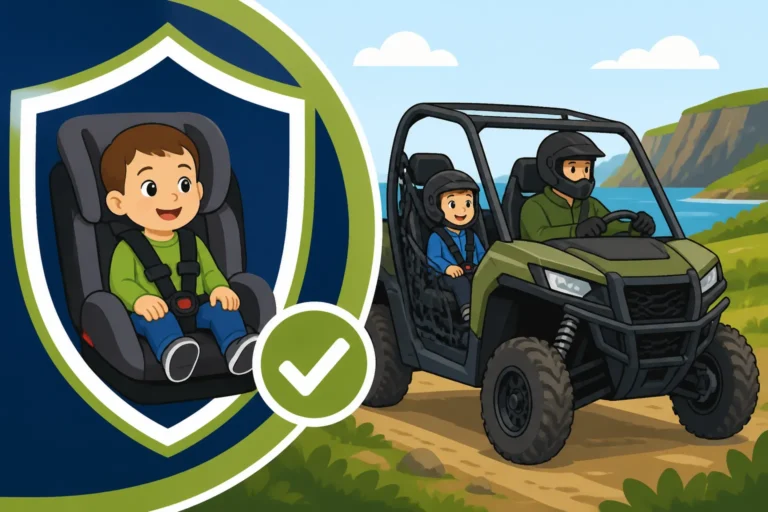
Proper supervision and mandatory safety training are two pillars of Newfoundland's ORV safety strategy for young riders. These aren't just bureaucratic checkboxes; they are essential components designed to equip young riders with the knowledge, skills, and judgment to ride responsibly and safely. Ignoring these requirements not only puts the child at risk but also exposes supervisors to legal penalties.
Who Can Supervise a Young Rider?
The regulations are explicit: [Newfoundland Supervisors Must Be 18 and Licensed]. This means the supervising adult must be at least 18 years of age and hold a valid driver's licence. The licence doesn't necessarily have to be an ORV-specific licence (as those don't exist in Newfoundland in the same way car licences do), but a general driver's licence (e.g., Class 5 for cars) demonstrates that the individual has passed a basic competency test for operating motorized vehicles. This ensures a level of experience and responsibility from the supervisor.
Furthermore, "direct supervision" means the supervisor must be in a position to immediately intervene if necessary. They should be riding their own ORV alongside the young rider, or be within very close proximity and have a clear line of sight. This isn't just about yelling instructions from a distance; it's about being able to physically assist, guide, or stop the young rider if a dangerous situation arises. Many experienced riders know the importance of communication and staying aware of their surroundings, and these traits are paramount for effective supervision.
Mandatory Safety Training Requirements
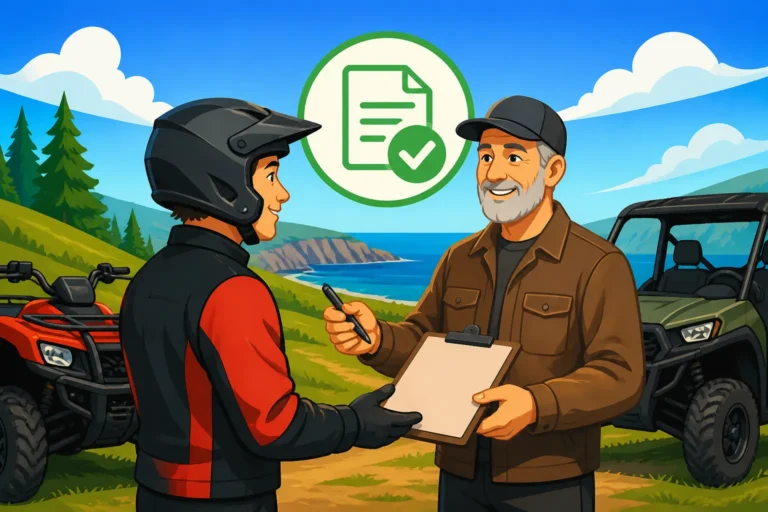
Newfoundland is serious about rider education. [Newfoundland Safety Training Is Mandatory] for all ORV operators under the age of 16, and also for first-time registrants of any age. For young riders, this training is absolutely critical. The official course, which can often be accessed online through MyGovNL, covers fundamental safety principles, operating techniques, environmental awareness, and adherence to the [Newfoundland's Off-Road Vehicles Act]. Passing a test at the end of this training is required to obtain a safety certificate. [Newfoundland Training Required Under 16] is a non-negotiable requirement.
This training teaches young riders about critical aspects like wearing appropriate safety gear (including a properly fitted helmet, as outlined in [Newfoundland Helmet Law for Every Rider]), understanding trail signs, basic machine maintenance checks, and how to react in emergency situations. It provides a structured learning environment that reinforces responsible riding habits from the very beginning. While some may argue that practical experience is best, combining practical experience with formal training creates the most well-rounded and safest riders. It’s an investment in their future safety on the trails.
Consequences of Not Following the Rules
It's easy to think of these rules as mere suggestions, especially if you're riding on private land or in remote areas. However, the provincial authorities take ORV safety very seriously, and the consequences for non-compliance, particularly when it involves young riders, can be significant. These aren't just minor inconveniences; they can result in substantial fines, machine seizure, and even more serious legal repercussions, especially in the event of an accident.
Penalties for Non-Compliance
Operating an off-road vehicle in contravention of the age, engine size, or supervision rules can lead to serious penalties. Peace officers, including the Royal Newfoundland Constabulary and RCMP, are empowered to enforce these regulations. Fines can range from several hundred dollars for a first offense, and they escalate significantly for repeat violations. Beyond financial penalties, there's also the possibility of the ORV being seized, meaning it can be impounded, and the owner will have to pay significant fees for its release, in addition to any fines. [Newfoundland Penalties for Riding Illegally] can be a harsh lesson for those who disregard the regulations.
For supervisors, the stakes are even higher. If a child under their supervision is found to be riding illegally or is involved in an accident, the supervising adult can face charges for failing in their duty, potentially leading to fines, licence suspension, or other legal action. The legal system views the supervisor as responsible for ensuring the young rider adheres to all safety and legal requirements. This underscores why choosing a responsible and knowledgeable supervisor is not just a recommendation, but a legal obligation.
The Bigger Picture: Safety and Responsibility
Ultimately, these rules and the penalties that back them up are about more than just legal compliance; they're about preventing injuries and fatalities. Off-road vehicles, while incredibly fun and useful, are powerful machines that demand respect. Accidents involving ORVs can result in serious injuries, including head trauma, broken bones, and spinal cord damage. These are life-altering events that can have devastating impacts on individuals and families.
By adhering to the age and engine size limits, ensuring proper supervision, and completing mandatory training, we collectively foster a culture of safety and responsibility within the ORV community. It's about empowering young riders to enjoy their passion for the outdoors safely, ensuring they have many years of enjoyment ahead of them. Reputable accessory providers like SuperATV also play a role by offering protective gear and machine enhancements that contribute to a safer riding experience for all, from robust skid plates to visibility-enhancing lighting. It’s a shared responsibility that allows everyone to appreciate the unique beauty of Newfoundland's trails and backcountry without unnecessary risks.
Disclaimer
This article is for general informational purposes only and does not constitute professional advice. Laws, prices and regulations vary by location and change over time. Consult a qualified professional for guidance on your specific situation.